behavior · design · emotion · environment · happiness · health · mental health · psychology

Modular Glass Bedroom Helps Researchers Investigate Light’s Infinite Health Benefits – PSFK

Do you notice you have different moods depending on how bright or dark it is outside? Do you notice the warmth or cold feeling emitting from a light bulb? Whether you consciously notice them or not, they do have an effect on your brain and body. Since these days most of us don’t get to work outside and absorb natural light, scientists are working on the right kind of artificial light for us.

The light emitted from our lamps and fixtures at home doesn’t just spruce up a room; it has the power to significantly augment our mood and lift our spirits.To explore further the link between lighting and personal wellbeing, glass engineering company Cantifix and Oxford University have collaborated to create the Photon Project. This scientific study comes to life at this month’s London Design Festival in the form of the Photon Pod, an all-glass living space that will help the Photon Project gather data and insights on the links between light and health.Resembling a futuristic bedroom, the pod invites visitors to experience what life is like in a completely translucent living space, as well as take part in simulations that measure levels of alertness or relaxation under varied light conditions.

more via Modular Glass Bedroom Helps Researchers Investigate Light’s Infinite Health Benefits – PSFK.

design · Mental · mental health · Nature

Serious New Funding for Innovative Research on Restorative Urban Nature

So many studies have found natural spaces to be beneficial for healing and mental health, so it is crucial as we become more urbanized to allow space for nature to sneak in.

Unknown's avatar

So many studies have found natural spaces to be beneficial for healing and mental health, so it is crucial as we become more urbanized to allow space for nature to sneak in.

View original post

behavior · brain · disease · happiness · health · play

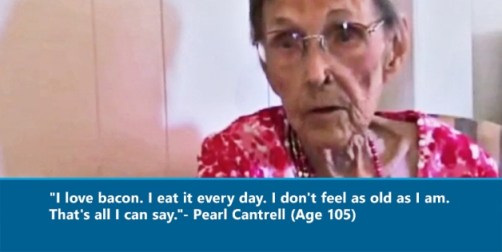
How to live to 100: advice for life and living longer

At first it seems like the typical “there’s no golden rule to getting old” article, right?

Some of the supercentenarian advice is sweet, some is a bit strange and a couple are everything we’ve always hoped for. Who knew bacon and whiskey were the fountain of youth?

more photos via How to live to 100: advice for life and living longer.

Some appear silly, and some fly in the face of recent studies (for example, married people tend to be healthier, and ergo live longer).

But if you try to generalize the advice, much of it boils down to one thing: have fun, be playful, don’t stress out too much about the details.

If you want to live to be 100, you have to give yourself space to play!

children · environment · happiness · hugs · Nature · neuroscience · psychology

Tree Hugging Now Scientifically Validated – Uplift

hugging trees can be good for us

The term “tree hugger” has been applied to people viewed as uber-liberal or too idealistic, however… “it has been recently scientifically validated that hugging trees is actually good for you.”

Research has shown that you don’t even have to touch a tree to get better, you just need to be within its vicinity has a beneficial effect.

In a recently published book, Blinded by Science, the author Matthew Silverstone, proves scientifically that trees do in fact improve many health issues such as Attention Deficit Hyperactivity Disorder (ADHD), concentration levels, reaction times, depression and other forms of mental illness. He even points to research indicating a tree’s ability to alleviate headaches in humans seeking relief by communing with trees.

The author points to a number of studies that have shown that children show significant psychological and physiological improvement in terms of their health and well being when they interact with plants and trees. Specifically, the research indicates that children function better cognitively and emotionally in green environments and have more creative play in green areas. Also, he quotes a major public health report that investigated the association between green spaces and mental health concluded that “access to nature can significantly contribute to our mental capital and wellbeing”.

full article via Tree Hugging Now Scientifically Validated – Uplift.

I”m sorry the article only looked at research in children, as more and more findings are showing the same improvements in adults from interacting and playing with nature, and even results that some would term “nature deprivation” or as Richard Louv calls it “Nature Deficit Disorder.”

One of my favorite little trivia facts is that there are microbes in soil that induce positive emotions in people, so digging in the dirt actually makes you happier. Plus helps you learn and concentrate more.

Hospital patients with a view of a tree or greenery from their room window were found to heal faster.


Those kinds of benefits are for everybody!

While I do feel like it’s important to make sure children get enough outdoor time, I continually want to drive home the message that not only should you encourage children to go outside and play, but adults too. We ALL need fresh air and nature and flowers and bugs and dirt.

behavior · brain · disease · neuroscience · play · psychology

A More Resilient Species – Boing Boing

brains!
brains! (Photo credit: cloois)

Happy Friday! After a looooong work week, here’s a little more incentive to make sure you get some time to play this weekend.

[Okay, fine, for all of you who are too “busy” to read the article, here’s a basic breakdown: you need free play in order to recover from stress, and that if we don’t we’re basically setting ourselves up for early brain deterioration and death.

Now will you take a second to read the article?] 🙂

“A playful brain is a more adaptive brain,” writes ethologist Sergio Pellis in The Playful Brain: Venturing to the Limits of Neuroscience. In his studies, he found that play-deprived rats fared worse in stressful situations.

In our own world filled with challenges ranging from cyber-warfare to infrastructure failure, could self-directed play be the best way to prepare ourselves to face them?

In self-directed play, one structures and drives one’s own play. Self-directed play is experiential, voluntary, and guided by one’s curiosity. This is different from play that is guided by an adult or otherwise externally directed.

more via A More Resilient Species – Boing Boing.

creativity · mental health · psychology

Visualizations, brainstorming, and daydreaming

English: Rêverie (Daydream)
Visualization and daydreaming are useful tools. Above: the painting Rêverie (Daydream) (Photo credit: Wikipedia)

I’ve been reading about visualization a lot lately. It can seem kind of hokey or too touchy-feely for some, and I’m usually not one to buy into “if you build it, they will come” kinds of ideas. However, studies are finding that visualization has a lot of positive benefits; usually articles and research focus on the relaxation and pain reduction aspects of visualization, but it also helps formalize one’s ideas, missions, and goals, and how to achieve them.

When most people visualize something for relaxation purposes, they think of outdoor spaces, whether it’s the beach, the woods, or a mountain top. Something wide open. Very few people think of cityscapes when trying to visualize a relaxing place. Women in labor or people using visualization for pain reduction will visualize things opening and releasing, usually a flower or something else natural.

For goal setting, visualization is definitely more personal, but it also often involves the person visualizing themselves doing something they enjoy, whatever it is that makes them feel happy and alive, energized and inspired to go after their goals. Scoring the game-winning goal, building the perfect dream house, nailing the presentation at work. The object of the exercise in all of these cases is imagining themselves in a specific scenario, seeing, tasting, smelling exactly what that’s like, being happy and successful.

Scientists and strategists often describe how sitting with a problem, thinking through its complexities and possible scenarios to solve the challenge.

What’s also interesting to me is that all of these scenarios for visualization could also be described as slightly more focused daydreaming.

Daydreaming, which is considered a type of play, is often dismissed as a waste of time. But it has been shown to be extremely useful for both children and adults in problem-solving, understanding mathematical or biological concepts, or just coming up with new ideas, whether it’s understanding energy or butterfly wings. It’s also good training for more focused practices like visualization, meditation, or focused brainstorming practiced in many professions.

My advice is to take some time this weekend and daydream on a topic of interest or a problem you’ve been having, or move up a step in complexity and try visualization or brainstorming on it.

There’s really no one way to daydream or visualize, although there are lots of suggested techniques out there.

What do you find yourself daydreaming about? Do you have a goal, dream, passion? Think about what that might look like? What are you doing, how are you doing it?

Do you have a problem or challenge that has been creeping into your mind without your consent? Instead of pushing it away, let it come in and think about it? Why is it bothering you? What are some ways to fix it?

Wishing you all a happy Friday, and a visualization-filled weekend.

environment · health · Nature

Indeed! Fascinating findings and I like how they’re being applied.

Unknown's avatar

Indeed! Fascinating findings and I like how they’re being applied.

View original post

anthropology · behavior · health · learning · mental health · psychology

I will be speaking on play this Friday, July 20, in Seattle at Parkour Visions

Me showing my serious anthropologist side.

Hi everyone. Just a little self-promotion, plus some promotion for a great organization:

I have been asked to speak this Friday, July 20, at 7:20 pm about play and parkour, at the 3rd annual Parkour Summit hosted by Parkour Visions in Seattle, WA.

As some of you know,  I received my MA in Anthropology this past winter, which focused on play and parkour. My play research has included studies of human-gorilla interaction at Woodland Park Zoo in Seattle, the primary physical play behaviors found in all primates (including traceurs), and how traceurs redefine and interact with space in new and creative ways.

Full disclosure, I have also been an advisory board member for the Pacific Northwest Parkour Association (the nonprofit behind Parkour Visions) since 2006, when it was having board meetings in my kitchen and I would feed all the board members banana coconut pancakes.

I have been asked by Parkour Visions to discuss my findings about parkour and play, why play is vitally important across the human lifespan for physical and mental health, what human play looks like, and how parkour reflects and answers the need for lifelong play.

There will also be lots of other great speakers talking about how movement plays into health in other ways than just strong muscles, including gut health, mental health, and long life, and ways to incorporate movement and play into ones lives. See a list of speakers here. The talks will be after a community dinner, so if you’re interested you can also bring $5 or a plate of something healthy (think fruit or meat) starting at 5pm, and mingle with the speakers before the talk.

The summit also includes an invitational competition of some of the best traceurs in the world, which is free to the public, on Saturday morning, so if you can’t come to the talk please come by and check out these amazing athletes. There are lots of other events taking place, so check out the itinerary and see if there’s something that sparks your interest.

I look forward to seeing you there!

architecture · community · environment · happiness · health

Parks Are the Foundation for New York City’s Future

Interesting initiative by New York’s Mayor Bloomberg. Nice to see his health campaign includes parks and open spaces.

Unknown's avatar

Interesting initiative by New York’s Mayor Bloomberg. Nice to see his health campaign includes parks and open spaces.

View original post

behavior · brain · creativity · learning · mental health · neuroscience · psychology

The Benefits of Daydreaming

English: Rêverie (Daydream)

I am a HUGE fan of Jonah Lehrer and his exploration of science and psychology, so I was thrilled to see his new article in the New Yorker about how important it is for us to daydream (which is a big part of make-believe play).

Humans are a daydreaming species. According to a recent study led by the Harvard psychologists Daniel Gilbert and Matthew A. Killingsworth, people let their minds wander forty-seven per cent of the time they are awake. (The scientists demonstrated this by developing an iPhone app that contacted twenty-two hundred and fifty volunteers at random intervals during the day.) In fact, the only activity during which we report that our minds are not constantly wandering is “love making.” We’re able to focus for that.

At first glance, such data seems like a confirmation of our inherent laziness. In a culture obsessed with efficiency, mind-wandering is often derided as useless—the kind of thinking we rely on when we don’t really want to think. Freud, for instance, described daydreams as “infantile” and a means of escaping from the necessary chores of the world into fantasies of “wish-fulfillment.”

In recent years, however, psychologists and neuroscientists have redeemed this mental state, revealing the ways in which mind-wandering is an essential cognitive tool. It turns out that whenever we are slightly bored—when reality isn’t quite enough for us—we begin exploring our own associations, contemplating counterfactuals and fictive scenarios that only exist within the head.

Read more http://www.newyorker.com/online/blogs/frontal-cortex/2012/06/the-virtues-of-daydreaming.html#ixzz1wwmMkzFa

We all need a chance to let our brains wander and make connections and just absorb and process what we’ve been experiencing. It’s a mental health issue as much as an intelligence issue in my book. There are lots of stories (not all of them 100% true, but still useful), of scientists struggling with a problem, going outside to take a break and daydream on it, and *BAM* problem suddenly solved!

Do you give yourself a chance to daydream? Have you had one of those “aha” moments due to daydreaming? Leave a note about your experiences in the comments below.