behavior · brain · disease · happiness · health · play

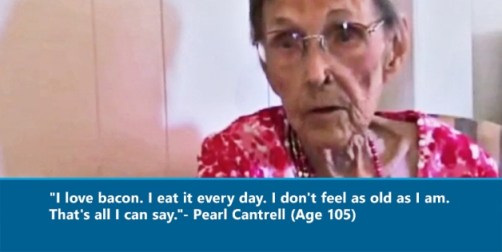
How to live to 100: advice for life and living longer

At first it seems like the typical “there’s no golden rule to getting old” article, right?

Some of the supercentenarian advice is sweet, some is a bit strange and a couple are everything we’ve always hoped for. Who knew bacon and whiskey were the fountain of youth?

more photos via How to live to 100: advice for life and living longer.

Some appear silly, and some fly in the face of recent studies (for example, married people tend to be healthier, and ergo live longer).

But if you try to generalize the advice, much of it boils down to one thing: have fun, be playful, don’t stress out too much about the details.

If you want to live to be 100, you have to give yourself space to play!

behavior · children · creativity · culture · happiness · health · play

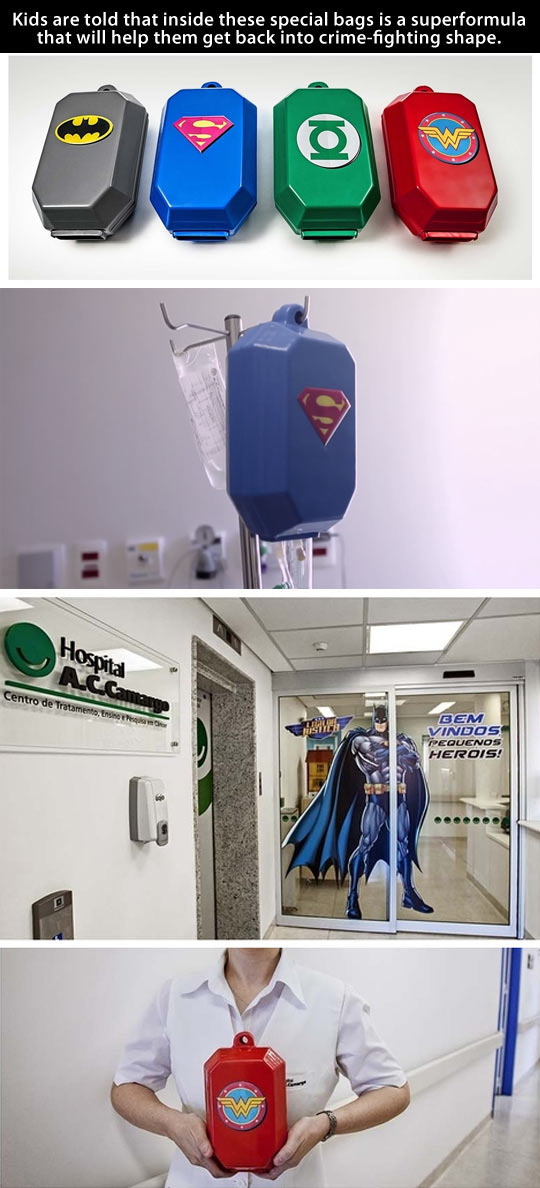
Cool doctors doing what’s right… – The Meta Picture

Hospitals can be scary places, for grown ups and for kids. This is a great way to make hospitals a little less intimidating, and add some silliness to an otherwise boring, and possibly painful, medical procedure.

Originally from Cool doctors doing what’s right… – The Meta Picture.

anthropology · behavior · community · happiness · health

Americans’ happiness score – latimes.com

Life is good.
Americans are in the top 10 for happy nations. (Photo credit: Wikipedia)

We’re a lot happier as a nation than I was otherwise led to believe. Um, go us?

We’re No. 6! That’s according to new data from the Organization of Economic Cooperation and Development , which on Tuesday released results of a survey measuring quality of life in 36 industrialized nations.

For the last three years, the Paris-based outfit has weighed 11 criteria, including housing, income, jobs, environment, safety and work-life balance. For the third year in a row, Australia was the big winner, thanks in large part to an economy that managed to avoid the global recession of the last decade.

The U.S. hobbled across the finish line in sixth place, behind Sweden, Canada, Norway and Switzerland, which ranked second through fifth, respectively.

more via Daum: Americans’ happiness score – latimes.com.

But seriously (ha ha), I feel like happiness scoring, as subjective as it is, is a good way of measuring our overall health and well being. It also indicates we’re doing okay and getting time in our lives for all the important stuff like family and time to recreate. I like Bhutan’s use of grass national happiness as a major marker for the nation’s well-being (lovely country, BTW, just be prepared for an exciting landing).

happiness · health · play · youtube

Prancercising, Inspired by Play

Everyone’s been having fun learning about Prancercise, created by Joanna Rohrback. Sure it’s a little silly, but that’s sort of the point. Joanna even says that the workout is inspired by horses prancing, and should be motivated by fun:

Prancercise® is defined as: A springy, rhythmic way of moving forward, similar to a horse’s gait and ideally induced by elation. It’s about Self-Expression. It’s about Non-violence. It’s about Conservation.

Exercise doesn’t need to be grueling and difficult, it can be fun. People stick with exercise programs longer if it’s fun, and exercise has been shown to be more effective when it’s fun.

So while blogs like the Huffington Post are poking fun at Prancercising, in a way it’s a great reminder to have fun with your exercise routine.

children · environment · happiness · hugs · Nature · neuroscience · psychology

Tree Hugging Now Scientifically Validated – Uplift

hugging trees can be good for us

The term “tree hugger” has been applied to people viewed as uber-liberal or too idealistic, however… “it has been recently scientifically validated that hugging trees is actually good for you.”

Research has shown that you don’t even have to touch a tree to get better, you just need to be within its vicinity has a beneficial effect.

In a recently published book, Blinded by Science, the author Matthew Silverstone, proves scientifically that trees do in fact improve many health issues such as Attention Deficit Hyperactivity Disorder (ADHD), concentration levels, reaction times, depression and other forms of mental illness. He even points to research indicating a tree’s ability to alleviate headaches in humans seeking relief by communing with trees.

The author points to a number of studies that have shown that children show significant psychological and physiological improvement in terms of their health and well being when they interact with plants and trees. Specifically, the research indicates that children function better cognitively and emotionally in green environments and have more creative play in green areas. Also, he quotes a major public health report that investigated the association between green spaces and mental health concluded that “access to nature can significantly contribute to our mental capital and wellbeing”.

full article via Tree Hugging Now Scientifically Validated – Uplift.

I”m sorry the article only looked at research in children, as more and more findings are showing the same improvements in adults from interacting and playing with nature, and even results that some would term “nature deprivation” or as Richard Louv calls it “Nature Deficit Disorder.”

One of my favorite little trivia facts is that there are microbes in soil that induce positive emotions in people, so digging in the dirt actually makes you happier. Plus helps you learn and concentrate more.

Hospital patients with a view of a tree or greenery from their room window were found to heal faster.


Those kinds of benefits are for everybody!

While I do feel like it’s important to make sure children get enough outdoor time, I continually want to drive home the message that not only should you encourage children to go outside and play, but adults too. We ALL need fresh air and nature and flowers and bugs and dirt.
brain · children · creativity · neuroscience

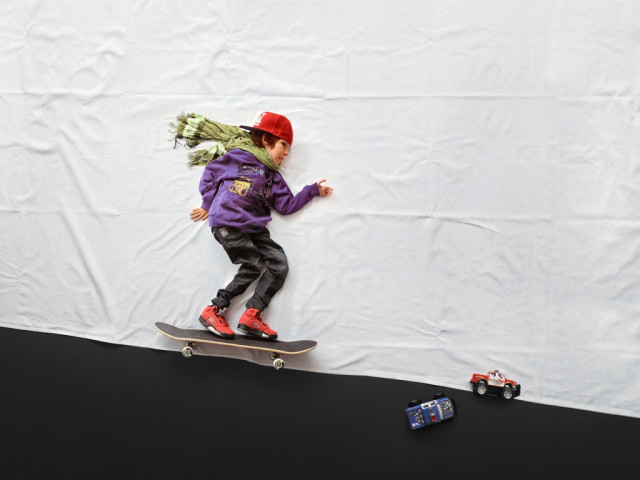
Photographer Takes a Boy with Muscular Dystrophy on an Imaginary Adventure | Colossal

Undoubtedly inspired by Mila’s Daydreams series, an awesome interpretation:

Slovenia-based photographer Matej Peljhan recently teamed up with a 12-year-named Luka who suffers from muscular dystrophy, to create a wildly imaginative series of photos depicting the boy doing things he is simply unable to do because of his degenerative condition. While he can still use his fingers to drive a wheelchair and to draw, things like skateboarding and swimming are simply not possible.

more via Photographer Takes a Boy with Muscular Dystrophy on an Imaginary Adventure | Colossal.

behavior · children

Playborhoods: Why Children Playing Street Games Is the Best Measure of a Healthy Neighborhood | Education on GOOD

English: Children playing in snow
Children playing outside in the snow (Photo credit: Wikipedia)

This weekend, take a look around to see if you see any kids running or biking around in your neighborhood. Children playing, or not playing, can be seen as a litmus test for overall neighborhood health. Yes physical health, but also the cultural and economic health.

Neighborhoods are suffering these days largely because children are absent. Instead of playing in their neighborhoods, they’re either staring at screens eight hours a day, according to a Kaiser Family Foundation study!, doing lots of homework, or attending numerous adult-led activities outside their neighborhoods.How are the children faring with these differently structured lives?They’re suffering, too, perhaps even worse. Pretty much every pediatrician and child psychologist will tell you that children need to play outside, every day. Without frequent outdoor play, children have been getting fatter, sadder, and less socially adept, and all that homework isn’t making them any smarter.

Children’s immediate neighborhoods—right on their block, outside their front door—are the ideal places for them to play outside. These are the safest, most comfortable places for children outside their homes because they can stay within earshot of their parents, and they can also get to know dozens of neighbors.

via Playborhoods: Why Children Playing Street Games Is the Best Measure of a Healthy Neighborhood | Education on GOOD.

architecture · design · environment · happiness · health · mental health · Nature · psychology

Dennis Bracale’s Garden Compositions

Creating organic, peaceful spaces can be arguably one of the most powerful, important acts for human wellness, both physically and mentally. These gardens are also peaceful just to look at, even if you can’t experience them firsthand.

Unknown's avatar

Creating organic, peaceful spaces can be arguably one of the most powerful, important acts for human wellness, both physically and mentally. These gardens are also peaceful just to look at, even if you can’t experience them firsthand.

View original post

behavior · brain · disease · neuroscience · play · psychology

A More Resilient Species – Boing Boing

brains!
brains! (Photo credit: cloois)

Happy Friday! After a looooong work week, here’s a little more incentive to make sure you get some time to play this weekend.

[Okay, fine, for all of you who are too “busy” to read the article, here’s a basic breakdown: you need free play in order to recover from stress, and that if we don’t we’re basically setting ourselves up for early brain deterioration and death.

Now will you take a second to read the article?] 🙂

“A playful brain is a more adaptive brain,” writes ethologist Sergio Pellis in The Playful Brain: Venturing to the Limits of Neuroscience. In his studies, he found that play-deprived rats fared worse in stressful situations.

In our own world filled with challenges ranging from cyber-warfare to infrastructure failure, could self-directed play be the best way to prepare ourselves to face them?

In self-directed play, one structures and drives one’s own play. Self-directed play is experiential, voluntary, and guided by one’s curiosity. This is different from play that is guided by an adult or otherwise externally directed.

more via A More Resilient Species – Boing Boing.

anthropology · behavior · community · culture · environment · happiness · health · mental health

OpenIDEO – How might we create healthy communities within and beyond the workplace?

Digicorp workplace
OpenIDEO asks how do we promote wellness in the workplace. (Photo credit: Wikipedia)

Wow, OpenIDEO is on a role lately with their challenges that get my creative juices rolling and my passions up, in a good way! This latest challenge is about wellness in the workplace:

Together with Bupa and the International Diabetes Federation, we’re asking our global community to help us explore how people can best be supported in the workplace to make positive changes to their health and wellness – and what skills and tools are needed to pass these positive changes onto their networks of co-workers, family and friends.

via OpenIDEO – How might we create healthy communities within and beyond the workplace?.

As the Chair of the Wellness Committee at my job for just under a year, we tried out a lot of different wellness incentives, some with better results than others. I feel very passionately about offices promoting and encouraging wellness; we spend the majority of our waking lives there, it’s cheaper in the long run for companies to have healthy and happy workers, and it promotes productivity and dedication from employees.

What are your ideas? Add them to the inspiration. I’ll have to share some of my ideas for this challenge on the blog, as well as my ideas from the previous OpenIDEO challenge I mentioned, which is currently in the concepting phase.