community · creativity · culture · play · Social

Play-Based KickStarter: Denver’s Immersive Street Arcade by OhHeckYeah

A long exposure photograph (2.5 seconds) of th...
Taking the arcade experience outdoors. (Photo credit: Wikipedia)

Coming soon(ish) to a street near you (if you live in Colorado):

OHY will transform a Downtown Denver street into an interactive arcade using LED screens, projections, custom games and street art.

BRINGING PLAY BACK TO THE STREET: Get ready! This summer – June & July, 2014 – Champa Street in Denver, from 14th Street to the 16th Street Mall, will be transformed into a street arcade like you’ve never seen. This isn’t your father’s old-school arcade. Powered through a combination of the Denver Theatre District’s LED screens, building projections, street art, social media and a website, this immersive arcade is going to be a gaming experience for all!

ON THE WEB: The public will be able to interact with video game characters through personalized Twitter profiles powered by local improv comedians from Bovine Metropolis.

ON THE STREET: Once you’re on Champa Street, you’ll feel it – the pulse of the arcade bringing downtown to life. To play at the arcade is to be immersed in each game. The entire two city blocks will be full of street art and custom structures that will transport players to a modern game world. The enormity and excitement is going to blow people away.

GAMES: Built by the Denver-based, award-winning creative team of Legwork Studio and Mode Set, the games will allow players to use a smart phone and their body as controllers while playing on the huge Denver Theater District LED screens, as well as projections on buildings. Microsoft Kinect devices will be utilized so participants feel like they’ve jumped right into the video games.

more via OhHeckYeah: Denver’s Immersive Street Arcade by Brian Corrigan — Kickstarter.

This sounds like a really great way to get people playing together in public spaces.

(Word to the wise, if you have a play-based Kickstarter event, toy, program, or other play-related thing you are trying to get attention for, let me know about it as it is pretty much guaranteed to get some blog time.)

behavior · creativity · education · health · music · play · school

Remembering to play even as the sun goes away

Happy Friday!

Now that we’re officially into fall, with the weather getting colder and wetter by the day, and all back to school or indoors,it’s important to remind ourselves of opportunities to get out and play.

Idea is Free Museum and Park Day tomorrow; September 28: over 1500 museums, and national and state parks, are opening up their doors to the public for free!

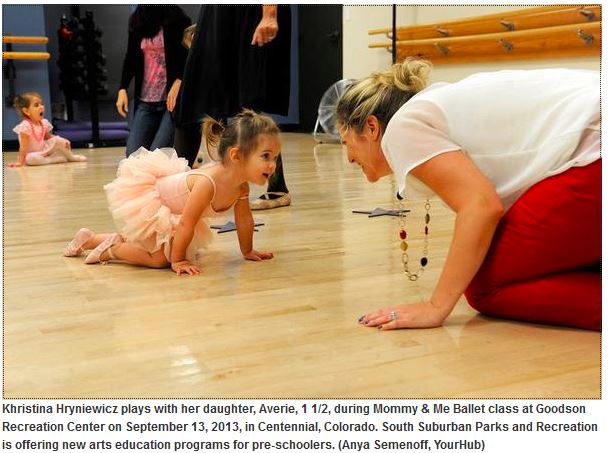
For some more structured play, there are great art, dance, and play-based programs for little and big kids. One just opened up in Colorado, and definitely understands the value of play:

dance

The Curious About Art program is just one of many preschool arts education programs the South Suburban Parks and Recreation District offers throughout the year. It’s not so much about the final product the kids create, but the journey and experiencing sensory exploration with their parents.

“It will probably look like something you expect an 18-month-old to make, something unrecognizable but still pretty wonderful,” said Vickie Willis, culture and enrichment supervisor for South Suburban.

“Everyone needs to play,” Willis said. “It makes us feel good, it unleashes possibilities in our brain, it makes us think better.”

Aside from encouraging play, the purpose of the classes is to prepare kids for a school environment by getting them socialized to being around other children, as well as developing motor skills.

“It’s to develop the motor skills, and the little ones just want to explore their world so music and art is a good way of doing that,” said Janice Schindler, the culture and enrichment coordinator at Goodson Recreation Center

more via Arts education programs in Centennial open possibilities – The Denver Post.

Seattle has a newly-minted hip-hop program for little kids that also focuses on the value of play and silliness in education:

Mini BREAKS is the original hip-hop dance class (breakin’ or “break dance”) for toddlers and preschoolers.

In this unique class, young students will have fun while they exercise, express themselves, think creatively, build self-esteem, practice respect, learn discipline and make new friends!

Outside of a dance studio, hip-hop culture (including breakin’) is not taught through choreography or 8-counts but more intuitively through interactive demonstration. Mini BREAKS focuses on encouraging young children to be creative and courageous – to come up with their own ideas and be able to express themselves by sharing those ideas with others. All children are artists – Mini BREAKS helps them remain artists as they grow up!

more via: Seattle’s Massive Monkees Open Hip-Hop Dance Studio

So remember to play and wiggle even as the weather gets cold and dark.

anthropology · community · culture · environment · play · Social

Happy Park(ing) Day 2013!

Parking Day, Pioneer Square Seattle
Participants of Parking Day setting up a game in Pioneer Square, Seattle. Photo by author.

Today is PARK(ing) Day, “an annual worldwide event where artists, designers and citizens transform metered parking spots into temporary public parks.”

Every year I see some amazing games, maps, and other cool uses of parking spaces set up all over Seattle.

Go out and explore the different parklets!

more via Park(ing) Day 2013 | PARK(ing) Day 2013 is Friday, September 20th.


Side View on Park(ing) Day aktivity by Green C...
Side View on Park(ing) Day aktivity by Green City in Munich. Two Parking spaces were transformed into a small park. (Photo credit: Wikipedia)
behavior · children · creativity · family · play

Goodbye screen time, hello awesome kid | Offbeat Families

A great example of how letting your kid have free play, and encouraging it over screen time, can have wiiiiide reaching positive consequences.

Four months ago, I told my husband that we needed to cut out all screen time during the week. While he understood the merits of the proposal, he balked at the logistics, telling me that there was no way that he could handle morning routine alone without television (to accommodate preschool hours we stagger our work schedules, with one parent leaving an hour or two before the other). I disagreed, and, being the bull-headed lady that I am, waited him out until he agreed to a screen-free weekday existence on a trial basis.

To prepare for the transition, I devised a series of “Mystery Boxes” for each day of the week. These boxes were stacked on the table each morning, and Uli got to choose one for each morning. Inside, I placed a project or special toy that would keep him occupied while Dad showered and fixed breakfast. One morning it was a Spider-Man puzzle, the next colored pencils and pictures I’d drawn for him to color. All of the toys or projects were sourced from forgotten objects in his toy box or from our craft and art supplies. His favorite Mystery Box item, though, was an old digital camera that he used to snap the most unflattering photos that have ever existed of myself and his father.

We only used the Mystery Boxes for about two weeks, and after that Uli was able to play in a more self-directed and creative manner than he ever was able to when he had weekday screen time. We were actually shocked by how quickly he adjusted to the no-tv-during-the-week proclamation. His teachers at school also noticed a difference, telling us that Uli was more engaged than he had been previously — a side benefit we hadn’t expected.

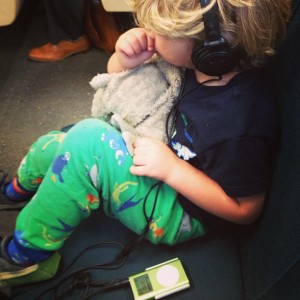
And in August, Uli and I took our first long plane trip without the iPad — including one fourteen-hour travel day. His dad had loaded a nine-year-old iPod with Uli’s favorite songs, which amused him for most of the plane trip, and in the airport, he did relay races in the terminal. It was a really successful experiment, and we have no plans to use the iPad again for travel.

read more about Uli’s transition via Goodbye screen time, hello awesome kid | Offbeat Families.

What have you done to encourage free play for your kids or yourself? Share in the comments below.

creativity · design · mental health · play

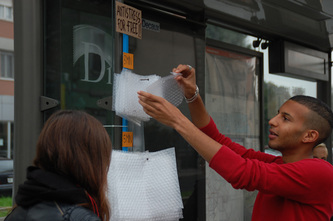
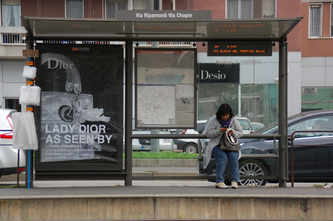
antistressforfree: Street Art by Fra Biancoshock

What a thoughtful, and playful, piece of public street art.

antistressforfree – fra.biancoshock.

behavior · children · creativity · emotion · health · play · psychology

Tiny superheroes combat big challenges with capes made by Seattle mom | Local News | The Seattle Times

Robyn Rosenberger makes capes for only the fiercest of fighters.

Have you ever had days where you felt you had super powers, or felt you needed them? One woman in Seattle is making that a reality for over 1,700 kids with illnesses and disabilities in 50 states and 14 countries, with a new workshop opening to help out more kids:


Gabby has epilepsy and is completely dependent: She cannot talk, walk or eat on her own. But she is a tiny superhero — her superpowers include perseverance, courage and strength — and she has the cape to prove it. A purple number, with a blue letter “G” hand-sewn on by Robyn Rosenberger.

Rosenberger is the powerhouse behind TinySuperheroes, which makes capes as a form of empowerment. “Our mission is to empower these kids to feel as extraordinary as we see they are,” Rosenberger explained.


via Tiny superheroes combat big challenges with capes made by Seattle mom | Local News | The Seattle Times.


On the surface this may seem a little fluffy, but it exemplifies the power of play, particularly imaginary play and pretending.  First, it gives the kids a chance to take a break from their illness and maybe laugh a little, which is good for everyone.  Second, the crazy thing is researchers are finding that by pretending to be big, strong, dominant, and super-hero-esque, it can train your body to actually be more strong, dominant, and super-hero-esque. Even healthy kids can feel pretty powerless, so by imagining what it feels like to be strong and healthy it can help their minds and bodies map out what that might look and feel like and maybe even help along the road the recovery.


So by giving these kids superhero capes, these volunteers are in fact giving these kids some pretty strong medicine.


Now I want a cape, or at least a magic wand.

If you are interested in helping out, visit the Tiny Superheroes site.


community · creativity · environment · play

Introducing Park-A-Park: Vancouver’s Recently Launched Mobile Parklet | Spacing Vancouver

Have you ever wandered into a neighborhood or parking lot and thought, “Wow, this space could use a nice mini-park, or even a bench.” Well, here you go!

A colorful banner pasted alongside the bin’s rough exterior cheerfully announces ‘Park-A-Park’, the mobile parklet that launched on Vancouver’s Commercial Drive at the tail end of July. The bin reaches just over three feet high, its inner walls are ringed with wooden bench seating, and planters and tables mingle inside to offer a charming, yet functional environment. The unit is capped by a shade-providing umbrella, and one end of the bin lies open, like a drawbridge, coyly beckoning passersby to enter.

A partnership between Emily Carr University of Art + Design and local Urban Interventionist Julien Thomas, Park-A-Park has been designed to transform an industrial disposal bin into an aesthetic mobile park that can be transported, parked, and enjoyed throughout the city. The unit is a component of Emily Carr’s chART project and aims to support public art and community engagement through creativity and innovation.

more via Introducing Park-A-Park: Vancouver’s Recently Launched Mobile Parklet | Spacing Vancouver.

For more information, you can also visit: www.parkapark.com.

This is reminiscent of PARK(ing) Days in the U.S. where people take over parking spaces in cities and turn them into mini-parks.

Where have you seen mini-parks, or think there should be one? Leave your ideas in the comments below.

behavior · brain · creativity · disease · happiness · mental health · Nature · play · psychology

10 Simple Things You Can Do Today That Will Make You Happier, Backed By Science – The Buffer Blog

I think I’ve talked about ALL of these tips individually on the blog before, so I’m thrilled that somebody combined them into a “Top 10 With Science!” post:


Happiness is so interesting, because we all have different ideas about what it is and how to get it. It’s also no surprise that it’s the Nr.1 value for Buffer’s culture, if you see our slidedeck about it. So naturally we are obsessed with it.

I would love to be happier, as I’m sure most people would, so I thought it would be interesting to find some ways to become a happier person that are actually backed up by science. Here are ten of the best ones I found.

1. Exercise More (7 minutes might be enough)

2. Sleep More

read all 10 Simple Things You Can Do Today That Will Make You Happier, Backed By Science – The Buffer Blog.

I particularly like suggestion #5.

brain · children · creativity · education · learning · play · school

Games Without Frontiers: Games, simulations, and the new school year.

Tic tac toe. Español: Ta te ti Polski: Kółko i...
Tic tac toe. (Photo credit: Wikipedia)

For teachers, it’s time to start thinking about Back-to-School planning. Thankfully this teacher’s got an awesome plan to teach world politics:

Ask any student the following question; would you prefer to start the year with a lecture or playing a game? I’d wager the that nearly all learners would choose to spend their time with the game. As a younger student, I recall only being able to play in class once all of the curriculum was “done”, usually at the end of the school year. Of course, we know that learners of all stripes acquire, apply, synthesize, and communicate knowledge through participation in games and simulations. As a result, there’s a strong case to be made to embed complex critical thinking simulations and games right from the outset of the school year.

I’m currently putting the final touches on all of my lesson plans for the first term of both years of IB Global Politics. Here’s a partial list of the games and simulations the students and I will be playing in the first thirteen weeks:

Against All Odds; Fish Forever; Half the Sky; Malaria in Wanzuzu; Model United Nations; Pandemic; Prisoner’s Dilemma; Rock-Paper-Scissors-Lizard-Spock; Rushing River Cleanup; Survival; Tic-Tac-Toe; The Walking Dead

To say that I’m completely nerded out by all of this is an understatement; I can’t (hardly) wait for school to start on the 26th!

via Games Without Frontiers: Games, simulations, and the new school year.

I’m looking forward to seeing how the year unfolds for this class! If the teacher is excited, that’s definitely a good sign.

behavior · brain · disease · happiness · health · play

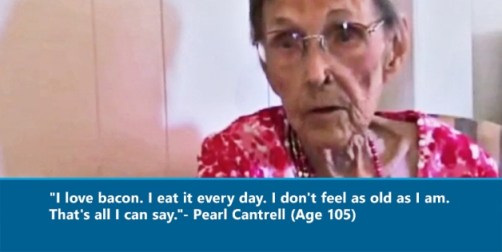
How to live to 100: advice for life and living longer

At first it seems like the typical “there’s no golden rule to getting old” article, right?

Some of the supercentenarian advice is sweet, some is a bit strange and a couple are everything we’ve always hoped for. Who knew bacon and whiskey were the fountain of youth?

more photos via How to live to 100: advice for life and living longer.

Some appear silly, and some fly in the face of recent studies (for example, married people tend to be healthier, and ergo live longer).

But if you try to generalize the advice, much of it boils down to one thing: have fun, be playful, don’t stress out too much about the details.

If you want to live to be 100, you have to give yourself space to play!