architecture · community · environment · Nature

It makes sense since several studies have found nature in general to be calming and correlates with an increase in concentration.

Jared Green's avatarTHE DIRT

benefits
What many landscape architects and designers know intuitively is increasingly becoming proven scientifically. In fact, more and more exciting research appears showing the cognitive and mental health benefits of being out in nature — in places like parks, or even just meandering down leafy streets. According to The New York Times, a new study from Scotland shows that “brain fatigue” can be eased by simply walking a half-mile through a park.

In The New York Times’ Well blog, Gretchen Reynolds writes that “scientists have known for some time that the human brain’s ability to stay calm and focused is limited and can be overwhelmed by the constant noise and hectic, jangling demands of city living, sometimes resulting in a condition informally known as brain fatigue.”

Green spaces help alleviate brain fatigue because they are “calming” and require “less of our so-called directed mental attention than busy, urban streets…

View original post 816 more words

community · Nature

Grown in Detroit

Veggies can be a powerful tool to fight obesity, food deserts, and create beautification and community engagement. This blog post is a great example…

Unknown's avatar

Veggies can be a powerful tool to fight obesity, food deserts, and create beautification and community engagement. This blog post is a great example…

View original post

behavior · creativity · environment · Nature

A Return to the Earth

This is a great exercise in demonstrating a connection to one’s environment, plus it’s fun! And a great example of how you’re never too old to be playful and maybe a little silly.

Unknown's avatar

This is a great exercise in demonstrating a connection to one’s environment, plus it’s fun! And a great example of how you’re never too old to be playful and maybe a little silly.

View original post

community · design · environment · happiness · Nature

In Philadelphia, More Green Innovations

A great example of re-energizing public space and making it more green and friendly.

Unknown's avatar

A great example of re-energizing public space and making it more green and friendly.

View original post

architecture · design · environment · happiness · health · mental health · Nature · psychology

Dennis Bracale’s Garden Compositions

Creating organic, peaceful spaces can be arguably one of the most powerful, important acts for human wellness, both physically and mentally. These gardens are also peaceful just to look at, even if you can’t experience them firsthand.

Unknown's avatar

Creating organic, peaceful spaces can be arguably one of the most powerful, important acts for human wellness, both physically and mentally. These gardens are also peaceful just to look at, even if you can’t experience them firsthand.

View original post

behavior · community · environment · happiness · health · Nature

Ron Finley: A guerilla gardener in South Central LA | Video on TED.com

Happy Spring Forward. Time to start planting seeds and playing in the dirt. In honor of getting dirty and creative, here’s a a TED talk from Ron Finley, guerrilla gardener.

Ron Finley plants vegetable gardens in South Central LA — in abandoned lots, traffic medians, along the curbs. Why? For fun, for defiance, for beauty and to offer some alternative to fast food in a community where “the drive-thrus are killing more people than the drive-bys.”Ron Finley grows a nourishing food culture in South Central L.A.’s food desert by planting the seeds and tools for healthy eating.

Best quote ever: Gardening is the most therapeutic & defiant act you can do, especially in the inner city. Plus you get strawberries.”

via Ron Finley: A guerilla gardener in South Central LA | Video on TED.com.

behavior · community · Nature · play

Orcas at Play

This is amazing!

The endangered Southern Resident Killer Whales visited Vashon and Maury Islands on December 3, 2012, searching for salmon. As they passed Point Robinson, they burst into playful antics that have to be seen to be believed: cartwheels, breaches, tail slaps, spyhops, and beautiful synchronized swimming in their tightly knit family groups.

architecture · children · design · environment · happiness · Nature · play

The Best Playground Is The One Nature Provided | Co.Exist: World changing ideas and innovation

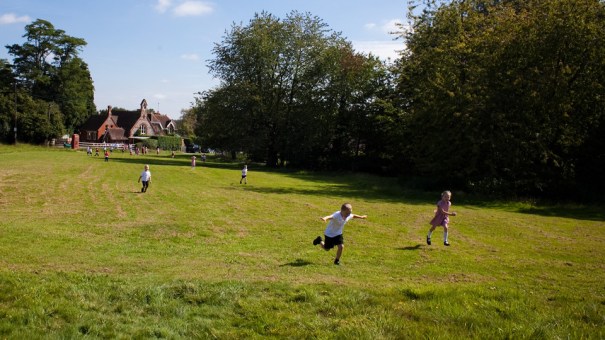
children lawn running

A recent article in the online magazine Co.EXIST discussed a study that found children benefit from being in natural environments, even if the environment is designed to appear natural but is actually human-made:

Dawn Coe, an assistant professor in the Department of kinesiology, recreation, and sport studies at the University of Tennessee spent time observing the behavior and time children spent playing on a local playground. After playground renovations added a gazebo, slides, trees, a creek, and a natural landscape of rocks, flowers and logs, Coe returned a year later to observe differences. Working with a statistician, Coe found children spent twice as much time playing in the natural landscape, and were less sedentary after the renovation and more active.“Natural playscapes appear to be a viable alternative to traditional playgrounds for school and community settings,” said Coe in a university statement. “Future studies should look at these changes long-term as well as the nature of the children’s play.”

via The Best Playground Is The One Nature Provided | Co.Exist: World changing ideas and innovation.

I attended a conference a couple of years ago where playground designers were reporting discovering the exact same thing – if you give a kid a pile of dirt and tree bark to play with and a bucket of water, they will have WAY more fun, play more, and learn some things as well.

This shouldn’t come as a surprise based on previous research on us humans:

For decades, scientists have reported our species exhibits a consistent, if not quite understood, response to spending time around nature: it boosts our mental and physical well being.

The scattering of findings have held in hospital beds, public housing, and Japanese forests. A 2001 study of public housing found the mere presence of trees and grass reduced reduced reported aggression and violence. Another showed people shown a stressful movie recovered to a normal state–as measured by metrics such as heart rate, muscle tension, and blood pressure–“faster and more complete[ly]” when exposed to natural rather than urban environments.

However, a lot of cities and schools are reluctant to install these kinds of playgrounds since they are considered “untested” or approved by several school or city boards. Thankfully, according to the article, cities are beginning to adopt and install these types of playgrounds:

“Natural playscapes are part of a growing trend appearing in cities across the US including Boston, Phoenix, Chicago, New York, Auburn and others.”

I hope to see more of these pop up around major cities. Do you have a natural playscape near your home? Tell us about it in the comments below.

creativity · environment · learning · Nature · play

Create your own science station

When I was a kid I loved to collect beach glass, shells, pretty rocks, leaves, feathers, or whatever cool stuff I found. I would take them home and want to display them somewhere to admire and study them further. My mom was gracious enough to give me vases to hold the feathers, and let me keep my rock collection on top of our wooden fence (the brace that goes along the top) for years. Eventually I had quite the collection of feathers or rocks or whatever grouping I had come up with. It was not only educational, it was just fun and inspired a lot of creativity, either by arranging the items in new ways or imagining where they came from.

I think most kids really like to do this kind of treasure hunting, and in fact I don’t think it goes away as grown-ups; we just find reasons to stop collecting. Some of them are legitimate, like the fact that it’s illegal to remove items from state parks and beaches, even teeny tiny shells. Some grown-ups I know also replace this urge of hunting for feathers by going to yard sales or reused building material stores like the ReStore (hey, I’m guilty as charged). BUT, for the places it IS legal, and for a free version of this activity, I would encourage people to not only continue collecting, but to also make a space in your home specifically dedicated to your recent finds. For one thing, it’s fun, but it is also a great way to learn more about your environment, even just your own backyard. You may notice new colors or shapes and be inspired to draw the feathers you find, or explore the geology of a strange rock.

Mary Mullikan at Tree Life Coaching has created a “Found” table, or officially known as a Home Science Station, for her child, but I think this is a great idea for people of all ages:

I made the very easy one-word banner from Handmade Home and within an hour had the whole bite-size Science Station assembled.  A few garage sale items re-purposed (like the little wooden board which is actually an old game piece), some family heirloom pottery, a few sprigs of lavender from our driveway and some mint from our herb garden, some of the rocks Orlis has been bringing indoors, a handful of sand and a postcard procured from our recent trip to the coast, and a flower in a jelly jar, Orlis’ collection basket, and a beloved piece of feedsack fabric to provide a backdrop.  All of it was in the house or just outside, and now it’s here, displayed, for further discovery.

Oh, I love this little table already, and I know, as time passes it will change and change a hundred times as the seasons do and so do our fascinations with the great big world.  I know we’ll easily find many things to pile and gather in the shelf below, and I know the living things will die and be replaced with other tangible items of interest.  For now, it’s simple and easy, this little science station — the perfect place for a toddler to bring in his outdoor treasures for more handling and organizing, and deeper relationship.

I am excited to see this idea get picked up by different people and in different ways, and to see how easy it can be. Whether you have some wall space, a shelf, or even a window sill, it can be very fun and insightful to create a “science station” of your own to inspire you.

Have a science/creativity station already set up in your home? Send me a picture of it, or tell me about it in the comments below.
anthropology · behavior · community · design · environment · happiness · mental health · Nature · psychology

Animals get their own trail systems at Philadelphia Zoo

Lonely Monkey Ape at Zoo
Soon this guy will be able to take his own self-guided tours of Philadelphia zoo. (Photo credit: epSos.de)

I am so excited about this I’m practically jumping out my seat to tell people. I first read about it in USA Today; animals are getting to wander outside of their exhibits, share spaces with other animals, and over all just chill around the zoo. Yup, that’s right:

The Philadelphia Zoo on Thursday opens the first leg of an ambitious enclosed trail system designed to allow large animals such as great apes, bears and big cats to roam throughout the zoo. It will give them access to one another’s habitats in a kind of time-share arrangement and offer visitors a closer look at wild animals behaving like wild animals.

Other U.S. zoos have created paths between exhibits, mixed habitats, elevated paths or rope swings for apes.

“This is an emerging trend” among zoos accredited by the Association of Zoos & Aquariums, says the group’s senior vice president for external affairs, Steve Feldman. “Great animal care means providing for animals’ physical and psychological welfare. These pathways and rotations really allow them that kind of stimulation.”

The Philadelphia Zoo’s program is the first to encompass the entire zoo. “This campus-wide effort to build this trail system is unique,” Feldman says. “It’s innovative and is really taking that trend to the next level.”

Because it’s the first effort of its kind, “we don’t have a road map to see how others have done it,” says Vik Dewan, the Philadelphia Zoo’s chief executive officer. The system “puts animal well-being first and foremost,” he says, and gives visitors “an experience here, that when combined with other experiences, paints the bigger picture of how they could be more effective stewards of the world.”

The critters will have to “timeshare” so the orangutans won’t be hanging out with the brown bears. In fact the bears might not get a chance to use the pathways until winter when it’s too cold for the primates. But that said, it’s sure to be a boon for the animals, as well as for the people. The zookeepers already report seeing a positive result from a similar vine system in their primate exhibit.

The article mentions other zoos starting to move in this direction. But which ones, and what exactly are they up to? I’m curious to learn more. Any hints? Leave them in the comments below.

animals given access to the new trail are expected to be more active and
to benefit from the stimulation of being able to see visitors and other
animals from a new perspective.