behavior · brain · creativity · disease · happiness · mental health · Nature · play · psychology

10 Simple Things You Can Do Today That Will Make You Happier, Backed By Science – The Buffer Blog

I think I’ve talked about ALL of these tips individually on the blog before, so I’m thrilled that somebody combined them into a “Top 10 With Science!” post:


Happiness is so interesting, because we all have different ideas about what it is and how to get it. It’s also no surprise that it’s the Nr.1 value for Buffer’s culture, if you see our slidedeck about it. So naturally we are obsessed with it.

I would love to be happier, as I’m sure most people would, so I thought it would be interesting to find some ways to become a happier person that are actually backed up by science. Here are ten of the best ones I found.

1. Exercise More (7 minutes might be enough)

2. Sleep More

read all 10 Simple Things You Can Do Today That Will Make You Happier, Backed By Science – The Buffer Blog.

I particularly like suggestion #5.

architecture · creativity · Nature

DIY Vertical Gardening

Make your space a little greener, using recycled materials.

Unknown's avatarTHE DIRT

garden
Who knew? You can turn those leftover soda bottles into a vertical garden with some supplies and a bit of crafting skills. This is Do-It-Yourself (DIY) vertical gardening.

This concept come to us from Brazilian design firm Rosenbaum, as part of their partnership with TV producer Luciano Huck. According to This Is Colossal, this is part of a series where “teams went through dozens of Brazilian homes” in an attempt to execute “dramatic makeovers of interior and exterior spaces.”

garden2
This urban garden, which was featured in their 48th home in the series, was such a hit that Rosenbaum released these instructions so anyone create their own. The instructions are in Portuguese, so here is a version translated into English:

Materials

•    2-liter plastic bottle, empty and clean
•    Scissors
•    Clothesline rope, twine, or wire
•    Washers (two per bottle if rope or wire is chosen)
•    Dirt
•  …

View original post 154 more words

behavior · community · happiness · Nature

The tent is too damn high: Camping comes to the city

Using some creativity, playfulness, and friends to bring “nature” and community to the city? Yes, please!

design · Mental · mental health · Nature

Serious New Funding for Innovative Research on Restorative Urban Nature

So many studies have found natural spaces to be beneficial for healing and mental health, so it is crucial as we become more urbanized to allow space for nature to sneak in.

Unknown's avatar

So many studies have found natural spaces to be beneficial for healing and mental health, so it is crucial as we become more urbanized to allow space for nature to sneak in.

View original post

community · creativity · environment · Nature

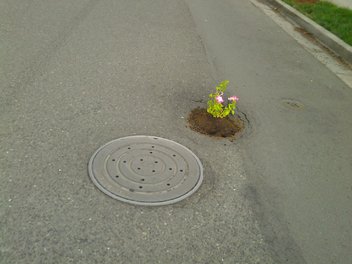
Portland Goes Green On Potholes | kgw.com

Portland Goes Green On Potholes | kgw.com Portland

Ah, Portland, specializing in making spaces more friendly and playful in somewhat unique ways:

This flower mysteriously appeared in a not so friendly pothole.The pothole had been reeking havoc on many a car tire and bike riders were terrified of it. But alas the flower has come to the rescue and now Mr Pothole is not intimidating at all as Ms Flower brings a smile too many.

via Portland Goes Green On Potholes | kgw.com Portland.

autism · behavior · brain · children · learning · mental health · Nature · play · school

Outdoor Play Helps Improve Autistic Symptoms

Reposting this from a fantastic blog Free Range Kids, run by Lenore Skenazy, a huge advocate for letting children be children and just playing, especially outdoors:

Readers — In our desperation to create “smarter” kids, we have practically pinned them to their desks. Now educators are realizing this may be just the opposite of what is best for kids — including those with special needs, as Andrea Gordon writes in Toronto’s TheStar.com (a paper run by my favorite editor-in-chief from back when he and I were at the NY Daily News, Michael Cooke). – L.

It was a crisp March day outside Blaydon Public School when teachers discovered that 4-year-old Alex Wong could spell his name.There were no pencils or paper in sight. Everyone was bundled in winter jackets. Alex, who has autism, was in the outdoor classroom where his special-needs class played and explored for at least an hour every day, alongside 25 kids from the mainstream kindergarten class.

Teacher Sue Cooper noticed Alex march over to a pile of wood, put three sticks in a small wheelbarrow and push it to a spot on the pavement. One by one, he placed the sticks on the ground, forming the letter A. He made three more trips and came back with sticks to make three more letters, which he placed in a row: L, E and X.

Cooper’s jaw dropped. The teachers ran for a camera.

Alex is non-verbal and for a long time, his only interactions had been to throw things or hit. But in the fresh air, day after day, something started to change. Over several months Alex had watched the other children making structures. And that March morning, he was ready to take his turn.

The teachers say his is one example of how daily outdoor time is changing the way their young students — including those autism and other special needs — learn and behave.

Full post.

Obviously more research needs to be done, but there has been strong correlations drawn between outdoor time and decreasing of ADD and dementia symptoms, so it makes sense that putting humans in our natural surroundings would also help other mental disabilities and ailments.

There are a growing number of outdoor preschools, and I’d argue that there should be more outdoor elementary and even middle schools.

community · culture · environment · happiness · Nature · Social

Chelsea Fringe: A Garden Festival for the Masses

On a more playful note, I love the idea of having public garden festivals where everyone is invited to come out and admire and enjoy nature, and each other’s company.

Unknown's avatar

On a more playful note, I love the idea of having public garden festivals where everyone is invited to come out and admire and enjoy nature, and each other’s company.

View original post

children · environment · happiness · hugs · Nature · neuroscience · psychology

Tree Hugging Now Scientifically Validated – Uplift

hugging trees can be good for us

The term “tree hugger” has been applied to people viewed as uber-liberal or too idealistic, however… “it has been recently scientifically validated that hugging trees is actually good for you.”

Research has shown that you don’t even have to touch a tree to get better, you just need to be within its vicinity has a beneficial effect.

In a recently published book, Blinded by Science, the author Matthew Silverstone, proves scientifically that trees do in fact improve many health issues such as Attention Deficit Hyperactivity Disorder (ADHD), concentration levels, reaction times, depression and other forms of mental illness. He even points to research indicating a tree’s ability to alleviate headaches in humans seeking relief by communing with trees.

The author points to a number of studies that have shown that children show significant psychological and physiological improvement in terms of their health and well being when they interact with plants and trees. Specifically, the research indicates that children function better cognitively and emotionally in green environments and have more creative play in green areas. Also, he quotes a major public health report that investigated the association between green spaces and mental health concluded that “access to nature can significantly contribute to our mental capital and wellbeing”.

full article via Tree Hugging Now Scientifically Validated – Uplift.

I”m sorry the article only looked at research in children, as more and more findings are showing the same improvements in adults from interacting and playing with nature, and even results that some would term “nature deprivation” or as Richard Louv calls it “Nature Deficit Disorder.”

One of my favorite little trivia facts is that there are microbes in soil that induce positive emotions in people, so digging in the dirt actually makes you happier. Plus helps you learn and concentrate more.

Hospital patients with a view of a tree or greenery from their room window were found to heal faster.


Those kinds of benefits are for everybody!

While I do feel like it’s important to make sure children get enough outdoor time, I continually want to drive home the message that not only should you encourage children to go outside and play, but adults too. We ALL need fresh air and nature and flowers and bugs and dirt.
environment · Nature

Quantification of how urban green spaces deliver big happiness boost

There have been studies that have found a correlation between nature and calming, relaxation, and an ability to concentrate. But is this effect quantifiable? And how much of an impact is there?

A lot, according to a new study in Psychological Science. The researchers estimate that green urban areas provide a life satisfaction boost roughly equivalent to one-fifth to one-quarter of the increase associated with being married or having a job.

Several studies have suggested that people living near green spaces are less anxious and depressed. But these studies generally don’t account for the possible effects of personality. For example, perhaps more upbeat people tend to live in greener places.

To avoid that problem, the study authors analyzed survey data from more than 10,000 people in the UK over an 18-year period, noting changes in the participants’ well-being and health as they moved from place to place. That way, the researchers could compare happiness in the same person while living in a green and not-so-green area. The team also controlled for factors such as crime rates, income level, and the type of housing.

More at Conservation Magazine.

anthropology · creativity · environment · happiness · Nature

In Love With My Planet – NYTimes.com

Happy Earth Day!

In honor of celebrating the best, prettiest, largest playful space out there – Earth – some beautiful photos showing off the planet in all its natural glory.

Sebastião Salgado, one of the world’s most admired photojournalists, has spent a lifetime relentlessly training his eye on human degradation and suffering. His photographs, though beautiful, are often full of despair. Mr. Salgado’s new work, “Genesis,” is a testament to something altogether different: the joy, innocence and repose in earth’s Edenic corners.

croc 1

croc 2

croc 3

more via In Love With My Planet – NYTimes.com.