community · happiness · Social · technology · youtube

Social Networks Can’t Replace Real Human Interaction

Virtual space, including friendships there, does not fully replace that real live human interaction we get in real world spaces. More and more studies are finding this out, and people are reacting to it, often on social media.

graphic designer Shimi Cohen, based in Tel Aviv, has provided “a fresh and subtly soul-wrenching reminder of the way our screens can become cells of solitary confinement.”

The animation was Cohen’s senior project at Shenkar College of Engineering and Design. Based in part on MIT professor Sherry Turkle’s book Alone Together and Yair Amichai-Hamburger’s article “The Invention of Being Lonely,” inspiration also came from a personal place. “Like many others,” Cohen tells Co.Design, “I became addicted to socializing through my phone and social media. This started to bother me and intrigue me at the same time.”

Discovered at Co.Design.

This is a wonderful and simple reminder to get off the computer from time to time and actually go interact outside with real people.

behavior · children · disease · environment · happiness · health

Why adult hospitals should be more like children’s hospitals – FierceHealthcare

My hospital has a goat 120/365
One hospital has a goat on their property that patients can see. One way to keep things engaging and fun and not feel like “a hospital.” (Photo credit: Jen R)

It’s not as silly as it sounds; in fact it’s genius!

Hospitals could improve patients’ quality of life, satisfaction and even health outcomes if they simply model adult hospitals after the ones designed for children, according to an opinion piece written by a fourth-year medical student in this week’s Journal of the American Medical Association.

Mark A. Attiah, who attends Perelman School of Medicine at the University of Pennsylvania in Philadelphia, writes in the piece, “Treat Me Like a Child,” that adult hospitals should take a page from pediatric facilities by creating surroundings that distract and reduce stress and making clinical practices more patient- and family-oriented rather than more convenient for caretakers.

Attiah was inspired to write the opinion piece after encounters with two pediatric patients during a rotation and another who transitioned into an adult hospital, according to an announcement about the editorial. The children’s hospital was bright, had longer visiting hours and allowed families to stay at the child’s bedside throughout the night. In addition, pediatric patients enjoyed the distractions of group activities, arts and crafts, and concerts. “If I ever get sick, I’d want to be taken here,” he writes.

more via Why adult hospitals should be more like children’s hospitals – FierceHealthcare.

Kid’s hospitals keep stuff light, upbeat, and optimistic. which is exactly what we need to get healthier, and want to go back to a particular hospital for our next ailment, since most hospitals care about that sort of thing.

community · culture · design · happiness

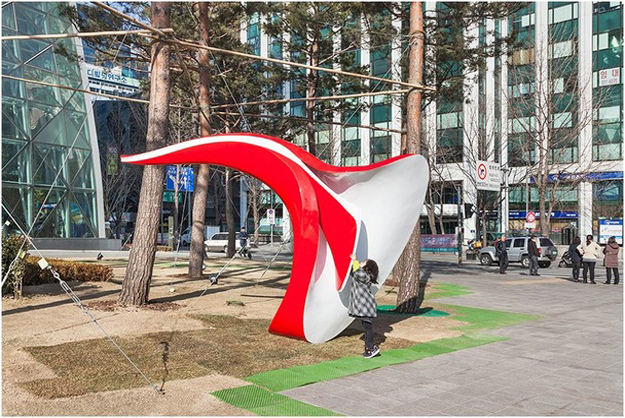
Ear Sculpture Listens To Citizen Complaints

Making space for listening and being heard…

The normal procedure for submitting a complaint to the government is to write a letter, send an email, or make a long drawn-out phone call. In Seoul, South Korea, there’s an alternative – yelling into a giant sculpture shaped like an ear.

Designed by artist Yang Soo-in, and backed by the organization, Lifethings, the sculpture sits outside City Hall in Seoul. It symbolizes the fact that Mayor Park Won-soon and his administration are willing to listen to the people.Since it’s installation, Koreans have lined up to speak their woes or ideas for civic improvement into the impressively sized artificial ear.

more via Ear Sculpture Listens To Citizen Complaints [Pics] – PSFK.

behavior · brain · creativity · disease · happiness · mental health · Nature · play · psychology

10 Simple Things You Can Do Today That Will Make You Happier, Backed By Science – The Buffer Blog

I think I’ve talked about ALL of these tips individually on the blog before, so I’m thrilled that somebody combined them into a “Top 10 With Science!” post:


Happiness is so interesting, because we all have different ideas about what it is and how to get it. It’s also no surprise that it’s the Nr.1 value for Buffer’s culture, if you see our slidedeck about it. So naturally we are obsessed with it.

I would love to be happier, as I’m sure most people would, so I thought it would be interesting to find some ways to become a happier person that are actually backed up by science. Here are ten of the best ones I found.

1. Exercise More (7 minutes might be enough)

2. Sleep More

read all 10 Simple Things You Can Do Today That Will Make You Happier, Backed By Science – The Buffer Blog.

I particularly like suggestion #5.

anthropology · community · culture · happiness · Social

The Happiest States In America In One Map (INFOGRAPHIC)

Where you live apparently can influence your happiness – or maybe happy people just tend head west?

Which way to happy? Geographically speaking, it’s the route to Hawaii, Maine or one of the clusters of blissful cities in California and Colorado.

The map below is based on results from a study of geotagged tweets published earlier this year in PLoS ONE by researchers at the University of Vermont. The team scored more than 10,000 words on a positive-negative scale and measured their frequency in millions of tweets across the country, deliberately ignoring context to eliminate experimental bias. What emerged was significant regional variation in happiness by this calculation, which correlates with other lifestyle measures such as gun violence, obesity and Gallup‘s traditional wellbeing survey. A sadness belt across the South includes states that have high levels of poverty and the shortest life expectancies.

Huffington Post, Happy, United States Map

more via The Happiest States In America In One Map (INFOGRAPHIC).

behavior · community · happiness · Nature

The tent is too damn high: Camping comes to the city

Using some creativity, playfulness, and friends to bring “nature” and community to the city? Yes, please!

behavior · brain · disease · happiness · health · play

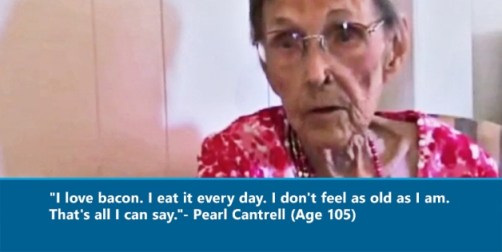
How to live to 100: advice for life and living longer

At first it seems like the typical “there’s no golden rule to getting old” article, right?

Some of the supercentenarian advice is sweet, some is a bit strange and a couple are everything we’ve always hoped for. Who knew bacon and whiskey were the fountain of youth?

more photos via How to live to 100: advice for life and living longer.

Some appear silly, and some fly in the face of recent studies (for example, married people tend to be healthier, and ergo live longer).

But if you try to generalize the advice, much of it boils down to one thing: have fun, be playful, don’t stress out too much about the details.

If you want to live to be 100, you have to give yourself space to play!

behavior · creativity · culture · happiness · health · mental health · play

Adults are reclaiming playtime

Dr. Norman Bethune (centre) watching a game of...
A lively game of checkers among friends (Photo credit: BiblioArchives / LibraryArchives)

From Dodgeball to pillow fights to roller derby, adults are reclaiming time to play in their lives:

It was all fun and games until someone smacked Don Norman in the head — hard — with a feather pillow. Walking into his first two-hour “Playing in the Deep” session, a weekly organized event in Portland, Maine that engages stressed-out grownups in childlike activities, Norman, a 48-year-old database administrator, didn’t know what to expect. Then he saw the pillows, a big pile of them, stacked high. Everyone around him grabbed one and was suddenly roughhousing like over-caffeinated kids at summer camp. Someone handed him his own pillow, but he simply held on to it, too inhibited to let his freak flag fly. He considered bolting.

“And then I got hit!” Norman recalls. “I figured, ‘If they’re going to hit me, I’ll hit them!’ By the end of the night, I was running around like a madman, and I forgot all about my self-consciousness. I forgot about everything. It was liberating.”

“I’ve seen a steady increase in invitations for adult play,” says game designer and self-proclaimed “fun theorist” Bernie De Koven, author of The Well-Played Game. “Now that we no longer have the same sense of community at work or in our neighborhoods as we did twenty or thirty years ago, these opportunities for play are filling the gap.”

The events may consist of kiddie games, but there’s often a serious psychological, even spiritual purpose behind them. “People need to feel they’re connected to other people,” says Cary Umhau, the cofounder of Spacious, who says she was inspired by the adage “Love Thy Neighbor.” “Most people are trying to numb themselves out from just the pain of life. If they don’t have addictions, they spend much of their life watching TV. They need places to come together, to step out of the box and out of their social silo.”

more via Stories: Playing For Keeps – Life Reimagined.

More and more adults are understanding the psychological benefits to playing and making time to let their hair down (or pull it up into a ponytail and go hog wild!), from less sick days to a larger community to helping solve a project problem at work. Even if it’s something as small as giving the barista a silly name the next time you order coffee (I am Batman!), it’s enough to get your brain cells firing and keep it healthy.

How do you squeeze in playtime for yourself? Share your ideas in the comments below.

anthropology · architecture · design · happiness · health · play

superkilen urban park by BIG architects, topotek1 + superflex

Happy Friday! I hope you have plans to go out and play. I totally want to play here!

Superkilen

the “black square” at night

superkilen‘ is a kilometer long park situated through the nørrebro area just north of copenhagen’s city centre, considered one of the most ethnically diverse and socially challenged neighborhoods in the danish capital as it is home to more than 60 nationalities. the large-scale project comes as a result of an invited competition initiated by the city of copenhagen and the realdania foundation as a means of creating an urban space with a strong identity on a local and global scale.

more via superkilen urban park by BIG architects, topotek1 + superflex.

community · culture · environment · happiness · Nature · Social

Chelsea Fringe: A Garden Festival for the Masses

On a more playful note, I love the idea of having public garden festivals where everyone is invited to come out and admire and enjoy nature, and each other’s company.

Unknown's avatar

On a more playful note, I love the idea of having public garden festivals where everyone is invited to come out and admire and enjoy nature, and each other’s company.

View original post