anthropology · behavior · community · environment · happiness · Nature · psychology · technology

Mappiness: Mapping Happiness

A shot of the app.

From the blog How Do you Landscape; a group from the UK has created an app that can be used to measure our happiness based on our surroundings, and using maps to look at the data:

“People feel better outside than inside”. “People feel better in the park/woods/nature than in the city”. These are some of the conclusions from a project with the telling title ‘Mappiness’ Good news for landscape and Landscape Architecture on first sight. But are these only one-liners or firmly based scientific statements? Well, that depends on the quality of the empirical evidence of course. Most experience sample methods (ESM) have a hard time getting a representative group (in the end almost only colleagues) that has to struggle trough tedious interview forms (“it will take only twenty minutes”) to step-by-step end up with modest results. How about a sample group of 47.331 people (and growing by the day) who willingly support their data three times a day to the researchers that by now collected over three million forms in a few months? I stumbled upon these remarkable Experience research feats in a TedxBrighton 2011. In this “Twenty minutes lectureGeorge MacKerron explains why and how he and Susana Mourato (both from the Department of Geography & Environment at the London School of Economics and Political Science) created ‘mappiness’. They want to better understand how people’s feelings are affected by features of their current environment. Things like air pollution, noise, and green spaces influence your well being is their hypothesis.

This is how it works. They developed an app that can be downloaded for free. It must be one of the most irritating apps around on the web because it rings you (with your approval, you can influence the settings) three times a day to ask you three simple questions.

When put through a big regression model they can gauge the happiness as the function of habitat type, activity, companionship, weather conditions (there is of course a link between meteorological data and the GPS data), daylight conditions, location type (in, out, home, work, etc), ambient noise level, time of the day, response speed, and individual ‘fixed-effects’ (that come out of your personal Mappiness-history). Factors can be plotted out against each other.

How awesome is that? What a neat piece of technology to measure our surroundings and how they influence us!

culture · environment · health · Nature

‘Food forest’ in middle of Seattle will feature an urban view

Woman shopping for vegetable starts at Seattle...
Soon Seattle-ites will be able to harvest their own veggies from a large community "forest." Image via Wikipedia

Sorry it has been so long since my last post. I don’t have long, but I had to stop and share in more detail this great story about an urban food forest being proposed for a Seattle neighborhood:

A plot of grass sits in the middle of Seattle, feet from a busy road and on a hill that overlooks the city’s skyline. But it’s no ordinary patch of green. Residents hope it will become one of the country’s largest “food forests.”

The Beacon Hill park, which will start at 2 acres and grow to 7, will offer city dwellers a chance to pick apples, plums and other crops right from the branch.

“I think it’s a great opportunity for the people of Seattle to be able to connect to the environment,” said Maureen Erbe, who walked her two dogs next to the plot on a recent overcast day.

Would she pluck some fruit from the forest?

“Heck yes, I love a good blueberry. You’re not from Seattle if you don’t like a good blueberry,” she said.

For health-conscious and locally grown-food-loving Seattle, the park is a new step into urban agriculture. Cities from Portland to Syracuse, N.Y., already have their own versions. In Syracuse, for example, vacant lots were turned into vegetable gardens to be tended by local teens.

Seattle is an awesome place to have an urban garden. People already replace the little strips of grass between the sidewalk and the street with gardens, and in the summer Seattle is practically overrun with feral blackberry bushes and other fruit.

This is also a great way to improve your environment and make it just a little bit healthier and happier.

This idea has been getting a lot of attention in the media (see related links below), and I hope it will inspire other cities to do the same. Even in cities where it doesn’t rain allll the time, it is more than possible to create spaces for people to garden or for crops to grow feral and let nature take its course.

architecture · creativity · design · environment

Underground gardens in Fresno

Image

It’s cold and wet here in the northwest, so it’s nice to be reminded that somewhere relatively nearby (ok, 800 miles, but still!), it’s warm and sunny:

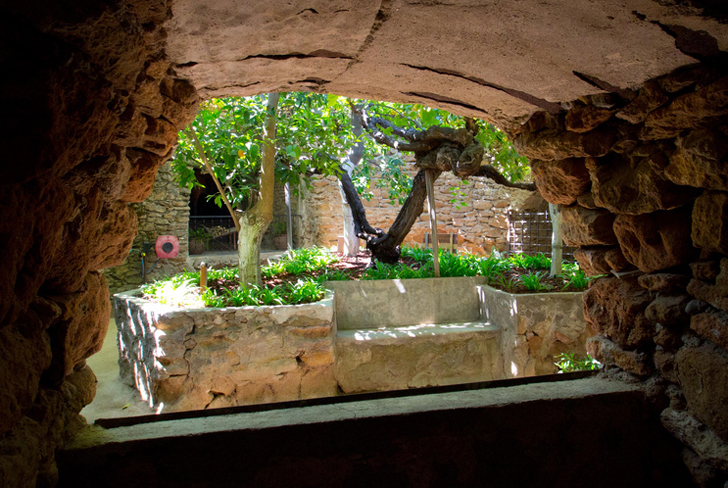
Fresno’s Forestiere Underground Gardens are one of California’s most beautiful feats of historical environmental design. Built by Sicilian immigrant Baldasare Forestiere over 40 years of his life, the subterranean gardensare fed with skylights and catch basins. Working totally on impulse, Forestiere designed the retreat without blueprints or plans – and his only tools were a pick, shovel, and wheelbarrow.

behavior · creativity · environment · happiness · play · youtube

My thesis, summed up in a two-minute video

After working for literally YEARS on my Master’s thesis (I’m still SO excited that I graduated this past quarter and am an official M.A.), I come across this video, which pretty much sums up my years of work in two and a half minutes. It showcases two students from Parkour Visions in Seattle, WA, explaining why they like parkour, mostly because it lets them play again. Upon seeing this I had two thoughts: “well done” and “dang!”

My parkour buddies also showed me this video recently, which in approximately 9 minutes explains the whole reason I wanted to do my thesis in the first place. The video is actually a pitch for funding a documentary called “Seriously!” which interviews a lot of play experts on the subject of play, including many people I cited in my thesis, and why play is important for our survival. In this case, my reaction was wanting to send it to my thesis advisers and scream: “See? See?!”

Ugh.

Anyway, it is a very nice video, so enjoy:

behavior · environment · health · mental health

How to Find a Quiet Space for Meditation

Levitating, Meditating, Flute-playing Gnu
How do you find space to relax and/or meditate? Image via Wikipedia

Work has been really hectic lately, and I’m finding it can be hard to find a quiet place for myself, not only metaphorically, but even physically. My house is full of dog or husband, the bus is impossible, and it seems like there isn’t an empty spot anywhere in the whole 20-story building I work in.

Here is some great advice from blog Quieting the Mind “for finding a quiet space for meditation:”

Make sure everyone in the house knows not to disturb you. If you have young children who can’t understand this, make sure to meditate when your spouse or someone else is home, so they can care for the children during this time. It’s only ten minutes. Surely, someone can ward off any distractions.

Find the quietest room in your house and set a little area that is designated for meditation. Always use the same room and close the door when you meditate. This way, people will know not to disturb you.

Meditate at the same time every day. If your household knows that you wake up at 5 a.m. to get your daily meditation in every day, they’ll learn to respect your privacy during that time.

If all else fails, put up a sign: “Meditating: Do not disturb!” If you get a distraction (one that isn’t an emergency) pretend you don’t hear the person. They won’t continue interrupting you if they don’t ever get a response.

Invite others to meditate with you. They may enjoy it, but best of all, you’ll all have some quiet time. It may take some getting used to for everyone, so allow an adjustment period, but it can really be worth it.

more via How to Find a Quiet Space for Meditation.

How do you make space, both using time and physical space, to find a piece of quiet? I know of more than a few people who use their commute as their quiet time, but that doesn’t work for others (myself included). Where else?

environment · health

Porous Roadways for Better Runoff

Water flowing through pervious concrete, courtesy of the National Ready Mixed Concrete Association.

This post is more focused on conservation and environmental preservation than usual, but I’m a sucker for a good “save the planet” technology story. Plus, I believe pretty much anything we can do to conserve the environment makes for an overall better, healthier, happier us.

When I first read the headline for this article, I thought it was going to be a complaint about the poor quality of several streets in major cities like Seattle and Portland that are supposedly “bike friendly,” where even a seemingly small series of potholes in a street can mean trouble for bikers like myself.

But no, this is better; a type of concrete that actually lets rain water and other liquid runoff through to the soil beneath, preventing flash floods, bad puddling and worse erosion:

Permeable pavement can make old-school road engineers and pavement builders anxious. To them, the idea of water seeping through roads like they’re made of Swiss cheese just doesn’t seem right. Water runs off roads, not through them. Or at least it used to.

In the Northwest, there’s a growing acceptance of the use of pervious concrete and porous asphalt for roads, sidewalks, parking lots, and driveways. The unconventional pavement does a great job reducing the amount of polluted stormwater runoff that damages homes, streams and lakes. Instead of gushing from the roads carrying a slug of toxic chemicals, the water seeps through small pores in the pavement, soaking into the gravel and dirt beneath the road. Some of the pollutants get trapped inside or beneath the pavement, or are consumed by organisms living in the ground below it.

Those who’ve used the pavement praise the technology. Advocates can be found around the region, including a 32-acre eco-friendly development near Salem called Pringle Creek, where all of the roads and alleys were built with porous asphalt.

Read more at: The Porous Road Less Traveled | Sightline

I’ve heard of this technology being used in driveways with great success, so it’s nice to hear it being used in larger applications.

behavior · community · culture · environment · happiness · psychology

The Psychological Importance of Home

English: Clayton H. Delano House, Ticonderoga,...
Our sense of place, and particularly our home, can be very intricately woven into our identities. Image via Wikipedia

As the weekend, approaches, many of us are making plans to go out to events in our local cities, or work around the house, or just sleep in our own beds after several weeks of visiting and traveling. The psychology of home is very important to us humans, and was captured really well in an article by Julie Beck in The Atlantic:

Susan Clayton, an environmental psychologist at the College of Wooster, says that for many people, their home is part of their self-definition, which is why we do things like decorate our houses and take care of our lawns. These large patches of vegetation serve little real purpose, but they are part of a public face people put on, displaying their home as an extension of themselves. It’s hardly rare, though, in our mobile modern society, to accumulate several different homes over the course of a lifetime. So how does that affect our conception of ourselves?

When you visit a place you used to live, these cues can cause you to revert back to the person you were when you lived there.

For better or worse, the place where we grew up usually retains an iconic status, Clayton says. But while it’s human nature to want to have a place to belong, we also want to be special, and defining yourself as someone who once lived somewhere more interesting than the suburbs of Michigan is one way to do that. “You might choose to identify as a person who used to live somewhere else, because it makes you distinctive,” Clayton says. I know full well that living in Paris for three months doesn’t make me a Parisian, but that doesn’t mean there’s not an Eiffel Tower on my shower curtain anyway.

We may use our homes to help distinguish ourselves, but the dominant Western viewpoint is that regardless of location, the individual remains unchanged. It wasn’t until I stumbled across the following notion, mentioned in passing in a book about a Hindu pilgrimage by William S. Sax, that I began to question that idea: “People and the places where they reside are engaged in a continuing set of exchanges; they have determinate, mutual effects upon each other because they are part of a single, interactive system.”

Read the full article here.

I definitely feel like I have a connection and identify with every place that I’ve lived, although some have felt more like home and have shaped me more than others. A lot of that has been due to how safe or at peace I feel in a place, and how much I have bonded with the people around me.

I also think one thing that was so traumatic about the housing bubble was that sense of losing your home. Not just a piece of property you owned, but this landmark of who you were, the space where you kept all of your memories and built new ones, your safe house, literally.

What is your experience with home? What makes a place “home” for you?

architecture · creativity · culture · design · environment

Top stories in architecture from Inhabitat

Happy New Year! This has been a pretty crazy year for me. One of change, growth, more change, more growth… but hopefully all of it has paid off to create a better, more enriching space for me both at work and at home.

In honor of enriching spaces, I figured I’d share Inhabitat’s top six (why six? Not sure) architecture stories of the year:

2011 saw more exciting, innovative and record-breaking green buildingsthan ever before, and judging from the popularity of our eco architecture stories, many of you agree! From the world’s largest wooden structure in Seville to the world’s first vertical forest beginning construction in Milan, if you want to see some of the most mind-blowing designs that made waves this year, then check out 2011′s most popular stories below — and be sure to vote for your favorite!

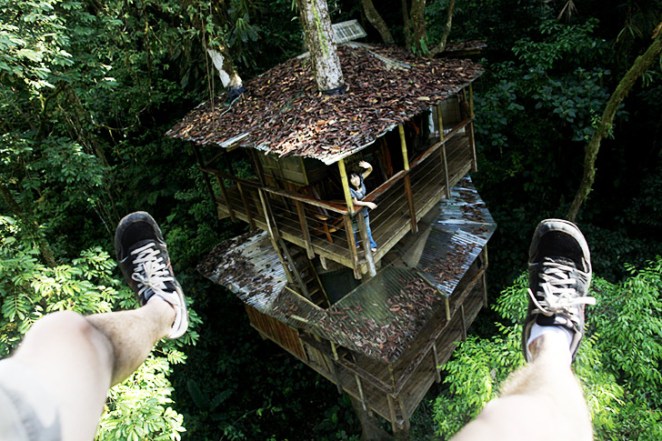
Finca Bella Vista
Where do Ewoks go when they're bored with Endor? Why, to Finca Bellavista village of course.


Bosco Verticale


sunken pedestrian bridge in the netherlands parts moat waters like moses

See the other three and vote for them here: Top 6 Green Architecture Stories of 2011 – Vote for Your Favorite! | Inhabitat – Green Design Will Save the World

design · environment

UW students focus on how to get local food to their dining hall tables

local food madness
getting local foods to a big institution can be tricky.

As you’ve probably figured out by now, I am a huge proponent of consciously choosing locally sourced food and products for consumption. Not only does it use less fossil fuels, I think buying and eating local also creates a better, healthier, and more enriching environment for us all.

It’s easy enough for individuals to choose and cultivate local food, but how does a larger institution like a university, or individuals living on campus, get access to the same local goods? One class at the University of Washington did a problem-solving project to come up with solutions to eating local. From the University of Washington:

Recipes that come boxed with fresh ingredients ready to cook? How about a monthlong incentive program inspiring a commitment to fresh local food? What would it take?

The class was Introduction to Interaction Design, Art 381, and the assignment Tad Hirsch gave his students was straightforward: Design a way to improve access to fresh local food on the UW campus.

“The students looked at how the UW community currently feeds itself,” Hirsch said, “and considered a range of factors that currently make it hard for students, faculty and staff to eat locally.” He said they took an interaction design approach to the problem, asking what experiences they wanted to provide for people. “They then had to come up with concrete proposals to make local food more accessible.”

It’s all pretty theoretical for this undergraduate class of mostly juniors, he said. “But we hope to take some of these ideas and make them tangible. There’s the notion that this stuff is meant to go out into the world.”

Hirsch is an assistant professor who came to the UW a couple of months back from Intel Corp. in Oregon. He said he is pleased to be part of the UW’s “small but mighty” program in interaction design.

So, what did the students come up with? Some pretty interesting stuff, actually:

Read their solutions at From crate to plate: Students study how to improve campus access to fresh local food

architecture · community · creativity · environment

Yarn bomber decorates public statues for Christmas

This time of year, when it gets dark and cold, we make our spaces brighter and cheerier with lights and greenery and sweet, rich food. Or, in this case, some nicely knitted decorations to share and brighten up a public space:

Everett Herald Yarn Bomber
Three-year-old Kirsten Mitchell can barely contain her excitement as Renee Walstad helps her "yarn bomb" a statue outside of the Imagine Children's Museum in Everett on Tuesday afternoon. Walstad handed out several knit ornaments and other decorations for children to place around the intersection. By Julie Muhlstein, Herald Columnist

A pompom here, a knitted ornament there, Everett has been hit by a yarn bomber.

“I just wanted to spread some Christmas cheer,” Renee Walstad said.

Walstad is part of a warm-and-fuzzy movement being embraced by creative types all over the world.

Her efforts are modest compared with the ways some yarn artists decorate public places. For some yarn bombers, what began as a covert operation has blossomed into commissioned public art projects.

Since early this month, Walstad, 28, has been putting knitted and crocheted decorations on Everett’s downtown sculptures. She calls it a “Yarnvent calendar.”

“You know, like Advent,” the Lake Stevens woman said. “Every day before Christmas, I put up an ornament.”

If you stopped for coffee on Everett’s Colby Avenue on Wednesday, you may have noticed Walstad’s cheery calling cards. Near the Starbucks shop, the statue of three little girls holding hands — Georgia Gerber’s “Along Colby” — finds the girls dressed for the season in knitted red and green anklets. One of the bronze figures held a knitted Christmas ornament.

read more about her creations: ‘Yarn bomber’ leaving her knitted mark on Everett’s public art

Merry Christmas!