Some of this is old news, but it’s nice to see it all in one place, and to see the long-term effects discussed, not just the immediate ones…
Author: Beth Kelley
Beth Kelley is an applied & digital anthropologist with an overall interest in how people engage with and are impacted by their environments and vice versa. This has manifested itself in many ways, by looking at creativity, playful spaces, built environments, and environmental enrichment, sustainability, design research, and integrative and collaborative models of learning such as through play and hands-on learning.

2013 in review
THANKS EVERYONE FOR MAKING THIS A GREAT YEAR!
The WordPress.com stats helper monkeys prepared a 2013 annual report for this blog.

Here’s an excerpt:
A New York City subway train holds 1,200 people. This blog was viewed about 7,200 times in 2013. If it were a NYC subway train, it would take about 6 trips to carry that many people.
The Giving Advent Calendar
Alright, I did it; I made the Giving Advent Calendar mock-up. There are some great ideas out there for giving back for December, like this interactive one, but I really wanted to focus on ways we could give back for free or low cost. That said, this is a super simple one I made up using Word, so I would love to see what other people have come up with for Giving Advent Calendars, both content and design.
Happy Advent!

December = The Giving Advent Calendar
I have seen November designated at the Month of Gratitude, and I was truly inspired by the list of 100 things you could do to make your neighborhood/community more playful.
I’ve been thinking, what about combining the two into a month of giving, or instead of an advent calendar where you get a treat, you make an advent calendar where you GIVE a treat.
This doesn’t need to cost you any money, either. You can give time at a volunteer effort. You can help someone move something heavy. You can give a compliment. You can build one of the 100 ideas posted before and put it in a public space where everyone can use it.
I really like this idea, and although we are all busy and poor and have way too much to do, myself included, I am going to try and do something for someone else at least up until Christmas, other than the usual obligatory caring and feeding of my dependents (dog, kid, fish, etc.), and preferably for free and/or using materials I’ve got laying around the house.
What kind of free giving are you planning on doing this season? Share it in the comments below.
An Evidence-based Approach to Therapeutic Landscapes
Glad to see this.


Therapeutic Landscapes: An Evidence-Based Approach to Designing Healing Gardens and Restorative Outdoor Spaces by Clare Cooper Marcus, Honorary ASLA, and Naomi Sachs, ASLA, is more than an update of the milestone 1999 book, Healing Gardens: Therapeutic Benefits and Design Recommendations, by Marcus and Marni Barnes, ASLA. Compared to the earlier book, this book is more richly illustrated with color photographs, exemplary case studies, and practical design guidelines. This book also provides all the latest research on the benefits of exposure to nature.


Healthcare is currently undergoing tremendous change. Healthcare environments are increasingly offering gardens, with demonstrable benefits to patients, families, and staff.

Healthcare gardens have proliferated. Many healthcare grounds have evolved into functional spaces that provide intentionally restorative or therapeutic benefits. But not all gardens deliver as advertised. Some healthcare gardens featured in leading design magazines appear attractive in photographs, yet are missing elements and characteristics that optimize…
View original post 521 more words
100 Seriously Fun Ways to Make Your Town More Playful | CommunityMatters
Yes, yes, yes! This is so exciting! I love some of these ideas on how to encourage play in your community as a way of creating joy and growing community bonds:
Here’s our list of
75100 ways that you can start making your city or town a playful place:Join the CommunityMatters conference call on play and placemaking
- Join the CommunityMatters conference call on play and placemaking
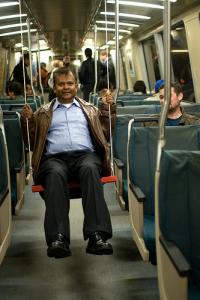
- Turn the subway into a swing set
- Munch people with your eyes
- Turn your street into a Play Street
- Let sidewalks be trampolines
- Play pong with traffic lights
- Transform a set of stairs into a piano
- Give pedestrians the keys to your city
- Host a hummingbirdman rally
- Embed games in public seating
- Think more like a roller coaster designer
- Rethink the public library as a place for play
- Start a citywide festival of play
- Challenge people to try alternative transportation
- Create a local currency, then turn it into a game
- Get all ethereal and make a playground in the air
- Install a swing just about anywhere
- Make a plan for engaging your community in play
see the first 74 via 75 Seriously Fun Ways to Make Your Town More Playful | CommunityMatters.
The other 25 were posted here, and included:
- Add cheer to the streets with tiny notes.
- Host a temporary tattoo parlor.
- Get out on the street with a popcorn machine. Idea from @wemakegood
- Three words: Cardboard Animal Picnic. Inspired by Patrick McDonnell
- Stop standing and start sitting with bench bombing.
- Install a Givebox. Idea from @wanderingzito
- Start a bell box mural project.
- Conduct pointless surveys. Idea from @uncustomaryart…
Related articles
- Three Lessons On Placemaking (nextcity.org)
- MIT report on placemaking (lawprofessors.typepad.com)
- The 7 Psychological Functions of the Art of Placemaking (resilience.org)
The health benefits of creativity
Double-posting because I think this is so important; from the blogger James Clear:
In 2010, the American Journal of Public Health published a review titled, The Connection Between Art, Healing, and Public Health. You can find it here.
In that article, researchers analyzed more than 100 studies about the impact of art on your health and your ability to heal yourself. The studies included everything from music and writing to dance and the visual arts.
As an example, here are the findings from five visual arts studies mentioned in that review (visual arts includes things like painting, drawing, photography, pottery, and textiles). Each study examined more than 30 patients who were battling chronic illness and cancer.
Here’s how the researchers described the impact that visual art activities had on the patients…
- “Art filled occupational voids, distracted thoughts of illness”
- “Improved well–being by decreasing negative emotions and increasing positive ones”
- “Improved medical outcomes, trends toward reduced depression”
- “Reductions in stress and anxiety; increases in positive emotions”
- “Reductions in distress and negative emotions”
- “Improvements in flow and spontaneity, expression of grief, positive identity, and social networks”
I don’t know about you, but I think the benefits listed above sound like they would be great not just for patients in hospitals, but for everyone. Who wouldn’t want to reduce stress and anxiety, increase positive emotions, and reduce the likelihood of depression?
James Clear goes on to explain some of the physical benefits of creativity. Go read it here, and then go get creative. 🙂

Gamification of exercise in the real world using phone apps
I love this idea of essentially creating exercise Easter eggs for people around the city. It makes people think of their surroundings in totally new, possibly more sporty ways.
The UK government is backing a new fitness initiative that includes putting calorie-counting labels on staircases so people can keep track of how many calories they burn while taking the stairs.
The project, which was developed by StepJockey, includes an app and a website to help people count the calories burned when taking the stairs. The project is backed by London Mayor Boris Johnson, the Department of Health, and NHS London.
The initiative was inspired by food labels that inform people of the calories they are consuming. According to their website, the initiative is “about the other side of the equation,” which entails labeling the physical world to promote fitness and weight loss.
People can “rate” unlabeled staircases by sending enough information for StepJockey to calculate how many calories would be burned when using it. The details can then be printed on a poster that they can put up near the staircases.
I love the concept of interacting with the real world and have crowd sourced information. Plus it’s fun to see spots pop up and know you’re part of the "in crowd," plus some friendly peer pressure to get active.


Remember to set a good play example for your kids.
From Quickmeme:

Collaborative art between a mom and her 4-year-old: a reminder to let play and creativity lead you
From Distractify:
At first, artist Mica Angela Hendricks didn’t want her four-year-old daughter near her new sketchbook. But her daughter convinced her, and Mica let her daughter finish one of her sketches, and pretty soon, they had a whole collection of collaborations.
Mica claims that her amazing artistic experiences with her daughter have taught her a lot about being an artist, and that you have to let go of control for wonderful things to happen.


 Mental Flowers