community · creativity · play · Social

Bubble Bath Seattle 2014- Yay Today!

I don’t recall this parable from Dr. Seuss, but I like the idea of a bubblefest!

If you want to recapture your childhood this weekend, head to Cal Anderson Park in Seattle, WA, with a gallon or so of soapy liquid for Bubble Bath Seattle, the biggest bubble fight this city has ever seen.

From 3:00 pm to 5:00 pm, Cal Anderson will transform into a sea of bubbles. Evidently these events have been going on in New York for years, but it’s the first time that Seattle has ever seen something this epic. Organizers draw inspiration from Dr. Seuss’s The Butter Battle Book

more via Bubble Bath Seattle 2014- Yay Today!.

behavior · children · environment · health · play

The Value of Unstructured Play Time for Kids – Pacific Standard: The Science of Society

This is a nice study that looks at the value for kids, but unstructured creative and/or play time is important for adults AND kids.

German psychologists find people who were allowed to play freely as children have greater social success as adults.

There has been plenty of hand-wringing in recent years about the “overscheduled child.” With after-school hours increasingly dominated by piano lessons, soccer practice, and countless other planned activities, many of us have a nagging sense that kids are missing out on something important if they have no time for unstructured play.New research from Germany suggests these fears are justified. It finds people who recall having plenty of free time during childhood enjoy high levels of social success as adults.

A team of three psychologists from the University of Hildesheim, led by Werner Greve, conducted a survey of 134 people. Participants were presented with a list of seven statements and reported the degree to which they conformed with their own childhood experiences that is, ages three to 10.

read the rest of the article via The Value of Unstructured Play Time for Kids – Pacific Standard: The Science of Society.

children · creativity · design · environment · learning · Nature · play

Can This Industrial Designer Get Children Back Outside? | Natural Start

Nice to see toys being introduced that work with already existing toys (sticks!), and encourages kids to go find their own sticks and go play in nature.

As an inductee to the National Toy Hall of Fame, the stick doesn’t need much improving as a classic toy. For as long as there have been children and sticks, sticks have served as a versatile toy in outdoor play. But connecting sticks takes a bit of ingenuity.

Enter Christina Kazakia, a design student with a mission. As she explains, “I designed these flexible silicone connectors as part of my graduate thesis in Industrial Design at the Rhode Island School of Design. My goal was to create prompts to engage children with their surrounding natural environment.” Called Stick-lets™, these connectors help small children build big structures like forts, teepees, lean-tos, or other creations.

Find out more about the toy and her kickstarter via Can This Industrial Designer Get Children Back Outside? | Natural Start.

anthropology · architecture · behavior · community · creativity · culture · environment

The Playful City – Azure Magazine

A great article about how building playful spaces leads to more, and better, play.

Can playgrounds make kids smarter? Yes, say the experts, and landscape architects everywhere are responding. Welcome to outdoor play’s new reality.

All work and no play makes jack a dull boy. Granted, Jack does not lack for innovative toys and gadgets. But what Jack really needs is better playgrounds. These days, reality is exchanged for a simulation of reality, and the sandbox is abandoned in pursuit of the virtual. Cognitive scientists, however, are finding that the unstructured activity children engage in at the playground fosters the social and intellectual abilities they need to succeed in life. Monkey bars and swing sets present opportunities to develop new skills, encourage autonomous thinking and promote flexible problem solving – but they also shape the brain. This is good news. With technology taking over so much of our lives, increased pressure on children to compete academically at a much younger age, and helicopter parenting restricting play for fear of potential danger, many experts – such as David Elkind, psychologist and author of The Hurried Child – are drawing attention to the “reinvention of childhood.” It is time we also reinvent the playground.

more via The Playful City – Azure Magazine.

creativity · culture · play

Intimate Photos Reveal the Day-to-Day Lives of Stormtroopers | Raw File | WIRED

Perhaps not very scholarly, but I love this growing trend of making “Day in the Life” photos of toys and other objects. It’s a great, playful exploration of space and creativity.


In the Star Wars movies, the Imperial Stormtroopers’ activities are pretty limited: Marching. Shooting things. Keeping order. More marching. What do they do the rest of the time? Twerk? Wait for the bus and bully battle droids like the rest of us? (OK, most of us don’t bully battle droids.) Photographer Zahir Batin has a few ideas, and they include feeding baby chickens.

Batin’s still-life photos, created with action figures and largely homemade props, provide a glimpse of Stormtroopers after the big battles—stringing crime scene tape, for example, and doing the splits, Jean-Claude Van Damme-style, on their 74-Z speeder bikes. But the Malaysian photographer’s pictures also reveal a grimmer reality. We see troopers carrying wounded soldiers from the battlefield and mourning fallen comrades. We also see dichotomy of life as a Stormtrooper, roughing up battle droids one moment and feeding chicks the next.

The photo series is “just a hobby to fill free time on the weekends,” Batin says, but it’s blossomed into dozens of pictures. The bulk of the time spent creating each image is spent on preparation. Because “my Photoshop skills have a limit,” Batin tries to make each scene as realistic as possible before snapping the frame. The resulting pictures are as gorgeous as they are humorous (or, of course, tragic).

Check out some of the photographer’s best Stormtrooper still-life photos in the gallery above, then check out even more on deviantArt and 500px.


via Intimate Photos Reveal the Day-to-Day Lives of Stormtroopers | Raw File | WIRED.

architecture · children · creativity · design · health · play

These are the most fantastical playgrounds ever built

Having fun, exciting spaces to play is important for both kids and grown-ups, so it’s nice to see what’s out there for kids, and hopefully grown-ups will follow suit.

When you’re a kid, visiting an amazing playground is the greatest experience ever. And these fantasy-themed playgrounds around the world have us wishing that we were kids again so we could run around in them like small, crazy people.

more via These are the most fantastical playgrounds ever built.

All of these are in more urban settings, and it would be cool to see some more natural playscapes, but the ideas behind some of these parks are fantastic!

children · cognition · creativity · happiness · learning

‘The Lego Movie’ Is An Entire Film About Fighting For Free Play!

I am a huge fan of Legos, and so the little kid in me was super excited to see this movie trailer. But the more I read about it, the more the grown-up in me gets excited to. The whole premise of the movie is about fighting a bad guy who wants to keep people from getting creative with Legos and playing with them just the way they want. The goal of the heroes is to keep free play, well, free.

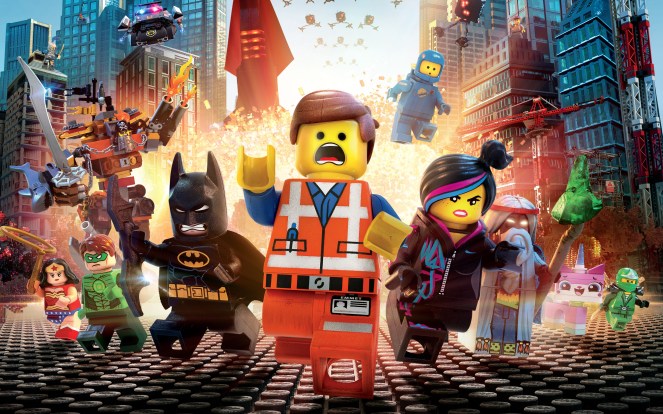
the_lego_movie_2014-wide
Photo from the Forbes review

“The Lego Movie” explores what may be the essential question of Lego building as it applies to life: Must you dutifully follow the instructions, or can you combine pieces creatively to make anything you dream up? In the animated children’s comedy, a repressive overlord voiced by Will Ferrell is so maniacal about controlling the residents of Bricksburg that he has a weapon designed to glue all the pieces of their world together, putting an end to freestyle play. Only a band of wisecracking rebels including Chris Pratt, Elizabeth Banks, Will Arnett and Morgan Freeman can stop him. The film is computer-animated but made to look as if all the scenery is built out of real Lego pieces. Everything moves in a way that simulates the stop-motion films that thousands of Lego customers have created with their pieces and posted online.

more via ‘The Lego Movie’: How it Came to Be Built – WSJ.com.

I am so excited to see a big budget movie with a lot of big budget actors devoted to promoting free-thinking free play, and some of the clips do in fact look really creative and are all about messing with your perceptions of the Lego reality!

behavior · children · play

I did these things as a kid (but my kids won’t) – Illustrated with Crappy Pictures™

The blogger of Illustrated with Crappy Pictures posted a couple of years ago about the differences between her childhood and her kids’ childhood, and how we are much more focused on safety, for better or for worse.

There are things I did that my kids will never do.

This type of comparison would be way more interesting coming from my grandparents who walked 50 miles barefoot uphill both ways in the snow and all that.

Still. Times have changed.

My aunt (who is only six years older than me) used to pull me in my Radio Flyer® wagon by tying a rope to her bike. On country roads. Down hills. No helmets.

But the wagon would go too fast.

And she’d yell “put the brakes on!” which actually meant “PANIC!” because there weren’t any brakes. We stopped ourselves by turning into the ditch and wiping out. It was fun.

My kids? They wear helmets at the dinner table. You know, just in case they fall off their chairs.

via I did these things as a kid (but my kids won’t) – Illustrated with Crappy Pictures™.

There are definitely some good things to avoid with her own kids, but even the author questions whether she is being too safe.

Are parents as a whole more protective these days? And where is the line drawn between good protection (seat belts and not letting your kids drink bleach) and being over-protective to where it is stifling for them. I think about this sometimes. FreeRangeKids is an excellent read if you are interested in this sort of discussion.  

What are your thoughts about letting kids go out and explore on their own? Obviously some of it is determined by your local environment, like if you live in the city or a country road. But letting kids explore on their own is also crucial to good development. Tough topic.

anthropology · behavior · community · creativity · culture · happiness · play · Social

100 Seriously Fun Ways to Make Your Town More Playful | CommunityMatters

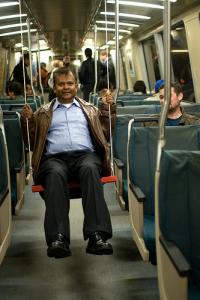
subway swing

Yes, yes, yes! This is so exciting! I love some of these ideas on how to encourage play in your community as a way of creating joy and growing community bonds:

Here’s our list of 75 100 ways that you can start making your city or town a playful place:

Join the CommunityMatters conference call on play and placemaking

  1. Join the CommunityMatters conference call on play and placemaking 
  2. Turn the subway into a swing set 
  3. Munch people with your eyes
  4. Turn your street into a Play Street 
  5. Let sidewalks be trampolines
  6. Play pong with traffic lights
  7. Transform a set of stairs into a piano
  8. Give pedestrians the keys to your city
  9. Host a hummingbirdman rally
  10. Embed games in public seating
  11. Think more like a roller coaster designer
  12. Rethink the public library as a place for play
  13. Start a citywide festival of play
  14. Challenge people to try alternative transportation
  15. Create a local currency, then turn it into a game
  16. Get all ethereal and make a playground in the air
  17. Install a swing just about anywhere
  18. Make a plan for engaging your community in play

see the first 74 via 75 Seriously Fun Ways to Make Your Town More Playful | CommunityMatters.

The other 25 were posted here, and included:

  1. Add cheer to the streets with tiny notes.
  2. Host a temporary tattoo parlor.
  3. Get out on the street with a popcorn machine.  Idea from @wemakegood
  4. Three words: Cardboard Animal Picnic. Inspired by Patrick McDonnell
  5. Stop standing and start sitting with bench bombing.
  6. Install a Givebox Idea from @wanderingzito
  7. Start a bell box mural project.
  8. Conduct pointless surveys.  Idea from @uncustomaryart
architecture · community · creativity · culture · design · Uncategorized

Gamification of exercise in the real world using phone apps

I love this idea of essentially creating exercise Easter eggs for people around the city. It makes people think of their surroundings in totally new, possibly more sporty ways.

The UK government is backing a new fitness initiative that includes putting calorie-counting labels on staircases so people can keep track of how many calories they burn while taking the stairs.

The project, which was developed by StepJockey, includes an app and a website to help people count the calories burned when taking the stairs. The project is backed by London Mayor Boris Johnson, the Department of Health, and NHS London.

The initiative was inspired by food labels that inform people of the calories they are consuming. According to their website, the initiative is “about the other side of the equation,” which entails labeling the physical world to promote fitness and weight loss.

People can “rate” unlabeled staircases by sending enough information for StepJockey to calculate how many calories would be burned when using it. The details can then be printed on a poster that they can put up near the staircases.

I love the concept of interacting with the real world and have crowd sourced information. Plus it’s fun to see spots pop up and know you’re part of the "in crowd," plus some friendly peer pressure to get active.