Really interesting article about the concept of biophilic design, something I’ve brought up a lot on this sight. In summary, humans love natural environments, so why haven’t our buildings and other spaces moved more in that direction? It’s all broken out very nicely in this post:
Tag: nature

Awakening Our Species to Nature Through the Eyes of Children
It’s written a bit like a public service announcement, but I still appreciate this article written by Izilwane, a non-profit group that deals with biodiversity internationally (full disclosure: I have contributed a free article to this group about research I have done on informal education. You can read it here), and featured on National Geographic News:
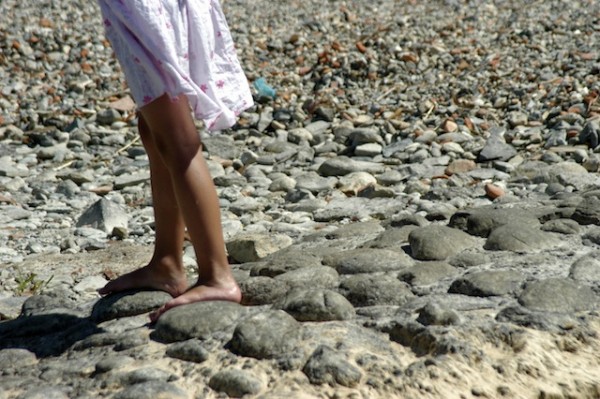
Children see the world through innocent eyes, eyes that see the unique beauty in even the most unimpressive puddle. To them, a tree is not just a plant but an entire jungle gym of adventure; a small plot of pines is not just a barrier between yards but an entire forest full of mystical creatures; a day at the beach is never simply sun and sand but the search for pirate treasure and lost shipwrecks.
By nurturing our species’ youngest members, by encouraging them to play outside, we are not only bolstering their imaginations but also encouraging creative problem solving, better concentration and social development. Kids who enjoy nature also grow up with an innate sense of responsibility and respect for the environment and all it has to offer.
How do we reconnect our youth with nature? How do we continue to teach our kids the importance of protecting our wild places? How do we reinvigorate children’s enthusiasm for playing outside? Here at Izilwane, we’re trying to combat the ever-growing apathy toward nature and provide youth – and those who work with them – with tools they can use to both learn and teach: a comprehensive and ever-growing list of resources for teachers; a story corner, which will feature anecdotal tales of youth connecting to nature; photo and video galleries that illustrate Izilwane’s work with students from around the world; and articles that highlight some of the strategies international educators are using to reach out to local children.
Read more at: Awakening Our Species to Nature Through the Eyes of Children.
I think they make a very good point about the importance of getting kids involved and engaged with animals and biodiversity at an early age. Not only does it help cultivate more empathy for animals and an appreciation for biodiversity, it’s also good for kids to learn about their environments and nature in order just to understand how the world works.
Related articles
- Biodiversity and Human Health (inimese.wordpress.com)
- Biodiversity in Kanazawa: Spring´s lesson (greenconduct.com)
It’s PARK(ing) Day!

Today in Seattle, S.F., and other major cities, activists are taking over one or several parking spaces and turning them into parks!
PARK(ing) Day is an annual, worldwide event that invites city dwellers to transform metered parking spots into parks for the day. PARK(ing) Day in Seattle happens to fall on the first day of the [Seattle Design] Festival.
We’ll be partnering with the Seattle Art Museum (SAM) at their impromptu “park.” Drop by and join us in a Festival photo/design activity open to everyone.
SAM will also be offering an all-ages, hands-on artmaking activity; an artist-designed Cornhole game (bean bag toss); and a noon concert by James Whetzel, classically trained on the sarod and tabla.
More via the Seattle Design Festival, which is going on from the 16th until the 25th! The festival is also pretty relevant since its goal is to explore our environments, how we use them, and how to make them better.
I was able to go see the Seattle exhibit last year, but unfortunately am parked at work today, so go see it and report back. Last year they had lots of games and give aways, and maps featuring the many parks that are scattered around the Seattle metro area.
Check out some of the other Park(ing) Day Related articles:
- Park(ing) Day is tomorrow (chicagoreader.com)
- LA celebrates Park(ing) Day with mini parks (abclocal.go.com)
- Park(ing) Day 2011 (laughingsquid.com)
- Midday Muse: Park(ing) Day (casasugar.com)
- Park(ing) Day 2011: Find Your Favorite Park(ing) Spot (streetsblog.org)
- PARK(ing) Day Vancouver! (yuriartibise.com)
- September 16 and 17 – Park(ing) Day (tebiki.be)
New Research Reveals the Nature of America’s Youth | The Nature Conservancy
Interesting study to keep you motivated while I’m off in the woods:

Kids are spending less and less time outdoors. Why? We’re becoming more and more wired in and dependent on technology:
There is a growing disparity between the time kids spend indoors wired to technology and the time they spend outside enjoying nature. The vast majority of today’s kids use a computer, watch TV, or play video games on a daily basis, but only about 10 percent say they are spending time outdoors every day, according to a new nationwide poll from The Nature Conservancy.Why? Lack of access to natural areas and discomfort with the outdoors are two primary factors identified by the Conservancy’s poll.The poll was conducted from July 28 through August 4, and asked 602 kids between the ages of 13 and 18 about their attitudes toward nature, outdoor activity and environmental issues.
more via New Research Reveals the Nature of America’s Youth | The Nature Conservancy.
One easy solution is to limit electronic time for youngsters, and ourselves for that matter.
And yes I recognize the irony of sharing this information via an electronic-based blog.
Related articles
The healing effects of forests, gardens, greenery

After spending some time this weekend in my garden, lounging in the dappled sunlight, it reminded me just how powerful nature is to rejuvenate and heal both physically and emotionally.
Many studies show that after stressful or concentration-demanding situations, people recover faster and better in natural environments than in urban settings. Blood pressure, heart rate, muscle tension and the level of “stress hormones” all decrease faster in natural settings. Depression, anger and aggressiveness are reduced in green environments and ADHD symptoms in children reduce when they play in green settings.
via The healing effects of forests.
So remember the next time you’re stressed, just staring at a house plant can help destress you.
Related articles
- BRAZIL: “Teaching” Children to Respect Nature: Between Fear and Awe (worldmomsblog.com)
- The same type of forest is good for both birds and people (eurekalert.org)
ParksByNature Smart Phone Apps Make State Parks Accessible Like Never Before | Inhabitat
 We hear stories of people getting lost or running into dead end streets because they are too religiously following their GPS or smart phone directions. And I’ve definitely been to dinner a couple of times in groups with one or two people who wouldn’t get off their phone. However, some smart phone apps can be useful and engaging, such as apps that encourage people to get out into nature. Inhabitat offered a write-up of one such app that’s tied into the U.S. park system.
Okay, so the article is totally written as a pitch to sell the app, but why not? This is an actually somewhat useful app that gets people more engaged with nature!
Many of us remember spending summers driving to lakes, hiking with the family and camping in the great outdoors, but some of today’s kids would rather spend some alone time with their iPhones than with Mother Nature. ParksByNature’s apps engage the gaming set with an interactive tour guide called The Pocket Ranger. Available in the free Lite Version or the upgraded Pro Version ($3.99), the app features park information, weather alerts, a social network to share favorite spots and photos in real time, and safety features like Friend Finder and Alert Feature, which helps coordinate rescues if a natural disaster were to strike.
The Pro version has guided tours and hikes with GPS tracking, downloadable detailed maps and best of all, supports the park directly. ParksByNature shares the fee with the parks system and Friends of State Parks, a nonprofit partner.
They are also planning to expand to zoos, museums, and other nature experiences.
Now I just wish they’d make one for all us non-iPhone aficionados.
Last Tourist in the Woods – Health and Financial Benefits of Outdoor Tourism | LandLopers
I’m dreaming of warm sandy beaches, or high mountain meadows, and realized it’s been awhile since I’ve gone on a good, solid, outdoors-focused vacation. Apparently I’m not the only one. From the magazine Landlopers, introduced to me by the non-profit environment-and-culture group Izilwane…
For more than a decade, visitation numbers at America’s National Parks have been dropping steadily. At first glance, the numbers are encouraging, around 280 million visitations in 2010. Impressive until you peel back the numbers and realize that this includes everything from people driving along the Blue Ridge Parkway to the annual Cherry Blossom Festival attendees. The actual number of people who hike, boat, fish or paddle is much lower, and that number is not increasing.I’m not sure for the drop in numbers, but it’s disheartening. I’m just as guilty as anyone about not visiting our common inheritance nearly as often as I should.

more via Last Tourist in the Woods – Health and Financial Benefits of Outdoor Tourism | LandLopers.
More and more people are discovering the importance of interacting with the outdoors, even in small doses like walking down a tree-line street. And now, the one plus-side of our current Federal and State funding in a crisis is that a lot of national and state parks are offering deals to entice visitors; so aside from supporting your parks and the economy, it’s a good time to think about vacationing in the great outdoors.
10 Ways to Boost Creativity
This list was compiled by the very talented Lori McNee (@lorimcneeartist) for The Top 10 Blog.
Lori is an internationally recognized professional artist who specializes in still life and landscape oil paintings. She shares valuable fine art tips, art business tips and social media advice on her superb blog FineArtTips.com.
Lori writes: Artists, writers, musicians and even bloggers have a common need to create. But, sometimes we hit a mind block and often find ourselves stressed, overwhelmed and unable to produce original ideas. This happens to me from time to time, so I decided share my top ten ways to boost your creativity.
1. Set aside a time and place.
2. Give yourself a break from technology. (um, but continue reading this blog for more ideas before you take a break!)
3. Try something new.
Read all of her ten tips and why here: http://www.thetop10blog.com/top-10-ways-to-boost-your-creativity/
How the places we live could heal us | Grist
This is an interesting follow-up/add-on to the RadioLab “Cities” episode I blogged about a couple of weeks ago. The Healing Cities Working Group of planners and health professionals in Vancouver, BC is working to create healthy environments in urban areas, particularly focusing on food and food sources.
It’s possible to interest public officials in the health impact of the built environment because Canada has nationalized health care.
“When you have a public health care system like we have in Canada, we all collectively pay the end-of-pipe costs,” said Holland. “So anything we have in our society that makes us unhealthy, we end up paying for it.” Of course, that’s true in the United States as well, but there is much less transparency and awareness of those costs because of the way our system is set up.
In Canada, Holland hopes to be able to involve doctors and public health authorities in the fight against sprawl and for more walkable and transit-oriented neighborhoods. Among the Healing Cities Working Group’s many planned initiatives is a partnership with health officials to advocate for more health-enhancing infrastructure and development at the local level.
via How the places we live make us sick, and how they could heal us instead | Grist.
Other studies have found that greener neighborhoods also decrease stress and make people more likely to walk or bike places. Where you live, what have you found works best for you personally to motivate you to get you outside, moving, and buying less insta-food?
Happiness is Right Outside (PsyBlog)
As anyone living in the gray, wet Pacific Northwest knows, there is something mentally stimulating and rejuvenating to being able to step outside and get a whiff of fresh air, even if it means getting a bit soggy in the process. Now, research has proven just how beneficial it is for mental health:
Hartig and colleagues suggest that being stuck indoors on vacation can limit mental recuperation. On the other hand, when able to roam outdoors, we can exert ourselves at a favourite sport or simply linger in the park. Psychologically, beautiful scenery can distract us from our troubles, help us forget our normal stressful environments and reconnect us to nature.
more via Happiness is Right Outside — PsyBlog.
 Mental Flowers