
behavior · environment · happiness · health · psychology

The financial and emotional drain of growing old alone

Marriage Day
Living with someone can be tough, but it may pay off, both financially and health-wise.

I came across this article today that focuses on the financial drain of growing old:

More Americans are living alone now than at any other point in history, and one-third of those 32.7 million are older than 65. A rise in the divorce rate in the over-50 set, which has doubled over the past two decades, along with women outliving their spouses by five to six years, is fueling the trend, which will only grow with an aging boomer population.

The older population in 2030 is projected to double from the start of this century — from 35 million to 72 million — representing nearly 20% of the total U.S. population, according to AARP.

Living on your own can be far more costly than sharing expenses like food and housing with a spouse, relative or housemate. Single seniors who also face escalating health care costs are five times more likely to live in poverty as their married peers.

I also feel like an important element was being skipped; the emotional drain and tax on growing old alone. If nothing else, for somebody to have your back.

One study in Denmark found that

A study involving more than 138,000 adults in Denmark showed that living alone carries a serious risk of heart disease. The subjects were followed from 2000 to 2002 and during that time 646 experienced severe angina, a heart attack, or sudden cardiac death. The two strongest predictors of these diagnoses, called acute coronary syndrome, were age and living alone. Women over the age of 60 and men over the age of 50, who lived alone, were twice as likely to have the syndrome as the other people. Although women over 60 who lived alone compromised only five percent of the studied group, they accounted for 30 percent of all deaths. Lone men over 50 were eight percent of the group, yet represented two thirds of the deaths.

In the Telegram UK:

Middle-aged men who reject family life and choose to live alone are more likely to die earlier than their married counterparts, UK Government figures published yesterday reveal.

They are also significantly more prone than married men to a variety of debilitating illnesses such as diabetes and rheumatism, said the study released by the Office for National Statistics.

The findings come against a backdrop of research which shows that married couples tend to enjoy better health than unmarried people.

Another study of 29 countries found that people who live alone are more likely to die young:

A four-year study of 45,000 people from 29 countries. Researchers found that those living solo under age 65 had a 21% greater chance of dying; in their study, 9.3% of those who had a roommate died within the four years, compared to 11.4% of those who had none. The researchers believe the main reason for the bump may simply be that being alone means there is no one around to help when something goes wrong, notes the Orlando Sentinel.

Although, to be fair, the same study found that after a certain age living alone was associated with longer life, but that could also be because older folks who are healthier are able to live alone and not move into assisted living for longer.

“but the hunch is if you make it to 80 and are independent, you’re doing pretty well.”

So, the bottom line of all of this? Think about splitting the rent with someone, even if you don’t technically need to.
autism · behavior · children · health · Social

Dogs trained to help disabled kids lead more enriching lives

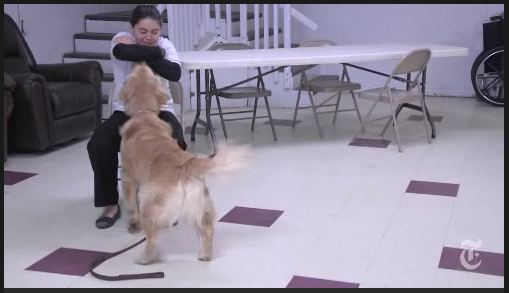
Your feel good story of the day, brought to you by the New York Times: a nonprofit organization trains dogs to help kids with all kinds of disorders, from autism to muscular dystrophy to seizures.

In October 1998, Shirk assembled a board and founded 4 Paws for Ability, a nonprofit corporation. She rescued Butler, a German shepherd mix, from a shelter; hired a trainer to prepare him for mobility work with the 12-year-old; and became a pioneer among service-dog agencies. “People started calling from all over to ask, Am I too young? Am I too old? Am I too disabled? Am I disabled enough?” she says. “I said, ‘If your life can be improved by a dog, and if you and your family can take good care of a dog, we’re going to give you a dog.’…” “We place dogs with kids in wheelchairs, kids on ventilators, kids with autism, kids with dwarfism, kids with seizure disorder and cognitive impairments; but if your dog does tricks, other kids want to meet you. Kids will ignore your disability if you’ve got a cool dog.”

Watch the video at the New York Times:

A trainer works with a dog on behavior modification techniques. Click the image to see the video.

It is also an amazing relationship dynamic to see occur between the children and their dogs, how the children with cognitive disabilities in particular are helped to see the world, in a way, through their dog’s eyes:

Alan M. Beck, the director of the Center for the Human-Animal Bond at Purdue University’s College of Veterinary Medicine, is among those intrigued by it. “There is a real bond between children and animals,” he told me. “The younger the child, the greater the suspension of disbelief about what an animal understands or doesn’t understand.” According to Beck, more than 70 percent of children confide in their dogs, and 48 percent of adults do. “The absolutely nonjudgmental responses from animals are especially important to children,” he says. “If your child with F.A.S.D. starts to misbehave, your face may show disapproval, but the dog doesn’t show disapproval. The performance anxiety this child may feel all the time is absent when he’s with his dog. Suddenly he’s relaxed, he’s with a peer who doesn’t criticize him.”

creativity · youtube

Superbowl ad actually encourages us to exercise (sorta)

Superbowl Sunday is almost upon us, and the Superbowl ads are already being released. Volkswagen has released an ad that features a dog getting in shape for his sport. While it’s obviously meant in jest, in some ways it’s great because it arguably sends the message that anyone can train for their personal goals, whether it’s chasing cars (and vaulting through trees), fitting through the doggie door, or whatever.
What are your goals? I’m participating in a 5k on Saturday, but what physical movement and enrichment do you hope to accomplish over the weekend?

behavior · environment · health · mental health

How to Find a Quiet Space for Meditation

Levitating, Meditating, Flute-playing Gnu
How do you find space to relax and/or meditate? Image via Wikipedia

Work has been really hectic lately, and I’m finding it can be hard to find a quiet place for myself, not only metaphorically, but even physically. My house is full of dog or husband, the bus is impossible, and it seems like there isn’t an empty spot anywhere in the whole 20-story building I work in.

Here is some great advice from blog Quieting the Mind “for finding a quiet space for meditation:”

Make sure everyone in the house knows not to disturb you. If you have young children who can’t understand this, make sure to meditate when your spouse or someone else is home, so they can care for the children during this time. It’s only ten minutes. Surely, someone can ward off any distractions.

Find the quietest room in your house and set a little area that is designated for meditation. Always use the same room and close the door when you meditate. This way, people will know not to disturb you.

Meditate at the same time every day. If your household knows that you wake up at 5 a.m. to get your daily meditation in every day, they’ll learn to respect your privacy during that time.

If all else fails, put up a sign: “Meditating: Do not disturb!” If you get a distraction (one that isn’t an emergency) pretend you don’t hear the person. They won’t continue interrupting you if they don’t ever get a response.

Invite others to meditate with you. They may enjoy it, but best of all, you’ll all have some quiet time. It may take some getting used to for everyone, so allow an adjustment period, but it can really be worth it.

more via How to Find a Quiet Space for Meditation.

How do you make space, both using time and physical space, to find a piece of quiet? I know of more than a few people who use their commute as their quiet time, but that doesn’t work for others (myself included). Where else?

anthropology · behavior · brain · community · happiness · health · mental health · psychology

Life Lessons Passed On

English: Elderly Muslim during the Republic of...

I was really inspired by that blog post I shared a couple of months ago about cancer survivors and what they’d learned about life. I also posted a survey done with older folks last year giving advice on what NOT to do.

Well, thankfully all of that hard-earned knowledge is coming out in book form. Many of the interviews can also be at legacyproject.human.cornell.edu. From the NYTimes:

Eventually, most of us learn valuable lessons about how to conduct a successful and satisfying life. But for far too many people, the learning comes too late to help them avoid painful mistakes and decades of wasted time and effort…

Enter an invaluable source of help, if anyone is willing to listen while there is still time to take corrective action. It is a new book called “30 Lessons for Living” (Hudson Street Press) that offers practical advice from more than 1,000 older Americans from different economic, educational and occupational strata who were interviewed as part of the ongoing Cornell Legacy Project.

Its author, Karl Pillemer, a professor of human development at the College of Human Ecology at Cornell and a gerontologist at the Weill Cornell Medical College, calls his subjects “the experts,” and their advice is based on what they did right and wrong in their long lives.

You can also read a summary of their advice in the article: Advice From Life’s Graying Edge on Finishing With No Regrets

What are your life lessons?

behavior · creativity · health · youtube

30 minutes of play a day!

*edit*: NOW with working YouTube link. Thanks for NOT telling me, people, gosh! 😛

In case you’re still trying to come up with a new year’s resolution, or even if you think you’ve got your goals for 2012 all set, you might want to make room for one more.

Ryan Ford, the man behind the DemonDrills workouts on YouTube and owner of Apex Movement, a Parkour and Crossfit gym in Colorado, makes a very convincing argument for just how easy it is to incorporate 30 minutes of fun exercise, i.e. play, into your day:

You’d be amazed at how easy it is to add a little play into your day, and how quickly that play adds up. It also helps get the creative juices flowing and helps you see the world in new ways, so it’s also good brain exercise.

architecture · design · disease · health

Designing and Building for Wellness

An overlay of two images: one of a river delta...
What does it mean to design with a person's wellness in mind? One architect has an idea. Image via Wikipedia

Great blog post from The Patron Saint of Architecture about what it means for her to be an architect and build and design things for people’s overall health and wellness:

As architects, we seek to inspire those who move through the environments we create.  It’s also our job to understand how the space will be used and create elements that support that use.  The last leg of the stool, a part we often overlook, is the need to make buildings that support wellness.  Even architects who design healthcare buildings often forget about this one as they work to meet many other challenges related to budget, program, operational  and code requirements.  Maybe it’s because wellness is such a slippery term.  Much like the term “green,” “wellness” is often bandied about, a buzzword that makes some aspect of a product, design or organization sound like it’s good for us. So how do we know if it really is- much less translate that into design elements?  I have been thinking about this issue for a while and even found an interesting website devoted to defining wellness complete with helpful questionnaires.

I’ve come to the conclusion that true wellness is multidimensional and positively impacts our physical, mental and social state of being.  With that in mind, I have also observed that, as a profession, we kind of, sort of, dip our toe in the waters of designing for wellness.  We embrace sustainable building standards, evidence-based design, lean design, even socially conscious strategies.  However, these are just quantifiers.  Building blocks of the wellness leg of the architecture stool, but not enough as stand-alones.  True architecture of wellness must incorporate all of these measures, but spring from a much deeper intent.

Read her recommendations for building spaces that promote wellness at her blog post: architecture of wellness


brain · happiness · mental health · music

Treating the Whole Patient

Icon from Nuvola icon theme for KDE 3.x.
Treating the whole patient, including mind and body, is becoming "cool" again. Image via Wikipedia

The faculty at University of Washington is pretty progressive in a lot of its research surrounding neuroscience and the mind, especially when it comes to Mental Health Care:

Researchers and professors at the UW, such as Dr. Jürgen Unützer, are driving innovative ways to improve access to high quality mental health care delivered in a manner that treats the whole person. Their efforts are focused on health care models that integrate behavioral health services into the primary care clinic and other heath care arenas, where the patients already receive care and have established provider relationships. Known as collaborative or integrated care, these models put the patient at the center of a health team – including their physician, a care coordinator and a psychiatric consultant – that collaborates on a patient’s treatment plan.

Unützer says he knew his research into new models of mental heath care delivery was on the right track when a patient described feeling like a tennis ball. This patient had a combination of health problems associated with diabetes along with alcohol problems and depression. As is common in the current health care system, the patient was being bounced around to different specialists to treat his individual symptoms. Dr. Unützer was concerned that patients like this, with a combination of behavioral health and medical conditions, were falling through the cracks and not receiving care that treats the whole person.

“The patient expects that the various providers are all talking to each other, but that is often not the case,” he says. “Who’s connecting the dots? Patients expect their care providers to sync up and know what’s going on with all of their conditions.”

More at UW Professional & Continuing Education.

Uncategorized

Kinect Helping With Senior Health

Tiger Place, an independent living center in Missouri, uses technology such as Kinect to closely monitor seniors’ movement to help prevent functional decline that can lead to falls and decreased mobility. From Microsoft.

From a Microsoft press release, but still really interesting: a researcher is looking at using Kinect to track a senior citizen’s walking more regularly than the usual once or twice a year to make sure they’ve still got that pep in their step:

What if technology could help prevent falls, and in some cases even prolong lives?

Marilyn Rantz and her colleagues at the University of Missouri are researching just that, using Microsoft’s Kinect to measure and monitor subtle changes in the gait and movement of older people. Using technology to measure the way people walk more completely and daily, rather than at bi-yearly doctor’s appointments, can give healthcare professionals a chance to intervene sooner.

[Independent Living Center] Tiger Place focuses on monitoring its residents with a network of sensors placed in apartments, a monitoring network that now includes Kinect sensors in many rooms. What’s more, Tiger Place is an “age in place” facility, meaning seniors don’t have to move to different housing as they get older and require more assistance – the new services they need as they age are brought in to them, Rantz said.

Several apartments in Tiger Place have a Kinect mounted near the ceiling in the living room, where day after day the devices gather a mountain of data about the resident’s movement and motion.

Helping seniors is just one of a growing number of healthcare applications for Kinect.

Doctors are also using Kinect to help stroke patients regain movement. Surgeons are using it to access information without leaving the operating room and in the process sacrificing sterility. Healthcare workers are even using it to help with physical therapy and children with developmental disabilities or Attention Deficit Hyperactivity Disorder (ADHD).

Thus, the genesis of the so-called “Kinect Effect” – a term coined in the hallways and conference rooms of Microsoft to describe the device’s increasingly widespread appeal and diversity of uses.

Read the entire release at Kinect Effect Reaches Into Hospitals, Senior Centers.

I’m a huge fan of Kinect hacks, especially when a Kinect is modified to help people move better in their homes and everyday surroundings. It is relatively cheap compared to a lot of other medical equipment, and the hack is often fun to use as well as being practical.

architecture · design · environment · health

Building a smoother ride to recover

A patient having his blood pressure taken by a...
Understanding environmental impacts like vibration can have a positive affect on patient recovery. Image via Wikipedia

I happened upon this tweet today:

@AIASeattle Did you know floor vibrations can affect patient outcomes?

Um, why no, no I didn’t. So I dug around a little bit and affirmed that, in fact, structural vibrations can in fact have an impact on patient recovery:

“Noticeable vibration leads many to fear structural collapse, although such fear is unwarranted in most cases because of the small displacements and stresses produced. Noticeable vibration is nevertheless undesirable in many occupancies because of its adverse psychological effect…It has been observed that continuous vertical floor oscillation becomes distinctly perceptible to people when peak acceleration reaches approximately 0.5 per cent g, where g is the acceleration due to gravity. People in residential, office and school occupancies do not like to feel distinct continuous vibration…

Continuous vibrations, defined here as vibrations lasting more than about 10 cycles, can arise from the periodic forces of machinery, from certain human activities such as dancing, or from vehicle traffic nearby. They can be considerably amplified when the periodic forces causing vibration are synchronized with a natural frequency of the structure – a phenomenon called resonance.”

Not only is shaking a problem, but there is also more and more research coming out that discusses the effects of the overall environment on a care-givers’ professional performance as well as a patient’s healing process:

“In a review of more than 600 articles, researchers found that there was a link between the physical environment (i.e., single-bed or multiple-bed patient rooms) and patient (e.g., fewer adverse events and better health care quality) and staff outcomes (e.g., reduced stress and fatigue and increased effectiveness in delivering care).

“There have been five other significant reviews of the literature relating to the physical environment and patient outcomes. Nelson and colleagues10 identified the need to reduce noise pollution and enhance factors that can shorten a patient’s length of stay (e.g., natural lighting, care in new/remodeled units, and access to music and views of nature); according to their study, patients can benefit from the skillful utilization of music and artwork. Ulrich and colleagues7 found research that demonstrated that the design of a hospital can significantly improve patient safety by decreasing health care associated infections and medical errors. They also found that facility design can have a direct impact on patient and staff satisfaction, a patient’s stress experience, and organization performance metrics. Three other reviews found that hospital design, particularly when single-bed rooms are employed, can enhance patient safety and create environments that are healthier for patients, families, and staff by preventing injury from falls, infections, and medical errors; minimizing environmental stressors associated with noise and inefficient room and unit layout; and using nature, color, light, and sound to control potential stressors.11–13

The Seattle branch of the AIA (that’s the American Institute of Architects) has hosting a talk specifically about how to design better, less drum-like floors, but is a nice indicator of how serious architects, designers, and other groups are taking this need to design and create better care facilities:

“Vibration criteria for hospital floors have become more stringent in the 2010 Edition of the Guidelines for the Design and Construction of Health Care Facilities (the FGI Guidelines). These new vibration requirements will increase structural construction costs in Healthcare construction. Understanding vibrations sources, criteria and benefits of different structural and non-structural approaches will provide healthcare designers with effective strategies to mitigate vibration issues and minimize cost impacts of the new requirements.”

For those who live in Seattle, there is a class on December 14th, 2011.

I’ve found some great examples of designing better medical facilities, but I’d love to hear about other projects you’ve seen, experienced, or even read about. Leave a comment with your thoughts.