children · creativity · design · environment · learning · Nature · play

Can This Industrial Designer Get Children Back Outside? | Natural Start

Nice to see toys being introduced that work with already existing toys (sticks!), and encourages kids to go find their own sticks and go play in nature.

As an inductee to the National Toy Hall of Fame, the stick doesn’t need much improving as a classic toy. For as long as there have been children and sticks, sticks have served as a versatile toy in outdoor play. But connecting sticks takes a bit of ingenuity.

Enter Christina Kazakia, a design student with a mission. As she explains, “I designed these flexible silicone connectors as part of my graduate thesis in Industrial Design at the Rhode Island School of Design. My goal was to create prompts to engage children with their surrounding natural environment.” Called Stick-lets™, these connectors help small children build big structures like forts, teepees, lean-tos, or other creations.

Find out more about the toy and her kickstarter via Can This Industrial Designer Get Children Back Outside? | Natural Start.

behavior · brain · children · cognition · creativity · culture · happiness · health · mental health · psychology · Social

20+ Drawing Ideas and Activities | picklebums.com

Staying playful and creative sometimes requires going back to your roots, or at least your crayons. Drawing, scribbling, doodling, and coloring have all been found to help with destressing, thinking out ideas and problems, and keep brains active into old age.

Drawing is also a great learning activity with lots of fine motor skill and development, problem solving, language development and social learning opportunities… (Editor’s note: all of which tie into the above-mentioned benefits, and these skills are all useful for both grownups and kids to practice and refresh on a regular basis).

Drawing is a way for children everyone to process their world, to represent and share their ideas and to explore new skills and information.

Drawing with Geometry Tools
Graph Paper Drawing
Graph Paper Drawing
Collaborative Doodle Drawings

see all 20+ Drawing Ideas and Activities at picklebums.com.

If you think this is just “kid’s stuff” I dare you to try some of these, especially the collaborative drawing exercise. It’ll (potentially) expose some growth areas of yourself and/or others very quickly. 😛

creativity · culture · play

Intimate Photos Reveal the Day-to-Day Lives of Stormtroopers | Raw File | WIRED

Perhaps not very scholarly, but I love this growing trend of making “Day in the Life” photos of toys and other objects. It’s a great, playful exploration of space and creativity.


In the Star Wars movies, the Imperial Stormtroopers’ activities are pretty limited: Marching. Shooting things. Keeping order. More marching. What do they do the rest of the time? Twerk? Wait for the bus and bully battle droids like the rest of us? (OK, most of us don’t bully battle droids.) Photographer Zahir Batin has a few ideas, and they include feeding baby chickens.

Batin’s still-life photos, created with action figures and largely homemade props, provide a glimpse of Stormtroopers after the big battles—stringing crime scene tape, for example, and doing the splits, Jean-Claude Van Damme-style, on their 74-Z speeder bikes. But the Malaysian photographer’s pictures also reveal a grimmer reality. We see troopers carrying wounded soldiers from the battlefield and mourning fallen comrades. We also see dichotomy of life as a Stormtrooper, roughing up battle droids one moment and feeding chicks the next.

The photo series is “just a hobby to fill free time on the weekends,” Batin says, but it’s blossomed into dozens of pictures. The bulk of the time spent creating each image is spent on preparation. Because “my Photoshop skills have a limit,” Batin tries to make each scene as realistic as possible before snapping the frame. The resulting pictures are as gorgeous as they are humorous (or, of course, tragic).

Check out some of the photographer’s best Stormtrooper still-life photos in the gallery above, then check out even more on deviantArt and 500px.


via Intimate Photos Reveal the Day-to-Day Lives of Stormtroopers | Raw File | WIRED.

community · culture · play

I Played The World’s Largest Tetris Game | The Creators Project

A first-hand account of being involved in a large community-organized play event.

As much as I love Philadelphia, I never considered it a breeding ground for innovation, but over the past few years, the city has built up enough of a tech scene to spawn an entire week dedicated to celebrating it. To kick off its fourth year, Philly Tech Week gave locals the chance to play Tetris on the Cira Centre, a building conspicuous for bearing a grid of color changing LEDs that sometimes display the Phillies logo. It’s the second game Drexel University professor Frank Lee has brought to the Cira Centre, topping his giant Pong game last year. “What was gratifying for me about the Pong project last year was not that it was the world’s biggest videogame display, although that’s kind of cool. Rather, it was the sharing of the moment by the two people playing, the hundreds of people watching, and thousands of people across Philadelphia watching,” says Lee. Similarly, giant Tetris is more of an art project than a feat for the record books. Lee aims to create a social benefit, what he calls an “aesthetic of a shared moment.”

more details via I Played The World’s Largest Tetris Game | The Creators Project.

Just a fun side note: being part of a large collected effort, whether it’s volunteering at a beach cleanup or playing group Tetris, is very beneficial to mental health as well.

This past Saturday was International Pillow Fight Day, for example, and it received a lot of positive feedback from grown-ups who participated, even with the occasional mention of a hard hit. So pull out the cubes and let’s get it on!

architecture · children · creativity · design · health · play

These are the most fantastical playgrounds ever built

Having fun, exciting spaces to play is important for both kids and grown-ups, so it’s nice to see what’s out there for kids, and hopefully grown-ups will follow suit.

When you’re a kid, visiting an amazing playground is the greatest experience ever. And these fantasy-themed playgrounds around the world have us wishing that we were kids again so we could run around in them like small, crazy people.

more via These are the most fantastical playgrounds ever built.

All of these are in more urban settings, and it would be cool to see some more natural playscapes, but the ideas behind some of these parks are fantastic!

architecture · creativity · culture · environment · work

Twitter to Install 19th Century Log Cabins in its SF Headquarters | Inhabitat

Do you think better in a small, cozy place, or something a little more rustic than modern offices? Twitter now has got its employees covered in that department.

Employees at Twitter’s San Francisco headquarters will soon have a chance to tap their creativity inside repurposed 19th century log cabins. The tech company has made a plan to install two homesteader cabins salvaged from historic ranches in Montana. The cabins will be installed within an open area in the headquarters, and serve as a creativity-inducing dining area.

The cabins, which are nicknamed Stanford and Belt to honor the Montana towns they were sourced from, will join other salvaged materials in the Twitter offices. Twitter’s logos throughout the office are made from reused California license plates, and the reception desk is made from salvaged bowling alley planks.

Like other tech companies in Silicon Valley, Twitter’s office is chock full of gimmicky but enjoyable features to inspire its employees. The refurbished office includes a yoga studio, rooftop garden, arcade and culinary treats like a cupcake shop, all clad in salvaged wood. The cabins are expected to be installed in the coming weeks.

more via Twitter to Install 19th Century Log Cabins in its SF Headquarters | Inhabitat – Sustainable Design Innovation, Eco Architecture, Green Building, or from its source CBS.

Going into a novel space, or even a space that feels special, can really boost creativity and/or help people focus on a project. It can also help to have some place quiet and private to concentrate and really dive in to something, whether it’s a log cabin at work or just a small “phone booth” style room.

What small, perhaps quirky, space do you use for yourself to get work done? Let us know about it in the comments below.

anthropology · architecture · behavior · community · culture · design · environment · happiness · health

Gorgeous Viewpoint Platform Invites Busy Londoners to Enjoy the Wildlife of Regents’ Canal | Inhabitat

Gorgeous Viewpoint Platform Invites Busy Londoners to Enjoy the Wildlife of Regents' Canal | Inhabitat - Sustainable Design Innovation, Eco Architecture, Green Building

Living in a big city like London, even with parks and trees, it can be hard to find a spot dedicated to just being quiet and taking in nature.

So the Finnish Institute of London, The Architecture Foundation and London Wildlife Trust just unveiled Viewpoint, a floating platform where Londoners can slow down and enjoy Regents’ Canal. Designed by Finnish architects Erkko Aarti, Arto Ollila and Mikki Ristola, this permanent structure serves as a placid retreat for visitors to nearby Camley Street Natural Park and as an outdoor learning environment for school children and adults.

more via Gorgeous Viewpoint Platform Invites Busy Londoners to Enjoy the Wildlife of Regents’ Canal | Inhabitat – Sustainable Design Innovation, Eco Architecture, Green Building.

Designating spaces as official rest areas is a great way to cue people to actually take breaks, and clue them in to their surroundings, to take a minute to stop and observe.

behavior · creativity · design · health · mental health

Don’t stop knitting! It keeps you healthy. : TreeHugger

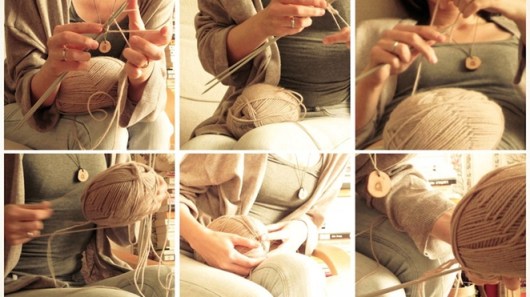
Taking time to destress and be creative has great benefits, both physically and mentally. Take knitting, for example:

It turns out that knitting has incredible health benefits. It makes people feel good in just about every way. A bit of research has revealed a wide range of ways in which knitting helps humans cope, physically and mentally.

1. Knitting is used for therapy. It’s a powerful distractant, helping people manage long-term physical pain. For those who are depressed, knitting can motivate them to connect with the world. It is a conversation starter, allowing people to interact politely without making eye contact. It builds confidence and self-esteem.

2. Knitting is supremely relaxing, which is extremely important for reducing stress and anxiety. Dr. Herbert Benson, founder of Harvard’s Mind/Body Medical Institute, wrote The Relaxation Response, in which he recommends the repetition of a word, sound, phrase, prayer, or muscular activity to elicit “the relaxation response” – decreased heart rate, muscle tension, and blood pressure. Knitting is likened to meditation, sometimes described by knitters as “spiritual” and “Zen-like.”

read more reasons, like social connection and confidence boosting, via Don’t stop knitting! It keeps you healthy. : TreeHugger.

I have always felt like I SHOULD learn how to knit, but I actually find the idea of having to keep count and keep track of where I’m at stressful, but maybe I should just give it a try. Thoughts? Leave them in the comments below.

behavior · children · creativity · family · play

Goodbye screen time, hello awesome kid | Offbeat Families

A great example of how letting your kid have free play, and encouraging it over screen time, can have wiiiiide reaching positive consequences.
Four months ago, I told my husband that we needed to cut out all screen time during the week. While he understood the merits of the proposal, he balked at the logistics, telling me that there was no way that he could handle morning routine alone without television (to accommodate preschool hours we stagger our work schedules, with one parent leaving an hour or two before the other). I disagreed, and, being the bull-headed lady that I am, waited him out until he agreed to a screen-free weekday existence on a trial basis.

To prepare for the transition, I devised a series of “Mystery Boxes” for each day of the week. These boxes were stacked on the table each morning, and Uli got to choose one for each morning. Inside, I placed a project or special toy that would keep him occupied while Dad showered and fixed breakfast. One morning it was a Spider-Man puzzle, the next colored pencils and pictures I’d drawn for him to color. All of the toys or projects were sourced from forgotten objects in his toy box or from our craft and art supplies. His favorite Mystery Box item, though, was an old digital camera that he used to snap the most unflattering photos that have ever existed of myself and his father.

We only used the Mystery Boxes for about two weeks, and after that Uli was able to play in a more self-directed and creative manner than he ever was able to when he had weekday screen time. We were actually shocked by how quickly he adjusted to the no-tv-during-the-week proclamation. His teachers at school also noticed a difference, telling us that Uli was more engaged than he had been previously — a side benefit we hadn’t expected.

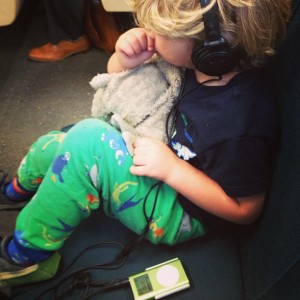
And in August, Uli and I took our first long plane trip without the iPad — including one fourteen-hour travel day. His dad had loaded a nine-year-old iPod with Uli’s favorite songs, which amused him for most of the plane trip, and in the airport, he did relay races in the terminal. It was a really successful experiment, and we have no plans to use the iPad again for travel.

read more about Uli’s transition via Goodbye screen time, hello awesome kid | Offbeat Families.

What have you done to encourage free play for your kids or yourself? Share in the comments below.

community · culture · design · happiness

Ear Sculpture Listens To Citizen Complaints

Making space for listening and being heard…

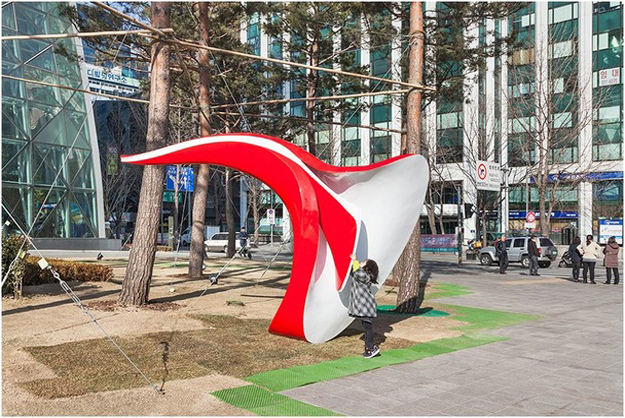
The normal procedure for submitting a complaint to the government is to write a letter, send an email, or make a long drawn-out phone call. In Seoul, South Korea, there’s an alternative – yelling into a giant sculpture shaped like an ear.

Designed by artist Yang Soo-in, and backed by the organization, Lifethings, the sculpture sits outside City Hall in Seoul. It symbolizes the fact that Mayor Park Won-soon and his administration are willing to listen to the people.Since it’s installation, Koreans have lined up to speak their woes or ideas for civic improvement into the impressively sized artificial ear.

more via Ear Sculpture Listens To Citizen Complaints [Pics] – PSFK.