architecture · community · creativity

Public art makes people invested in the land: an OpenIDEO idea

OpenIDEO asked “How might we inspire and enable communities to take more initiative in making their local environments better?”

One of my responses:


Install public art to create community, sense of place

Install public murals and other public art to create a sense of place and add beauty to urban spaces, which leads to more interest in and conservation of the environment as a whole, including the natural environment.

Public art creates a sense of place and space, and makes people more aware of their environments, more invested in the space, and more interested in preserving other things in their environment.
From a Grist article: “dozens of painted plazas, dubbed Intersection Repairs, pepper the map not just of Portland but also of Los Angeles, New York, St. Paul, and Seattle.
“In Seattle, a City Repair chapter formed and facilitated several intersection painting projects, including a ladybug in the Wallingford neighborhood. Residents meet annually to repaint the mural and hold a block party. “Our goal is to cut down traffic and bring the community together and create a sense of neighborhood,” Eric Higbee, who led the ladybug painting, told the Seattle Times.
“It’s not about the paint,” says professor Jan Semenza, a professor of public health at Portland State University who lives near the Sunnyside Piazza and has researched intersection repairs. “It’s about neighbors creating something bigger than themselves.” As an everyday intersection becomes someplace special, residents begin to experience the value of community.”
There are other examples of public art and murals being installed that have created a renaissance in a neighborhood, from New York to Brazil.
Guerilla street art has also started to appear over the last couple of years, creating awareness and interest in preserving the community. In Seattle, when a woman knit a sweater for a tree, it created interest in the tree and a desire to preserve it. Even something as simple as “repairing” walls and buildings with colorful Legos, such as the work that Jan Vormann has been doing for the last couple of years, has made people more invested in repairing and preserving their community.
While it is not a direct impact on the natural environment, it is a positive impact on the built environment, and does create a sense of place and overall higher investment in the neighborhood and local environment.

Read about their next challenge too.

education · school · youtube

Why We Need Physical Education


Dr. Thom McKenzie explains why it’s so important for children to have quality Physical Education in school and how caring adults can support it. Designed especially for parents, teachers, school board members and administrators.

behavior · community

Building gardens to promote community

Before I share my ideas for the latest OpenIDEO challenge, I wanted to capture some of the ideas I submitted for their challenge “How might we inspire and enable communities to take more initiative in making their local environments better?

Here is my first one:

Community gardens create ownership, a sense of place, and shared goals

Community gardens provide green space, community ownership, local landmarks and create a communal space for people to share, and beauty as well as food!

Urban farming and agriculture has exploded in popularity in the United States, and . community gardens are now present in all 50 states. These communal green spaces can be as small as a parking space or as large as a few acres. They can be used to produce food, act as filtering systems for urban runoff such as rain gardens, or simply grow flowers.
Research is finding that these gardens are beneficial to communities for numerous reasons. First, these gardens provide green space and support the local environment, from migrating birds and bees to potentially filtering urban runoff. Second, they can often supplement vegetables for communities who live in densely urban areas where it can be hard to access fresh fruits and veggies through a grocery store. Third, these gardens create a sense of ownership not only for those working actively in the garden, but anyone who lives in the neighborhood. Creating this sense of ownership for a small space makes it more likely that communities will work together to protect and save larger green spaces, such as beaches or parks, that the community can share and enjoy in.
Community gardens are easy to set up and maintain, with minimal initial investment other than some seeds and a shovel. The key to success would be the need to designate a leader at first to spearhead the building and maintaining of the garden, to teach others and look over things until the garden was established and other knowledgeable gardeners began to work the space, or new gardeners who learned from experience in the community garden. The garden leader would need to be able to lead but not “own” the garden, but rather make it accessible for all community members.

anthropology · behavior · community · culture · environment · happiness · health · mental health

OpenIDEO – How might we create healthy communities within and beyond the workplace?

Digicorp workplace
OpenIDEO asks how do we promote wellness in the workplace. (Photo credit: Wikipedia)

Wow, OpenIDEO is on a role lately with their challenges that get my creative juices rolling and my passions up, in a good way! This latest challenge is about wellness in the workplace:

Together with Bupa and the International Diabetes Federation, we’re asking our global community to help us explore how people can best be supported in the workplace to make positive changes to their health and wellness – and what skills and tools are needed to pass these positive changes onto their networks of co-workers, family and friends.

via OpenIDEO – How might we create healthy communities within and beyond the workplace?.

As the Chair of the Wellness Committee at my job for just under a year, we tried out a lot of different wellness incentives, some with better results than others. I feel very passionately about offices promoting and encouraging wellness; we spend the majority of our waking lives there, it’s cheaper in the long run for companies to have healthy and happy workers, and it promotes productivity and dedication from employees.

What are your ideas? Add them to the inspiration. I’ll have to share some of my ideas for this challenge on the blog, as well as my ideas from the previous OpenIDEO challenge I mentioned, which is currently in the concepting phase.

behavior · cognition · creativity · environment · play · youtube

TED Blog | 10 talks about the beauty — and difficulty — of being creative

Creativity
Creativity (Photo credit: Mediocre2010)

I have been on vacation in California this week, playing with deer, ground squirrels, sea otters, sea lions, harbor seals, pelicans, sparrows, sheep, dogs, cats, persimmons, pomegranates, oak trees, poplars, and other assorted flora and fauna. It also means I haven’t been feeding and tending to this blog as much as I would like. So, to hold you over until I am back into my usual swing of things, I am providing a link to a collection of 10 TED talks on Creativity.

Why TED?

I like to think of TED talks as little mental snacks, so this smattering of talks about creativity, both as a blessing and a curse, when it flows and when it doesn’t, and what you can do about it if anything, are a great collection of videos for you to snack on.

Why creativity?

Because I see creativity as merely a facet of play, so any research or discussion of creativity is also beneficial for talking about play. People need creativity in order to play. Creativity is also a key element to a playful space. Writers and artists often need specific environments to create (or at least think they do). And, for some reason, I find it’s easier for academics and business types to talk about creativity than play, when in many regards they are talking about the same thing. You say tom-A-to, I say tom-au-to…

Either way, enjoy!…

TED Blog | 10 talks about the beauty — and difficulty — of being creative.

architecture · children · design · environment · happiness · Nature · play

The Best Playground Is The One Nature Provided | Co.Exist: World changing ideas and innovation

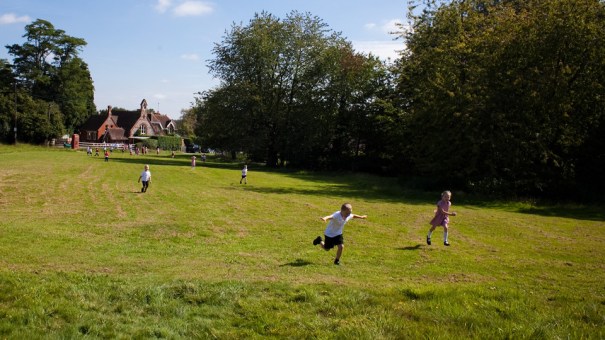
children lawn running

A recent article in the online magazine Co.EXIST discussed a study that found children benefit from being in natural environments, even if the environment is designed to appear natural but is actually human-made:

Dawn Coe, an assistant professor in the Department of kinesiology, recreation, and sport studies at the University of Tennessee spent time observing the behavior and time children spent playing on a local playground. After playground renovations added a gazebo, slides, trees, a creek, and a natural landscape of rocks, flowers and logs, Coe returned a year later to observe differences. Working with a statistician, Coe found children spent twice as much time playing in the natural landscape, and were less sedentary after the renovation and more active.“Natural playscapes appear to be a viable alternative to traditional playgrounds for school and community settings,” said Coe in a university statement. “Future studies should look at these changes long-term as well as the nature of the children’s play.”

via The Best Playground Is The One Nature Provided | Co.Exist: World changing ideas and innovation.

I attended a conference a couple of years ago where playground designers were reporting discovering the exact same thing – if you give a kid a pile of dirt and tree bark to play with and a bucket of water, they will have WAY more fun, play more, and learn some things as well.

This shouldn’t come as a surprise based on previous research on us humans:

For decades, scientists have reported our species exhibits a consistent, if not quite understood, response to spending time around nature: it boosts our mental and physical well being.

The scattering of findings have held in hospital beds, public housing, and Japanese forests. A 2001 study of public housing found the mere presence of trees and grass reduced reduced reported aggression and violence. Another showed people shown a stressful movie recovered to a normal state–as measured by metrics such as heart rate, muscle tension, and blood pressure–“faster and more complete[ly]” when exposed to natural rather than urban environments.

However, a lot of cities and schools are reluctant to install these kinds of playgrounds since they are considered “untested” or approved by several school or city boards. Thankfully, according to the article, cities are beginning to adopt and install these types of playgrounds:

“Natural playscapes are part of a growing trend appearing in cities across the US including Boston, Phoenix, Chicago, New York, Auburn and others.”

I hope to see more of these pop up around major cities. Do you have a natural playscape near your home? Tell us about it in the comments below.

anthropology · behavior · brain · community · culture · happiness · health · mental health · play · psychology · Social

Unhappy Employees Cost More (and how to reduce that cost)

Employment Exhibition
What does it take to reduce on-the-job depression and create an overall happier work environment? (Photo credit: Modern_Language_Center)

A recent study of health factors and their associated costs at seven companies, published in the journal Health Affairs, found that “depression is the most costly among 10 common risk factors linked to higher health spending on employees.”

The analysis, found that these factors — which also included obesity, high blood sugar and high blood pressure — were associated with nearly a quarter of the money spent on the health care of more than 92,000 workers.

First the employees were assessed for health risks, then researchers tracked their medical spending from 2005 through 2009.

The average medical spending for each employee was $3,961 a year. In total, $82 million, or 22 percent, of the $366 million annually spent on health care for the workers was attributed to the 10 risk factors, the study found.

The relationship between higher spending and depression was the strongest, with 48 percent more spending for workers with a propensity for that widespread problem.

via VPR News: Depression And Health Spending Go Together.

Now, to be fair, this is a fairly small study of just seven companies, and the article didn’t say how many employees worked at these companies. However, this is definitely a trend that has been spotted at least anecdotally by many HR managers, so it’s nice to see that there is some “official” analysis being done on the issue.

So what can employers do about this? My fear is that employers would discriminate, unintentionally or intentionally, against people who suffer from depression. But these days many people will be diagnosed with depression due to a temporary life situation such as a death in the family, or their jobs, so being fired for temporary sadness is probably not a good idea for companies.

Instead, my hope is that companies would invest more on making people’s job satisfaction higher. As of two years ago, Americans reported the lowest job satisfaction ever recorded. That means employers can be doing A LOT more to improve their employees’ lives at work. And a lot of that has to do with feeling supported by their managers, and feel like they are heard and respected and overall a part of the team. A lot of that comes from having fun at work.

This philosophy has been spouted in several different books and magazines, and has been shown to work well in classrooms as well, referred to as the “Responsive Classroom” approach.

The Responsive Classroom approach centers on several ostensibly mundane classroom practices. Each morning students form a circle, greet one another, share bits of news, engage in a brief, fun activity and review the day’s agenda. The idea is to build trust, ensure a little fun (which adolescents crave) and confront small problems before they become big. Students might welcome one another with salutations from a foreign language. An activity might involve tossing several balls around a circle in rapid succession. Students share weekend plans or explore topics like bullying before lessons begin. (New York Times)

This approach could very easily be applied to a business setting, in fact it sounds like a team kick-off meeting one might see in a corporate environment. Taking time to connect with other coworkers and laugh a little before diving in to the day’s work has been shown to work wonders for productivity and boost morality in both school and work settings.

There is definitely a  drive and expectation in many industries to work longer, faster, harder hours, and be available and working at all hours. But that drive is unsustainable, demonstrated by the low job satisfaction and high burnout rates in many industries, from high-tech to physicians. Taking time to play a little bit at work, or just connect with coworkers, is being shown as an effective way to reduce depression related to work and job burnout, increase productivity, and create a more cohesive company with more loyalty overall to the company’s mission.

So long story short: remember to bring the koosh ball to your next meeting.

anthropology · behavior · community · creativity · Social

When Play Gets Political: Puppets Protest At The U.S. Capitol

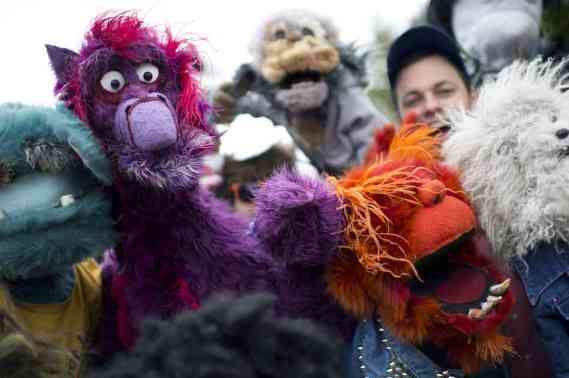
Puppets at the Million Muppet March protest this past weekend.

When presidential hopeful Mitt Romney threatened a childhood icon with funding cuts during a debate last month, people took to the streets and protested…with puppets. In what was deemed the Million Muppet March, people used puppets, marionettes, and other toys to show their unhappiness with the idea of funding for public broadcasting being cut:

Organizers say at least 600 people signed up to attend the march in person, with a few thousand more participating virtually on Facebook, Twitter and their own marches around the country. So far, the pictures on the group’s Facebook page show the marchers bundled in puppet-like hats with animal ears, carrying coffee, placards with statements like “Grouches of the World, Unite!” and, yes, more than a few puppets.

via They’re Furry And Furious: Puppets Protest At The U.S. Capitol : The Two-Way : NPR.

This protest is not only about supporting Public Broadcasting, but is also about play on several different levels. First, Big bird and other Sesame Street characters are a big part of many Americans’ childhoods. While imaginary, to many people these Muppets were very real and very important play characters during the formative years of their lives.

Second, the use of puppets and toys to protest politics is an age-old tradition. People in countries ranging from the England to Venezuela to Thailand have used puppets and epitaphs during protests to get a laugh out of people as well as get their attention. Even the court jester in days of old could get away with some nasty political commentary because it was said “in jest.”

Full disclosure, I am a huge Muppet fan, and am happy to see that others agree with me that Big Bird and PBS are worth funding, and I’m especially happy that people showed their support using puppets.

Uncategorized

The title of this ASLA blog post says it all…

Unknown's avatar

The title of this ASLA blog post says it all…

View original post

Uncategorized

Spooky Eggs

A creative and tasty way to play with your food. Happy Halloween!
(via Facebook)