architecture · creativity · culture · environment · work

Twitter to Install 19th Century Log Cabins in its SF Headquarters | Inhabitat

Do you think better in a small, cozy place, or something a little more rustic than modern offices? Twitter now has got its employees covered in that department.

Employees at Twitter’s San Francisco headquarters will soon have a chance to tap their creativity inside repurposed 19th century log cabins. The tech company has made a plan to install two homesteader cabins salvaged from historic ranches in Montana. The cabins will be installed within an open area in the headquarters, and serve as a creativity-inducing dining area.

The cabins, which are nicknamed Stanford and Belt to honor the Montana towns they were sourced from, will join other salvaged materials in the Twitter offices. Twitter’s logos throughout the office are made from reused California license plates, and the reception desk is made from salvaged bowling alley planks.

Like other tech companies in Silicon Valley, Twitter’s office is chock full of gimmicky but enjoyable features to inspire its employees. The refurbished office includes a yoga studio, rooftop garden, arcade and culinary treats like a cupcake shop, all clad in salvaged wood. The cabins are expected to be installed in the coming weeks.

more via Twitter to Install 19th Century Log Cabins in its SF Headquarters | Inhabitat – Sustainable Design Innovation, Eco Architecture, Green Building, or from its source CBS.

Going into a novel space, or even a space that feels special, can really boost creativity and/or help people focus on a project. It can also help to have some place quiet and private to concentrate and really dive in to something, whether it’s a log cabin at work or just a small “phone booth” style room.

What small, perhaps quirky, space do you use for yourself to get work done? Let us know about it in the comments below.

behavior · happiness · play

The Secret Lives Of Cows: Jumping For Joy : The Salt : NPR

People often interpret animal behaviors as one thing when in fact it’s something different. But in this case, frolicking is indeed frolicking.

It turns out “cows love a change of scenery. And a switch from the concrete floors of the indoors to a soft green pasture would surely help break a bovine’s winter blues.

In fact, cows are suckers for novelty, adds de Passille’s colleague, . They get an extra spring or leap in their step “whenever something new or unexpected happens,” he says – say, changing their bedding or letting them out or back in. “We think it’s a sign that things are well with them.”

more via The Secret Lives Of Cows: Jumping For Joy : The Salt : NPR.

behavior · culture · disease · happiness · health

Statistics Say We Should Take Friday Off From Work. All The Fridays, Forever And Ever.

This is a great visual follow up to my post from a couple of weeks ago about the value of not overworking, and making time for play.

It’s nice that they also offer a possible solutions visual.

Statistics Say We Should Take Friday Off From Work. All The Fridays, Forever And Ever.

Statistics Say We Should Take Friday Off From Work. All The Fridays, Forever And Ever.

more graphics via Statistics Say We Should Take Friday Off From Work. All The Fridays, Forever And Ever.

Uncategorized

The truth about travelers

A very interesting read about traveling and those who find joy in the exploration of new spaces, to the point of what others may see as “sacrificing” other things that bring us happiness (a large house, giant movie collection, etc.).

Satori's avatarinfinite satori

Press play first.

_DSC7058 copy

We have been called many things. Travelers, by default. But we like to be called nomads. Explorers. Vagabonds. Adventurers. Wayfarers. Modern gypsies. Wanderers. We’ve adopted them all. A growing breed of humans with restless feet and the inability to stay still, the inability to stay in one place.

That is who we are. And that’s just the gist of it.

We come from all walks of life, from bustling gray colored cities, sleepy beach towns, snow-covered metropolises, small villages nestled in between lush green mountains, we come from everywhere. But our inner gravity always brings us to the same place… the road.

We deem courage weighs more than money when it comes to travel. We’re not rich, not financially well-off and we don’t travel for luxury. Our money does not come from rich parents, trust funds, or whatever privileges you think we have in order to maintain…

View original post 1,067 more words

anthropology · architecture · behavior · community · culture · design · environment · happiness · health

Gorgeous Viewpoint Platform Invites Busy Londoners to Enjoy the Wildlife of Regents’ Canal | Inhabitat

Gorgeous Viewpoint Platform Invites Busy Londoners to Enjoy the Wildlife of Regents' Canal | Inhabitat - Sustainable Design Innovation, Eco Architecture, Green Building

Living in a big city like London, even with parks and trees, it can be hard to find a spot dedicated to just being quiet and taking in nature.

So the Finnish Institute of London, The Architecture Foundation and London Wildlife Trust just unveiled Viewpoint, a floating platform where Londoners can slow down and enjoy Regents’ Canal. Designed by Finnish architects Erkko Aarti, Arto Ollila and Mikki Ristola, this permanent structure serves as a placid retreat for visitors to nearby Camley Street Natural Park and as an outdoor learning environment for school children and adults.

more via Gorgeous Viewpoint Platform Invites Busy Londoners to Enjoy the Wildlife of Regents’ Canal | Inhabitat – Sustainable Design Innovation, Eco Architecture, Green Building.

Designating spaces as official rest areas is a great way to cue people to actually take breaks, and clue them in to their surroundings, to take a minute to stop and observe.

behavior · creativity · design · health · mental health

Don’t stop knitting! It keeps you healthy. : TreeHugger

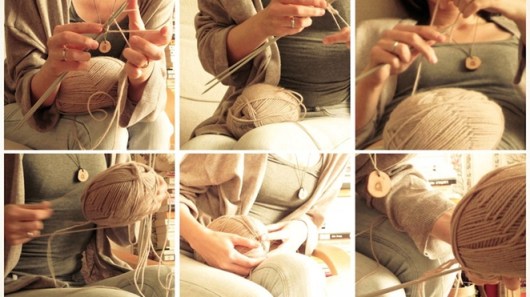
Taking time to destress and be creative has great benefits, both physically and mentally. Take knitting, for example:

It turns out that knitting has incredible health benefits. It makes people feel good in just about every way. A bit of research has revealed a wide range of ways in which knitting helps humans cope, physically and mentally.

1. Knitting is used for therapy. It’s a powerful distractant, helping people manage long-term physical pain. For those who are depressed, knitting can motivate them to connect with the world. It is a conversation starter, allowing people to interact politely without making eye contact. It builds confidence and self-esteem.

2. Knitting is supremely relaxing, which is extremely important for reducing stress and anxiety. Dr. Herbert Benson, founder of Harvard’s Mind/Body Medical Institute, wrote The Relaxation Response, in which he recommends the repetition of a word, sound, phrase, prayer, or muscular activity to elicit “the relaxation response” – decreased heart rate, muscle tension, and blood pressure. Knitting is likened to meditation, sometimes described by knitters as “spiritual” and “Zen-like.”

read more reasons, like social connection and confidence boosting, via Don’t stop knitting! It keeps you healthy. : TreeHugger.

I have always felt like I SHOULD learn how to knit, but I actually find the idea of having to keep count and keep track of where I’m at stressful, but maybe I should just give it a try. Thoughts? Leave them in the comments below.

children · cognition · creativity · happiness · learning

‘The Lego Movie’ Is An Entire Film About Fighting For Free Play!

I am a huge fan of Legos, and so the little kid in me was super excited to see this movie trailer. But the more I read about it, the more the grown-up in me gets excited to. The whole premise of the movie is about fighting a bad guy who wants to keep people from getting creative with Legos and playing with them just the way they want. The goal of the heroes is to keep free play, well, free.

the_lego_movie_2014-wide
Photo from the Forbes review

“The Lego Movie” explores what may be the essential question of Lego building as it applies to life: Must you dutifully follow the instructions, or can you combine pieces creatively to make anything you dream up? In the animated children’s comedy, a repressive overlord voiced by Will Ferrell is so maniacal about controlling the residents of Bricksburg that he has a weapon designed to glue all the pieces of their world together, putting an end to freestyle play. Only a band of wisecracking rebels including Chris Pratt, Elizabeth Banks, Will Arnett and Morgan Freeman can stop him. The film is computer-animated but made to look as if all the scenery is built out of real Lego pieces. Everything moves in a way that simulates the stop-motion films that thousands of Lego customers have created with their pieces and posted online.

more via ‘The Lego Movie’: How it Came to Be Built – WSJ.com.

I am so excited to see a big budget movie with a lot of big budget actors devoted to promoting free-thinking free play, and some of the clips do in fact look really creative and are all about messing with your perceptions of the Lego reality!

behavior · children · play

I did these things as a kid (but my kids won’t) – Illustrated with Crappy Pictures™

The blogger of Illustrated with Crappy Pictures posted a couple of years ago about the differences between her childhood and her kids’ childhood, and how we are much more focused on safety, for better or for worse.

There are things I did that my kids will never do.

This type of comparison would be way more interesting coming from my grandparents who walked 50 miles barefoot uphill both ways in the snow and all that.

Still. Times have changed.

My aunt (who is only six years older than me) used to pull me in my Radio Flyer® wagon by tying a rope to her bike. On country roads. Down hills. No helmets.

But the wagon would go too fast.

And she’d yell “put the brakes on!” which actually meant “PANIC!” because there weren’t any brakes. We stopped ourselves by turning into the ditch and wiping out. It was fun.

My kids? They wear helmets at the dinner table. You know, just in case they fall off their chairs.

via I did these things as a kid (but my kids won’t) – Illustrated with Crappy Pictures™.

There are definitely some good things to avoid with her own kids, but even the author questions whether she is being too safe.

Are parents as a whole more protective these days? And where is the line drawn between good protection (seat belts and not letting your kids drink bleach) and being over-protective to where it is stifling for them. I think about this sometimes. FreeRangeKids is an excellent read if you are interested in this sort of discussion.  

What are your thoughts about letting kids go out and explore on their own? Obviously some of it is determined by your local environment, like if you live in the city or a country road. But letting kids explore on their own is also crucial to good development. Tough topic.

creativity · design · play

Whimsical Inventions Solve Problems People Didn’t Even Know They Had – PSFK

I loved Wallace and Grommet for all the creative inventions Wallace developed. Turns out artist Dominic Wilcox creates similar odd inventions in real life, and businesses are willing to donate space to display them.

This time it’s the turn of celebrated British department store Selfridges to let Wilcox’s creative wings spread and take over their prestigious windows on behalf of the store’s Festival of Imagination. For the project, Wilcox created the “Variations On Normal” where his eccentric yet logical inventions give physical form to figments of his imagination. Some of his specially made pieces include an umbrella with built-in flower pots and a suitcase with robotic legs that follows its owner.

more via Whimsical Inventions Solve Problems People Didn’t Even Know They Had [Pics] – PSFK.

behavior · brain · cognition · happiness · health · Mental · mental health · Nature · psychology

Why Your Brain Needs More Downtime – Scientific American

I’m working on an article for work, and came across this article as part of my research for the article. It pretty much sums up everything I wanted to say (darn it!).

Americans and their brains are preoccupied with work much of the time. Throughout history people have intuited that such puritanical devotion to perpetual busyness does not in fact translate to greater productivity and is not particularly healthy. What if the brain requires substantial downtime to remain industrious and generate its most innovative ideas? “Idleness is not just a vacation, an indulgence or a vice; it is as indispensable to the brain as vitamin D is to the body, and deprived of it we suffer a mental affliction as disfiguring as rickets,” essayist Tim Kreider wrote in The New York Times. “The space and quiet that idleness provides is a necessary condition for standing back from life and seeing it whole, for making unexpected connections and waiting for the wild summer lightning strikes of inspiration—it is, paradoxically, necessary to getting any work done.”

In contrast to the European Union, which mandates 20 days of paid vacation, the U.S. has no federal laws guaranteeing paid time off, sick leave or even breaks for national holidays. In the Netherlands 26 days of vacation in a given year is typical. In America, Canada, Japan and Hong Kong workers average 10 days off each year. Yet a survey by Harris Interactive found that, at the end of 2012, Americans had an average of nine unused vacation days. And in several surveys Americans have admited that they obsessively check and respond to e-mails from their colleagues or feel obliged to get some work done in between kayaking around the coast of Kauai and learning to pronounce humuhumunukunukuapua’a.

more via Why Your Brain Needs More Downtime – Scientific American.

The article focuses on mental downtime options like naps and meditation, which are awesome, but I would argue that being awake and aware, but also not actively engaged, like going for a walk or just sitting down and observing a garden, are good options too, especially since getting outside has also shown to be mentally reinvigorating.