behavior · Nature · Social

Awakening Our Species to Nature Through the Eyes of Children

It’s written a bit like a public service announcement, but I still appreciate this article written by Izilwane, a non-profit group that deals with biodiversity internationally (full disclosure: I have contributed a free article to this group about research I have done on informal education. You can read it here), and featured on National Geographic News:
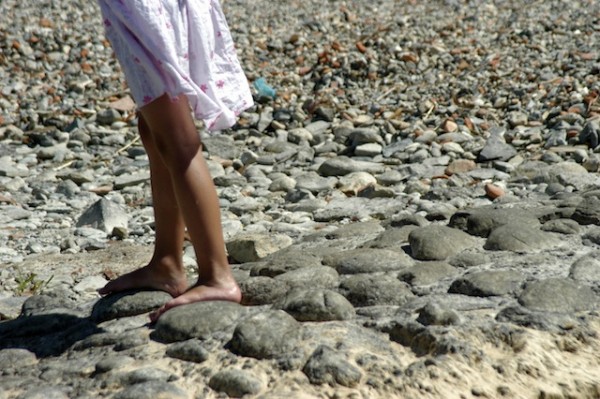
Children see the world through innocent eyes, eyes that see the unique beauty in even the most unimpressive puddle. To them, a tree is not just a plant but an entire jungle gym of adventure; a small plot of pines is not just a barrier between yards but an entire forest full of mystical creatures; a day at the beach is never simply sun and sand but the search for pirate treasure and lost shipwrecks.

By nurturing our species’ youngest members, by encouraging them to play outside, we are not only bolstering their imaginations but also encouraging creative problem solving, better concentration and social development. Kids who enjoy nature also grow up with an innate sense of responsibility and respect for the environment and all it has to offer.

How do we reconnect our youth with nature? How do we continue to teach our kids the importance of protecting our wild places? How do we reinvigorate children’s enthusiasm for playing outside? Here at Izilwane, we’re trying to combat the ever-growing apathy toward nature and provide youth – and those who work with them – with tools they can use to both learn and teach: a comprehensive and ever-growing list of resources for teachers; a story corner, which will feature anecdotal tales of youth connecting to nature; photo and video galleries that illustrate Izilwane’s work with students from around the world; and articles that highlight some of the strategies international educators are using to reach out to local children.

Read more at:  Awakening Our Species to Nature Through the Eyes of Children.

I think they make a very good point about the importance of getting kids involved and engaged with animals and biodiversity at an early age. Not only does it help cultivate more empathy for animals and an appreciation for biodiversity, it’s also good for kids to learn about their environments and nature in order just to understand how the world works.

community · creativity · Social

Walking to learn about your environment better

With gas prices going through the roof, many people are taking to walking more. But after being car-focused in our navigation for decades, it can be unusual for people to know how to get around by walking and how long it will take them. One student from Raleigh, North Carolina, has an idea:

On a rainy night in January, urban planning student Matt Tomasulo and two fellow schemers positioned 27 signs in three strategic locations across central Raleigh. In bold, authoritative letters, each sign indicates the number of minutes it would take for a pedestrian to reach a particular, popular destination.

And for the directionally challenged, the otherwise spartan signs are equipped with a high-tech surprise. By scanning the signs with a smartphone, pedestrians can receive a specially tailored Google Map that will keep them on the right path.

Tomasulo and his colleagues at City Fabric have dubbed their effort Walk Raleigh, and have submitted the project to the Spontaneous Interventions competition, a contest sponsored by the Institute for Urban Design. In terms of impressing judges, the group is off to a good start: far from being displeased by Tomasulo’s guerrilla antics, the city of Raleigh has expressed interest in permanently incorporating Walk Raleigh’s signs into the city’s landscape.

see more at A Walk to Remember.

I’m glad the city of Raleigh is encouraging this, and I hope it catches on in other places. I think it’s great to share our knowledge of neighborhoods with others and let them get to know their cities and environments a little bit better. Plus it’s just fun.

Have you seen similar signs in other cities? Tell me about it in the comments below.

behavior · brain · children · learning · robotics · Social

Are robots future playmates for kids?

robot
Will this robot someday be a child's best friend? (Photo credit: glemak)

An article from LiveScience talks about recent studies that find kids can get along pretty well with robots as playmates:

As technology continues to improve, human-like robots will likely play an ever-increasing role in our lives: They may become tutors for children, caretakers for the elderly, office receptionists or even housemaids. Children will come of age with these androids, which naturally raises the question: What kind of relationships will kids build with personified robots?

Children will view humanoid robots as intelligent social and moral beings, allowing them to develop substantial and meaningful relationships with the machines, new research suggests.

Researchers analyzed the interactions between nearly 100 children and Robovie, a 3-foot-tall (0.9 meters) robot developed by the Advanced Telecommunications Research Institute in Japan. In the study, two technicians controlled Robovie remotely from another room, leading the children to believe that the robot was autonomous. The researchers imparted humanlike behavior to the robot, such as having Robovie claim unfair treatment when he was told to go into the closet at the end of the interaction sessions.

After reading the LiveScience question is, is this a good idea? I know positive results have been found for kids with Autism, who are able to transfer skills practiced with robots on to other humans, but for healthy kids is this really as beneficial? The scientists don’t seem too concerned:

…the researchers think that the results have important implications for the design of future robots. If engineers design robots to simply obey orders, the master-servant relationship that children experience may trickle into their interactions with other humans. Is it then better to design robots with the ability to “push back” as Robovie did when he was instructed to go into the closet?

Shen said there is no easy answer to which design scheme is better.

“I don’t think children will treat robots as nonsocial beings, they will treat them as social actors and interact with them in social ways,” she said. “But we need more data and evidence to see how adults, as well as children, will develop relationships with these robots.”

What do you think? Is this a good idea? The elderly in Japan do seem to benefit from having robot pets. Could the same be true for kids?

architecture · behavior · culture · design · happiness · mental health · Social

New Office Designs in Seattle Trend Towards Open, Social Spaces

Most of us these days work in a cubicle, although the past ten years have really seen a transformation of space and place at the workplace in order to create happier, and therefore more productive, workers. This article in the NYTimes focused on some organizations in Seattle that have embraced a more open work floor plan:

Is this your idea of a perfect work environment?

MARTHA CHOE’S ideal working space is not her private office, nice though it is, but rather a long, narrow table in the vast atrium of the Bill & Melinda Gates Foundation headquarters here.

Ms. Choe, a former member of the City Council here, is the foundation’s chief administrative officer, and she had considerable input in the building’s design. One objective from the start was to give the 1,000 employees a variety of spaces to accommodate different kinds of work. “There’s a recognition that we work in different modes, and we’ve designed spaces to accommodate them,” she says. “I think one of the lessons is to understand your business, and understand what your people need to do their best work.”

The building was designed by NBBJ, a 700-employee architecture firm whose largest operation is in Seattle. The structure is a culmination of ideas about the 21st-century workplace that NBBJ has been exploring in corporate office designs worldwide, including its own offices here.

These are the main concepts: Buzz — conversational noise and commotion — is good. Private offices and expressions of hierarchy are of debatable value. Less space per worker may be inevitable for cost-effectiveness, but it can enhance the working environment, not degrade it. Daylight, lots of it, is indispensable. Chance encounters yield creative energy. And mobility is essential.

This isn’t a suddenly exploding trend. NBBJ’s research has found that two-thirds of American office space is now configured in some sort of open arrangement. But even as these designs save employers space and money, they can make office workers feel like so many cattle. So how to humanize the setting?

SEATTLE serves as a test tube because of several converging factors: There’s a lot of money here to experiment with projects. The work force is relatively young and open to innovation. And the local culture places a high value on informality, autonomy and egalitarianism. People will put in long hours under high pressure if they feel respected, but they won’t tolerate being treated like Dilberts.

Most office workers in Seattle and elsewhere labor in environments much less inspiring than Ms. Choe’s. And most employers have much less to spend to make things pleasant. (Bill and Melinda Gates personally contributed $350 million of the campus’s $500 million cost.) But staying competitive requires coming up with the best ideas, and the office environment can be the incubator for them.

Read the full article.

I am all for creating spaces that encourage collaboration and make workers feel comfortable and ready to get down to business. My only question is lack of meeting space. In my last two jobs it has been very hard to find private spaces to meet, although both were cubicle-based workspaces so that layout doesn’t necessarily solve things either. And I’m not alone in my concerns, as the article points out:

NOT all of NBBJ’s corporate clients have boarded the informality-and-buzz bandwagon. When the R.C. Hedreen Company, a real estate development firm based in Seattle, commissioned a renovation of a 10,800-square-foot floor in an old downtown office building five years ago, it specified a perimeter of private offices. Collaborative spaces are provided for creative teamwork, but the traditional offices remain the executives’ home ports.

“Individually, a lot of our workday is taken up with tasks that are better served by working alone in private offices,” says David Thyer, Hedreen’s president.

Susan Cain, author of “Quiet: The Power of Introverts in a World That Can’t Stop Talking,” is skeptical of open-office environments — for introverts and extroverts alike, though she says the first group suffers much more amid noise and bustle.

What are your thoughts on work space? Do you like having an open space to share, or do you prefer your own cubicle or booth? How do you handle the meeting privacy issues at your office? Leave your thoughts in the comments below.

anthropology · architecture · community · creativity · culture · design · environment · happiness · Social

How legalizing street art made Rio de Janeiro a prettier, happier place

A recent article in the Huffington Post explored Rio de Janeiro’s acceptance of street art and how it has enriched the various neighborhoods:

Brazilian graffiti art is considered among the most significant strand[s] of a global urban art movement, and its diversity defies the increasing homogeneity of world graffiti.” – Design Week

In March 2009, the Brazilian government passed law 706/07 making street art and graffiti legal if done with the consent of building owners. As progressive of a policy as this may sound, the legislation is actually a reflection of the evolving landscape in Brazilian street art, an emerging and divergent movement in the global street art landscape.

Rio de Janeiro has been particularly progressive in its policy towards street art, with its 1999 “Não pixe, grafite” (Don’t Tag, Graffiti) project that brought together 35 graffiti artists to showcase diversity in local styles. But more unique is the evolution of a permission hierarchy, blurring the line between formal and informal. The new street art law merely reinforced these unique patterns of street art and legitimized an already flourishing form of artistic expression.

Retaining walls on the steep terrain provide canvases for artists.

In Rio de Janeiro, street art is ubiquitous. It exists in all corners of the city, from the favelasto upper class neighborhoods, from residential to institutional. It is bold in scale and aesthetics and is anything but graffiti. The urban fabric of Rio de Janeiro also figures prominently in the evolving street art scene. The high walls, whether for security or to contain the topography, provide ample surfaces for painting. But rather than location dictating art, the relationship between owner and artist has a direct impact on where street art occurs.

Owners of buildings, both residential and commercial, sometimes invite artists for commissions, which is done to protect from tagging, as an aesthetic choice or as an economic choice — painting a façade with art may be cheaper than another mode of beautification. In another case, street artists ask permission from the owner.

Tudo de cor para você, Santa Marta, Rio de Janeiro (photo source: favelapainting.com)

Thanks to the city’s openness to various forms of artwork, and specifically “street” art, Rio de Janeiro is now known for its colorfulness and art. In informal studies the art has also been found to make citizens more invested in their communities and overall happier.

Hooray for public art.

community · creativity · Social

Storefront Seattle: taking art to the street (window)

Before and After example of Storefronts Seattle project.

With the down economy a lot of stores and businesses have gone out of business, leaving a lot of empty store fronts, at least in places around Seattle. But rather than let those places stay dark and dormant, one woman is spearheading an effort to get local Seattle artist’s work installed in these vacant storefronts:

Storefronts debuted in late 2010 as an experiment in activating vacant spaces with art, creative enterprise, and performance… We also revitalize neighborhoods. And we beautify blocks. And we make areas safer at night, and we market real estate, and we paint walls and mop floors and install lighting and turn desolate half-empty blocks into the hippest, happiest, and hottest real estate in town.

Storefronts Seattle leases storefront space from neighborhood property owners for the nominal rate of $1 per month. We can program up to 15 storefronts in any given neighborhood at any given time, and we fill these spaces with art installations, with creative businesses, and with artist’s studios. These projects are proposed by artists throughout the region, and are chosen by a panel that includes neighborhood representatives, local museum curators, arts professionals, and our programming staff.

At full integration into a neighborhood, Storefronts Seattle is programming up to 60 arts installations per year into your spaces. That’s enough to instantly turn any neighborhood into a walking destination, an arts and culture destination, and a shopping destination. It’s enough to generate regional press. It’s enough to get the city’s creative class and cultural leaders to pay attention.

More at Storefronts Seattle

This is a great project where everyone benefits: property managers get free positive attention for their site, artists get their work exposed, and normal people get to benefit from the art for free!

It also involves a lot of local Seattle neighborhood organizations, bringing attention and buy-in from various communities around Seattle. There are quite a few installations in place right now through May.

What a great opportunity to improve and enrich everyone’s environment. Know of other groups out there taking advantage of empty spaces like these in other cities? Share them in the comments below!

autism · behavior · children · health · Social

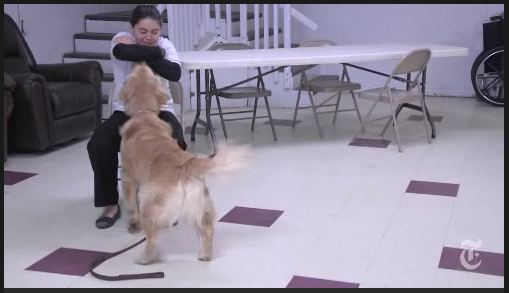
Dogs trained to help disabled kids lead more enriching lives

Your feel good story of the day, brought to you by the New York Times: a nonprofit organization trains dogs to help kids with all kinds of disorders, from autism to muscular dystrophy to seizures.

In October 1998, Shirk assembled a board and founded 4 Paws for Ability, a nonprofit corporation. She rescued Butler, a German shepherd mix, from a shelter; hired a trainer to prepare him for mobility work with the 12-year-old; and became a pioneer among service-dog agencies. “People started calling from all over to ask, Am I too young? Am I too old? Am I too disabled? Am I disabled enough?” she says. “I said, ‘If your life can be improved by a dog, and if you and your family can take good care of a dog, we’re going to give you a dog.’…” “We place dogs with kids in wheelchairs, kids on ventilators, kids with autism, kids with dwarfism, kids with seizure disorder and cognitive impairments; but if your dog does tricks, other kids want to meet you. Kids will ignore your disability if you’ve got a cool dog.”

Watch the video at the New York Times:

A trainer works with a dog on behavior modification techniques. Click the image to see the video.

It is also an amazing relationship dynamic to see occur between the children and their dogs, how the children with cognitive disabilities in particular are helped to see the world, in a way, through their dog’s eyes:

Alan M. Beck, the director of the Center for the Human-Animal Bond at Purdue University’s College of Veterinary Medicine, is among those intrigued by it. “There is a real bond between children and animals,” he told me. “The younger the child, the greater the suspension of disbelief about what an animal understands or doesn’t understand.” According to Beck, more than 70 percent of children confide in their dogs, and 48 percent of adults do. “The absolutely nonjudgmental responses from animals are especially important to children,” he says. “If your child with F.A.S.D. starts to misbehave, your face may show disapproval, but the dog doesn’t show disapproval. The performance anxiety this child may feel all the time is absent when he’s with his dog. Suddenly he’s relaxed, he’s with a peer who doesn’t criticize him.”

behavior · education · happiness · health · Social

Non-Elimination Games Leads to More Physically Active Children, Researchers Say | MomsTeam

A typical game of tic tac toe English: Tic tac...
Non-competitive games also have benefits. Image via Wikipedia

Interesting article about the value of non-elimination games (the original author focused on “non-competitive” but there are many competitive games that don’t involve elimination):

A study presented in May 2008 established that the structuring of children’s games has a significant effect on energy expenditure.

A research team led by Karla Bruggeman and David Dzewaltowski, Ph.D., measured activity during both elimination- and non-elimination games, using accelerometers, in 29 children in grades four through six. Both normal weight and overweight children participated in the study, but were not separated for analysis.

In non-elimination games, kids accrued more overall physical activity due to not having to spend time on the sidelines as a result of elimination. They also accumulated significantly more moderate and vigorous physical activity than elimination games. Both sets of games were adopted from a children’s program devised by a nonprofit group that uses various pieces of equipment to facilitate non-competitive play; elimination games were modified from non-competitive versions.

Children were surveyed for self-efficacy, enjoyment, and peer victimization following both types of games. Results showed that enjoyment was somewhat higher following elimination games, although enjoyment scores were high in non-elimination games as well. There were no reports of peer victimization in either set of games, but were significant increases in self-efficacy after both sets.

“The games in this study were part of fun and enjoyable day camp,” Bruggeman said. “It is likely that a well organized and positive game experience increases a kid’s confidence regardless of elimination or non-elimination game conditions.”

Again, the article author was focusing on non-competitive sports, but really the evidence is looking at non-elimination sports. While I don’t find anything wrong with competitive sports, I know they’re not everybody’s cup of tea, and I think it’s great to emphasize the fact that you don’t need to be playing on a team sport or competing against others in order to gain the same benefits from play. And there are lots of non-competitive physical activities that kids can and do partake in: parkour, running, climbing, digging in the dirt, parachute play, biking… what else? Name your favorite non-competitive physical activity in the comments.
behavior · community · creativity · Social · youtube

More subway enrichment

More examples of how to make your environment fun, thanks to Boing Boing:

In this video from the NYC subway, a singer named Jessica Latshaw, bearing a small uke, finds herself sitting across from a gentleman with a fine pair of bongos. The two begin an impromptu jam session, emceed by a random gregarious stranger and captured for posterity by a subway rider with a camphone. The performance is just fine, and it’s clear from the footage that the rest of the car is having a fine time.

In theory, it’s possible that the whole thing is a fix, “buzz marketing” from Latshaw and co, and if so, well, it’s an extraordinarily nonobnoxious example of the form.

okay- what you are about to watch is a true new york experience. what originally started out as a typical nyc subway ride (sitting across from guy who smelled like urine) turned into an awesome performance by two people who have never met before. i captured the whole thing on video.

never a dull moment on the nyc subway (Thanks, z7q2!)

behavior · community · environment · Social

The new economy is local, handmade

English: Looking northeast at Zukkie's Bike Sh...
The new economy is local. Image via Wikipedia

I read a great article in Fast Company yesterday by Bruce Nussbaum, the former assistant managing editor for Business Week and a Professor of Innovation and Design at Parsons The New School of Design, about a trend that he refers to as “indie capitalism,” this idea of a homemade economy. Homemade in many ways: products made at home and sold from there, locally focused market, and driven by small, independent entrepreneurs:

You won’t learn about it in business school, hear about it from Wall Street, or see it in Palo Alto. But if you spend time in Bushwick, Brooklyn, or on Rivington Street in Manhattan, you just might detect the outlines of an emerging “indie” capitalism. This new form of capitalism is not just about conventional startups and technology and venture capitalists. If you add up all the trends under way today, I believe we are beginning to see the start of something original, and perhaps wonderful. It may prove to be the economic and social antidote to the failed financial capitalism and crony capitalism that no longer delivers economic value in terms of jobs, income, and taxes to the people of this country.

Indie capitalism is local, not global, and cares about the community and jobs and says so right up front. Good things come from and are made locally by people you can see and know. The local focus makes indie capitalism intrinsically sustainable–energy is saved as a result of a way of life, not in an effort to reach a distinct and difficult goal.

Indie capitalism is socially, not transactionally, based. It’s not just Internet social, involving 5,000 friends, but personally social. Take Kickstarter, for example, where people fund the music, books, and products that they can watch develop over time. In this model, consumer, investor, audience, fan, helper, and producer conflate. People find and prepare their food the same way they find and prepare their music. And then they share it all.

More at 4 Reasons Why The Future Of Capitalism Is Homegrown, Small Scale, And Independent

I am really excited by this idea of a locally-sourced and locally-focused economy. I think it is better for the environment, but I also think it’s better for community building and having a better sense of place, to feel connected to where you live and what you do, and enriched by it.

Please read the entire, well-written article, and let me know your thoughts in the comments below.