Humans are greatly effected by the greenery in their environments, but remember how a few weeks back I was lamenting that not much robust analysis or study had been done on this kind of positive impact? Well, voila!
ScienceDaily (2011-11-17) — Greening of vacant urban land may affect the health and safety of nearby residents. In a decade-long comparison of vacant lots and improved vacant lots, greening was linked to significant reductions in gun assaults across most of Philadelphia and significant reductions in vandalism in one section of the city. Vacant lot greening was also associated with residents in certain sections of the city reporting significantly less stress and more exercise.
C. C. Branas, R. A. Cheney, J. M. MacDonald, V. W. Tam, T. D. Jackson, T. R. Ten Have. A Difference-in-Differences Analysis of Health, Safety, and Greening Vacant Urban Space. American Journal of Epidemiology, 2011; DOI: 10.1093/aje/kwr273
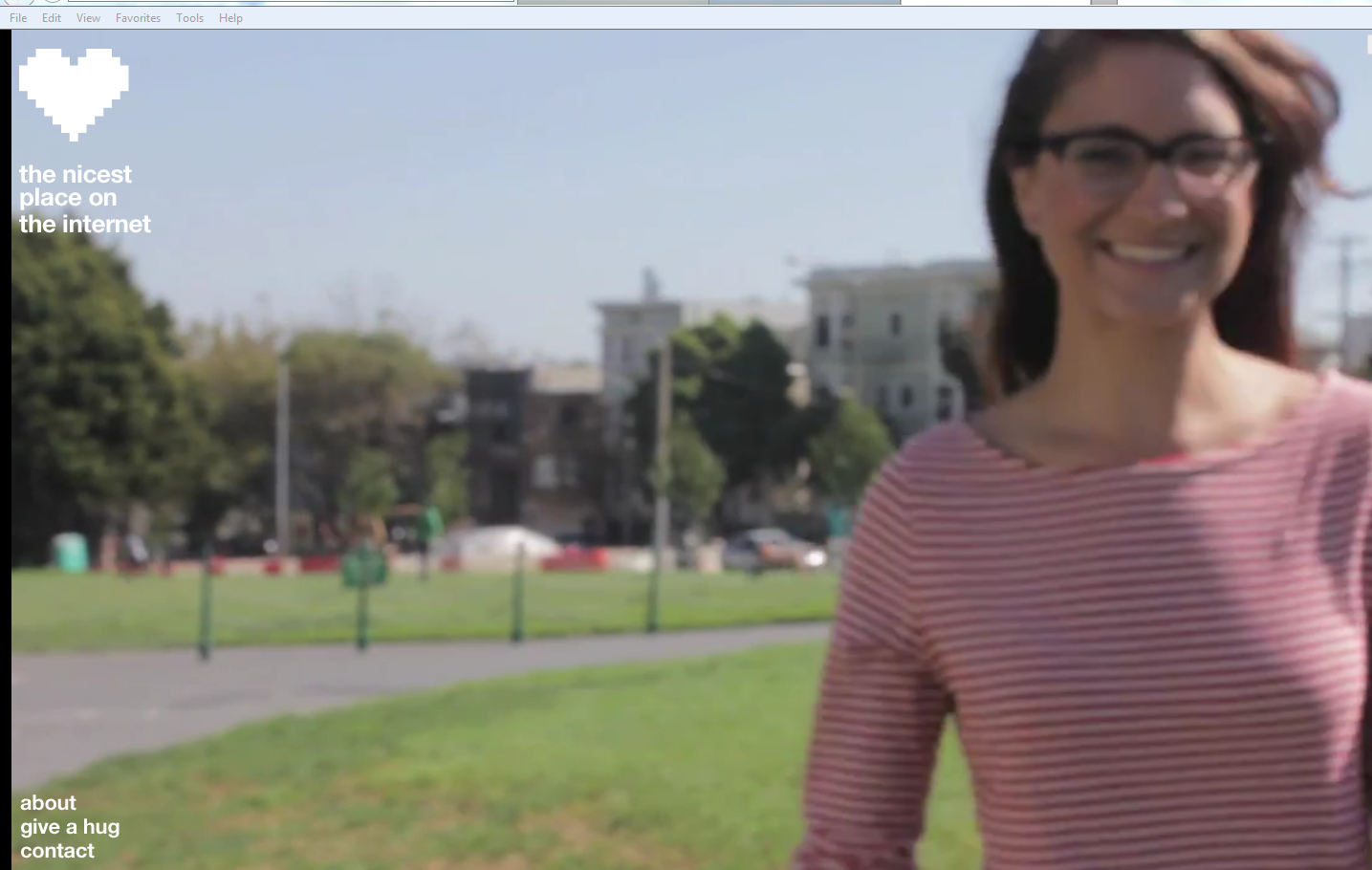
Ever have a day when you just really need a hug, like, right now? Well now you’re in luck:
"Jeff Lam and Lauren Perlow created The Nicest Place on the Internet, a place where you can feel warm and fuzzy with virtual hugs, because they were having an off day. It’s perfect for those chilly winter days."
I love this idea of virtual kindness; it’s a weird concept in a way, of people donating hugs (so to speak) to complete strangers. But, it’s great because it’s using the World Wide Web to create community and connections with people all over the world. Somehow, by being open to receiving a hug, even a virtual one, we are able to create connections and feel like part of a larger tribe or cohesion.
So often online communities can turn harsh or downright mean; it’s great to see online crowdsourcing being used for positive psychological benefits!
Uptake helps you ask locals what to do in different locations
On a recent roadtrip, my husband and I stopped in a medium-sized town out in the middle of nowhere, tired, dirty, and famished. Neither one of us are McDonalds or Subway types, but we definitely needed meat, and fast. What to do? My husband spent 10 minutes on my smartphone trying to read Yelp for a decently reviewed restaurant, which turned out to be a real dive but had somewhat tolerable pizza. Long story short, I bet this app would have helped us out a lot:
Uptake is set up to have a web community of people passionate about their local bars, hotels, and restaurants, but the key is that they let you ask questions of your Facebook friends who are local in the city you’re interested in.
When you ask questions in an open community, you’re not guaranteed to get an answer. If you’re looking at reviews on Yelp, you don’t really know who are behind them [Editor’s note: Yeah, tell me about it!]. Your friends are usually the people you trust the most with picking a great bar or pub to eat at, so Uptake takes the extra step of drilling down to the friends who are relevant to your question.
A lot of apps and services like Nomad for iPad and Trazzler let you ask for travel recommendations, but Uptake helps you ask the people who probably know best.
Local destinations still need technology, as sites like Yelp have become a stomping ground for trolls sounding off about bad experiences. Social is the key to a good recommendation, but not many services have nailed the experience yet. When I see a recommendation from a name or avatar that I recognize, it instantly has more value to me.
Uptake is in beta right now and promises a few features that aren’t available yet.
One interesting trend of crowd-sourcing apps is an attempt to reach out to pre-established tribes and communities (see yesterday’s post about creating tribes through community) and trying to tap into that local’s knowledge. As the author of the article mentioned, people trust other people they know, and getting “local” knowledge is very important to us humans. We want to feel like we’re an insider, included, and not some dumb tourist who gets taken advantage of or just looks silly.
We also trust other tribe members and their knowledge more than anything else. It’s been shown we trust word of mouth and let it influence us more than advertising, and our peers are hugely influential on what we buy, use, and spend time doing. As we travel, we will also trust our peers over guidebooks on what to do, what to see, and where to eat.
I’ll be interested to see how these social peer-sourcing apps continue to evolve over time. Visit Uptake‘s website to find out more about the app.
Social media keeps us connected with friends, but for some can be detrimental to everyday life. Image via Wikipedia
I love being able to connect to old friends, classmates, and coworkers via social media, as well as share thoughts, ideas, and new developments. But some people can take it too far, and while I have my weaknesses as much as the next gal, I don’t think I’d consider myself addicted as they describe it. Apparently people can receive intense highs from the social interactions and feel like they need a “fix” if they go on too long without checking in to one of their social media networks.
When you hear the word ‘addiction’ perhaps you think of alcohol, drugs and sex. But what about social media? Over recent years there’s been an emergence of studies into social media as a new form of addiction.
Research by Retrevo Gadgetology looked into how people use social networking sites. Out of those asked, 45% said they check Facebook or Twitter after getting into bed. People under the age of 25 were the more extreme with 19% saying they log on any time they wake up during the night, 27% said they sometimes check when they wake up during the night and 32% check in first thing in a morning.
To me this indicates just how detached and isolated many of us are, that instead of going to a local gathering or even a bar or club when we’re feeling lonely, we go online. It’s been shown that Americans feel more isolated and alone than at any other time in our history (or at least history of checking for this kind of thing), and I would hypothesize we’re turning to these social media networks as some way to retain communities we’ve established in other physical locales, or create new ones that are entirely virtual. I also wonder if the meta-interaction makes people feel less fulfilled than dealing with people in real, physical life and make them anxious to get more. I believe social media networks are useful, no doubt, but I do wonder if we are using them as a crutch rather than actually meeting people in person. Granted a lot of social media sites encourage actual in-person meetings, from online dating sites to the new GrubwithUs startup that acts as matchmaker for hungry social types in various cities across the U.S.
What are your thoughts about social media networks and people who can’t seem to unplug from them? Leave your thoughts and/or experiences in the comments below.
Raised beds using concrete blocks. Image via Wikipedia
For the past couple of years people have been discussing the idea of “food deserts” in urban areas where there are no groceries or places for people to purchase fresh veggies and meat. This is an interesting concept of how to address that: a food corridor in Olympia, WA.
The commons is a collection of gardens, pathways, landscapes and building demonstration projects under the stewardship of the Fertile Ground Community Center and the South Sound Chapter of the Northwest EcoBuilding Guild. Together, they take up half a city block and include the guild headquarters known as EcoHouse, the Fertile Ground Community Center and the Fertile Ground Guesthouse, a bed-and-breakfast owned and operated by Karen Nelson and Gail O’Sullivan.
If chickens aren’t your thing, you’re welcome to pick a handful of fruits and berries — everything from Asian pears and Cascade cherries to golden raspberries and strawberries — growing along the sidewalk.
The community invitation extends into the garden where flowers, vegetables and herbs grow in raised beds built out of recycled wood and tree limbs.
I’m interested to see how this might manifest in other places, particularly those where it’s less common already to have chickens in backyards and use the front strip of grass in your yard as a raised bed. During World War II people had “Victory” gardens in containers on their front stoops, so it’s definitely doable to grow things even in the most compacted urban spaces, but it seems like the biggest hurdle is acceptance, so what could possibly be done to raise acceptance of backyard broccoli? Ideas?
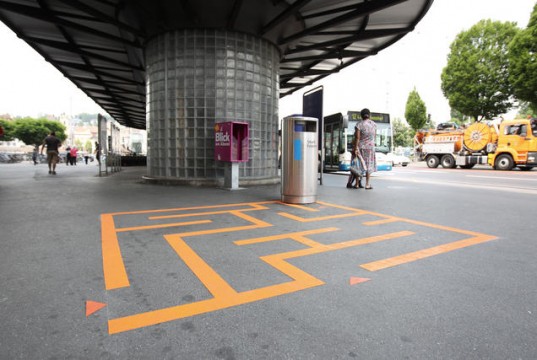
More ways to make social responsibility fun! I love the idea of turning the act of throwing away your trash into a game.
To discourage residents tossing their empty cups and wrappers on the streets and sidewalks, the city of Lucerne launched its “Lucerne Shines” program, which rolled out mazes, hopscotch boxes, and three point lines to make the act of trash disposal more fun. The project appeals to kids and is a great nostalgic throwback for adults alike — kudos to the Swiss town for this creative idea!
Being part of a social group at work provides a pillar of support. Image via Wikipedia
Company culture seems to be this ethereal idea that no one can really wrap their head around, but “they know it when they see it.” They also know that employees having a strong connection with peers at work and a social buy-in to their employer promotes loyalty, worker productivity, and less absenteeism. This is an interesting profile of one aspect of Google’s work culture and community – creating mini support groups and internal communities.
Groups have always been an integral aspect of life at Google, but as the company approaches 30,000 employees, they have become an ever more critical mooring for new and veteran employees at a company trying to assimilate “Nooglers” at a pace of more than 100 a week. Many valley companies have groups for employee minority or cultural groups, but Google goes further, actively encouraging, and sometimes evenAdvertisementproviding financial support, for employees to organize special-interest groups ranging from economic theory to photography.
Google has 19 “Employee Resource Groups” or ERGs, employee-initiated entities that receive
financial support from the company and represent social, cultural or
minority groups…
The article goes on to point out, and this should be a no brainer, that having a healthy, enriching work environment is also crucial to overall individual wellness and work fulfillment. Many companies are afraid to let their teams “goof off.” Maybe they should consider it “Googling off.”
Example of architecture in Pioneer Square Neighborhood. Image via Wikipedia
Revitalizing a neighborhood, i.e. growing a community or keeping it from leaving, can be difficult, even if everybody’s in agreement on what needs to get done. I’m seen a couple of revitalization plans for neighborhoods *cough* *Alameda* *cough* *cough* go nowhere fast. Seattle’s plan for one of its oldest neighborhoods, Pioneer Square, involves free Internet and better parking.
Comcast has been chosen to provide high-speed Internet service to businesses in Pioneer Square, Mayor Mike McGinn said Wednesday, one of several efforts aimed at reanimating a neighborhood perceived to be in trouble.
McGinn also announced that Onehub, a business-file sharing company from Bellevue, was moving into the city’s oldest community next month. Charles Mount, Onehub CEO, said juiced-up Internet was a key factor in the decision to bring his 10-person business across Lake Washington…
The Comcast and Onehub announcements were part of the unveiling of a new plan (PDF) to revitalize Pioneer Square, the product of a panel of more than two dozen business, neighborhood and city leaders. Among the ideas are to increase residential density, streamline permits, improved lighting, better manage parking increase public safety.
“We by no means think we have the problems licked in Pioneer Square, we know it’s going to take a lot more work,” McGinn said.
Last summer they also had a “Pioneer Square” craft festival with food trucks and all sorts of crafty items. I have no idea if they’re doing it again this year (I guess not?), but if they are going to try and keep it as a tourist attraction for the people who jump off the ferries, then bathrooms and better lighting are a good start.
What else would you do to improve the feel of Pioneer Square? Cleaner streets? Different kinds of shops? Leave your ideas in the comments below.
YouTube will be broadcasting on the Web a red-glowing lunar eclipse today at 11:20 a.m. PDT that otherwise will only be visible in the skies of South America, Africa, Asia, Australia and Europe. Sorry, North America.
The lunar event will last about 100 minutes and be live-streamed in video to Google’s official YouTube channel.
Helena Norberg-Hodge, director of "The Economics of Happiness" and founder of ISEC. Image via Wikipedia
I am a huge fan of buying local (although I could be a lot better at it). This film makes an interesting argument that buying local is not only good for the environment and the local economy, but also connects us back to our spiritual sense of community.
Economic globalization has led to a massive expansion in the scale and power of big business and banking. It has also worsened nearly every problem we face: fundamentalism and ethnic conflict; climate chaos and species extinction; financial instability and unemployment. There are personal costs too. For the majority of people on the planet, life is becoming increasingly stressful. We have less time for friends and family and we face mounting pressures at work.
The Economics of Happiness describes a world moving simultaneously in two opposing directions. On the one hand, an unholy alliance of governments and big business continues to promote globalization and the consolidation of corporate power. At the same time, people all over the world are resisting those policies, demanding a re-regulation of trade and finance—and, far from the old institutions of power, they’re starting to forge a very different future. Communities are coming together to re-build more human scale, ecological economies based on a new paradigm – an economics of localization.
I have seen this same community/spirituality argument proposed as well with farmers in Hawaii trying to preserve traditional knowledge of taro planting, as well as other indigenous groups in South and Central America, and all over the world, so it is interesting to see this documentary maker make the argument on a larger scale, saying it can benefit all of us. I tend to agree.
I also like the idea of “grandmother universities,” which fit in well with the current trend of DIYers.




 Mental Flowers