children · disease · environment · health · play

A Medi-Teddy: Wrapping Medical Sensors In A Plushie For Kids

Teddy the Guardian Medical Monitoring in a Teddy BearHospitals and medical device makers are coming to the conclusion that making medical spaces and medical practices more user-friendly and less scary leads to speedier recoveries, shorter hospital stays, and overall just good medicine.

One way to do that is to make the devices less scary, a la a Medi-Teddy. 🙂

The product is called Teddy the Guardian, a plushie installed with sensors that measure heart rate, blood pressure, oxygen levels, and temperature, and then relay that data via Bluetooth to a parent’s phone. The sensors are scattered around the bear’s body; pressing a finger to the bear’s paw, for instance, takes heart rate and oxygen levels.

The idea behind disguising medical tech as a lovable toy is to provide parents and pediatricians more accurate, consistent data points. When a child is stressed out about going to the doctor, his or her vital signs will be skewed. Taking data points when the child is in a neutral emotional state can give doctors a wealth of good information to compare against when something is wrong.

Of course, the bear is just as much a tool for keeping parents attuned to their child’s general well-being as it is a medical device. IDerma co-founder Josipa Majić said that for busy parents who don’t have as much time to connect with their kids, the data can show when their child’s day has been particularly stressful or problematic.

Later versions of Teddy will be equipped with sensors specific to different medical conditions, Majić said. Blood sugar level measurements for diabetic children, for instance.

via By Wrapping Sensors In A Plushie, “Teddy The Guardian” Aims To Sell Medical Tech For Kids | TechCrunch.

This is such a great idea to keep kids calm and cooperative during boring and possibly uncomfortable medical procedures. Heck, I know a lot of adults that would probably like to use this.

I’ve previously written about making MRI machines less scary for kids by making them space or aquatic themed, and how a natural view out of a hospital window is correlated with speedier recoveries, but what other things have you seen hospitals do to make it more patient-friendly? Let me know in the comments below.

behavior · creativity · culture · happiness · health · mental health · play

Adults are reclaiming playtime

Dr. Norman Bethune (centre) watching a game of...
A lively game of checkers among friends (Photo credit: BiblioArchives / LibraryArchives)

From Dodgeball to pillow fights to roller derby, adults are reclaiming time to play in their lives:

It was all fun and games until someone smacked Don Norman in the head — hard — with a feather pillow. Walking into his first two-hour “Playing in the Deep” session, a weekly organized event in Portland, Maine that engages stressed-out grownups in childlike activities, Norman, a 48-year-old database administrator, didn’t know what to expect. Then he saw the pillows, a big pile of them, stacked high. Everyone around him grabbed one and was suddenly roughhousing like over-caffeinated kids at summer camp. Someone handed him his own pillow, but he simply held on to it, too inhibited to let his freak flag fly. He considered bolting.

“And then I got hit!” Norman recalls. “I figured, ‘If they’re going to hit me, I’ll hit them!’ By the end of the night, I was running around like a madman, and I forgot all about my self-consciousness. I forgot about everything. It was liberating.”

“I’ve seen a steady increase in invitations for adult play,” says game designer and self-proclaimed “fun theorist” Bernie De Koven, author of The Well-Played Game. “Now that we no longer have the same sense of community at work or in our neighborhoods as we did twenty or thirty years ago, these opportunities for play are filling the gap.”

The events may consist of kiddie games, but there’s often a serious psychological, even spiritual purpose behind them. “People need to feel they’re connected to other people,” says Cary Umhau, the cofounder of Spacious, who says she was inspired by the adage “Love Thy Neighbor.” “Most people are trying to numb themselves out from just the pain of life. If they don’t have addictions, they spend much of their life watching TV. They need places to come together, to step out of the box and out of their social silo.”

more via Stories: Playing For Keeps – Life Reimagined.

More and more adults are understanding the psychological benefits to playing and making time to let their hair down (or pull it up into a ponytail and go hog wild!), from less sick days to a larger community to helping solve a project problem at work. Even if it’s something as small as giving the barista a silly name the next time you order coffee (I am Batman!), it’s enough to get your brain cells firing and keep it healthy.

How do you squeeze in playtime for yourself? Share your ideas in the comments below.

autism · behavior · brain · children · learning · mental health · Nature · play · school

Outdoor Play Helps Improve Autistic Symptoms

Reposting this from a fantastic blog Free Range Kids, run by Lenore Skenazy, a huge advocate for letting children be children and just playing, especially outdoors:

Readers — In our desperation to create “smarter” kids, we have practically pinned them to their desks. Now educators are realizing this may be just the opposite of what is best for kids — including those with special needs, as Andrea Gordon writes in Toronto’s TheStar.com (a paper run by my favorite editor-in-chief from back when he and I were at the NY Daily News, Michael Cooke). – L.

It was a crisp March day outside Blaydon Public School when teachers discovered that 4-year-old Alex Wong could spell his name.There were no pencils or paper in sight. Everyone was bundled in winter jackets. Alex, who has autism, was in the outdoor classroom where his special-needs class played and explored for at least an hour every day, alongside 25 kids from the mainstream kindergarten class.

Teacher Sue Cooper noticed Alex march over to a pile of wood, put three sticks in a small wheelbarrow and push it to a spot on the pavement. One by one, he placed the sticks on the ground, forming the letter A. He made three more trips and came back with sticks to make three more letters, which he placed in a row: L, E and X.

Cooper’s jaw dropped. The teachers ran for a camera.

Alex is non-verbal and for a long time, his only interactions had been to throw things or hit. But in the fresh air, day after day, something started to change. Over several months Alex had watched the other children making structures. And that March morning, he was ready to take his turn.

The teachers say his is one example of how daily outdoor time is changing the way their young students — including those autism and other special needs — learn and behave.

Full post.

Obviously more research needs to be done, but there has been strong correlations drawn between outdoor time and decreasing of ADD and dementia symptoms, so it makes sense that putting humans in our natural surroundings would also help other mental disabilities and ailments.

There are a growing number of outdoor preschools, and I’d argue that there should be more outdoor elementary and even middle schools.

architecture · community · creativity · design · environment · play

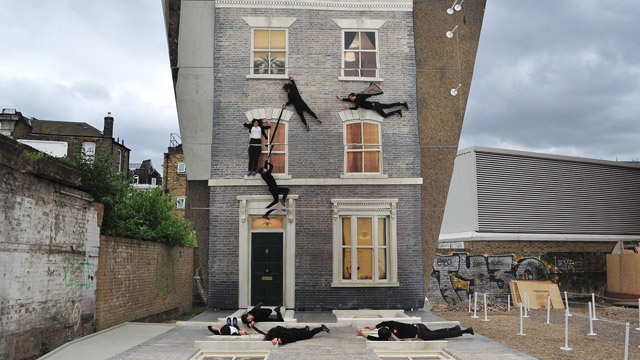
Dalston House: where every visitor becomes Spider-Man – video | Art and design | guardian.co.uk

A Victorian terrace has popped up in east London that lets you swing from its ledges, run up its walls and generally defy gravity. Architecture critic Oliver Wainwright hangs loose at Dalston House, the novelty installation by Argentinian artist Leandro Erlich.

The artist talks about “enjoyable discovery” and playing with spaces that you might not otherwise think of.

I love how it is an interactive piece of art that only exists when people play with it.

more at Dalston House: where every visitor becomes Spider-Man – video | Art and design | guardian.co.uk.

anthropology · architecture · design · happiness · health · play

superkilen urban park by BIG architects, topotek1 + superflex

Happy Friday! I hope you have plans to go out and play. I totally want to play here!

Superkilen

the “black square” at night

superkilen‘ is a kilometer long park situated through the nørrebro area just north of copenhagen’s city centre, considered one of the most ethnically diverse and socially challenged neighborhoods in the danish capital as it is home to more than 60 nationalities. the large-scale project comes as a result of an invited competition initiated by the city of copenhagen and the realdania foundation as a means of creating an urban space with a strong identity on a local and global scale.

more via superkilen urban park by BIG architects, topotek1 + superflex.

anthropology · behavior · creativity · culture · happiness · play · Social · technology · youtube

Lolcats and the Harlem Shake: Play on the Internet


An article from the head of Google’s Agency Strategic Planning team published in Fast Company talks about why we play on the Internet; it’s a really good dive into the need and importance for play in our lives and share that playful experience with others, and how as we move towards a more digital space we are taking that need to share play with us. It is marketing/branding focused, but the message is clear; we all need play and are making space for it, at least in our Internet lives:

We [netizens] uploaded over half a million variations of Harlem Shake to YouTube in the past few months. Google searches for Cat GIFs hit an all-time high last month. And we took 380 billion photos last year–that’s 10% of all the photos taken . . . ever. But let’s be honest–these memes are fun, but they don’t matter, right? They’re pretty much a waste of time.

As the head of Google’s Agency Strategic Planning team, it’s my job to work with brands and creative agencies to help develop their ideas in the digital space. So I had to ask: Why would we be doing so much of all this “visual play” if it really means so little to us?
To get to the bottom of these memes, we assembled a team of original thinkers–anthropologists, digital vanguards, and content creators–to dig a little deeper into this “visual web.” We also spoke to gen-Cers–the people who grew up on the web or behave as though they did–and who thrive on creation, curation, connection, and community.

The research showed us that far from distracting us from more serious things, these viral pictures, videos, and memes reconnect us to an essential part of ourselves.

It may seem that all we’re doing is just capturing every mundane moment. But look closely. These everyday moments are shot, displayed, and juxtaposed in a way that offers us a new perspective. And then all of a sudden these everyday moments, places, and things look . . . fascinating.

As kids, that happens all the time because everything is new. Everything is unlike. And we aren’t constrained by the rules about what “goes together.” Why else was putting the Barbie in the toy car wash more fun than putting the car in the car wash?

Read the whole article here: Memes With Meaning: Why We Create And Share Cat Videos And Why It Matters To People And Brands

behavior · children · creativity · culture · happiness · health · play

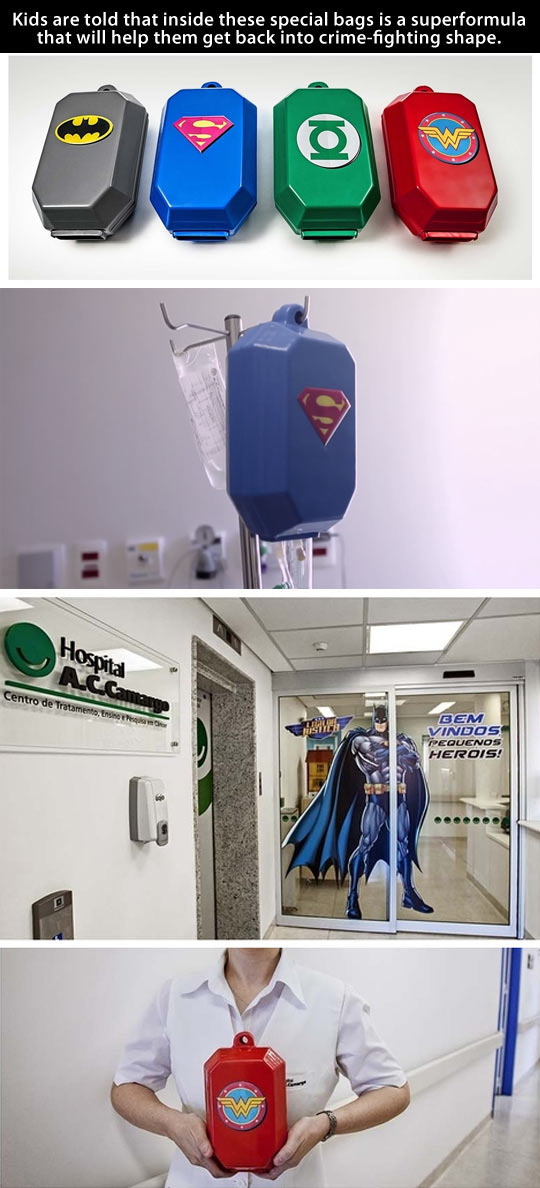
Cool doctors doing what’s right… – The Meta Picture

Hospitals can be scary places, for grown ups and for kids. This is a great way to make hospitals a little less intimidating, and add some silliness to an otherwise boring, and possibly painful, medical procedure.

Originally from Cool doctors doing what’s right… – The Meta Picture.

anthropology · community · creativity · design · happiness · play · youtube

Freak Bikes of Portland

I’ve been watching episodes of American Hipster Presents – a fun video series about different entrepreneurs/artists/etc. around the U.S. (side tangent, how crazy is it that we live in an economy where I can write entrepreneurs/artists/etc. and have that not be weird? Hello Etsy!) – I came across the freak bike builders of Portland. It’s a group of guys and gals around Portland that build their own bikes and then pedal around town in bike gangs, playing games, hanging out with friends, and being overall pretty silly.

To me this is a great showcase of grown-ups making playful spaces and space for play in their lives.

The main interviewee says it best [paraphrasing]: “Kids get to play on bikes, why shouldn’t grown-ups?”

It also makes me kind of want to move to Portland.

happiness · health · play · youtube

Prancercising, Inspired by Play

Everyone’s been having fun learning about Prancercise, created by Joanna Rohrback. Sure it’s a little silly, but that’s sort of the point. Joanna even says that the workout is inspired by horses prancing, and should be motivated by fun:

Prancercise® is defined as: A springy, rhythmic way of moving forward, similar to a horse’s gait and ideally induced by elation. It’s about Self-Expression. It’s about Non-violence. It’s about Conservation.

Exercise doesn’t need to be grueling and difficult, it can be fun. People stick with exercise programs longer if it’s fun, and exercise has been shown to be more effective when it’s fun.

So while blogs like the Huffington Post are poking fun at Prancercising, in a way it’s a great reminder to have fun with your exercise routine.

happiness · health · play

Playing with smoke rings, air rings, bubble rings…

Courtesy of Krulwich Wonders: multiple species will make their own games and toys out of thin air, literally, using a variety of different tools:

Humans do it with smoke.

A human blowing smoke rings.

Dolphins do it with air.

A beluga blowing rings.

With a little snort, dolphins can produce a nearly perfect "air" rings, (sophisticated non-dolphins called them toroidal vortices) which they turn into underwater toys.

While humans and dolphins obviously play with rings, it’s possible humpback whales do this too. The video shows humpbacks sending air rings to the ocean surface, but in one of them, the giant underwater author suddenly pops up mid-ring to take what looks like a bow in front of a boat of whale-watchers.

More…