I recently had a short stay at a hospital (just some minor surgery), and as I lay in my hospital bed I recall looking out my window at a green canopy of trees planted two stories below. I remember how peaceful and pleasant it was to be able to look out and watch the trees. I also noticed my anxiety went down, I was distracted from my pain, and just overall felt better.
More and more research is coming out that is finding the benefits of incorporating nature and natural environments into the healing process, for everything from surgery to PTSD to dementia, and a variety of other ailments. So it’s great to see hospitals incorporating this knowledge into new building designs as well as therapies.
The University Medical Center of Princeton realized several years ago that it had outgrown its old home and needed a new one. So the management decided to design a mock patient room.Medical staff members and patients were surveyed. Nurses and doctors spent months moving Post-it notes around a model room set up in the old hospital. It was for just one patient, with a big foldout sofa for guests, a view outdoors, a novel drug dispensary and a bathroom positioned just so.
Equipment was installed, possible situations rehearsed. Then real patients were moved in from the surgical unit — hip and knee replacements, mostly — to compare old and new rooms. After months of testing, patients in the model room rated food and nursing care higher than patients in the old rooms did, although the meals and care were the same.
But the real eye-opener was this: Patients also asked for 30 percent less pain medication.
Reduced pain has a cascade effect, hastening recovery and rehabilitation, leading to shorter stays and diminishing not just costs but also the chances for accidents and infections. When the new $523 million, 636,000-square-foot hospital, on a leafy campus, opened here in 2012, the model room became real.
I am definitely competitive by nature, as well as a game-rule follower, but I also appreciate and value the ability to think beyond the rules and explore “what if?” That is essence is the entire definition of play, questioning, what else can this be used for. It helps brains grow and is also the spark behind science, art, math, and all the other great discoveries. It’s nice to see that other people also understand and appreciate that need to explore and ask “what else does this do?”.
At 8 and 6 years old, my daughter and oldest son prefer to pick out the pawns from board games and use these figures for imaginary role-play rather than play the games themselves. This drives my mother crazy, and not just because the kids also use her antique water bird decoys as super villains.
“Aren’t they a little old for this?” my mother asks, exasperated and reaching under the couch to capture roving tokens from Clue and Monopoly, setting the games back in their proper boxes “for the umpteenth time today!”
The truth is that my children are not too old for it at all. Nor are they too old for those evening song and dance numbers in which anyone over the age of 21 is required to sit in a row, sweaty thigh to sweaty thigh, while the children put on a variety show after little to no rehearsal.
Environmental Psychology and conservationists have, for awhile now, been advocating the importance of letting children get out and play in and with nature to educate them on the value of preserving their environment and benefiting from natural surroundings. It’s nice to see pediatricians also start to embrace and advocate for the need for everyone, including children, get outside and get dirty.
Dr. Lawrence Rosen writes that throughout his practice, seeing children on a daily basis, “I’m often reminded of Winslow Homer’s 1872 painting, “Snap the Whip,” depicting boys playing with abandon in a field outside their rural schoolhouse.”
So eloquently portrayed is the simplicity of another time, kids out in the natural world for no other purpose than to play, freely and without a care in the world.Contrast this with contemporary schoolyards with their meticulously designed jungle gyms and artificial surfacing, often empty throughout the day as more and more schools abolish recess or replace free play with highly structured, adult-supervised activities. I’ve realized, as I see increasingly anxious and depressed children come to my office looking for guidance, that the answers often lie not in my prescription pad but outside my window.
One very recent publication from Dr. Kirsten Beyer and associates at the Medical College of Wisconsin described the influence of green space on mental health outcomes, concluding that “higher levels of neighborhood green space were associated with significantly lower levels of symptomology for depression, anxiety and stress” and that “’greening’ could be a potential population mental health improvement strategy in the United States.”
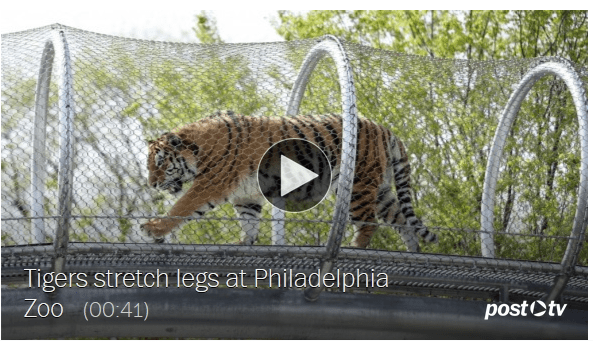
Visitors to the Philadelphia Zoo might want to beware of stray cats: A new enclosed passageway allows lions and tigers to roam outside their exhibits.
Humans, though, can safely gawk at the predators traveling along Big Cat Crossing. The protected, open-air path snakes above the felines’ habitat to an archway over the zoo’s main promenade and ends at a viewing spot along a lake.
The concept for the catwalk unveiled Wednesday stems from the increasingly common practice of animal rotation, which lets animals take in new stimuli while visitors encounter them in unexpected places.
Big carnivores are roamers, and prefer to have lots of space to patrol. Being able to get a cat’s eye view of their zoo is so much healthier for them, and gives them the enrichment and psychological and physical space they need to stay healthy.
I had heard about the plans to create this space, so it’s really nice to see it implemented and in action.
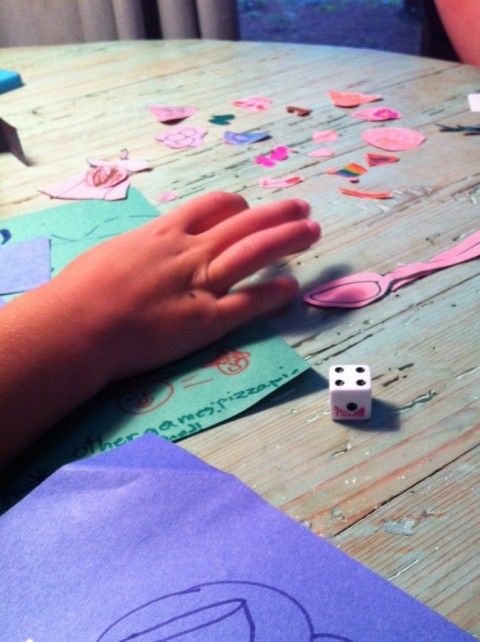
Staying playful and creative sometimes requires going back to your roots, or at least your crayons. Drawing, scribbling, doodling, and coloring have all been found to help with destressing, thinking out ideas and problems, and keep brains active into old age.
Drawing is also a great learning activity with lots of fine motor skill and development, problem solving, language development and social learning opportunities… (Editor’s note: all of which tie into the above-mentioned benefits, and these skills are all useful for both grownups and kids to practice and refresh on a regular basis).
Drawing is a way for children everyone to process their world, to represent and share their ideas and to explore new skills and information.
Drawing with Geometry ToolsGraph Paper DrawingCollaborative Doodle Drawings
If you think this is just “kid’s stuff” I dare you to try some of these, especially the collaborative drawing exercise. It’ll (potentially) expose some growth areas of yourself and/or others very quickly. 😛
Taking time to destress and be creative has great benefits, both physically and mentally. Take knitting, for example:
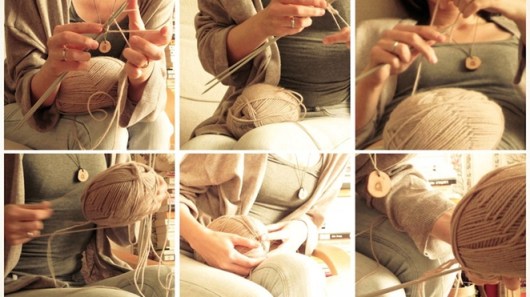
It turns out that knitting has incredible health benefits. It makes people feel good in just about every way. A bit of research has revealed a wide range of ways in which knitting helps humans cope, physically and mentally.
1. Knitting is used for therapy. It’s a powerful distractant, helping people manage long-term physical pain. For those who are depressed, knitting can motivate them to connect with the world. It is a conversation starter, allowing people to interact politely without making eye contact. It builds confidence and self-esteem.
2. Knitting is supremely relaxing, which is extremely important for reducing stress and anxiety. Dr. Herbert Benson, founder of Harvard’s Mind/Body Medical Institute, wrote The Relaxation Response, in which he recommends the repetition of a word, sound, phrase, prayer, or muscular activity to elicit “the relaxation response” – decreased heart rate, muscle tension, and blood pressure. Knitting is likened to meditation, sometimes described by knitters as “spiritual” and “Zen-like.”
I have always felt like I SHOULD learn how to knit, but I actually find the idea of having to keep count and keep track of where I’m at stressful, but maybe I should just give it a try. Thoughts? Leave them in the comments below.
I’m working on an article for work, and came across this article as part of my research for the article. It pretty much sums up everything I wanted to say (darn it!).
Americans and their brains are preoccupied with work much of the time. Throughout history people have intuited that such puritanical devotion to perpetual busyness does not in fact translate to greater productivity and is not particularly healthy. What if the brain requires substantial downtime to remain industrious and generate its most innovative ideas? “Idleness is not just a vacation, an indulgence or a vice; it is as indispensable to the brain as vitamin D is to the body, and deprived of it we suffer a mental affliction as disfiguring as rickets,” essayist Tim Kreider wrote in The New York Times. “The space and quiet that idleness provides is a necessary condition for standing back from life and seeing it whole, for making unexpected connections and waiting for the wild summer lightning strikes of inspiration—it is, paradoxically, necessary to getting any work done.”
In contrast to the European Union, which mandates 20 days of paid vacation, the U.S. has no federal laws guaranteeing paid time off, sick leave or even breaks for national holidays. In the Netherlands 26 days of vacation in a given year is typical. In America, Canada, Japan and Hong Kong workers average 10 days off each year. Yet a survey by Harris Interactive found that, at the end of 2012, Americans had an average of nine unused vacation days. And in several surveys Americans have admited that they obsessively check and respond to e-mails from their colleagues or feel obliged to get some work done in between kayaking around the coast of Kauai and learning to pronounce humuhumunukunukuapua’a.
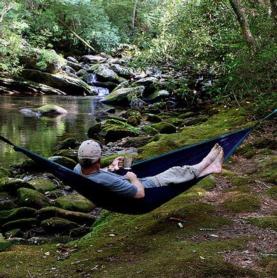
The article focuses on mental downtime options like naps and meditation, which are awesome, but I would argue that being awake and aware, but also not actively engaged, like going for a walk or just sitting down and observing a garden, are good options too, especially since getting outside has also shown to be mentally reinvigorating.
Do you notice you have different moods depending on how bright or dark it is outside? Do you notice the warmth or cold feeling emitting from a light bulb? Whether you consciously notice them or not, they do have an effect on your brain and body. Since these days most of us don’t get to work outside and absorb natural light, scientists are working on the right kind of artificial light for us.
The light emitted from our lamps and fixtures at home doesn’t just spruce up a room; it has the power to significantly augment our mood and lift our spirits.To explore further the link between lighting and personal wellbeing, glass engineering company Cantifix and Oxford University have collaborated to create the Photon Project. This scientific study comes to life at this month’s London Design Festival in the form of the Photon Pod, an all-glass living space that will help the Photon Project gather data and insights on the links between light and health.Resembling a futuristic bedroom, the pod invites visitors to experience what life is like in a completely translucent living space, as well as take part in simulations that measure levels of alertness or relaxation under varied light conditions.
How many of your virtual friends would you actually invite over for lunch? (Photo credit: Meer)
Does social media make us feel more or less connected? How does connecting and communicating in a digital space impact us differently than connecting and communicating in a physical space?
There are mixed results from various studies, but recently more studies have come out finding that we actually feel less connected to each other the more we use social media like Facebook:
Kross found that the more people used Facebook, the less happy they felt—and the more their overall satisfaction declined from the beginning of the study until its end. The data, he argues, shows that Facebook was making them unhappy.Research into the alienating nature of the Internet—and Facebook in particular—supports Kross’s conclusion. In 1998, Robert Kraut, a researcher at Carnegie Mellon University, found that the more people used the Web, the lonelier and more depressed they felt. After people went online for the first time, their sense of happiness and social connectedness dropped, over one to two years, as a function of how often they used the Internet.Lonelier people weren’t inherently more likely to go online, either; a recent review of some seventy-five studies concluded that “users of Facebook do not differ in most personality traits from nonusers of Facebook.”
But, as with most findings on Facebook, the opposite argument is equally prominent. In 2009, Sebastián Valenzuela and his colleagues came to the opposite conclusion of Kross: that using Facebook makes us happier. They also found that it increases social trust and engagement—and even encourages political participation. Valenzuela’s findings fit neatly with what social psychologists have long known about sociality: as Matthew Lieberman argues in his book “Social: Why Our Brains are Wired to Connect,” social networks are a way to share, and the experience of successful sharing comes with a psychological and physiological rush that is often self-reinforcing. The prevalence of social media has, as a result, fundamentally changed the way we read and watch: we think about how we’ll share something, and whom we’ll share it with, as we consume it. The mere thought of successful sharing activates our reward-processing centers, even before we’ve actually shared a single thing.
Virtual social connection can even provide a buffer against stress and pain: in a 2009 study, Lieberman and his colleagues demonstrated that a painful stimulus hurt less when a woman either held her boyfriend’s hand or looked at his picture; the pain-dulling effects of the picture were, in fact, twice as powerful as physical contact.
So what does this all mean? That we are complicated. And so is how we use social media.
“What makes it complicated is that Facebook is for lots of different things—and different people use it for different subsets of those things. Not only that, but they are also changing things, because of people themselves changing,” said Gosling. A 2010 study from Carnegie Mellon found that, when people engaged in direct interaction with others—that is, posting on walls, messaging, or “liking” something—their feelings of bonding and general social capital increased, while their sense of loneliness decreased. But when participants simply consumed a lot of content passively, Facebook had the opposite effect, lowering their feelings of connection and increasing their sense of loneliness.
I have seen forums used to create physical communities (I don’t want to say “real world” because virtual is real, it’s really happening) and create friendships that crossed continents, but I have also heard of and seen virtual bullying that in some very sad cases led to a person’s death. We can be cruel to others by hiding behind that veil of anonymity, or even just by creating a lack of physical presence which also creates a mental separation which makes it easier for us to feel isolated or intentionally isolate others. But we also want to share and connect with others, even if we can’t be physically near them, and share very intimate details with people we may not otherwise have given the time of day, which can be a good or bad thing depending on the context and situation.
How do you use social media? Does it make you feel more connected to your tribe, or do you feel left out or perhaps even more isolated? Do you bridge the gap between your virtual world and physical world, or does the slogan “What happens in Vegas stays in Vegas” also apply to your social media and physical lives? Leave your thoughts in the comments below.
While most of my blog posts focus on playful design and things that create a playful atmosphere, a lot of us don’t have all of our basic needs met in order to be in a playful state. We are often overstressed, underslept, overworked, and detached from community. Play researchers have found evidence that goes along with Maslow’s hierarchy of needs that find we need these things in order to be ready to explore, create, and be healthy. That’s why I also like to talk about what it takes to get us to a space where we feel safe, healthy, and ready to be playful.
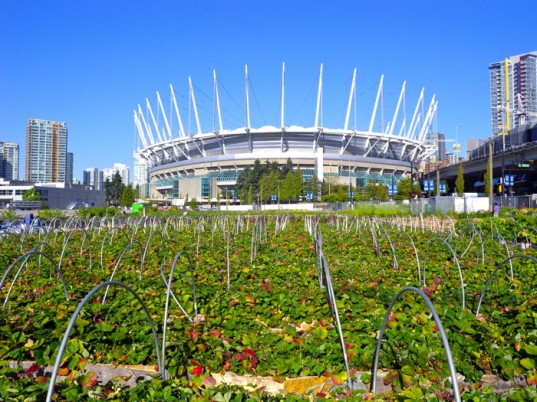
Going with the philosophy that gardening is good for the soul, as well as aiming for convenience, a group in Vancouver has opened a huge urban farm and orchard.
Vancouver’s Sole Food Farms has transformed an old gas station into North American’s largest urban orchard! Located in Downtown Eastside, the orchard provides jobs to recovering addicts and those with mental illness, giving them a chance to make a living while raising organic food. The organic fruit, along with produce from three other sites, is sold to local restaurants and grocery stores.
Adding green space to a city, whether it’s a garden, park, or a single tree, has also repeatedly shown to be valuable even to those who just observe the space, they don’t need to even be actively engaged in maintaining it. The garden adds connection to and investment in the land, which is good for building community, and provides a sense of agency for those who might not otherwise have one.
Where have you seen community gardens spring up? What works, what doesn’t? Leave your thoughts in the comments below.







 Mental Flowers