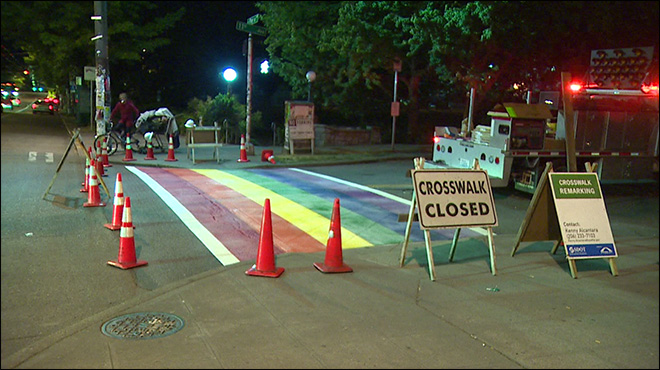
Several Seattle crosswalks are getting a new rainbow-colored coat of paint to celebrate Pride Week, and the city is planning to make them permanent.
Eleven of the rainbow crosswalks were unveiled Tuesday, including one at 10th Avenue and Pike Street on gay-friendly Capitol Hill.
Local groups have been campaigning for the crosswalks for a couple of years. They cost about $6,000 each, and are being paid for by fees for new private developers on Capitol Hill.
I love these not only because they are symbols of gay pride, they are also colorful and playful symbols of the neighbor’s character. Public art that the public engages with every time they cross the street.
Where you live can have a huge bearing on how healthy you’re likely to be. And, sometimes the gaps open up over just a few miles. A few subway stops in New York, for example, could mean up to nine years difference in how long someone might live.
Mitchell’s research, while still at a relatively early stage, suggests green-space might serve to reduce these gaps.
The research doesn’t prove the strength of the relationship between individual neighborhood services and well-being, but does show that well-being gaps are smaller where services are better, Mitchell notes in an email. Research he’s conducting now, which hasn’t been published, does show green spaces having the strongest bearing on well-being differences.
A million times yes! This article focuses on one of my biggest pet peeves and challenges as a play advocate; play not being taken seriously.
The author, Hilary O’Shaughnessy, and also the producer of the Playable City Award, discusses her play competition and the usual rub of people asking whether this is really all “worth it.” I’m quoting over half of her article, but she very eloquently covers an entire blog post I was planning on writing (I will still write it, I promise):
Amongst the usual squeals of anticipation [around the competition], there are questions about the value of these ideas to the “real” world. Fun is all well and good – but surely fun is the stuff we get to when the grown up work of building hospitals and roads is done with? When we’ve fixed the economy, let’s play. Cities are full of problems, why are we not fixing them first?
Herein lies the real issue. When we see play simply as fun, a whimsy for those of us lucky enough to have the time to engage in it, we underestimate the transformative power of play and it’s role in our lives.
Fixing problems, making our living and working spaces more livable and resilient, designing better cities, starts at every level with the people that Iive in those cities. Increasingly we are realising that our cities are designed for exclusivity, so it makes sense that we don’t feel part of shaping the future. This is revealed in the language we use to describe our relationships to the services and organisations that our cites are made of. We want them to fix it, they don’t want us to have a say, they give money to them to exclude us: the language is divisive and separating, and that’s the problem. Even the descriptions of the projects fail to deliver what they promise, because a playable city is experienced, not described.
The idea of what our cities should mean, how public money is spent, what we imagine as good for us and who is involved in designing them, is only ever addressed when we have a complaint or we feel excluded. We talk to the city council when the road is road is torn up or the lights won’t come on. We complain that our voices are unheard, but we never seize opportunities to speak, fearing that if we do we will be ignored or shouted down by the loudest ones.
This feeling of separation cannot be undone overnight. We need new approaches, new tools, and new ways to talk to one another about how to live together in cities.
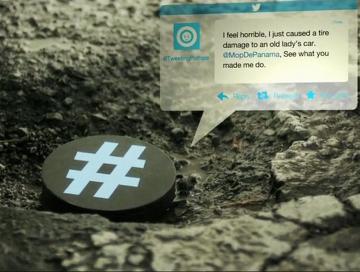
From a different article, but an example of using play as political protest: a device placed in large potholes that tweets whiny complaints when it is run over in order to publicly shame govt. into action.
Conversations about the future, about how we want to live, have to begin from a level playing field, and crucially that level playing field may not be where we expect. Play is a leveler: when we play, we play as humans, first. Traditional status markers like wealth, celebrity, or qualifications are not really much use when invited to dance with your shadow or conduct lights like a demi-god.
Addressing problems and finding solutions that work for us all begin with inviting everyone into conversation. Play as unexpected interventions in familiar places act as invitations to connect, an offer to begin to talk about those parts of our cities that we feel excluded from. To new eyes and ears, some projects can seem esoteric – but that is because we have become numbed to dull public announcements, badly designed flyers and clunky websites which act as information dumps that no-one reads, let alone takes as an invitation to work together. Yet, this is important stuff: we need to talk about the kind of future we want or it be will be decided for us while we look the other way.
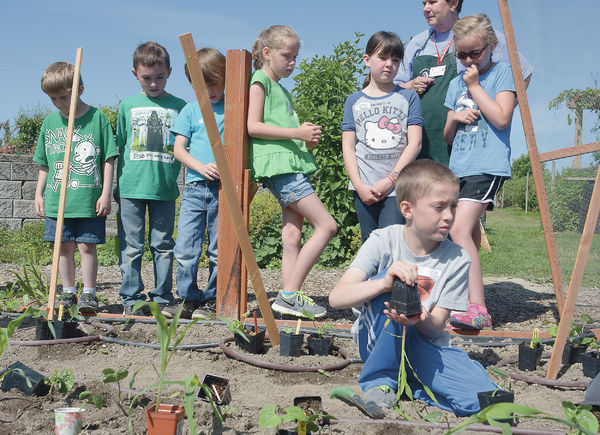
This is a great example of how even “country kids” – all of these kids come from communities surrounded by farmland and agriculture – enjoy and appreciate hands-on experiences and learning about gardening and the natural environment.
About 70 classmates participated Thursday in the Washington State University Skagit County Extension Master Gardener’s “Discovery In Gardening — Is Terrific” (DIG-IT) youth education program.
“It introduces kids to how the garden works, from the growth of the plants to how it arrives in your kitchen and what to do with the scraps,” said Master Gardener Chuck Howell.
The program was started in 2002 by two teachers, Master Gardener Gail Messett said.
The format of the program has changed over the years, Messett said, but the goal has remained the same: Get kids outside and into the garden.
“They’re learning respect for insects and bees and flowers,” Messet said. “I think they go home pretty awestruck, actually.”
Sitting on a bench at a bus stop or in the park, most people tend to focus on their smartphones or a book rather than whoever’s sitting next to them. But a new bench is designed to instantly connect strangers in a moment of play: When you sit down, the bench transforms into a makeshift merry-go-round.
After a successful year-and-a-half long pilot, we’re excited to announce that the Parklet Program is now a permanent program! This means that Seattle businesses and community groups have even more opportunities to enhance our streets with public spaces.
As part of this launch, we’re also rolling out a brand-new approach to activating our streets: the Streateries Pilot Program. What’s a “streatery” you ask? Streateries combine the best features of a parklet and a sidewalk café by allowing a restaurant, café, or bar to use a parking space to create outdoor seating for their customers during business hours (like a café) and for the public during non-business hours (like a parklet).
Great article about the evolution of the playground, as well as the next generation of playgrounds emerging in cities:
After World War II, European architects turned out custom playgrounds that challenged kids both physically and intellectually. Inspired by their work, a few American architects, including Philadelphia’s Louis Kahn, tried their hands at the form. But the movement didn’t get very far. Playgrounds were a casualty of the breakdown of American cities in the ’60s and ’70s. As maintenance was deferred, they fell into ruin. By the time cities began to recover in the ’90s, Solomon says, all that local officials wanted was equipment that was indestructible and vetted for safety.
Moore, a professor at North Carolina State University who has been studying children’s play for 50 years, sees a connection between those designs and the increase in such childhood ailments as obesity, anxiety, and attention-deficit disorder. In the simple act of scrambling up the branches of a tree, a kid learns to monitor risk and deal with fear. But on most playgrounds, the climbing frames are lower than ever.
The concern about such controlled environments has sparked any number of popular books advocating less programming: Free Range Kids, 50 Dangerous Things (you should let your children do), Last Child in the Woods. All see our culture’s fear of risk as worse than the occasional scraped knee or broken bone.
So what’s the alternative to standard-issue playgrounds? Solomon envisions multipurpose, multigenerational urban parks that incorporate spaces where kids can take charge of their own play. Instead of a fixed bridge in a plastic fort, they would have to use their imagination to decide which objects could be converted to play equipment. Such a challenging play space also would include nooks where kids could temporarily escape the nervous gaze of their caregivers. There would be no fences, plenty of trees and bushes, and good seating.
My favorite playground growing up was made of mostly huge sewer pipe pieces, a monkey cage, and random cement shapes. What was your favorite playground as a kid? Or now? Describe it in the comments below.
Need some creative inspiration? How about a creative, inspiring environment? Not a lot of patterns here, although I’d love to see a behavioral scientist try and spot one?
Mark Twain, author.
Ruth Reichl, food writer.
From tiny writing desks to giant painting studios, the only thing all of these creative studios have in common is that they inspired their successful inhabitants to create greatness.
I love seeing people working WITH their environments to create art.
Sculptural artist Spencer Byles spent a year creating beautiful sculptures out of natural and found materials throughout the unmanaged forests of La Colle Sur Loup (where he lived with his family), Villeneuve Loubet and Mougins. He worked together with elements of his natural surroundings to create artwork that blends seamlessly with the environment.
Byles’ project is intentionally secretive – the only way you’ll see these work short of his photos is by going into the woods and finding them yourself. I imagine that coming upon such a fantastic structure unexpectedly in the woods is sure to be quite a magical surprise.
One of the most beautiful things about his work is its temporary nature. The pieces were not intended to last, and each sculpture will eventually be reclaimed by the natural environment that helped Byles shape it. This full circle gives the organic pieces a powerful poetic and philosophical touch.
This is a scathing opinion piece looking at the negative influences of space and place, specifically cars and car culture. Corwin argues passionately against the takeover of cars in to the city space and how it is anything BUT enriching. It is full of examples of what NOT to do, and therefore offers suggestions on how to solve it.
Our experiences driving cars in this city are, for the most part, fleeting. We drive somewhere, we get out of the car, we close the door, and we walk away. But to think that we can escape the world that cars have created as easily as we escape the car itself is foolish. In fact, when we leave our cars, we walk into that world. We have to live in that putrid mess.
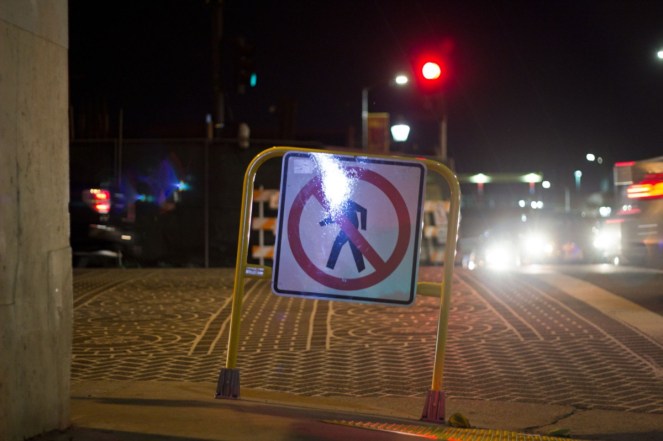
Let’s talk about how Los Angeles is a city where construction projects can fence off whole blocks, including the sidewalks, without offering people on foot an alternative. Let’s talk about how when that happens, no one even considers converting one of the two car lanes into a temporary sidewalk, because dear god, that might cause slight inconvenience to people in cars. And let’s talk about how ironic it is that inconveniencing people in cars is the end of the world, but doing the same to people on foot is a non-issue. Then let’s talk about how when frustrated walkers decide to use the car lane rather than take the ridiculous detour, the city’s totally acceptable solution to that problem is not to concede space to those people, but rather to bolt permanent, metal signs into the middle of the sidewalk to keep them from doing so. That is cancer.





 Mental Flowers