architecture · children · community · design · play

UW professor and students help redesign International Children’s Park

A nice story about a redesign of a park in Seattle so children could actually, you know, play in it:

Located on the northeast corner of Seventh Avenue and South Lane streets in the Chinatown-International District, the park is small – about one-fifth of an acre — but in a key spot.

Vegetation had grown up around the periphery of the 30-year-old park, obscuring views and raising concerns about safety. There were few amenities for adults who bring kids to the park, and no accommodations for people with disabilities. A rock mound posed a hazard, and during the winter, the grass was often soggy.

Cultural and language differences were also part of the landscape, making decisions about the park complicated.

But renewal made sense because the neighborhood has seen increasing residential and commercial development, leading to  more active community places such as the Wing Luke Asian Museum and a branch of the Seattle Public Library.

To involve stakeholders young and old, Hou’s group, along with the city and several neighborhood groups, held an intergenerational design workshop in 2007.

“I think the most difficult challenge was to incorporate as much of the feedback we got from the community while still allowing the park to have a clear and concise design,” said student Patrick Keegan.

Engaging multiple generations of users was the most interesting part of the redesign, said Joyce Pisnanont, manager of IDEA Space, which promotes and develops the Chinatown­-International District. Desires were consistent across age groups, she said, and the adults “really wanted to ensure that the park was fun for kids to play in.”

The final design by landscape architect Karen Kiest includes an expanded children’s area with a play structure big enough for a dozen kids, a dragon sculpture restored by artist Gerard Tsutakawa, a stainless steel pagoda with seats for grown-ups and a three-level rockery that serves as both gathering space and a climbing area.

Public art by Stuart Nakamira includes a brushed stainless steel top the size of a typical 4-year-old.

In a Lane Street corner, pink viburnum are budding, surrounded by circles of black mondo grass.

See more images of the park:
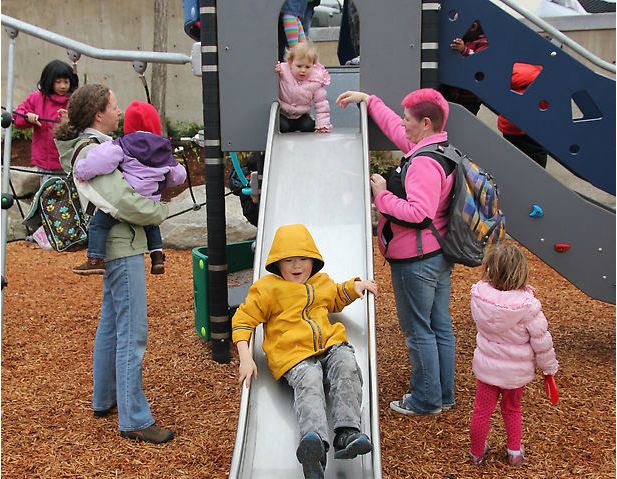
Kids play in the redesigned park.


anthropology · architecture · community · creativity · culture · design · environment · happiness · Social

How legalizing street art made Rio de Janeiro a prettier, happier place

A recent article in the Huffington Post explored Rio de Janeiro’s acceptance of street art and how it has enriched the various neighborhoods:

Brazilian graffiti art is considered among the most significant strand[s] of a global urban art movement, and its diversity defies the increasing homogeneity of world graffiti.” – Design Week

In March 2009, the Brazilian government passed law 706/07 making street art and graffiti legal if done with the consent of building owners. As progressive of a policy as this may sound, the legislation is actually a reflection of the evolving landscape in Brazilian street art, an emerging and divergent movement in the global street art landscape.

Rio de Janeiro has been particularly progressive in its policy towards street art, with its 1999 “Não pixe, grafite” (Don’t Tag, Graffiti) project that brought together 35 graffiti artists to showcase diversity in local styles. But more unique is the evolution of a permission hierarchy, blurring the line between formal and informal. The new street art law merely reinforced these unique patterns of street art and legitimized an already flourishing form of artistic expression.

Retaining walls on the steep terrain provide canvases for artists.

In Rio de Janeiro, street art is ubiquitous. It exists in all corners of the city, from the favelasto upper class neighborhoods, from residential to institutional. It is bold in scale and aesthetics and is anything but graffiti. The urban fabric of Rio de Janeiro also figures prominently in the evolving street art scene. The high walls, whether for security or to contain the topography, provide ample surfaces for painting. But rather than location dictating art, the relationship between owner and artist has a direct impact on where street art occurs.

Owners of buildings, both residential and commercial, sometimes invite artists for commissions, which is done to protect from tagging, as an aesthetic choice or as an economic choice — painting a façade with art may be cheaper than another mode of beautification. In another case, street artists ask permission from the owner.

Tudo de cor para você, Santa Marta, Rio de Janeiro (photo source: favelapainting.com)

Thanks to the city’s openness to various forms of artwork, and specifically “street” art, Rio de Janeiro is now known for its colorfulness and art. In informal studies the art has also been found to make citizens more invested in their communities and overall happier.

Hooray for public art.

architecture · children · creativity · design · play

Playground Crochet by Toshiko Horiuchi

This is from last November, but still amazing!

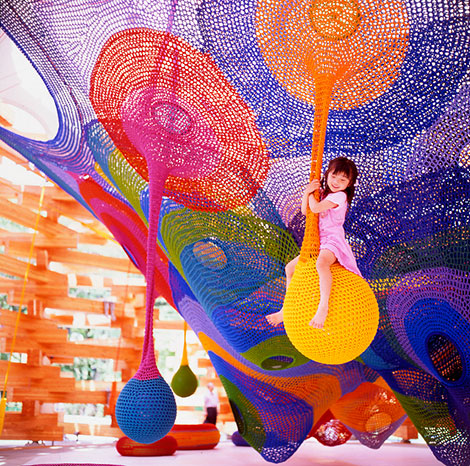
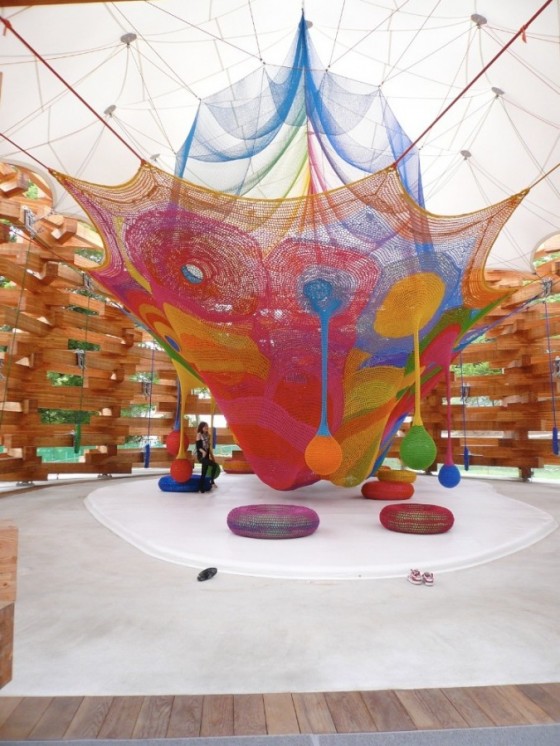
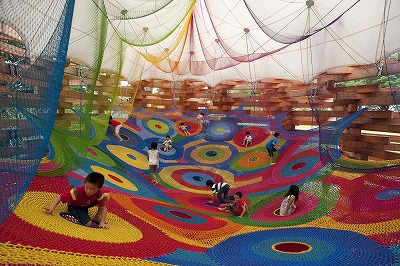
Toshiko Horiuchi MacAdam, who orders yarn by the ton for her creations, is the textile artist behind the oft photographed net constructions at the Hakone sculpture park in Sapporo Japan.

I love the story of how she came to be engaged with children’s play:  “It all happened quite by accident. Two children had entered the gallery where she was exhibiting ‘Multiple Hammock No. 1’ and, blissfully unaware of the usual polite protocols that govern the display of fine art, asked to use it. She watched nervously as they climbed into the structure, but then was thrilled to find that the work suddenly came alive in ways she had never really anticipated. She noticed that the fabric took on new life – swinging and stretching with the weight of the small bodies, forming pouches and other unexpected transformations, and above all there were the sounds of the undisguised delight of children exploring a new play space.”

From that point, her work shifted out of the gallery and a subdued, monochromatic pallet into a riotous rainbow of colors for children’s playscapes.

Rainbow Net was produced in close collaboration with structural engineers TIS & Partners and landscape architects Takano Landscape Planning and opened in July of 2000 after three years of planning, testing, and building.

Note that the project began with a brief not for a playground, but simply for ‘public art‘.   Wouldn’t it be great if when we heard ‘public art’ we automatically thought ‘play’?

But innovative playscapes require an enormous commitment: “…endless cycles of discussion and approval, with meticulous attention to detail…[including] an actual scale wooden replica of the space in Horiuchi’s studio and accurately scaled crocheted nets using fine cotton thread. Even then, it was difficult to assess many things. What difference, for instance, would the weight of the real yarn make when everything increased in scale? All of these factors had to be calculated in order to arrive at a scientific methodology that could eradicate any risk of unacceptable danger.”During final assembly, Toshiko crocheted ten hours a day, often on her knees, until the installation was complete.”

With the current revival of the textile arts and yarn bombings everywhere, I’d love to see more crochet on the playground!

More at: Playground Crochet by Toshiko Horiuchi.

What an amazing use of fabric to create an original, creative play space.

architecture · community · creativity · design · happiness · mental health · Nature

“Pop-up” park to fight the winter blues

Signs of spring are just starting to appear – birds are getting more active, tulips are just starting to show off green shoots – but even in my neck of the woods I know it’ll be awhile before spring is actually here. In New York, one group is fighting the gray and dark with an installed insta-park:

photo courtesy of laughing squid

Welcome to New York City in winter, with a cure for cold-weather blues: a pop-up indoor park in lower Manhattan that’s open through Valentine’s Day.

Despite temperate temperatures so far this year, “it’s our rebellion against winter,” says Jonathan Daou, founder and CEO of Openhouse Gallery, a company that holds a 20-year lease on the space at 201 Mulberry St.

On a recent chilly weekday afternoon, babies played barefoot in the 75-degree world of Park Here while their mothers and fathers sipped tea, eating cookies and sandwiches.

One night, a movie is planned on the lawn; other days bring a ping pong competition, a trivia contest, wine tastings and soccer workshops.

The 5,000-square-foot artificial habitat in the downtown Nolita neighborhood is filled with trees, rocks, picnic benches and the recorded ambient sounds of Central Park in spring. There are giant cushions and even a hammock, plus a baby elephant.

But the park will be gone by mid-February.

The rest of the year, the 200-year-old former police precinct is a stage for business that plays on the “pop-up” retail method mushrooming around the world in recent years: a quick presentation of a product, performance or personality, with no commitment to a lease or contract.

It’s usually set up in a mobile unit that can be assembled and disappear.

Some call it guerrilla retail. “You’re not stuck with a 10-year lease if the product doesn’t sell,” Daou says. “People are looking for novelty, off the beaten path, and this space tests the ‘legs’ of a business concept.”

The space was part of a police precinct in the late 1890s under New York Police Commissioner Theodore Roosevelt, who later became U.S. president.

But there’s nothing historic about what’s going on inside. On the contrary, it’s all the rage in retail.

Read the full article: Winter ‘Pop-Up’ Park Debuts in New York

What a nice way to slough off that winter feeling and take a break and add some fun to your day. What is happening in your area that reminds you of spring?

children · creativity · design · education · learning · Nature

Toys in space!

Toys are not only great for thinking outside the box with, they’re also great for thinking outside of our world! Two Canadian students recently sent a Lego man out to the edge of space:

Matthew Ho and Asad Muhammad used a weather balloon to carry a camera and a toy lego man high above the clouds.

(source: BBC News)

What the video here:

Image

brain · creativity · design · neuroscience · play

Creating new designs through play, brain waves

Very cool video from B-Reel, Scandinavian furniture brand Varier and Oslo agency DIST Creative, on a project that involved creating fabric designs based on brain waves, specifically the brain waves of children playing and exploring:

Design based on kids' brainwaves.

Using some of the findings from its Mind Scalextricsexperiment, B-Reel used a headset to measure the brain waves of three children using Varier’s Balans chair. (The chair is designed to promote circulation and extended activity, which is claimed to leadi to better concentration and overall well-being).

It then used a custom built data visualization engine to turn the recordings into a pattern that could be printed as upholstery for the chair. As well as creating image patterns to reflect the changes in the children’s brain activities, the engine engine also used graphic presets corresponding to the children’s personal interests and took inspiration from patterns ranging from classic tapestries to pop-art and contemporary design.

Varier Furniture is featuring the project on its website as well as at international Furniture and Design Fairs.

Originally from Creativity Online, where you can also see the video.

architecture · creativity · design · environment

Underground gardens in Fresno

Image

It’s cold and wet here in the northwest, so it’s nice to be reminded that somewhere relatively nearby (ok, 800 miles, but still!), it’s warm and sunny:

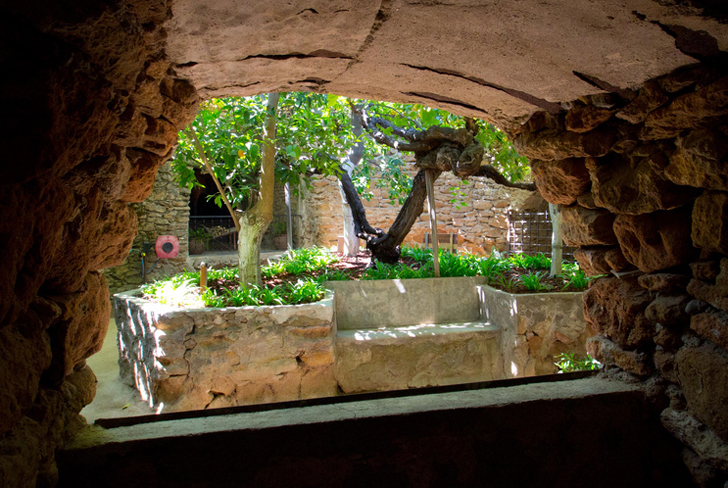
Fresno’s Forestiere Underground Gardens are one of California’s most beautiful feats of historical environmental design. Built by Sicilian immigrant Baldasare Forestiere over 40 years of his life, the subterranean gardensare fed with skylights and catch basins. Working totally on impulse, Forestiere designed the retreat without blueprints or plans – and his only tools were a pick, shovel, and wheelbarrow.

architecture · creativity · culture · design · environment

Top stories in architecture from Inhabitat

Happy New Year! This has been a pretty crazy year for me. One of change, growth, more change, more growth… but hopefully all of it has paid off to create a better, more enriching space for me both at work and at home.

In honor of enriching spaces, I figured I’d share Inhabitat’s top six (why six? Not sure) architecture stories of the year:

2011 saw more exciting, innovative and record-breaking green buildingsthan ever before, and judging from the popularity of our eco architecture stories, many of you agree! From the world’s largest wooden structure in Seville to the world’s first vertical forest beginning construction in Milan, if you want to see some of the most mind-blowing designs that made waves this year, then check out 2011′s most popular stories below — and be sure to vote for your favorite!

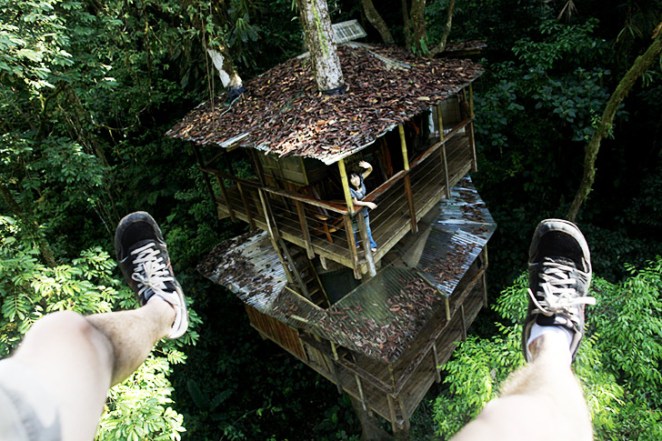
Finca Bella Vista
Where do Ewoks go when they're bored with Endor? Why, to Finca Bellavista village of course.


Bosco Verticale


sunken pedestrian bridge in the netherlands parts moat waters like moses

See the other three and vote for them here: Top 6 Green Architecture Stories of 2011 – Vote for Your Favorite! | Inhabitat – Green Design Will Save the World

design · environment

UW students focus on how to get local food to their dining hall tables

local food madness
getting local foods to a big institution can be tricky.

As you’ve probably figured out by now, I am a huge proponent of consciously choosing locally sourced food and products for consumption. Not only does it use less fossil fuels, I think buying and eating local also creates a better, healthier, and more enriching environment for us all.

It’s easy enough for individuals to choose and cultivate local food, but how does a larger institution like a university, or individuals living on campus, get access to the same local goods? One class at the University of Washington did a problem-solving project to come up with solutions to eating local. From the University of Washington:

Recipes that come boxed with fresh ingredients ready to cook? How about a monthlong incentive program inspiring a commitment to fresh local food? What would it take?

The class was Introduction to Interaction Design, Art 381, and the assignment Tad Hirsch gave his students was straightforward: Design a way to improve access to fresh local food on the UW campus.

“The students looked at how the UW community currently feeds itself,” Hirsch said, “and considered a range of factors that currently make it hard for students, faculty and staff to eat locally.” He said they took an interaction design approach to the problem, asking what experiences they wanted to provide for people. “They then had to come up with concrete proposals to make local food more accessible.”

It’s all pretty theoretical for this undergraduate class of mostly juniors, he said. “But we hope to take some of these ideas and make them tangible. There’s the notion that this stuff is meant to go out into the world.”

Hirsch is an assistant professor who came to the UW a couple of months back from Intel Corp. in Oregon. He said he is pleased to be part of the UW’s “small but mighty” program in interaction design.

So, what did the students come up with? Some pretty interesting stuff, actually:

Read their solutions at From crate to plate: Students study how to improve campus access to fresh local food

architecture · design · disease · health

Designing and Building for Wellness

An overlay of two images: one of a river delta...
What does it mean to design with a person's wellness in mind? One architect has an idea. Image via Wikipedia

Great blog post from The Patron Saint of Architecture about what it means for her to be an architect and build and design things for people’s overall health and wellness:

As architects, we seek to inspire those who move through the environments we create.  It’s also our job to understand how the space will be used and create elements that support that use.  The last leg of the stool, a part we often overlook, is the need to make buildings that support wellness.  Even architects who design healthcare buildings often forget about this one as they work to meet many other challenges related to budget, program, operational  and code requirements.  Maybe it’s because wellness is such a slippery term.  Much like the term “green,” “wellness” is often bandied about, a buzzword that makes some aspect of a product, design or organization sound like it’s good for us. So how do we know if it really is- much less translate that into design elements?  I have been thinking about this issue for a while and even found an interesting website devoted to defining wellness complete with helpful questionnaires.

I’ve come to the conclusion that true wellness is multidimensional and positively impacts our physical, mental and social state of being.  With that in mind, I have also observed that, as a profession, we kind of, sort of, dip our toe in the waters of designing for wellness.  We embrace sustainable building standards, evidence-based design, lean design, even socially conscious strategies.  However, these are just quantifiers.  Building blocks of the wellness leg of the architecture stool, but not enough as stand-alones.  True architecture of wellness must incorporate all of these measures, but spring from a much deeper intent.

Read her recommendations for building spaces that promote wellness at her blog post: architecture of wellness