anthropology · architecture · creativity · culture

8 New Jobs People Will Have In 2025

Have you ever wondered what job you’ll have in 10 years? This trend-spotting firm came up with some ideas for what new jobs could exist by then.

New technology will eradicate some jobs, change others, and create whole new categories of employment. Innovation causes a churn in the job market, and this time around the churn is particularly large–from cheap sensors (creating “an Internet of things“) to 3-D printing (enabling more distributed manufacturing).

Sparks & Honey, a New York trend-spotting firm, has a wall in its office where staff can post imaginative next-generation jobs. Below are eight of them, with narration from CEO Terry Young (who previously appeared here talking about health care).

1. Digital Death Manager

2. Un-schooling Counselor

3. Armchair Explorer (this already exists, btw).

see all 8 via 8 New Jobs People Will Have In 2025 | Co.Exist | ideas + impact.

First, this list is a great example of why creativity and playfulness are so important to cultivate – it’ll help you adapt to the future.

But several of these jobs also require being able to think creatively and outside the box, being adaptable and adjusting to new problems like “I haven’t been in school in 10 years but want to go back), and thinking abstractly. All of which are cultivated and grown through play!

anthropology · community · culture · happiness · Social

The Happiest States In America In One Map (INFOGRAPHIC)

Where you live apparently can influence your happiness – or maybe happy people just tend head west?

Which way to happy? Geographically speaking, it’s the route to Hawaii, Maine or one of the clusters of blissful cities in California and Colorado.

The map below is based on results from a study of geotagged tweets published earlier this year in PLoS ONE by researchers at the University of Vermont. The team scored more than 10,000 words on a positive-negative scale and measured their frequency in millions of tweets across the country, deliberately ignoring context to eliminate experimental bias. What emerged was significant regional variation in happiness by this calculation, which correlates with other lifestyle measures such as gun violence, obesity and Gallup‘s traditional wellbeing survey. A sadness belt across the South includes states that have high levels of poverty and the shortest life expectancies.

Huffington Post, Happy, United States Map

more via The Happiest States In America In One Map (INFOGRAPHIC).

architecture · community · creativity · culture · design · environment

Designers Stretch Out Imaginations on Park Benches – NYTimes.com

Several great scientists, philosophers, and kids alike know the power of a good park bench. Thankfully park designers are learning that too:

That most prosaic of public furnishings, the New York City park bench, has morphed into a blank canvas on which designers, landscape architects and artists have unleashed their fantasies.

Architects and park officials say the trend has gained momentum as the city has reclaimed its waterfront and turned forgotten public nooks into plazas.

park furniture has the power to stop people in their tracks and have them take a seat. Abigail Hansen, a 24-year-old graduate student who lives on the Upper West Side, set out recently to walk along the Hudson River all the way to Chelsea. But she was sidetracked when she happened upon a group of curvaceous chaise longues made from molded fiberglass in Riverside Park South at West 62nd Street near the river. “When I saw these I decided to stop,” said Ms. Hansen, who was flipping through an Italian fashion magazine. “The surface is nice and smooth and the material doesn’t get too hot.”

via Designers Stretch Out Imaginations on Park Benches – NYTimes.com.

What parks do you visit that have amazing benches? Tell us in the comments below.

behavior · creativity · culture · happiness · health · mental health · play

Adults are reclaiming playtime

Dr. Norman Bethune (centre) watching a game of...
A lively game of checkers among friends (Photo credit: BiblioArchives / LibraryArchives)

From Dodgeball to pillow fights to roller derby, adults are reclaiming time to play in their lives:

It was all fun and games until someone smacked Don Norman in the head — hard — with a feather pillow. Walking into his first two-hour “Playing in the Deep” session, a weekly organized event in Portland, Maine that engages stressed-out grownups in childlike activities, Norman, a 48-year-old database administrator, didn’t know what to expect. Then he saw the pillows, a big pile of them, stacked high. Everyone around him grabbed one and was suddenly roughhousing like over-caffeinated kids at summer camp. Someone handed him his own pillow, but he simply held on to it, too inhibited to let his freak flag fly. He considered bolting.

“And then I got hit!” Norman recalls. “I figured, ‘If they’re going to hit me, I’ll hit them!’ By the end of the night, I was running around like a madman, and I forgot all about my self-consciousness. I forgot about everything. It was liberating.”

“I’ve seen a steady increase in invitations for adult play,” says game designer and self-proclaimed “fun theorist” Bernie De Koven, author of The Well-Played Game. “Now that we no longer have the same sense of community at work or in our neighborhoods as we did twenty or thirty years ago, these opportunities for play are filling the gap.”

The events may consist of kiddie games, but there’s often a serious psychological, even spiritual purpose behind them. “People need to feel they’re connected to other people,” says Cary Umhau, the cofounder of Spacious, who says she was inspired by the adage “Love Thy Neighbor.” “Most people are trying to numb themselves out from just the pain of life. If they don’t have addictions, they spend much of their life watching TV. They need places to come together, to step out of the box and out of their social silo.”

more via Stories: Playing For Keeps – Life Reimagined.

More and more adults are understanding the psychological benefits to playing and making time to let their hair down (or pull it up into a ponytail and go hog wild!), from less sick days to a larger community to helping solve a project problem at work. Even if it’s something as small as giving the barista a silly name the next time you order coffee (I am Batman!), it’s enough to get your brain cells firing and keep it healthy.

How do you squeeze in playtime for yourself? Share your ideas in the comments below.

anthropology · community · creativity · culture

Critical City Upload, Edgeryders create games for urban public spaces

Augusto Pirovano, in Milan, Italy with 2 other friends we made a project called Critical City Upload:

A game of urban transformation that uses a web platform and asks its players to perform creative missions. So far CCU is not very different from Edgeryders, the fact is that the missions are – instead of stories and reflections to write and share with others as it is on Edgeryders – creative actions that are generally performed in the public spaces of cities. The player picks the mission, shuts down the computer, gets out on the street, plays the mission, collects the necessary proof of his experience and then, after returning home, publishes the mission attaching photos and videos. As the player gets points, he levels up until he reaches level 7 and wins the Mechanical Box (a mysterious box that is delivered at his home).

Some examples of missions:

more via We create games for urban public spaces | Edgeryders.

architecture · community · creativity · culture · design

Teatro del Mare celebrates public space, community

A fun way to encourage public participation in space and creativity.

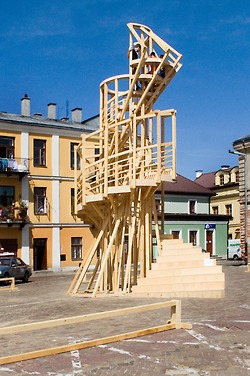
In order to celebrate its 10 years of activity, the artistic centre Lungomare in Bolzano Italy has recruited the ConstructLab/exyzt team composed by Alexander Römer, Gonzague Lacombe, Patrick Hubmann and Mattia Paco Rizzi. The result is the creation of Teatro del Mare, a wooden temporary structure, both a contemporary stage and street furniture, hosting a series of events, meetings and screenings until the end of June.

LIEU d’ÊTRE by the French Compagnie Acte is more than a performance. The project is an urban collective experience involving, both in the creation and the production of the event, professionals as well as inhabitants of a block of flats or of a whole neighbourhood. It uses the tool of dance to explore the pattern of the city.

more via In public space we trust.

community · culture · environment · happiness · Nature · Social

Chelsea Fringe: A Garden Festival for the Masses

On a more playful note, I love the idea of having public garden festivals where everyone is invited to come out and admire and enjoy nature, and each other’s company.

Unknown's avatar

On a more playful note, I love the idea of having public garden festivals where everyone is invited to come out and admire and enjoy nature, and each other’s company.

View original post

anthropology · behavior · creativity · culture · happiness · play · Social · technology · youtube

Lolcats and the Harlem Shake: Play on the Internet


An article from the head of Google’s Agency Strategic Planning team published in Fast Company talks about why we play on the Internet; it’s a really good dive into the need and importance for play in our lives and share that playful experience with others, and how as we move towards a more digital space we are taking that need to share play with us. It is marketing/branding focused, but the message is clear; we all need play and are making space for it, at least in our Internet lives:

We [netizens] uploaded over half a million variations of Harlem Shake to YouTube in the past few months. Google searches for Cat GIFs hit an all-time high last month. And we took 380 billion photos last year–that’s 10% of all the photos taken . . . ever. But let’s be honest–these memes are fun, but they don’t matter, right? They’re pretty much a waste of time.

As the head of Google’s Agency Strategic Planning team, it’s my job to work with brands and creative agencies to help develop their ideas in the digital space. So I had to ask: Why would we be doing so much of all this “visual play” if it really means so little to us?
To get to the bottom of these memes, we assembled a team of original thinkers–anthropologists, digital vanguards, and content creators–to dig a little deeper into this “visual web.” We also spoke to gen-Cers–the people who grew up on the web or behave as though they did–and who thrive on creation, curation, connection, and community.

The research showed us that far from distracting us from more serious things, these viral pictures, videos, and memes reconnect us to an essential part of ourselves.

It may seem that all we’re doing is just capturing every mundane moment. But look closely. These everyday moments are shot, displayed, and juxtaposed in a way that offers us a new perspective. And then all of a sudden these everyday moments, places, and things look . . . fascinating.

As kids, that happens all the time because everything is new. Everything is unlike. And we aren’t constrained by the rules about what “goes together.” Why else was putting the Barbie in the toy car wash more fun than putting the car in the car wash?

Read the whole article here: Memes With Meaning: Why We Create And Share Cat Videos And Why It Matters To People And Brands

behavior · children · creativity · culture · happiness · health · play

Cool doctors doing what’s right… – The Meta Picture

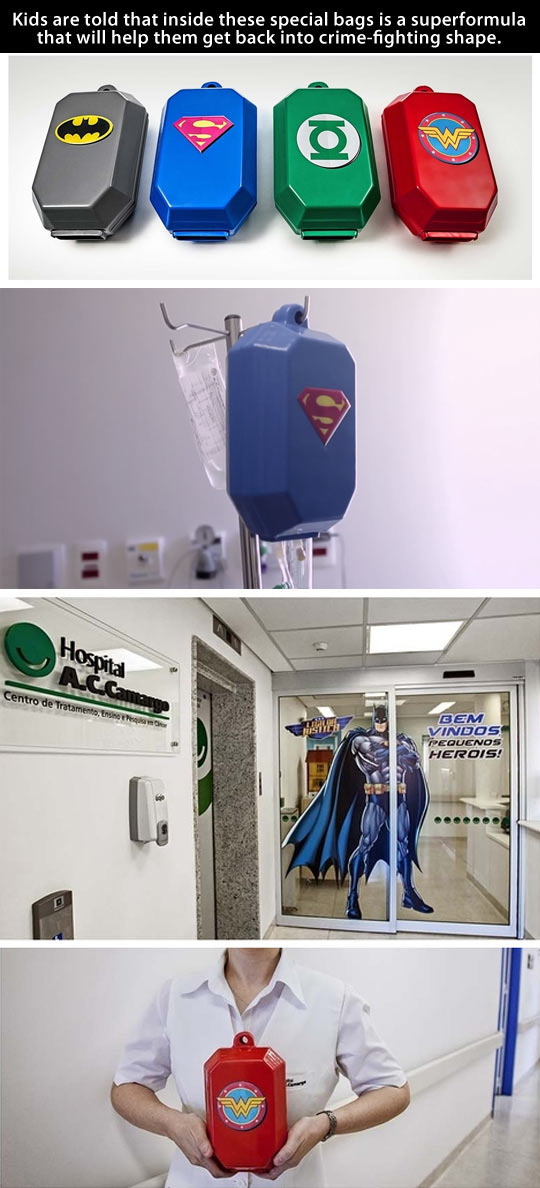
Hospitals can be scary places, for grown ups and for kids. This is a great way to make hospitals a little less intimidating, and add some silliness to an otherwise boring, and possibly painful, medical procedure.

Originally from Cool doctors doing what’s right… – The Meta Picture.

anthropology · children · community · creativity · culture · design · environment · music

In New Documentary “Landfill Harmonic” Music Students Scrape Together their Instruments from Trash

The kids show off their instruments

Making music is a pretty powerful thing. Especially if you’re making it out of recycled objects and keeping things out of landfills.

“Landfill Harmonic,” an upcoming documentary scheduled for release in 2014, tells the story of an orchestra whose musicians play instruments made from trash. The film is set in the town of Cateura, Paraguay, which is built on a landfill. Many of the town’s residents collect trash to recycle and sell for money, and many of the town’s children are susceptible to getting involved with gangs or drugs. A music program was set up to help keep the kids out of trouble, but because so many of them were interested, there was soon a shortage of instruments.

more via In New Documentary, ‘Recycled Orchestra’ Makes Instruments from Trash | Earth911.com.

Music, like play, has been shown to have so many cognitive benefits, and emotional as well (plus even the act of music is called “playing”). There is something very deeply rooted in humanity about playing music, it is wonderful that through ingenuity and creativity these kids can channel their energy into the incredible power of making music. Plus the fact that they’re keeping things out of landfills is just a double bonus!

More information: https://www.facebook.com/landfillharmonicmovie?fref=ts

Kickstarter project: http://www.kickstarter.com/projects/405192963/landfill-harmonic-inspiring-dreams-one-note-at-a-t