behavior · children · creativity · emotion · health · play · psychology

Tiny superheroes combat big challenges with capes made by Seattle mom | Local News | The Seattle Times

Robyn Rosenberger makes capes for only the fiercest of fighters.

Have you ever had days where you felt you had super powers, or felt you needed them? One woman in Seattle is making that a reality for over 1,700 kids with illnesses and disabilities in 50 states and 14 countries, with a new workshop opening to help out more kids:


Gabby has epilepsy and is completely dependent: She cannot talk, walk or eat on her own. But she is a tiny superhero — her superpowers include perseverance, courage and strength — and she has the cape to prove it. A purple number, with a blue letter “G” hand-sewn on by Robyn Rosenberger.

Rosenberger is the powerhouse behind TinySuperheroes, which makes capes as a form of empowerment. “Our mission is to empower these kids to feel as extraordinary as we see they are,” Rosenberger explained.


via Tiny superheroes combat big challenges with capes made by Seattle mom | Local News | The Seattle Times.


On the surface this may seem a little fluffy, but it exemplifies the power of play, particularly imaginary play and pretending.  First, it gives the kids a chance to take a break from their illness and maybe laugh a little, which is good for everyone.  Second, the crazy thing is researchers are finding that by pretending to be big, strong, dominant, and super-hero-esque, it can train your body to actually be more strong, dominant, and super-hero-esque. Even healthy kids can feel pretty powerless, so by imagining what it feels like to be strong and healthy it can help their minds and bodies map out what that might look and feel like and maybe even help along the road the recovery.


So by giving these kids superhero capes, these volunteers are in fact giving these kids some pretty strong medicine.


Now I want a cape, or at least a magic wand.

If you are interested in helping out, visit the Tiny Superheroes site.


community · creativity · environment · play

Introducing Park-A-Park: Vancouver’s Recently Launched Mobile Parklet | Spacing Vancouver

Have you ever wandered into a neighborhood or parking lot and thought, “Wow, this space could use a nice mini-park, or even a bench.” Well, here you go!

A colorful banner pasted alongside the bin’s rough exterior cheerfully announces ‘Park-A-Park’, the mobile parklet that launched on Vancouver’s Commercial Drive at the tail end of July. The bin reaches just over three feet high, its inner walls are ringed with wooden bench seating, and planters and tables mingle inside to offer a charming, yet functional environment. The unit is capped by a shade-providing umbrella, and one end of the bin lies open, like a drawbridge, coyly beckoning passersby to enter.

A partnership between Emily Carr University of Art + Design and local Urban Interventionist Julien Thomas, Park-A-Park has been designed to transform an industrial disposal bin into an aesthetic mobile park that can be transported, parked, and enjoyed throughout the city. The unit is a component of Emily Carr’s chART project and aims to support public art and community engagement through creativity and innovation.

more via Introducing Park-A-Park: Vancouver’s Recently Launched Mobile Parklet | Spacing Vancouver.

For more information, you can also visit: www.parkapark.com.

This is reminiscent of PARK(ing) Days in the U.S. where people take over parking spaces in cities and turn them into mini-parks.

Where have you seen mini-parks, or think there should be one? Leave your ideas in the comments below.

behavior · brain · creativity · disease · happiness · mental health · Nature · play · psychology

10 Simple Things You Can Do Today That Will Make You Happier, Backed By Science – The Buffer Blog

I think I’ve talked about ALL of these tips individually on the blog before, so I’m thrilled that somebody combined them into a “Top 10 With Science!” post:


Happiness is so interesting, because we all have different ideas about what it is and how to get it. It’s also no surprise that it’s the Nr.1 value for Buffer’s culture, if you see our slidedeck about it. So naturally we are obsessed with it.

I would love to be happier, as I’m sure most people would, so I thought it would be interesting to find some ways to become a happier person that are actually backed up by science. Here are ten of the best ones I found.

1. Exercise More (7 minutes might be enough)

2. Sleep More

read all 10 Simple Things You Can Do Today That Will Make You Happier, Backed By Science – The Buffer Blog.

I particularly like suggestion #5.

anthropology · architecture · creativity · culture

8 New Jobs People Will Have In 2025

Have you ever wondered what job you’ll have in 10 years? This trend-spotting firm came up with some ideas for what new jobs could exist by then.

New technology will eradicate some jobs, change others, and create whole new categories of employment. Innovation causes a churn in the job market, and this time around the churn is particularly large–from cheap sensors (creating “an Internet of things“) to 3-D printing (enabling more distributed manufacturing).

Sparks & Honey, a New York trend-spotting firm, has a wall in its office where staff can post imaginative next-generation jobs. Below are eight of them, with narration from CEO Terry Young (who previously appeared here talking about health care).

1. Digital Death Manager

2. Un-schooling Counselor

3. Armchair Explorer (this already exists, btw).

see all 8 via 8 New Jobs People Will Have In 2025 | Co.Exist | ideas + impact.

First, this list is a great example of why creativity and playfulness are so important to cultivate – it’ll help you adapt to the future.

But several of these jobs also require being able to think creatively and outside the box, being adaptable and adjusting to new problems like “I haven’t been in school in 10 years but want to go back), and thinking abstractly. All of which are cultivated and grown through play!

behavior · community · creativity · work

Organize an Office Recess and Create Your Own Game | Play on GOOD

Yes! I’m in!

When you think of our everyday endeavors and going through life as adults, we’re not really encouraged to be playful. But when we play games, we relax and become more receptive and less judgmental. Games trigger our creative juices—through solving problems, navigating complex systems and managing resources. They present us with hard problems; like solving a puzzle or defeating a boss. As players we need to be creative and come up with good ideas to solve those problems. They make us more playful in our way of being and experiencing life. Best of all, games bring us together. Go ahead, organize an office recess and create your own game—and use the toolkit at the link to help get you started.

sign up and find out more at Organize an Office Recess and Create Your Own Game | Play on GOOD.

architecture · creativity · Nature

DIY Vertical Gardening

Make your space a little greener, using recycled materials.

Unknown's avatarTHE DIRT

garden
Who knew? You can turn those leftover soda bottles into a vertical garden with some supplies and a bit of crafting skills. This is Do-It-Yourself (DIY) vertical gardening.

This concept come to us from Brazilian design firm Rosenbaum, as part of their partnership with TV producer Luciano Huck. According to This Is Colossal, this is part of a series where “teams went through dozens of Brazilian homes” in an attempt to execute “dramatic makeovers of interior and exterior spaces.”

garden2
This urban garden, which was featured in their 48th home in the series, was such a hit that Rosenbaum released these instructions so anyone create their own. The instructions are in Portuguese, so here is a version translated into English:

Materials

•    2-liter plastic bottle, empty and clean
•    Scissors
•    Clothesline rope, twine, or wire
•    Washers (two per bottle if rope or wire is chosen)
•    Dirt
•  …

View original post 154 more words

brain · children · creativity · education · learning · play · school

Games Without Frontiers: Games, simulations, and the new school year.

Tic tac toe. Español: Ta te ti Polski: Kółko i...
Tic tac toe. (Photo credit: Wikipedia)

For teachers, it’s time to start thinking about Back-to-School planning. Thankfully this teacher’s got an awesome plan to teach world politics:

Ask any student the following question; would you prefer to start the year with a lecture or playing a game? I’d wager the that nearly all learners would choose to spend their time with the game. As a younger student, I recall only being able to play in class once all of the curriculum was “done”, usually at the end of the school year. Of course, we know that learners of all stripes acquire, apply, synthesize, and communicate knowledge through participation in games and simulations. As a result, there’s a strong case to be made to embed complex critical thinking simulations and games right from the outset of the school year.

I’m currently putting the final touches on all of my lesson plans for the first term of both years of IB Global Politics. Here’s a partial list of the games and simulations the students and I will be playing in the first thirteen weeks:

Against All Odds; Fish Forever; Half the Sky; Malaria in Wanzuzu; Model United Nations; Pandemic; Prisoner’s Dilemma; Rock-Paper-Scissors-Lizard-Spock; Rushing River Cleanup; Survival; Tic-Tac-Toe; The Walking Dead

To say that I’m completely nerded out by all of this is an understatement; I can’t (hardly) wait for school to start on the 26th!

via Games Without Frontiers: Games, simulations, and the new school year.

I’m looking forward to seeing how the year unfolds for this class! If the teacher is excited, that’s definitely a good sign.

community · creativity · environment · Nature

Portland Goes Green On Potholes | kgw.com

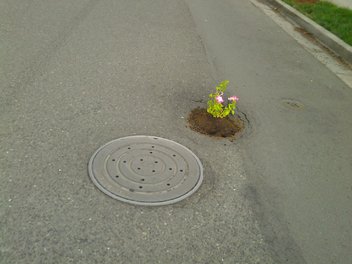
Portland Goes Green On Potholes | kgw.com Portland

Ah, Portland, specializing in making spaces more friendly and playful in somewhat unique ways:

This flower mysteriously appeared in a not so friendly pothole.The pothole had been reeking havoc on many a car tire and bike riders were terrified of it. But alas the flower has come to the rescue and now Mr Pothole is not intimidating at all as Ms Flower brings a smile too many.

via Portland Goes Green On Potholes | kgw.com Portland.

architecture · community · creativity · culture · design · environment

Designers Stretch Out Imaginations on Park Benches – NYTimes.com

Several great scientists, philosophers, and kids alike know the power of a good park bench. Thankfully park designers are learning that too:

That most prosaic of public furnishings, the New York City park bench, has morphed into a blank canvas on which designers, landscape architects and artists have unleashed their fantasies.

Architects and park officials say the trend has gained momentum as the city has reclaimed its waterfront and turned forgotten public nooks into plazas.

park furniture has the power to stop people in their tracks and have them take a seat. Abigail Hansen, a 24-year-old graduate student who lives on the Upper West Side, set out recently to walk along the Hudson River all the way to Chelsea. But she was sidetracked when she happened upon a group of curvaceous chaise longues made from molded fiberglass in Riverside Park South at West 62nd Street near the river. “When I saw these I decided to stop,” said Ms. Hansen, who was flipping through an Italian fashion magazine. “The surface is nice and smooth and the material doesn’t get too hot.”

via Designers Stretch Out Imaginations on Park Benches – NYTimes.com.

What parks do you visit that have amazing benches? Tell us in the comments below.

behavior · creativity · culture · happiness · health · mental health · play

Adults are reclaiming playtime

Dr. Norman Bethune (centre) watching a game of...
A lively game of checkers among friends (Photo credit: BiblioArchives / LibraryArchives)

From Dodgeball to pillow fights to roller derby, adults are reclaiming time to play in their lives:

It was all fun and games until someone smacked Don Norman in the head — hard — with a feather pillow. Walking into his first two-hour “Playing in the Deep” session, a weekly organized event in Portland, Maine that engages stressed-out grownups in childlike activities, Norman, a 48-year-old database administrator, didn’t know what to expect. Then he saw the pillows, a big pile of them, stacked high. Everyone around him grabbed one and was suddenly roughhousing like over-caffeinated kids at summer camp. Someone handed him his own pillow, but he simply held on to it, too inhibited to let his freak flag fly. He considered bolting.

“And then I got hit!” Norman recalls. “I figured, ‘If they’re going to hit me, I’ll hit them!’ By the end of the night, I was running around like a madman, and I forgot all about my self-consciousness. I forgot about everything. It was liberating.”

“I’ve seen a steady increase in invitations for adult play,” says game designer and self-proclaimed “fun theorist” Bernie De Koven, author of The Well-Played Game. “Now that we no longer have the same sense of community at work or in our neighborhoods as we did twenty or thirty years ago, these opportunities for play are filling the gap.”

The events may consist of kiddie games, but there’s often a serious psychological, even spiritual purpose behind them. “People need to feel they’re connected to other people,” says Cary Umhau, the cofounder of Spacious, who says she was inspired by the adage “Love Thy Neighbor.” “Most people are trying to numb themselves out from just the pain of life. If they don’t have addictions, they spend much of their life watching TV. They need places to come together, to step out of the box and out of their social silo.”

more via Stories: Playing For Keeps – Life Reimagined.

More and more adults are understanding the psychological benefits to playing and making time to let their hair down (or pull it up into a ponytail and go hog wild!), from less sick days to a larger community to helping solve a project problem at work. Even if it’s something as small as giving the barista a silly name the next time you order coffee (I am Batman!), it’s enough to get your brain cells firing and keep it healthy.

How do you squeeze in playtime for yourself? Share your ideas in the comments below.