I tweeted about this short film yesterday, but I really feel like this is worth giving some space on the blog for.
The value of play is important for teaching life skills like conflict resolution and collaboration, health lessons, healing from trauma, building community and just overall survival as a child and human being, the work this organization does seems simple but is hugely important.
This short video highlights some of the incredible impact that play can have on a child, or group of children.
You can also visit the organization’s website at Right to Play.
Happy Friday. I got to start off my work day sitting on my back patio drinking coffee. Here’s why more people should do the same.
Do you feel stifled by the four walls of your office or cubicle?
There’s a reason for that.
Trapping ourselves indoors has created what health experts call a “nature deficit disorder” — depression or anxiety resulting from too little time spend outside. Getting outdoors can do great things for your health. Reducing stress, lowering blood pressure and improving immune function are among nature’s health benefits. What’s more, incorporating elements of nature into your workday can also give your brain a boost, resulting in increased productivity, focus and creativity.
Harvard physician Eva M. Selhub, co-author of Your Brain on Nature, says a drop of nature is like a drop of morphine to the brain, since it “stimulates reward neurons in your brain. It turns off the stress response which means you have lower cortisol levels, lower heart rate and blood pressure and improved immune response.”
Turning off the sensors that are involved in the stress response allows the higher brain centers to be accessed, resulting in increased concentration, improved memory, greater creativity and productivity and reduced mental fatigue. While Selhub says spending 20 minutes a day outdoors is recommended, studies have shown even looking at photographs of nature can deliver some of the same cognitive benefits as physically being outdoors. A 2008 study at the University of Michigan showed students who looked at photos of nature performed better on tests of attention and working memory than those who looked at photographs of urban scenes.
Staying playful and creative sometimes requires going back to your roots, or at least your crayons. Drawing, scribbling, doodling, and coloring have all been found to help with destressing, thinking out ideas and problems, and keep brains active into old age.
Drawing is also a great learning activity with lots of fine motor skill and development, problem solving, language development and social learning opportunities… (Editor’s note: all of which tie into the above-mentioned benefits, and these skills are all useful for both grownups and kids to practice and refresh on a regular basis).
Drawing is a way for children everyone to process their world, to represent and share their ideas and to explore new skills and information.
Drawing with Geometry ToolsGraph Paper DrawingCollaborative Doodle Drawings
If you think this is just “kid’s stuff” I dare you to try some of these, especially the collaborative drawing exercise. It’ll (potentially) expose some growth areas of yourself and/or others very quickly. 😛
I’m working on an article for work, and came across this article as part of my research for the article. It pretty much sums up everything I wanted to say (darn it!).
Americans and their brains are preoccupied with work much of the time. Throughout history people have intuited that such puritanical devotion to perpetual busyness does not in fact translate to greater productivity and is not particularly healthy. What if the brain requires substantial downtime to remain industrious and generate its most innovative ideas? “Idleness is not just a vacation, an indulgence or a vice; it is as indispensable to the brain as vitamin D is to the body, and deprived of it we suffer a mental affliction as disfiguring as rickets,” essayist Tim Kreider wrote in The New York Times. “The space and quiet that idleness provides is a necessary condition for standing back from life and seeing it whole, for making unexpected connections and waiting for the wild summer lightning strikes of inspiration—it is, paradoxically, necessary to getting any work done.”
In contrast to the European Union, which mandates 20 days of paid vacation, the U.S. has no federal laws guaranteeing paid time off, sick leave or even breaks for national holidays. In the Netherlands 26 days of vacation in a given year is typical. In America, Canada, Japan and Hong Kong workers average 10 days off each year. Yet a survey by Harris Interactive found that, at the end of 2012, Americans had an average of nine unused vacation days. And in several surveys Americans have admited that they obsessively check and respond to e-mails from their colleagues or feel obliged to get some work done in between kayaking around the coast of Kauai and learning to pronounce humuhumunukunukuapua’a.
The article focuses on mental downtime options like naps and meditation, which are awesome, but I would argue that being awake and aware, but also not actively engaged, like going for a walk or just sitting down and observing a garden, are good options too, especially since getting outside has also shown to be mentally reinvigorating.
How many of your virtual friends would you actually invite over for lunch? (Photo credit: Meer)
Does social media make us feel more or less connected? How does connecting and communicating in a digital space impact us differently than connecting and communicating in a physical space?
There are mixed results from various studies, but recently more studies have come out finding that we actually feel less connected to each other the more we use social media like Facebook:
Kross found that the more people used Facebook, the less happy they felt—and the more their overall satisfaction declined from the beginning of the study until its end. The data, he argues, shows that Facebook was making them unhappy.Research into the alienating nature of the Internet—and Facebook in particular—supports Kross’s conclusion. In 1998, Robert Kraut, a researcher at Carnegie Mellon University, found that the more people used the Web, the lonelier and more depressed they felt. After people went online for the first time, their sense of happiness and social connectedness dropped, over one to two years, as a function of how often they used the Internet.Lonelier people weren’t inherently more likely to go online, either; a recent review of some seventy-five studies concluded that “users of Facebook do not differ in most personality traits from nonusers of Facebook.”
But, as with most findings on Facebook, the opposite argument is equally prominent. In 2009, Sebastián Valenzuela and his colleagues came to the opposite conclusion of Kross: that using Facebook makes us happier. They also found that it increases social trust and engagement—and even encourages political participation. Valenzuela’s findings fit neatly with what social psychologists have long known about sociality: as Matthew Lieberman argues in his book “Social: Why Our Brains are Wired to Connect,” social networks are a way to share, and the experience of successful sharing comes with a psychological and physiological rush that is often self-reinforcing. The prevalence of social media has, as a result, fundamentally changed the way we read and watch: we think about how we’ll share something, and whom we’ll share it with, as we consume it. The mere thought of successful sharing activates our reward-processing centers, even before we’ve actually shared a single thing.
Virtual social connection can even provide a buffer against stress and pain: in a 2009 study, Lieberman and his colleagues demonstrated that a painful stimulus hurt less when a woman either held her boyfriend’s hand or looked at his picture; the pain-dulling effects of the picture were, in fact, twice as powerful as physical contact.
So what does this all mean? That we are complicated. And so is how we use social media.
“What makes it complicated is that Facebook is for lots of different things—and different people use it for different subsets of those things. Not only that, but they are also changing things, because of people themselves changing,” said Gosling. A 2010 study from Carnegie Mellon found that, when people engaged in direct interaction with others—that is, posting on walls, messaging, or “liking” something—their feelings of bonding and general social capital increased, while their sense of loneliness decreased. But when participants simply consumed a lot of content passively, Facebook had the opposite effect, lowering their feelings of connection and increasing their sense of loneliness.
I have seen forums used to create physical communities (I don’t want to say “real world” because virtual is real, it’s really happening) and create friendships that crossed continents, but I have also heard of and seen virtual bullying that in some very sad cases led to a person’s death. We can be cruel to others by hiding behind that veil of anonymity, or even just by creating a lack of physical presence which also creates a mental separation which makes it easier for us to feel isolated or intentionally isolate others. But we also want to share and connect with others, even if we can’t be physically near them, and share very intimate details with people we may not otherwise have given the time of day, which can be a good or bad thing depending on the context and situation.
How do you use social media? Does it make you feel more connected to your tribe, or do you feel left out or perhaps even more isolated? Do you bridge the gap between your virtual world and physical world, or does the slogan “What happens in Vegas stays in Vegas” also apply to your social media and physical lives? Leave your thoughts in the comments below.
I think I’ve talked about ALL of these tips individually on the blog before, so I’m thrilled that somebody combined them into a “Top 10 With Science!” post:
Happiness is so interesting, because we all have different ideas about what it is and how to get it. It’s also no surprise that it’s the Nr.1 value for Buffer’s culture, if you see our slidedeck about it. So naturally we are obsessed with it.
I would love to be happier, as I’m sure most people would, so I thought it would be interesting to find some ways to become a happier person that are actually backed up by science. Here are ten of the best ones I found.
For teachers, it’s time to start thinking about Back-to-School planning. Thankfully this teacher’s got an awesome plan to teach world politics:
Ask any student the following question; would you prefer to start the year with a lecture or playing a game? I’d wager the that nearly all learners would choose to spend their time with the game. As a younger student, I recall only being able to play in class once all of the curriculum was “done”, usually at the end of the school year. Of course, we know that learners of all stripes acquire, apply, synthesize, and communicate knowledge through participation in games and simulations. As a result, there’s a strong case to be made to embed complex critical thinking simulations and games right from the outset of the school year.
I’m currently putting the final touches on all of my lesson plans for the first term of both years of IB Global Politics. Here’s a partial list of the games and simulations the students and I will be playing in the first thirteen weeks:
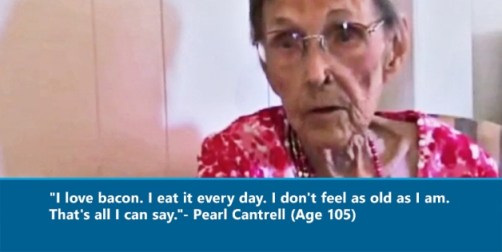
At first it seems like the typical “there’s no golden rule to getting old” article, right?
Some of the supercentenarian advice is sweet, some is a bit strange and a couple are everything we’ve always hoped for. Who knew bacon and whiskey were the fountain of youth?
Readers — In our desperation to create “smarter” kids, we have practically pinned them to their desks. Now educators are realizing this may be just the opposite of what is best for kids — including those with special needs, as Andrea Gordon writes in Toronto’s TheStar.com (a paper run by my favorite editor-in-chief from back when he and I were at the NY Daily News, Michael Cooke). – L.
It was a crisp March day outside Blaydon Public School when teachers discovered that 4-year-old Alex Wong could spell his name.There were no pencils or paper in sight. Everyone was bundled in winter jackets. Alex, who has autism, was in the outdoor classroom where his special-needs class played and explored for at least an hour every day, alongside 25 kids from the mainstream kindergarten class.
Teacher Sue Cooper noticed Alex march over to a pile of wood, put three sticks in a small wheelbarrow and push it to a spot on the pavement. One by one, he placed the sticks on the ground, forming the letter A. He made three more trips and came back with sticks to make three more letters, which he placed in a row: L, E and X.
Cooper’s jaw dropped. The teachers ran for a camera.
Alex is non-verbal and for a long time, his only interactions had been to throw things or hit. But in the fresh air, day after day, something started to change. Over several months Alex had watched the other children making structures. And that March morning, he was ready to take his turn.
The teachers say his is one example of how daily outdoor time is changing the way their young students — including those autism and other special needs — learn and behave.
Obviously more research needs to be done, but there has been strong correlations drawn between outdoor time and decreasing of ADD and dementia symptoms, so it makes sense that putting humans in our natural surroundings would also help other mental disabilities and ailments.
There are a growing number of outdoor preschools, and I’d argue that there should be more outdoor elementary and even middle schools.
I heard this story on NPR recently, and I think it’s the best advice I’ve heard in awhile on how to get out in the woods and explore, relax, and as they say in the article, take time to smell the roses! The answer: make an exploratory game out of it. “Pretend” to be a naturalist. Yes!
In this permanent state of hyperventilation, the issue for us all is not stopping to smell roses. It’s not even noticing that there are roses right there in front of us. Joseph Campbell, the great scholar of religion, hit the core of our problem when he wrote, “People say that what we’re all seeking is a meaning for life. I don’t think that’s what we’re really seeking. I think that what we’re seeking is an experience of being alive.”
But how can we experience “being alive” in the midst of the crushing urgencies that make up modern life?
Well, it might seem strange, but one answer to that question is “science,” at least science with a lowercase “s.” Science, you see, is all about noticing. This is where it begins, with simple act of catching seeing the smallest detail as an opening to a wider world of wonder and awe. And here is the good news. You don’t need a particle accelerator or well-equipped genetics lab in your basement to practice noticing (that would be science with a capital “S”).
You already are a scientist. You have been since you were a kid playing with water in the tub, or screwing around in the backyard with dirt and sticks and stuff.
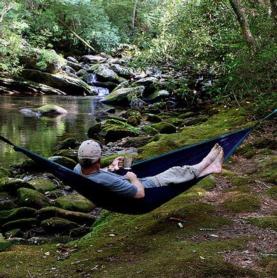
If you want to rebuild your inner-scientist-noticing-skills, the best place to begin is with a walk in the woods.
There are lots of reasons to take a walk in the woods. To get away from it all, clear your head, smell the fresh air. The problem, of course, is that even if we get ourselves into a park or a forest, we might still be so lost in our heads that we miss what’s right in front of us. Practicing noticing, like a scientist, can change that by binding us to experience in ways that are thrilling, even in their ordinariness.
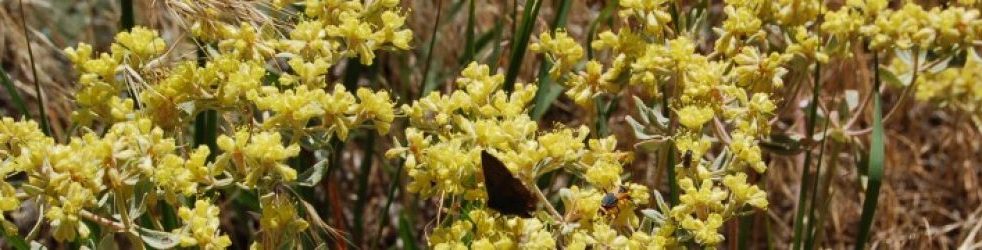
Noticing can take many forms. One trick is to count things. Scientists love to count stuff. How many trees are there on the sides of a steep hill compared with its crest? How many leaves are there on the stalks of the blue flowers compared to the yellow ones? How many different kinds of birdsong do you hear when you stop and listen, (by the way, this requires really stopping and really listening, which is awesome). Counting things forces you to pay attention to subtleties in the landscape, the plants, the critters.
Other things scientists love: shapes, colors, patterns. Do the rocks at the stream’s edge look different from the ones near the trail? Do the big cattails have the same color as the small ones? Get your naturalist on and bring a notebook. Pretend you are or John Muir. Jot down your findings, make little drawings and always, always ask your yourself those basic questions: why, how, when?
It may seem counter-intuitive, but scientists are all about creativity and exploration, and noticing things outside of the ordinary, so acting like a scientist is great way to see the world in a whole new way by playing with things, seeing what happens when you mess with something. Kids are natural players/explorers/scientists, so you can even bring one along as it might be helpful to get you in the explorer mode.
I would also argue that it doesn’t have to be “the woods” necessarily to get the same playful/exploratory benefits, it can also be short walks around the block, whatever works to get your observational juices flowing.






 Mental Flowers