anthropology · architecture · behavior · community · creativity · culture · design · education · learning · play

More projects on Play and the City

TED (conference)

I posted last week about Jason Sweeney and his TED City2.0 plan to map out quiet spaces in cities.

After doing some more poking around I found some other great projects all grouped under “Play in the City.”

First, I commend TED and the participants of this project for recognizing the need for play in all environments and for all ages.

Second, they have some really cool ideas to check out:

Bruno Ruganzu, 10k prize winner and the first TED Prize recipient of 2012 in Doha, Qatar at the TEDxSummit


All of these great ideas and more are captured on the Play theme page of the TED City2.0 project.

I think people often think of play as done out in the woods or on playgrounds, and often forget that cities can contain all the resources needed for play. Just look at parkour or buildering or urban mountain biking, or even yarn bombing. That said, it is absolutely crucial to allow people to play in cities and to create spaces dedicated entirely to play, as much for grown-ups as for kids.

What other projects promoting play in the city are you aware of? Let me know in the comments below.

behavior · creativity · environment · play

Boat Bumbers as elephant toys

An elephant named Chai carries a boat bumper around with her trunk. Photo by Ryan Hawk/Woodland Park Zoo.

This time of year we often think of playing in boats and recreation on the water. But sometimes one kind of play can inspire an entirely different kind. I came across this great blog post from Woodland Park Zoo in Seattle, WA, about how recycled objects like boat bumpers make great toys, especially for larger critters:

Our elephants have a number of toys, or, in zoo-speak, Environmental Enrichment Devices (EED) that are designed to bring out their instinctual behaviors, along with all the naturally enriching elements in their exhibit like trees, logs, leaf piles, water and different ground coverings. The elephants have quite an array of EEDs, and one of their favorites is a boomer ball, which we often fill with treats. But constantly purchasing more boomer balls (since the elephants can be a bit destructive with them) can be a little costly. So, what’s a zookeeper to do? We think outside the box, er, ball.

With a background working with marine mammals, I thought back to my days of playing with dolphins. We would throw boat bumpers and buoys in with the 800-pound critters, and play endless games with them. So, how would an 8,000-pound animal react to one?

To get my answer I ventured to West Marine to see if we could acquire a couple of boat bumpers to test out on these playful pachyderms. Lo and behold, I discovered that not only did the manager have a couple to spare, but that in the summertime, they often receive dozens each week. Finding a new and revitalized way to keep them out of the landfill was refreshing to him, and getting free toys for the animals at the zoo was exhilarating for me!

We hung a boat bumper up in the barn, and put another in an EED container to protect it from getting squished too soon. It didn’t take Bamboo long to figure out where the hole was located so she could get the treats out. It took a little encouragement from us for Bamboo to notice the hanging bumper, but once she realized it, too, held treats, it was game on, and she batted it non-stop until she was certain every morsel was out.

To see how the other elephants reacted, read the rest of the blog post.

Congrats to Woodland Park Zoo and West Marine for keeping stuff out of the landfill and making some elephants very happy!

Uncategorized

Playful Conference in London October 19

Conway Hall Humanist Centre, home of the South...

Does anybody know more about this event?

Playful 2012: It’s a one-day conference all about games, play, interaction, behaviour and everything that comes with looking at the world through fun eyes.

It’ll be incredible, enlightening, smart and gloriously silly. A bit like a really good game, or Born To Run by Bruce Springsteen.

Playful 2012 will be held on Friday the 19th of October at Conway Hall, London. Doors open at around 9:00am for a 10:00am start — don’t hang about. We’ll be done by 4:30 so that the tango class can get their hips shaking, when we’ll decamp to the pub.

Bring a pad, a pencil, your brain and a mug. Leave the rest behind.

If I had money and time I’d go just for the sheer awesomeness/curiosity factor. It’s sponsored by tech company Mudlark, but it looks like they’re pulling from pretty diverse areas of study/work.

Know anything more about it? Leave a comment below.

architecture · community · creativity · design · happiness · mental health · Nature

“Pop-up” park to fight the winter blues

Signs of spring are just starting to appear – birds are getting more active, tulips are just starting to show off green shoots – but even in my neck of the woods I know it’ll be awhile before spring is actually here. In New York, one group is fighting the gray and dark with an installed insta-park:

photo courtesy of laughing squid

Welcome to New York City in winter, with a cure for cold-weather blues: a pop-up indoor park in lower Manhattan that’s open through Valentine’s Day.

Despite temperate temperatures so far this year, “it’s our rebellion against winter,” says Jonathan Daou, founder and CEO of Openhouse Gallery, a company that holds a 20-year lease on the space at 201 Mulberry St.

On a recent chilly weekday afternoon, babies played barefoot in the 75-degree world of Park Here while their mothers and fathers sipped tea, eating cookies and sandwiches.

One night, a movie is planned on the lawn; other days bring a ping pong competition, a trivia contest, wine tastings and soccer workshops.

The 5,000-square-foot artificial habitat in the downtown Nolita neighborhood is filled with trees, rocks, picnic benches and the recorded ambient sounds of Central Park in spring. There are giant cushions and even a hammock, plus a baby elephant.

But the park will be gone by mid-February.

The rest of the year, the 200-year-old former police precinct is a stage for business that plays on the “pop-up” retail method mushrooming around the world in recent years: a quick presentation of a product, performance or personality, with no commitment to a lease or contract.

It’s usually set up in a mobile unit that can be assembled and disappear.

Some call it guerrilla retail. “You’re not stuck with a 10-year lease if the product doesn’t sell,” Daou says. “People are looking for novelty, off the beaten path, and this space tests the ‘legs’ of a business concept.”

The space was part of a police precinct in the late 1890s under New York Police Commissioner Theodore Roosevelt, who later became U.S. president.

But there’s nothing historic about what’s going on inside. On the contrary, it’s all the rage in retail.

Read the full article: Winter ‘Pop-Up’ Park Debuts in New York

What a nice way to slough off that winter feeling and take a break and add some fun to your day. What is happening in your area that reminds you of spring?

play

Hooray for play, sailing edition

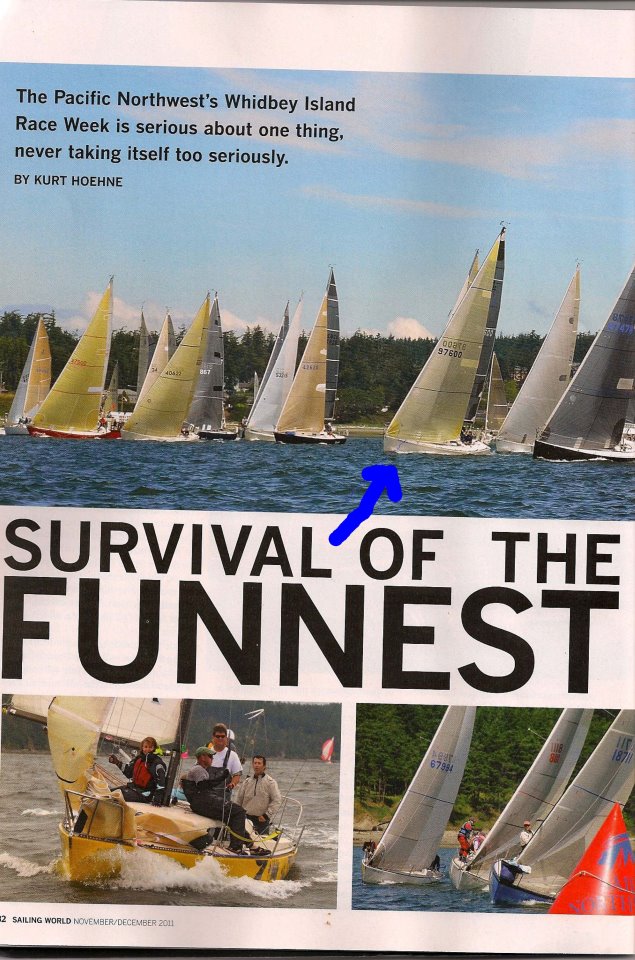
A scan of a picture in this month’s Sailing World Magazine featuring one of my old college professor’s boats as part of the Whidbey Island Race Week this past summer.

I love the fact that the article headline is advocating and encouraging play, rather than competition or adventure.

Happy to see some healthy, outdoorsy, environmentally friendly play get some attention and respect in a nationally syndicated magazine (even if it is already preaching to the choir).

environment · Me · mental health · Nature · play · smell

A morning communion

deciduous azaleaEnrichment is…

Waking before dawn, and being called out by the morning birds to go participate in the celebration of dawn.

I lie in bed, awaken from being overheated under my down comforter. I had been cold and left the heat on last night, foolishly, for now I am up and alert, at 5:30 in the morning. I toss and turn a little, and lie on my back, hands resting on my chest and stomach, almost as if in meditation or prayer.

I don’t know how long I lie there, but soon enough the light outside changes from cold, harsh street lamps to a softer natural light. Suddenly I hear a bird announcing his presence in the tree above my bedroom. His song is joined by a second kind of beat, the first lolling, the other more short and chirpy. A third chimes in with his sing-songy notes. For whatever reason, I am moved to join them. Not in song, but a need to be witness to this ageless ritual of the morning, of virility, of male posturing, of spring.

It is spring; after a long rainy winter, it is finally starting to be spring. In the dark of my bedroom I feel for my grandfather’s work shirt and a pair of leggings. I find a pair of Converse waiting by the back door. Slowly, so as not to wake the dog or my husband I left behind both soundly asleep, I unlock the door, tie my shoes, and I am gone.

I could easily just stand out in my backyard, listening, still as a newly budding daffodil in this morning gray. But I must move. I must be a part of it. I want to deeply breathe in the cold wet air, to feel the morning on my hands and face. While it is a warmer morning than I’ve felt in awhile, the air is brisk with only one layer on, but walking keeps me just warm enough. I walk north past the church where last weekend the boy scouts had their gardening fundraiser, the yard now empty, abandoned in this pre-morning gray. There are no cars, no people. Just me and birds, and they are the only ones brave enough to break the silence.

I see fat robins picking at things in the street; they must have better eyes than me to make out anything edible in this pre-dawn light, or maybe just being closer to the ground helps.

A pair of runners and their dog cross my path a block up, reminding me that I am not the only human alive. Gaining momentum before charging up a small hill, they do not see me, they are lost in their own morning meditation.

I pass under a series of pink blooming plum trees, and as I pass their fragrance fills my nostrils. It is glorious. I breathe in deeply, letting the fruity blossom smell reach all the way into the back of my throat. My pace is perfect so that I am able to perform a deep, yoga-like breath under each tree, taking the smell in, considering the slightly different fragrance each tree puts off. One is farther along in its blooming cycle, and the white flowers are less fruity than the pink ones, more subtle. As I walk under them the air temperature changes to just a few degrees warmer. It is a pleasant respite from the cool morning air.

The houses on the street are all darkened, except for the occasional porch light or living room lamp left on. They are still asleep. Wise souls. Foolish souls for missing the morning.

The street dead ends onto another cross street, and I turn, starting to make my rectangular route around the neighborhood. Each garden’s plants are in a different state of bloom, from sticks to buds to a few purple and pink azalea blooms already in full show. Some gardeners have already started their new beds this year, others haven’t touched them, or let them go to weed.

My study of the local architecture is distracted by another human; a homeless man with shaggy graying, sun-bleached hair, in baggy clothes and a plastic bag tied to his shirt is walking down the other side of the street, slowly but with a purpose. He ignores me as we walk towards each other on opposite sides of the street. As he passes from my peripheral view I wonder what he is doing out wandering around the neighborhood this time of morning, then realize he could just as easily think the same of me; what is this strange girl doing in just a large flannel work shirt and leggings doing wandering the neighborhood this time of morning?

I see another runner reach his front walkway as I make the final turn onto my street. The light is finally starting to turn yellow, streaming up under the clouds, lighting them with streaks of yellow and orange. The birds are now in full chorus. My hands are chilled, but I am filled with gratitude that I got to see this morning arrive. I lift my up my back gate and carefully swing it open so it won’t scrape the pavement, still trying to keep quiet.

I take a moment, standing on my back porch, letting the bird song and wet, cold morning air drift over me. I want to share this with my entire household. I want to share this moment of awakeness, aliveness, and sense of being a part of the world. But the secret to this moment’s success is that it is a solitary event, it is alone and quiet. Just me and the birds, the plum blossoms, the rhododendron bushes, and the cold wet air.

I go inside to get warm just as the sun splits the clouds open and it starts to rain.

brain · creativity · design · music

10 Ways to Boost Creativity

This list was compiled by the very talented Lori McNee (@lorimcneeartist) for The Top 10 Blog.

Lori is an internationally recognized professional artist who specializes in still life and landscape oil paintings. She shares valuable fine art tips, art business tips and social media advice on her superb blog FineArtTips.com.

Lori writes: Artists, writers, musicians and even bloggers have a common need to create. But, sometimes we hit a mind block and often find ourselves stressed, overwhelmed and unable to produce original ideas. This happens to me from time to time, so I decided share my top ten ways to boost your creativity.

1. Set aside a time and place.
2. Give yourself a break from technology. (um, but continue reading this blog for more ideas before you take a break!)
3. Try something new.

Read all of her ten tips and why here: http://www.thetop10blog.com/top-10-ways-to-boost-your-creativity/

behavior · brain · creativity · culture · happiness · health · mental health · play · Social

Playing is good for work productivity

Editor’s Note: Hi! I just wanted to take a minute to acknowledge that this post is VERY similar to a  post this week on the blog of digital agency Plexipixel. That’s because they were BOTH written by me, but I didn’t want to plagiarize my own work. For the original version of this post, check out their site.

The title of this blog post sums up the entire concept. There’s no other way to say it: you need to play to be a productive member of society.

However, this idea doesn’t seem to be sticking. 

The perception in America is that the harder and longer you work, the more productive you’ll be. Especially now when jobs are scarce and companies are holding on by the skin of their teeth, people sacrifice play, exercise, and good old legitimate downtime, not to mention sleep (September 30th was National Coffee Day!), to get more work done.

But it turns out we weren’t built to work that way. We need breaks, we need downtime, and we most certainly need to cut loose and be a little silly every once in awhile. As biology professor Robert Sapolsky pointed out in his book “Why Zebras Don’t Get Ulcers,” occasional stress is good – it makes sure we get that report in on time and we are aware of our surroundings in a new city. But constant stress just wears us down.

Several studies have found that play increases new ideas and overall productivity at work. Germans, and other European countries, have more vacation time than Americans, and yet have overall higher productivity, according to data presented in an article in Open Forum. The O.E.C.D. put Americans at 1,804 work hours a year on average and the Germans at 1,436 hours in 2006.Author Thomas Geoghegan believes that Americans weren’t always this overworked. In an interview, Geoghegan explains that in the 1960’s, Americans spent more vacation time than they do now, and many people in their 50s or 60s will tell you that they take less vacation time than their parents did. In the same New York Times article, another commenter noted that Americans view time as a currency in the workplace, as opposed to output, whereas Germans view results as the biggest indicator of results.

And it’s not just time away from work that’s rejuvenating. Repeated research has found that play increases new ideas and overall productivity at work. Psychology Today reports that telling stories and jokes makes us better writers. It also reports that even a little bit of physical play or just boring old exercise – a brisk walk around the block three times a week – fights depression. 

New business, products, and companies stem from play. The t-shirt company Threadless, for example, started off 10 years ago as a hobby. The company has since grown to employ 80 workers, but Jake Nickell, founder and chief strategy officer, “has made sure playtime remains a part of company culture. Shooting a potato gun at plastic parachute guys is a way to relieve stress.”

 Pamela Meyer, author of “From Workspace to Playspace: Innovating, Learning and Changing through Dynamic Engagement,” agrees that taking time out for fun is a good workplace practice.

“This idea of play space is very much a key part of business success” because it fosters dynamic employee engagement, said Meyer in an interview with the Chicago Tribune. “Companies that engage their workers by giving them space to create, try new roles or test new ideas benefit from higher employee retention, greater productivity and better financial returns.”

So, to re-re-emphasize my point: Go play, it’s good for your work.

architecture · creativity · Mental · psychology

Rx Art For Hospitals: Just What The Curator Ordered : NPR

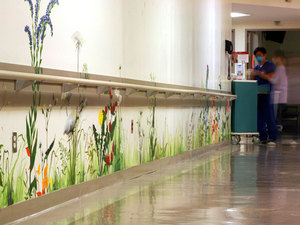
Being able to relax during medical treatments makes treatments more effective, as well as making better patients. Diane Brown is working to add a little art and light to a scary place: hospitals.

“While hospitals have become more physically welcoming in recent years, with new buildings designed by famous architects and lobbies filled with art, those changes rarely find their way to some of the hospital’s most difficult spaces — the rooms filled with machinery where treatment actually happens.

Diane Brown is trying to change that. She’s the founder of Rx Art, a nonprofit group dedicated to bringing art into the examination room and giving patients a way to escape their bodies’ sickness through their minds’ imagination.”

more via Rx Art For Hospitals: Just What The Curator Ordered : NPR.