Uncategorized

What does it really mean for humans to be fully environmentally deprived?

This blog often focuses on environmental enrichment, but what does it mean for humans to truly experience complete environmental deprivation?

A survey of 11 studies came out recently, called "The Challenges of the Disengaged Mind," that asked subjects to do nothing for 6 to 15 minutes. Literally nothing. No books, no laptop, no person to chat with. All they had was a device that would administer an electric shock at a level that was fairly unpleasant. The study found that many subjects chose to shock themselves rather than do nothing for those 15 minutes.

The All Tech Considered article that I originally read was focused on arguing how we’ve all been trained to be way over stimulated by our electronic devices to handle 15 minutes of alone time. I think other studies have shown that, but in this particular study I disagree.

First, the studies in the survey took away ALL distractions, not just technical devices. Other studies have shown that being left alone without anything to do for a long time is pretty unpleasant for us social creatures. Just think of solitary confinement, and how it is considered cruel and unusual punishment by some.

Second, it is unclear based on what I read from the abstract and articles about the survey (I should probably break down and buy access, but meh), how longitudinal this survey of studies is. The only way to argue that we as humans have gotten worse at sitting alone by ourselves over the last twenty years, or since the Internet, or whatever impetus you want to use, as several articles want to do, is to have longitudinal comparisons of before and after said cause. I’ve seen this done with the length of time humans tend to read or focus on a project, and it could be done with solitary confinement or other isolation studies.

In fact, that would be pretty interesting to do a longitudinal survey study of how (and how well) humans cope with isolation or being forced to be alone with their thoughts, and hopefully not in a torturous way. We see this idea of intentional isolation practiced via meditation, which is more the practice of actively ignoring both your environment and your thoughts, and as most people who’ve tried it will tell you, it is HARD!

I’m curious to hear what other people have seen and think about our capabilities to handle "alone time" and whether it has changed over the decades. Leave your thoughts in the comments below.

Uncategorized

Guess which country does the most good for the planet?

Having a happy, enriching environment includes working to preserve the environment, and actively emphasizing and working to improve the quality of life for all citizens. Here are some countries working on doing just that.

Uncategorized

Hitting the Wellness Trail

Great perspective about the importance of environment as part of the healing process, from the perspective of a hospital administrator.

Marc Gorelick's avatarStarting With Curious

CHW LogoJames brought me a caterpillar the other day.  Never having met him before, I was impressed with this 10 year old’s gumption in bringing an insect on a milkweed leaf, unsolicited, to the office of the executive vice president of the hospital.  I was even more impressed when he started to talk.  James, who has spina bifida, has spent a lot of time at Children’s Hospital of Wisconsin.  But he’s pretty unimpressed with our clinics and operating rooms.  What gets him going is the park-like space across the street on the County Grounds.  Once the home of the Milwaukee County School of Agriculture and Domestic Economy, Asylum for the Insane, TB sanitorium, and poor house, among other things, the County Grounds is now largely occupied by the Milwaukee Regional Medical Center, UW-Milwaukee Innovation Campus, a golf course, and stormwater detention ponds.  But pockets of the grounds remain undeveloped, including the

View original post 436 more words

Uncategorized

Find Quiet (and Maybe Even Peace) at Work

Having a quiet, peaceful place to work makes a huge difference on the human psyche. Some people find they work best with music blasting or in a loud cafe, but for most of us that workstyle is only good for certain projects or for a short period of time (say while we’re cleaning the house). In the long run, we can concentrate longer in a quiet, but not too quiet, environment.

Uncategorized

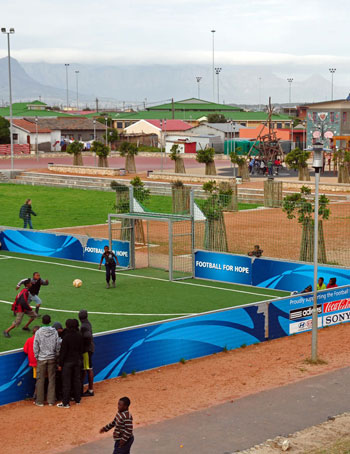
In Cape Town, Urban Design Reduces Violence

Using space design to reduce violence and create peace, and hopefully more play and sense of community.

Unknown's avatarTHE DIRT

cape2 VPUU Khayelitsha / CST South Africa

One legacy of South Africa’s fragmented, racially-segregated society has been incredible violence. To change that story, the city of Cape Town and the German Development Bank are harnessing the power of design. Through an inventive program, Violence Prevention through Urban Upgrading (VPUU), these players and many local non-profits are transforming Khayelitsha, one of the most dangerous townships in South Africa, into a safer, more livable place. At the World Urban Forum in Medellin, Colombia, the team behind the VPUU program said since the development of this 5-year, $11 million, community-driven project, murders are down 33 percent in Harare, one section of the township, and 22 percent in Khayelitsha overall. Furthermore, almost 90 percent of the area’s 250,000 residents say living conditions have improved.

The city assembled a team of local planners, urban designers, landscape architects, and architects to create four “safe nodes,” each…

View original post 531 more words

Uncategorized

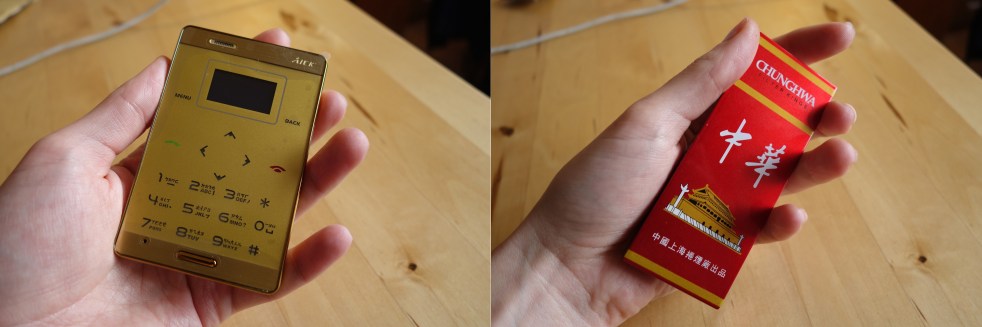
Making! The Other Story: Robot#10, Twins Separated at Birth, and Hacker Mama

Call it making, hacking, independent empowerment; to me, a lot of this is just grown-ups playing. Think Legos or junk robots. 🙂

yunya's avatarEthnography Matters

Silvia Lindtner Silvia Lindtner

Amelia Guimarin Amelia Guimarin
Editor’s Note: Silvia Lindtner (@yunnia) and Amelia Guimarin round out the March-April theme on makers, hackers, and engineers with this post that shares three stories of hackers and makers in China. Their observations complicate the celebratory story of hacking/making, giving us a richly detailed look at some of the real challenges and triumphs in this very active space.

Silvia Lindtner is a postdoc at the ISTC-Social at UC Irvine and at Fudan University Shanghai, and is the cofounder of Hacked Matter. She researches, writes and teaches about maker culture and its intersections with manufacturing in China. Drawing on her background in interaction design and media studies, she merges ethnographic methods with approaches in design and making. This allows her to provide deep insights into emerging cultures of technology production and use.

Amelia Guimarin is a independent producer and researcher at UC Irvine.  She has…

View original post 2,582 more words

Uncategorized

DIY Tree Art

Some nice examples of playful tree decor and public art using trees to send you off into the weekend…

Unknown's avatarTHE DIRT

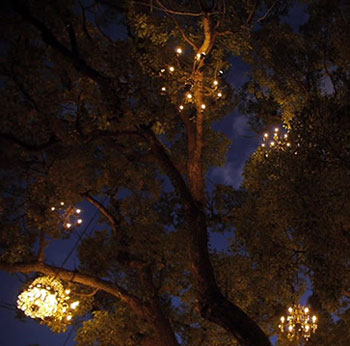
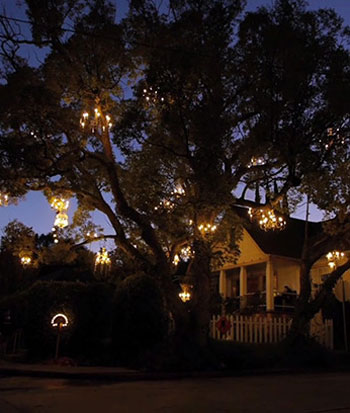
tree1 The Chandelier Tree / This Is Colossal

tree2 The Chandelier Tree / This Is Colossal

For ages, trees have been a favorite subject of landscape painters. Their material has long provided substance for sculptors and crafters. Now, some contemporary artists are rediscovering the artistic effects that can be achieved with the humble tree. And, showing clear appreciation, these artists aren’t damaging the trees.

This Is Colossal tells us that Adam Tenebaum, a Los Angeles-based artist, was recently bequeathed a number of large chandeliers by a lighting-loving ancestor. Unfortunately, they were too large for his house, so he decided to create The Chandelier Tree, a one-of-a-kind installation in Silver Lake.

Here’s a documentary about the piece:

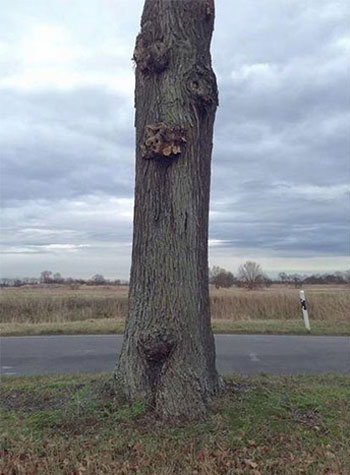
In Potsdam, Germany, street artists Daniel Siering and Mario Shu transformed an average-joe tree along a road into a startling illusion.

tree1 Daniel Siering and Mario Shu / Street Art Utopia

They wrapped the…

View original post 117 more words

Uncategorized

San Francisco Wants You to See and Feel Innovation

San Francisco is creating playful, exploratory public spaces for everyone to try out.

Unknown's avatarTHE DIRT

explore Pause / Shawn Lani via The Architect’s Newspaper

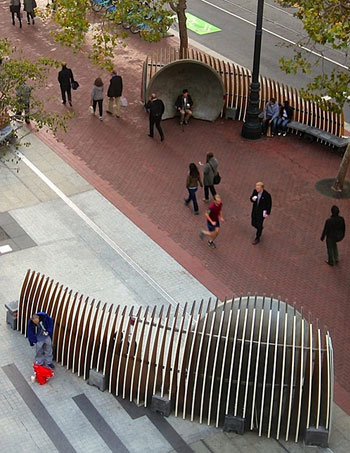
San Francisco has long been a test bed for innovation when it comes to its streets. With their Pavement to Parks program, the city showed how low-cost parklets and pop-up plazas can make streets much more welcoming, creating new street life where there was once only cars. Now, the city is experimenting with what they call Living Innovation Zones (LIZs), public-private spaces that also feel like design installations. The city thinks these places can become “catalysts for exploration, innovation, and play.”

The idea of the LIZ program is to express in physical form what San Francisco is all about: innovation. San Francisco sees the LIZs as a way to demonstrate the “economic and technological movements that define San Francisco today.” These public installations are people-friendly monuments to the city’s “creative expression and DIY spirit.”

San Francisco Mayor Ed Lee said the…

View original post 186 more words

Uncategorized

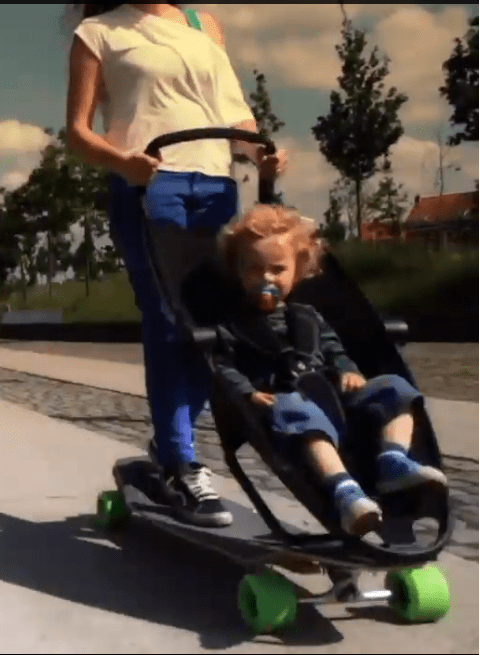
Introducing the Longboard Stroller: Half Baby Stroller, Half Skateboard

How did I miss this before? Want! Such a fun way for both parent and kiddo to get around!

Uncategorized

The truth about travelers

A very interesting read about traveling and those who find joy in the exploration of new spaces, to the point of what others may see as “sacrificing” other things that bring us happiness (a large house, giant movie collection, etc.).

Satori's avatarinfinite satori

Press play first.

_DSC7058 copy

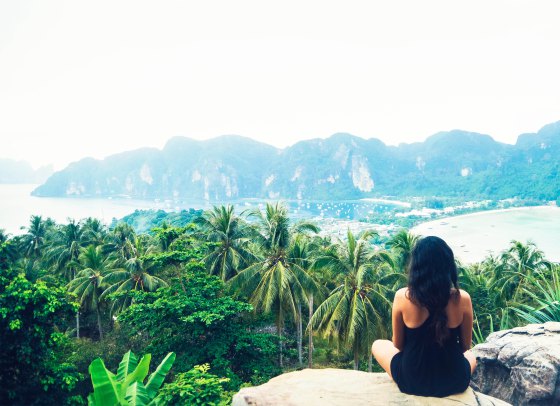
We have been called many things. Travelers, by default. But we like to be called nomads. Explorers. Vagabonds. Adventurers. Wayfarers. Modern gypsies. Wanderers. We’ve adopted them all. A growing breed of humans with restless feet and the inability to stay still, the inability to stay in one place.

That is who we are. And that’s just the gist of it.

We come from all walks of life, from bustling gray colored cities, sleepy beach towns, snow-covered metropolises, small villages nestled in between lush green mountains, we come from everywhere. But our inner gravity always brings us to the same place… the road.

We deem courage weighs more than money when it comes to travel. We’re not rich, not financially well-off and we don’t travel for luxury. Our money does not come from rich parents, trust funds, or whatever privileges you think we have in order to maintain…

View original post 1,067 more words