anthropology · architecture · community · creativity · environment · Social · technology

Mapped out Missed Connections

I’m a very visual person, so I like to map stuff out as much as possible. It looks like some artists had the same sentiment and took it to the next level. I argue this is environmental enrichment because it takes human connections (or missed human connections) and marks them in the universe, in a fun way!
From Wired:

You know Craigslist’s Missed Connections, right? The personals page where you log a brief interaction with a stranger who you hope to see again? The posts are a candid, wistful, often hilarious look at interactions — or the lack thereof — between people in the digital age, and beg the question, “Have we become so used to interacting online that we can’t say ‘hi’ in person?”

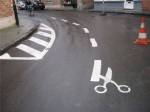
That question, among others, inspired artists Lisa Park and Adria Navarro to take these digital love notes and turn them back into physical markers. The pair made oversize stickers based on Missed Connections posts, then affixed them at the exact spot where the missed connection occurred. They document the entire project, called I Wish I Said Hello, online, completing the loop.

To me this is kind of like marking your initials in a tree without hurting a living organism. It’s fun, it tells a story, and it helps us make connections with people; even if we never meet them in real life, we learn a little bit about who they are, how they see the world, and a moment in their lives. That helps us in turn feel more connected to our communities and large, ever-expanding tribes.

Locations also hold special meaning to people; pilgrimages to the cafe where their favorite singer performed to Mecca and everything in between. These also create small landmarks that are probably insignificant in the long run, but help orient us in the world in some way.

Have a special place or spot? Why not mark it with a ribbon or rock, or just let us know about it in the comments below.

architecture · behavior · community · creativity · environment · happiness · health · play · Social

Adults for playgrounds? Yes, please!

Playground
Grown-ups often need a little more persuasion to play than kids. (Photo credit: phalinn)

Earlier this week I brought up the importance of spaces for play in the city, and then yesterday mentioned a scientific study that used traceurs or people who practice parkour, a sport that basically makes any space into a play space. Unfortunately park playgrounds are often verboten to grown-ups without a kid companion. But often grown-ups like the play equipment, or similar play equipment, as much as kids do. Now, the cities of New York and Detroit are determining where and whether to put in playgrounds specifically for adults:

New York City is installing adult playgrounds for fitness-hungry grown-ups, touting the benefits of a grade-school workout. …the Big Apple parks are geared more toward workouts than whiling away the summer hours. There aren’t any slides or swings yet at these outdoor gyms.

The City of New York built its first adult playground in the Bronx’s Macomb Dam Park. The New York Times reports as many as 24 playplaces for grown-up kids could be installed by 2014.

In Europe, where playtime seems to be more a more capricious venture, adult playgrounds tempt grown-ups to get off the couch with detailed outdoor mazes, rock climbing walls, elephant slides and swimming canals.

Philip Lauri is the founder of Detroit Lives!, the media company with the mission of bringing creativity to the streets of Detroit (through an apparel line, murals and the “After The Factory” documentary). Detroit Lives! has recently started experimenting with making places in the city that inspire that same joie de vivre and fun — like the Georgia Street Community Collective’s remote-control racetrack for kids living in the nonprofit’s target neighborhood. He thinks adult playgrounds could be smart additions to neighborhoods who have already installed thriving community gardens.

“In those areas, we install an adult playground as an addendum to that successful effort, and use the kind of neighborhood engagement that the garden created to successfully initiate the adult playground,” Lauri wrote. “Then, both sites grow with participation and we get healthier people and neighborhoods. That’s a simplified progression, but still tangible enough to act upon quite quickly.”

Most people taking the Huffington Post poll are all for adult playgrounds.

In some ways I find it sad that we need to create playgrounds specifically for grown-ups. Don’t we teach our kids to share and cooperate? But, in many ways it makes sense: for one thing, adults are bigger and therefore need different sized equipment. They also tend to play rougher, more competitively, and less cooperatively than children (according to numerous studies I’ll find and source later), so keeping the two play groups separated is probably a safer idea. Finally, grown-ups also need to be given explicit permission to goof off, at least much more so than kids, so giving them a space devoted entirely to play will help them get creative and playful in their movement.

What kind of equipment would you want on an adult playground? Rope swings? Fireman’s pole? Leave your thoughts in the comments below?

behavior · brain · community · culture · emotion · environment · happiness · health · Social · technology

Crowdsourcing Quiet Spaces in the City

For the past month I have been staying in a surprisingly noisy apartment. The neighborhood itself is very quiet, but just my luck to be staying over a night club and all-night grocery store. After this month the importance of being able to find quiet, peaceful places in a city rings all the more true and important to me (and it’s not just the ringing in my ears). From Inhabitat:

Cities have always been bustling environments, and with more and more of us living in them it can be difficult to find a quite place to relax or contemplate. Sound Artist Jason Sweeney‘s winning proposal for the TED Imagining the City 2.0 Prize is a crowdsourcing project that seeks to locate and map the places that provide silence in the urban din. The Stereopublic Project will be a public guide for those who crave a retreat from the crowds.

Based in Melbourn’s city center, Sweeney found himself attracted to tucked-in corners, where the city’s sound fades into the background and where the built environment is experienced as a sound environment. Inspired by his own experiences, he’s looking to create a platform where others can geo-tag and share their favorite quiet space. Sweeney is interested in helping those who are sensitive to noises, with disabilities, or just seeking respite from the constant din of the streets.

The TED City 2.0 prize will help his team develop a digital tool for crowdsourcing those places, adding a new layer of awareness to the cityscape for its occupants.

Cities are large, complex environments and the project is a unique way to understand the acoustic dynamic of city life. Stereopublic is based on active users sharing their findings, but ironically, the project’s success will likely make those quiet spaces busier, further pushing inhabitants to explore new places. The idea may become a failed experiment if it becomes too successful, but it also very well might help create new venues that improve the “sonic health” of a city — adding a vital resource to urban life.

Know of a quiet place in your city? Add it to the list, or leave it in the comments below and I’ll add it for you and if it’s in the Pacific Northwest may just try it out first. You know, for research).
anthropology · architecture · children · creativity · design · environment · health · Social · technology

6 Future Playgrounds That Harness Kids’ Energy While They Play | Co.Exist

What a great series from Co.Exist and Fast Company: play grounds, and other structures, that harness the energy of people’s movement. This may be the first time employees are actively encouraged to move around all day. 🙂

Kids have boundless energy. What if that energy could be put to some use besides just running around and having a good time. These new jungle gyms convert play to power.

When IBM came up with a list in 2011 of the five technologies it thinks will change the world in five years, kinetic energy–power from people–topped the list. Advancements could come, they say, from developments in devices that might harvest power from your shoes, your exercise, and even the soccer ball you kick. Green gyms are also cropping up. And now the idea has come to playgrounds, where kids’ movement can be harnessed and funneled into powering schools and toys.

Natural Energy Park
Natural Energy Park

This playground–designed by Hyundai engineering and construction–is part jungle gym and part renewable energy science experiment. After climbing a ladder into a laboratory, kids can spin a wheel that will illuminate “Benjamin Franklin’s kite.” An optical illusion will spin at varying speeds as children adjust a solar panel to different angles. Pedaling a bicycle powers a pinwheel and illuminates lights around the structure. Hyundai calls this the “Natural Energy Park” and it looks like a lot of fun.

Empower Playground
Empower Playground

Mixing fun and helping people, Empower Playgrounds is a non-profit organization that provides electricity-generating

playground equipment to villages in Ghana that are too remote to be on their nation’s electricity grid. The school children gain a playground as well as safe, rechargeable LED lanterns to light their homes so they can do their homework. Additionally, the play equipment doubles as part of a hands-on science lab that brings science concepts into their daily lives

See the whole series here.

For more on the future of playgrounds, check out 8 insane playgrounds, schools, and libraries of the future.

Know of other playful energy producers? Let us know in the comments below!

community · creativity · design · education · Social

Public Art Project That Shares, Teaches Art

Another great story about public artwork and interactive public space. This time courtesy of Design*Sponge:

Mike Perry (who was part of Design by the Book four years ago) is launching a new project via Kickstarter called Wondering Around Wandering. It’s a three-month FREE community exhibition and event space where Mike will teach workshops and host screenings, discussions and more. The space will welcome artists and art appreciators alike and, because of the time span, would be a great way for visiting artists and design enthusiasts to learn and experience on a more intimate level.

Holiday Zine, one example of what you’d get as part of your support via Kickstarter

See the original story at Wondering About Wandering | Design*Sponge

Find out more at Wondering About Wandering | Kickstarter

anthropology · culture · emotion · happiness · health · Social

The UN Embraces the Economics of Happiness — YES! Magazine

Should happiness and well being be considered a metric to measure overall success of a country? The UN just voted yes:

Imagine you open the paper tomorrow, and the headlines are not about the “sluggish economy,” but our nation’s quality of life. You turn to the business section, and find not just information about a certain company’s profitability, but also about its impact on community health and employee well-being.

Imagine, in short, a world where the metric that guides our decisions is not money, but happiness.

That is the future that 650 political, academic, and civic leaders from around the world came together to promote on April 2, 2012. Encouraged by the government of Bhutan, the United Nations held a High Level Meeting for Wellbeing and Happiness: Defining a New Economic Paradigm. The meeting marks the launch of a global movement to shift our focus away from measuring and promoting economic growth as a goal in its own right, and toward the goal of measuring—and increasing—human happiness and quality of life.

Not just for dreamers

Some may say these 650 world leaders are dreamers, but they are the sort that can make dreams come true. The meeting began with an address by Prime Minister Jigmi Thinley of Bhutan, where the government tracks the nation’s “Gross National Happiness.”…

UN Secretary-General Ban Ki-moon cited Aristotle and Buddha in calling for the replacement of our current economic system with one based on happiness, well-being, and compassion. “Social, economic, and environmental well-being are indivisible” he said.

Read more at: The UN Embraces the Economics of Happiness by Laura Musikanski — YES! Magazine.

Pretty exciting stuff. Bhutan has been using happiness as a metric for several years. so it’s nice to see the idea get picked up on. I believe emotional well-being and happiness is a very valuable metric. What about you? Leave your thoughts in the comments below.

community · design · environment · Social

UW exhibit celebrates parks, public spaces reclaimed from unusual uses

A bit older news, but still interesting, and a great way to get into the unofficial summer season; from UW News:

Gas Works Park, Seattle WA

Thaisa Way, a UW associate professor of landscape architecture, and several of her design students have curated “Experimenting in Public Space,” on exhibit May 9 to June 24 at the American Institute of Architecture design gallery in downtown Seattle. The exhibit explores Gas Works and 11 subsequent parks and public spaces in a series of sketches, photographs and architectural renderings.

In 1962, a parcel at the northern tip of Lake Union was a toxic waste dump, the result of an industrial plant that turned coal to natural gas. By 1976, however, it was Gas Works Park, the result of a gutsy experiment in landscape architecture led by Richard Haag, a University of Washington emeritus professor of architecture.

Gas Works and subsequent projects established Seattle as one of the first American cities willing to recast industrial sites into places to celebrate.

“Gas Works was a radical move, especially since Rachel Carson’s book, ‘Silent Spring,’ had just been published, and people were alerted about environmental pollution,” Way said.

Haag convinced the city that not only could unusual and sometimes polluted land be reclaimed but that it should be. Instead of the wide, rolling vistas of trees and flowers created across the country by the Olmsted brothers in the late 19th and early 20th centuries, however, Haag celebrated the city and all its right angles. The gas works boiler house eventually sheltered grills and picnic tables, and the gas compressor became a play barn, all with a water’s edge view of Lake Union and the downtown Seattle skyline.

Among the projects featured in the exhibit are Freeway Park, Waterworks Gardens and the Olympic Sculpture Park.

Read more here.

I’m excited to see a celebration of open public park spaces, especially those reclaimed from formerly unappealing and otherwise unusable spaces. I find myself at Gas Works Park a lot in the summer, and love having so much green open space in the city I live in!

community · creativity · Social

Street art

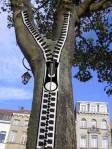
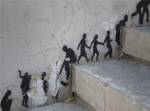
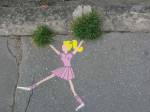
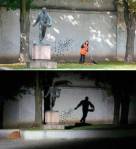
Happy Friday! I was forwarded one of those massive emails with a lot of great street graffiti and art, all of them commenting on their environment, as well as adding beauty and interest. I will add credits and attribute authors as soon as I find out who everyone is (if you know any of the artists please let me know in the comments below), but for now just some nice eye candy to get you ready for the weekend. Enjoy!

:
anthropology · community · environment · happiness · health · mental health · Social

Can cities promote happiness?

Ann Arbor as seen from the University of Michi...
Can humans be happy in cities? Ann Arbor as seen from the University of Michigan Stadium. (Photo credit: Wikipedia)

A nice article from The Atlantic about how urban designers can do things to make living in the city a truly happier place to live:

I’ve been looking at some research reports, and confirming that some of the qualities associated with great urbanism – good public transit; easy access to cultural activities, recreation and shops; connectedness – are associated positively with human happiness. I first reported on a study reaching just those conclusions back in early February. Others found the study as well, concluding that residents of “beautiful, well-designed cities” are happier than those living in suburbs.

I’ve been following this topic for some time, because I believe that factors we generally think of as “subjective” can be every bit as important to fostering great, sustainable places as those that we can measure objectively. Of course, researchers being researchers, we try to measure them anyway (Seattle’s city council president on that city’s Happiness Initiative: “Measuring the subjective happiness or well-being levels of Seattle residents is an important tool”), and I suppose it was just a matter of time before someone came up with a ranking. Indeed, earlier this year The Daily Beast measured a number of factors they believed make people happy, concluding in a widely-publicized story that residents of Washington, D.C., were the happiest in America, followed by residents of Boulder, San Francisco, San Jose, and Ann Arbor.

[Some research] points out, however, that other research contradicts those conclusions, or at least muddies them significantly.

Still another study – this one involving a bit of self-selection, since its data were generated by use of an iPhone app – finds that none of the above is true, since nature is what really produces a good mood.

There are definitely positive elements to living the city: more social contact with others, social and cultural events, potential access to a variety of fresh fruits and veggies, and more. There is also the flip side to all of those positives.

Read the entire article, and write back with your own opinion: do you believe that people can be happier in the city?

anthropology · behavior · community · emotion · happiness · Social

Just how lonely are we?

Jeff Ragsdale on Location
Jeff Ragsdale, the instigator for "One Lonely Guy" (Photo credit: Wikipedia)

More and more studies are coming out about how Americans feel more isolated than ever, and that we have less “close” friends despite being more connected to people via social media and technology.

One book was recently released that explores that idea of loneliness and the need for humans to connect with each other through the case of one man’s ad and the voicemails he received in response. From University of Washington News:

In October 2011, former University of Washington student Jeff Ragsdale, living in New York, had hit a low point — his stand-up comedy and acting career had stalled, he had been through a bad breakup and he was living in a cheap rented room. Despondent, Ragsdale posted a flyer around the city that said, “If anyone wants to talk about anything, call me. (347) 469-3173.”

To his surprise he got about 100 calls and texts the first day alone, and they kept on coming, finally numbering in the thousands. In time he brought the messages to the attention of his former teacher, UW English Professor David Shields. From that came the book “Jeff, One Lonely Guy,” edited by Ragdsale, Shields and Michael Logan of Seattle.

“I had kept in touch with Jeff over the years; I knew he was always up to interesting projects,” said Shields. “Jeff kept sending me the most amazing transcriptions of phone calls and texts that he had received. At a certain point, I just couldn’t say no. The material was simply too interesting; it spoke too deeply to the culture.

“What I love about the book (and I can say this because it’s less anything any of us did, and it’s more the voices that came in on Jeff’s cell phone) is what it tells us about what it’s like to live in America right now. I can’t think of a book that evokes more specifically how people talk now (the new words and phrases and sayings are extraordinary — it’s a virtual Roget’s of contemporary slang); how much they/we hunger for connection to themselves/ourselves, to each other, to a larger community; how energized and enervated they are/we are by Big Media and digital culture; how confusing love is in a 24/7 porn environment; and how baffling transcendence is — how fame or brief flickers of fame seem to beckon out of every internet portal. This book is a remarkable document of contemporary existence.”

Read/watch more about “Jeff, One Lonely Guy” in The New Yorker, Book Forum, and The Huffington Post.

The explorations of loneliness and connectedness sparked by one simple ad is pretty incredible. The book itself is also pretty powerful in that it truly is a collaborative effort, not only edited by three guys, but the content of the book is created from the voicemails of 100’s of individuals who were looking to connect with another individual in some way.

In Seattle we talk about the “Seattle Freeze,” this phenomenon where it’s hard for newcomers to make friends, but it sounds like it’s a problem all over the U.S. Would you say you have a close friend, or close friends? Would you say you feel connected to where you live, to your community? Why do you think we feel so disconnected from our neighbors compared to 30 years ago? Leave your thoughts in the comments below.