creativity · play

Bored Coworkers Recreate Classic Paintings Using Office Supplies | DeMilked

On a lighter note, I am always appreciative of people who maintain a playful attitude and are able to have fun no matter where they are, even at work:

Francesco Fragomeni and Chris Limbrick found themselves bored at Squarespace’s office in NYC one day so they came up with a fun activity. Using only the stuff found in their office, the two coworkers managed to recreate the famous “Creation of Adam” by Michelangelo. They were pretty happy with the results, so they continued recreating iconic paintings, which eventually grew into a project called “Fools Do Art.”Other coworkers started to join into the fun and they began accepting idea submissions from people all around the world. Every recreation, however, has to satisfy two strict rules: it must be made exclusively using things found in the office, and any photo manipulations, if needed, must be made on a smart phone.

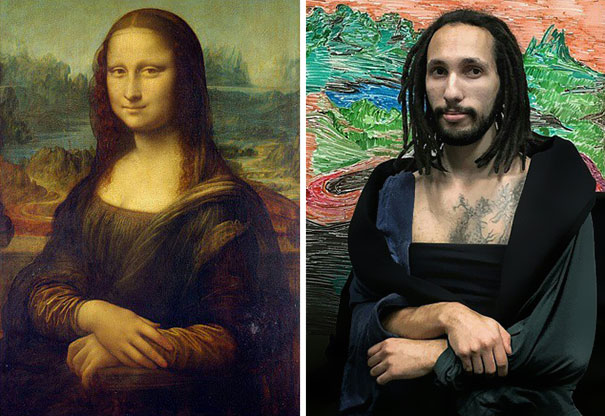
Some of these are really creative, and actually a pretty great way to teach people about art (*hint hint school admins*).

Check out all the pics via Bored Coworkers Recreate Classic Paintings Using Office Supplies | DeMilked.
behavior · brain · children · creativity · mental health · play

Letting imagination win – The Washington Post

I am definitely competitive by nature, as well as a game-rule follower, but I also appreciate and value the ability to think beyond the rules and explore “what if?” That is essence is the entire definition of play, questioning, what else can this be used for. It helps brains grow and is also the spark behind science, art, math, and all the other great discoveries. It’s nice to see that other people also understand and appreciate that need to explore and ask “what else does this do?”.

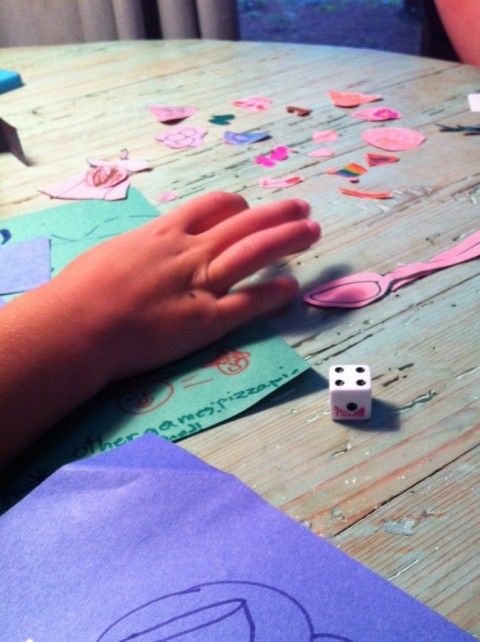
At 8 and 6 years old, my daughter and oldest son prefer to pick out the pawns from board games and use these figures for imaginary role-play rather than play the games themselves. This drives my mother crazy, and not just because the kids also use her antique water bird decoys as super villains.

“Aren’t they a little old for this?” my mother asks, exasperated and reaching under the couch to capture roving tokens from Clue and Monopoly, setting the games back in their proper boxes “for the umpteenth time today!”

The truth is that my children are not too old for it at all. Nor are they too old for those evening song and dance numbers in which anyone over the age of 21 is required to sit in a row, sweaty thigh to sweaty thigh, while the children put on a variety show after little to no rehearsal.

read the entire article at Letting imagination win – The Washington Post.

behavior · brain · culture · health · play · Social

Play Doesn’t End With Childhood: Why Adults Need Recess Too | NPR

I’ve already shared this article via Twitter, but it is so important that I just had to re-share via my blog. If there was one mantra I would want to be known for it’s that adults need play. Humans need downtime. Humans need breathing room. Humans need play at any age!

A father and daughter try out a public park piano in Seattle, WA
A father and daughter try out a public park piano together in Seattle, WA

Childhood play is essential for brain development. As , time on the playground may be more important than time in the classroom.But playtime doesn’t end when we grow up. Adults need recess too.

The question is, why? To answer this question, Dr. Stuart Brown says we need to clearly define what play is. He’s head of a nonprofit called the National Institute for Play.

“Play is something done for its own sake,” he explains. “It’s voluntary, it’s pleasurable, it offers a sense of engagement, it takes you out of time. And the act itself is more important than the outcome.”

So, let’s take gambling, for instance. A poker player who’s enjoying a competitive card game? That’s play, says Brown. A gambling addict whose only goal is to hit the jackpot? Not play.

Brown says that children have a lot to learn from what he calls this “state of being,” including empathy, how to communicate with others, and how to roll with the punches.

read the whole article, including more insight from Stuart Brown, a long-time play research and advocate, via Play Doesn’t End With Childhood: Why Adults Need Recess Too : NPR Ed : NPR.

I have met and chatted briefly with Dr. Brown and read his work, and he has done some pretty interesting work on play over the years, using both primary and secondary research (I even cited him in my thesis).

I could easily go on a rant here as to why adult play is so important but so undervalued, but for now just read the article and leave any comments either here or on the actual article’s page.

architecture · behavior · community · creativity · culture · environment · family · happiness · health · play · Social

Cities’ Message to Young Families: Play and Stay – WSJ

City planners are finally starting to grok that in order to keep residents, they will need to offer the whole package, including playful spaces for everyone, kids and grown-ups alike.

About a decade ago, the so-called creative class of 20somethings fueled the revival of urban centers by settling in downtown areas mixing condos and coffee shops. Now, as millennials and other urbanites have children, their needs are changing. Cities want to hold on to them by becoming more “playable,” for both children and adults.

For decades, cities “relegated kids to the playground and said, ‘We’ve done something for you,’ ” says Darell Hammond, chief executive of Washington, D.C. nonprofit KaBOOM!, which consults with city officials on promoting and preserving play. “The whole city should be a playground, and play should happen everywhere.”

That means not only building more parks and bike paths but also incorporating the ideas of “fun” and “play” throughout a city, whether it is musical swings downtown Montreal, a hopscotch crosswalk in an arts district Baltimore or camp sites on a city lake front Chicago.

more via Cities’ Message to Young Families: Play and Stay – WSJ.

I hope that this attitude shift from city planners and designers makes it more acceptable for grown-ups to go out and play, and I mean actually physically play, not just go to bars and concerts that were traditionally classified as the only acceptable adult “play.” Seattle and Portland, and  are definitely accepting and encouraging of grown-ups playing bike polo in city parks or just going for a run. Creating an environment that welcomes play also helps change the attitude of others

behavior · children · community · education · environment · Nature · play

Let ‘Em Out! The Many Benefits of Outdoor Play In Kindergarten | MindShift

Another take on Free Play Learning:

For the typical American kindergartner, unstructured free play during the school day consists of 20 to 30 minutes of recess, and perhaps some time at indoor “stations” — perhaps creating with building blocks, costumes, or musical instruments. But what if there was more? What if the answer to “what did you do in school today?” was, “I climbed a tree, played in the mud, built a fire”?

That is exactly the kind of learning going on in the Swiss Waldkindergartens, or forest kindergartens, where children ages four to seven spend all of their school days playing outdoors, no matter the weather. With no explicit math or literacy taught until first grade, the Swiss have no set goals for kindergartners beyond a few measurements, like using scissors and writing one’s own name. They instead have chosen to focus on the social interaction and emotional well-being found in free play.

With many parents and educators overwhelmed by the amount of academics required for kindergartners — and the testing requirements at that age — it’s no surprise that the forest kindergarten, and the passion for bringing more free play to young children during the school day, is catching on stateside. Free play and inquiry learning are the cornerstone of Canada’s new all-day kindergarten program; forest kindergartens are popping up in Washington state, Vermont, and even Brooklyn.

At the Waldkindergarten, which takes place in the middle of the woods in Langnau am Albis, Switzerland, dotted with several handmade structures like a rudimentary wood shelter where children and teachers gather around the fire, children play, often away from teachers’ view.

These scenes are captured in “School’s Out: Lessons From a Forest Kindergarten,” a documentary directed by Lisa Molomot. In the 36-minute film, Molomot and producer Rona Richter show scenes from two public schools: the outdoor forest kindergarten in Switzerland and a more typical American kindergarten in New Haven, Connecticut.

more via Let ‘Em Out! The Many Benefits of Outdoor Play In Kindergarten | MindShift.

children · culture · education · environment · learning · play

A School That Ditches All the Rules, But Not the Rigor | MindShift

Play IS a form of learning and experimentation, so it’s nice to see a school try to incorporate this very basic, very elemental learning process into the heart of their education system.

How can we make school a joyful experience without sacrificing rigor? What’s the best way to measure true learning? What’s the purpose of school? The founders and teachers at the PlayMaker School (watch the PBS Newshour report by April Brown), an all-game based school in Los Angeles, are asking those big, abstract questions that all teachers grapple with. And they’re trying to find their own answers through their constantly morphing, complex experiment.

Here are their thoughts about these issues, in their own words, from extended answers to the PBS NewsHour report. How can teachers, parents, and administrators these ideologies to existing public schools?

Read the interview with the school’s founder Tedd Wakeman at  A School That Ditches All the Rules, But Not the Rigor | MindShift.

behavior · education · health · learning · neuroscience · play · technology

Helping children receive and learn about brain scans through play | BBC News

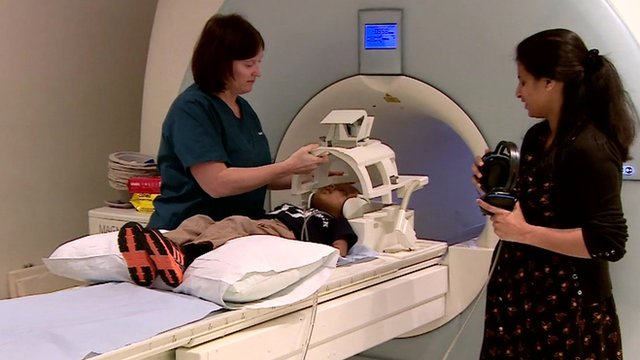
We know children tend to be wiggly, but we’ve also seen them sit stone still when they are engaged in a good book or toy or enraptured by a movie. A hospital in the UK is tapping into that enraptured engaged stillness.

Many adults find the procedure of having a brain scan, which involves having to lie still for an hour or more while images are analysed, an unsettling experience.The process is no less daunting for young children, who are usually given a general anaesthetic when they have the procedure.

However, a pilot scheme at University College Hospital in London is helping young people have a scan without being sedated, by teaching them about it through play.

see the video via BBC News – Helping children learn about brain scans through play.

children · environment · happiness · health · learning · mental health · Nature · neuroscience · play

IS PLAY THE KEY TO ECO-ACTION? : Children & Nature Network

Environmental Psychology and conservationists have, for awhile now, been advocating the importance of letting children get out and play in and with nature to educate them on the value of preserving their environment and benefiting from natural surroundings. It’s nice to see pediatricians also start to embrace and advocate for the need for everyone, including children, get outside and get dirty.

Dr. Lawrence Rosen writes that throughout his practice, seeing children on a daily basis, “I’m often reminded of Winslow Homer’s 1872 painting, “Snap the Whip,” depicting boys playing with abandon in a field outside their rural schoolhouse.”

So eloquently portrayed is the simplicity of another time, kids out in the natural world for no other purpose than to play, freely and without a care in the world.Contrast this with contemporary schoolyards with their meticulously designed jungle gyms and artificial surfacing, often empty throughout the day as more and more schools abolish recess or replace free play with highly structured, adult-supervised activities. I’ve realized, as I see increasingly anxious and depressed children come to my office looking for guidance, that the answers often lie not in my prescription pad but outside my window.

One very recent publication from Dr. Kirsten Beyer and associates at the Medical College of Wisconsin described the influence of green space on mental health outcomes, concluding that “higher levels of neighborhood green space were associated with significantly lower levels of symptomology for depression, anxiety and stress” and that “’greening’ could be a potential population mental health improvement strategy in the United States.”

read more from Dr. Rosen via IS HAPPINESS THE KEY TO ECO-ACTION? : The New Nature Movement.

anthropology · behavior · children · education · health · learning · music · play

To Boost Attendance, Milwaukee Schools Revive Art, Music And Gym : NPR Ed : NPR

This gives me hope:

In the stuffy, little gymnasium at Richard Kluge Elementary in Milwaukee, 16 boys and girls are stretching, jumping and marching to music.

Two years ago, the school had no gym, art or music classes due to budget cuts. But now, Kluge students get a so-called “special” class three days a week.

Milwaukee Public Schools is one of several school systems across the country — including Los Angeles, San Diego and Nashville, Tenn. — that are re-investing in subjects like art and physical education. The Milwaukee school district is hiring new specialty teachers with the hope of attracting more families and boosting academic achievement.Music teacher Angie Dvorak is one of the teachers that’s been effected. Last year, Dvorak was part time and traveled between schools. This year, she’s stays at Kluge all day, teaching music upstairs from the school’s gymnasium.

Dvorak says she’s seen a different in her students: “I get to have them for class more frequently, which is awesome because their music skills are shooting through the roof this year.”

more via To Boost Attendance, Milwaukee Schools Revive Art, Music And Gym : NPR Ed : NPR.

creativity · play · Social · youtube

Man gets stuck in airport overnight, makes spectacular music video – Weird News – News – The Independent

Just goes to show you can have fun pretty much anywhere:

Richard Dunn, when stuck overnight in Las Vegas’ McCarran Airport he busied himself making a music video for Celine Dion’s “All By Myself”, complete with improvised dolly tracking shot and bottom of the escalator ‘fall to knees’ for the crescendo.Dunn admitted to having actually had a ‘quite fun’ time the first recorded instance of this in an airport, getting behind the Delta check-in desks, crooning in those massage chairs no-one actually uses and utilising the inherently cinematic horizontal escalators.

read more about Dunn’s experience via Man gets stuck in airport overnight, makes spectacular music video – Weird News – News – The Independent.