behavior · cognition · creativity · design · education · emotion · language · learning · mental health · play

How Playing With Puppets Turns New Learners into Future CEOs | GOOD

This is a very well thought out and researched article about the benefits of pretend play, specifically creating and playing with puppets.

How Playing With Puppets Turns New Learners into Future CEOs | GOOD

The [Puppet School] curriculum establishes the tenets of puppeteering education, which put educational theories about the importance of play and grit and resilience into practice.

In the beginning classes, students start to learn basic head and mouth movements, using motor skills in both hands and both arms, choreographed to pre-existing sound tracks of well-known pop songs. Students learn to articulate vowels and develop a sense of rhythm with their bodies. As the exercises advance, students learn to improvise using their own voices and hand movements, and eventually choreograph movement to material they’ve written. From motor skills, to communication and improv skills, then finally written skills, students exercise many parts of their brains at Puppet School, increasing communication between their two brain hemispheres.

According to Eric Jensen’s Teaching with the Brain in Mind, when brain signals are passed from one side to the other quickly, or when the left and right sides of bodies work simultaneously, the brain is able to function more efficiently, and the stronger the brain’s connections become—thereby improving literacy, movement coordination, processing data, and communication skills.

more via How Playing With Puppets Turns New Learners into Future CEOs | GOOD.

play · Uncategorized

Small vignettes out in the wild

I have been taking small "luck" or "fortune" figurines and letting them play in found vignettes.
It is fun to play like kids do with their surroundings and it makes me see my environment in a new way.

I will crosspost them here on my blog, but you can follow me on Instagram to see more of these.

play

Bunny buddy in Chicago

This past week I got to travel to Chicago. I wanted my daughter to feel more connected to where I was, so I brought one of her toys; a toy bunny she has had since she was an infant and already has a habit of going on interesting adventures (My friend still had this bunny as her profile pic for at least a year).
I also wanted to bring Bunny because it is fun, and a little daring as a grownup, to bring a toy to a "grown up" restaurant and sightseeing.
Stay playful.

play

Creating playful spaces

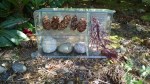
On a walk today I found a couple of plastic containers on the side of the road, and decided they made quite good shadow boxes for found objects.
I just grabbed the closest pretty or interesting things I could find next to the box, so these aren’t my best work, but I figure that’s sort of the point; just be playful with that which falls in your lap. Or on the side of the road.

behavior · creativity · culture · environment · happiness · play

This Public Bench Turns Into A Merry-Go-Round To Connect Strangers On The Street | Co.Exist | ideas + impact

Super cool (sorry it’s been awhile).

Sitting on a bench at a bus stop or in the park, most people tend to focus on their smartphones or a book rather than whoever’s sitting next to them. But a new bench is designed to instantly connect strangers in a moment of play: When you sit down, the bench transforms into a makeshift merry-go-round.

more at via This Public Bench Turns Into A Merry-Go-Round To Connect Strangers On The Street | Co.Exist | ideas + impact.

creativity · design · play · Social

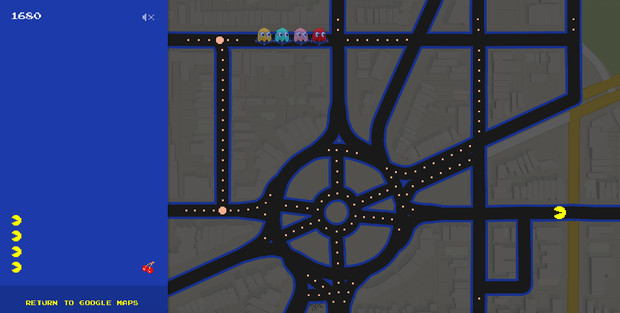
Google Maps Easter Egg Lets Users Play Pac-Man on Real Streets – CityLab

Gamification of at least a virtual space:

For a limited time, you can finally experience Pac-Man on your favorite (or least favorite) place to navigate IRL. One of the best navigational easter eggs ever, Google Maps is currently letting users experience the world through the eyes of a Pac-Man.

Ever wished Namco created a Pierre L’Enfant-version of the arcade game? Well, D.C.’s Logan Circle now has all the Pac-Dots your Pac-Gut can handle.

more via Google Maps Easter Egg Lets Users Play Pac-Man on Real Streets – CityLab.

community · creativity · play

Artist Creates Water-Activated Street Art To Make People Smile On A Rainy Day | Bored Panda

It makes sense that this would be developed in Seattle, where it is wet a good portion of the year.

Like a new modern version of invisible ink, superhydrophobic coatings can also be used to create hidden street art that stays invisible until it gets wet. Peregrine Chuch, a Seattle-based street artist, created a series of public works of street art called Rainworks using the same sort of hydrophobic coatings that we saw being used in Germany to combat public urination.

Church creates the artwork spontaneously because he has been assured by the city authorities that what he is doing is legal – the coating is non-toxic, non-permanent, only sometimes visible, and his works don’t advertise anything. He says that, depending on how much the sidewalk in question is used, his pieces may last between 4 months and a year, but are most vivid within the first few weeks of application.

His works are diverse, and range from artistic drawings to fun and motivational messages to a hop-scotch game that can only be played when it’s wet.

more via Artist Creates Water-Activated Street Art To Make People Smile On A Rainy Day | Bored Panda.

children · learning · play · school · technology

This Throwable Computer Teaches Kids How To Code | Co.Design

Learning is fun. Or at least it should be fun. Little kids are always exploring, experimenting, asking “why, why, where, when, why?!” (can you tell I have a toddler at home?). This is a great example of trying to keep learning fun.

This Throwable Computer Teaches Kids How To Code | Co.Design | business + design

Coding is a great skill for kids to learn but it can be a lonely, sedentary endeavor. Hackaball, a new toy created from a partnership between the design agencies MAP and Made By Many, promises to get kids off their butts and playing outside—all while teaching basic coding skills and empowering kids to invent their own kind of play.

It’s a lot to ask from one product which is why Hackaball had to be meticulously designed. The ball is bigger than a baseball but smaller than a soccer ball, and it comes with several simple parts that can be put together using basic instructions, so kids understand what’s inside, and get the chance to start creating from the get-go. Once it’s put together, the toy can glow different colors, make noises, and even vibrate. As for how to use it? The kids get to decide.

Using a space-themed app, kids write if-then rules, learning the syntax of basic coding. An example: if you drop a ball, then it turns red. Or if the ball hits something, then it will make a noise. These games can be as complicated or as simple as kids want.

read more at This Throwable Computer Teaches Kids How To Code | Co.Design | business + design.

The Hackaball is currently seeking funding on Kickstarter, where you can pre-order one for $69.

architecture · children · community · design · environment · health · mental health · play · school

Changing Skyline: Redesigning playgrounds to promote ‘loose play’ – think pop-up play spaces

Great article about the evolution of the playground, as well as the next generation of playgrounds emerging in cities:

After World War II, European architects turned out custom playgrounds that challenged kids both physically and intellectually. Inspired by their work, a few American architects, including Philadelphia’s Louis Kahn, tried their hands at the form. But the movement didn’t get very far. Playgrounds were a casualty of the breakdown of American cities in the ’60s and ’70s. As maintenance was deferred, they fell into ruin. By the time cities began to recover in the ’90s, Solomon says, all that local officials wanted was equipment that was indestructible and vetted for safety.

Moore, a professor at North Carolina State University who has been studying children’s play for 50 years, sees a connection between those designs and the increase in such childhood ailments as obesity, anxiety, and attention-deficit disorder. In the simple act of scrambling up the branches of a tree, a kid learns to monitor risk and deal with fear. But on most playgrounds, the climbing frames are lower than ever.

The concern about such controlled environments has sparked any number of popular books advocating less programming: Free Range Kids, 50 Dangerous Things (you should let your children do), Last Child in the Woods. All see our culture’s fear of risk as worse than the occasional scraped knee or broken bone.

So what’s the alternative to standard-issue playgrounds? Solomon envisions multipurpose, multigenerational urban parks that incorporate spaces where kids can take charge of their own play. Instead of a fixed bridge in a plastic fort, they would have to use their imagination to decide which objects could be converted to play equipment. Such a challenging play space also would include nooks where kids could temporarily escape the nervous gaze of their caregivers. There would be no fences, plenty of trees and bushes, and good seating.

read more of their ideas for better playgrounds via Changing Skyline: Redesigning playgrounds to promote ‘loose play’ – think pop-up play spaces.

My favorite playground growing up was made of mostly huge sewer pipe pieces, a monkey cage, and random cement shapes. What was your favorite playground as a kid? Or now? Describe it in the comments below.

behavior · environment · play · psychology

40 Inspiring Workspaces Of The Famously Creative | Sorry That It’s Buzzfeed

Need some creative inspiration? How about a creative, inspiring environment? Not a lot of patterns here, although I’d love to see a behavioral scientist try and spot one?

Mark Twain, author.

Ruth Reichl, food writer.

From tiny writing desks to giant painting studios, the only thing all of these creative studios have in common is that they inspired their successful inhabitants to create greatness.

Georgia O’Keefe, painter.

Alexander Calder, sculptor.

see all forty via 40 Inspiring Workspaces Of The Famously Creative.