children · environment · Nature

Walk to the Park with the Kids Turns into Four-Hour Nature Day Marathon

The kids take a break from walking to analyze a babbling brook.

Kids are amazing explorers. Their drive for exploration and play can overpower their desires for sleep, food, and general grumpiness.

This past Monday we had a sitter sick day, and I was in charge of the kids. To get them out of the house we took a four hour round-trip hike down to the park near our house. This park is more like a nature preserve, with a trail that follows a quick drop down from street level into a canyon where a small creek that still supports a salmon run every year slowly meanders down to a mostly sandy beach and the Puget Sound, where local families dig their plastic shovels in the gravely soil and watch sail boats, freight ships, and the occasional harbor seal, bald eagle, or osprey fishing off the shore.

My daughter loved walking over the wooden bridges, stomping her feet to make the boom boom echo noise that only comes from wooden bridges. We went at her pace, taking as much time as she wanted at each spot, stopping at every bridge to look over its edge into the babbling brook or stream below, stopping to touch a cool tree, as well as the fire trucks that happened to be at the park. A few times I got bored and suggested we move on, and if she said yes we went and if not we stayed. Even towards the end of our adventures, although she was simultaneously starting to complain about being hungry and thirsty, she was the one demanding that we go down to the beach to at least sit on a log for awhile and touch the sand. She also wanted to go swimming in the creek and the sound, but we skipped those activities mostly because I did not feel like adding “wet” to the description of things I had to lug back out of the canyon, and she didn’t protest too much.

She balanced, climbed, slid, see-sawed, and ran up and down hills, falling and tripping a couple of times but brushing herself off each time and only needing one kiss to make a finger better before moving on to the next activity. She got to try an apple that fell off the park’s apple orchard, picked up leaves, and analyzed different rocks strewn on the beach. She walked more than half of the time down and around the canyon and park, and returning walked all the way down the hill from the beach cliff and towards the lower parking lot. She had an amazing time and had lots of things to share with her dad when we got back from our adventure.

But my son, my son enjoyed the day on an entirely different level. My son was so happy during our walk through the woods he looked like an animal released from its cage and realizing it has been returned into its home forest.

He would just lean over, reaching down over the edge of his stroller trying to touch the ground as it whizzed by him, feeling any dirt kick up off the path with those pudgy little hands that an instant later were reaching up up up into the sky, trying to touch the leaves high above and sunlight sparkling through them.

He was always sitting literally at the edge of his seat, at times riding his stroller like a chariot, bracing his feet against the step and grabbing the guard rail, standing straight up and wiggling his body to urge his rickety chariot to go faster. He would lean back into his chair, arching his back to look up at the tops of the trees, and look back at me as if to say “Mom, this is so cool!”

He wanted to taste and experience everything, and although he tired much more quickly than his sister he still grabbed for various sticks, rocks, and chunks of wood to taste as we sat on the beach. He would understand when I told him no and take the rock out of his mouth, but would then start searching for another one, thinking, “maybe this cracker shaped piece of wood is okay.” When he found an apple on the ground in the orchard, He was so proud and protective of it he struggled with wanting to show me but wanting to keep it for himself. He actually tried to pick up all the apples while holding on to his tiny little apple, but I tossed the rotten ones further into the field and tried to get him to focus on his precious little apple that he had already started chewing. He spent a long time nibbling at it, getting it about half eaten, and when I finally snuck it away from him to bite away a wormy spot I found that in fact it was pretty good, better than the one I picked off the tree for my daughter.

He had exhausted himself by the time we walked through the woods again and looked dazedly up into the sparking tree canopy before he drifted to sleep about half way up the canyon trail. My daughter rested in her seat, chatting here and there but was overall surprisingly quiet for a two year old.

After I made us a very late lunch and we sat around the kitchen table hungrily munching our pasta and sausages, I was still, and am still, blown away by just how long the kids both wanted to be out there in the park, playing, exploring, and just how happy they were to be out experiencing nature. I try to let the kids explore on their own at their own pace, but this day took that experience to a whole new level for me, one I will try to remember as we continue to explore and learn about our world together.

behavior · children · creativity · education · environment · learning · Nature

Loose Parts = Creativity. Road Trip to Lithuania Reminds a Teacher to Play

This is a great blog post from a teacher re-learning the value of creative free play and specifically outside.

I highly recommend you read the whole post, but for me this sentence summed up the whole experience:

“…As I witnessed these projects I realised that children and adults can only be as creative as their environment allows them to be and that by letting children spend time in a natural environment like the woods or to be surrounded by loose parts, we can but only help them to become or remain creative.”

‘Nuff said.

Read the entire post: Learning for Life: Loose Parts = Creativity. Road Trip to Lithuania Part 3.

behavior · children · culture · environment · happiness · health · mental health · Nature · play

Nature Valley shows chilling faces of children addicted to technology

Okay, ignore that this is a granola company’s commercial.

And they may have cherry-picked to prove a point.

YET…

The fact that even these kids exist is terrifying.

Just watch the video. And cringe. Mourn. Cry. Then go do something about it!

https://www.youtube.com/watch?v=is5W6GxAI3c

Children are obsessed with technology, and Nature Valley wants us to be afraid. Very afraid.

That seems to be the message of this new ad for the granola bar company, which asks three generations of families: “When you were a kid, what did you do for fun?”

The elder two generations share memories of blueberry picking, sledding, fishing trips, and playing baseball as airy music plays in the background.

But then it’s the younger generation’s turn, and ominous music suggests these kids aren’t exactly frolicking in the grass and soaking in the sunshine. The kids detail that they spend five hours a day texting, emailing, tweeting, browsing the computer, or playing video games as the parents cry or lament the death of the good old days.

h/t via Nature Valley shows chilling faces of children addicted to technology (Mashable).

This is not okay people. So, so, the opposite of okay!

Go volunteer to take your niece or nephew to the park, or go hunt for cool leaves and flowers in the park. Grow a flower or even spider plant and give it to a kid! Take action!

behavior · community · creativity · emotion · happiness · language · Nature · play · Social · writing

Email-a-Tree Service Turns Into Love Letters to Melbourne’s Urban Trees

This is beautiful.

We humans love nature.

And now, the residents of Melbourne have found a way to express it.

The city of Melbourne assigned trees email addresses so citizens could report problems. Instead, people wrote thousands of love letters to their favorite trees.

“My dearest Ulmus,” the message began.

“As I was leaving St. Mary’s College today I was struck, not by a branch, but by your radiant beauty. You must get these messages all the time. You’re such an attractive tree.”

This is an excerpt of a letter someone wrote to a green-leaf elm, one of thousands of messages in an ongoing correspondence between the people of Melbourne, Australia, and the city’s trees.

Officials assigned the trees ID numbers and email addresses in 2013 as part of a program designed to make it easier for citizens to report problems like dangerous branches. The “unintended but positive consequence,” as the chair of Melbourne’s Environment Portfolio, Councillor Arron Wood, put it to me in an email, was that people did more than just report issues. They also wrote directly to the trees, which have received thousands of messages—everything from banal greetings and questions about current events to love letters and existential dilemmas.

“The email interactions reveal the love Melburnians have for our trees,” Wood said. City officials shared several of the tree emails with me, but redacted the names of senders to respect their privacy.

Read more of the love letters via Email-a-Tree Service Doesn’t Go As Planned, But in the Best Possible Way – CityLab.

I bet this is something Seattle could really get behind, or San Francisco, or Chicago, or any city with multiple older trees.

Do you have a tree that you love or loved? Write your city about it, or on Twitter, or if you’re feeling shy you can share it here in the comments.

behavior · community · culture · environment · happiness · health · mental health · Nature

Scientists have discovered that living near trees is good for your health – The Washington Post

While it may be better for you to take a walk in the woods than on an urban block, living near trees, even in an urban environment, has been found repeatedly to improve people’s health, even making them feel younger.

In a new paper published Thursday, a team of researchers present a compelling case for why urban neighborhoods filled with trees are better for your physical health. The research appeared in the open access journal Scientific Reports.

The large study builds on a body of prior research showing the cognitive and psychological benefits of nature scenery — but also goes farther in actually beginning to quantify just how much an addition of trees in a neighborhood enhances health outcomes. The researchers, led by psychologist Omid Kardan of the University of Chicago, were able to do so because they were working with a vast dataset of public, urban trees kept by the city of Toronto — some 530,000 of them, categorized by species, location, and tree diameter — supplemented by satellite measurements of non-public green space (for instance, trees in a person’s back yard).

They also had the health records for over 30,000 Toronto residents, reporting not only individual self-perceptions of health but also heart conditions, prevalence of cancer, diabetes, mental health problems and much more.

more via Scientists have discovered that living near trees is good for your health – The Washington Post.

I live in a fairly verdant neighborhood in a very green city, and this report still makes me want to go out and plant some more trees!

community · design · environment · happiness · health · Nature

Green Spaces In Cities Help Close “Well-Being Gaps” Between Rich And Poor | Co.Exist

It’s a morning of enriching spaces! I am so thrilled to see this work come out as part of the advocacy for green spaces for all!

Do Green Spaces In Cities Help Close "Well-Being Gaps" Between Rich And Poor? | Co.Exist | ideas + impact

Can neighborhood green spaces help close the gaps in health between people of different incomes and backgrounds?

That’s the tantalizing proposition of research by Rich Mitchell, a professor at the University of Glasgow, and colleagues. They suggest that green places are not only good for our health and well-being, but could also play an equalizing role in our cities.

Where you live can have a huge bearing on how healthy you’re likely to be. And, sometimes the gaps open up over just a few miles. A few subway stops in New York, for example, could mean up to nine years difference in how long someone might live.

Mitchell’s research, while still at a relatively early stage, suggests green-space might serve to reduce these gaps.

The research doesn’t prove the strength of the relationship between individual neighborhood services and well-being, but does show that well-being gaps are smaller where services are better, Mitchell notes in an email. Research he’s conducting now, which hasn’t been published, does show green spaces having the strongest bearing on well-being differences.

more via Do Green Spaces In Cities Help Close “Well-Being Gaps” Between Rich And Poor? | Co.Exist | ideas + impact.

architecture · community · design · Nature · Uncategorized

An End to Forgettable Stormwater Management?

Love this.

Unknown's avatarTHE DIRT

PennypackerCovers-FinalFront Artful Rainwater Design / Island Press

As our climate becomes more unpredictable, finding better ways to manage stormwater is crucial to mitigating flood damage. However, traditional stormwater management strategies can be unforgettable at best and unsightly at worst. In the new book, Artful Rainwater Design: Creative Ways to Manage Stormwater, authors and Pennsylvania State University professors, Stuart Echols, ASLA, and Eliza Pennypacker, ASLA, prove that this doesn’t always have to be the case — it is possible to effectively manage runoff without sacrificing aesthetics.

In this well-organized how-to guide for designers, Echols and Pennypacker highlight the benefits of Artful Rainwater Design (ARD), a term coined by Echols in 2005 to describe rainwater collection systems that are not only functional, but also attractive and engaging. These systems are usually designed to handle small rain events and the initial — and dirtiest — events, rather than major flooding from large storms…

View original post 686 more words

behavior · children · community · environment · health · learning · Nature · school

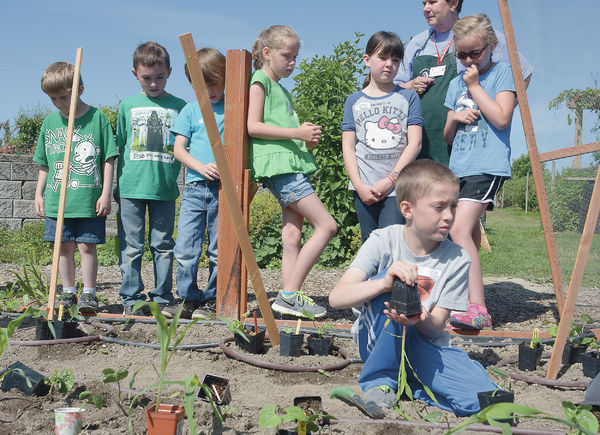
Playing in the garden: Kids learn about gardening, bugs and flowers at WSU Extension

This is a great example of how even “country kids” – all of these kids come from communities surrounded by farmland and agriculture – enjoy and appreciate hands-on experiences and learning about gardening and the natural environment.

Kids learn about gardening, bugs and flowers at WSU Extension | All Access | goskagit.com

About 70 classmates participated Thursday in the Washington State University Skagit County Extension Master Gardener’s “Discovery In Gardening — Is Terrific” (DIG-IT) youth education program.

“It introduces kids to how the garden works, from the growth of the plants to how it arrives in your kitchen and what to do with the scraps,” said Master Gardener Chuck Howell.

The program was started in 2002 by two teachers, Master Gardener Gail Messett said.

The format of the program has changed over the years, Messett said, but the goal has remained the same: Get kids outside and into the garden.

“They’re learning respect for insects and bees and flowers,” Messet said. “I think they go home pretty awestruck, actually.”

more via Kids learn about gardening, bugs and flowers at WSU Extension | All Access | goskagit.com.

community · health · Nature · play · Social · technology

Draw A Walking Route In Whatever Shape You Want | PSFK

Looking to have a little fun with your walk? Now you can use mapping technology to do so…

The Trace app will let you turn a sketch on your smartphone into a physical walking route around a city. You can share your route with a friend, and the recipient gets step-by-step directions. Eventually, the app will reveal the shape on a map.

The walk creator can add signposts along the way—images, audio recordings, messages—which will pop-up at specific places in-route. Walkers can begin their walk anywhere in the city, and pick the duration of their walk. The app adjusts the size of the shape accordingly.

Sixteen walkers in Seattle, Boston and Chicago tested out Trace for a week, drawing over 150 shapes. They sent the walks to friends or tried the routes themselves. The results were presented in a study in Seoul, at the Association for Computing Machinery’s CHI conference last month.

more via Draw A Walking Route In Whatever Shape You Want.

architecture · design · environment · health · mental health · Nature

In Redesigned Room, Hospital Patients May Feel Better Already – NYTimes.com

I recently had a short stay at a hospital (just some minor surgery), and as I lay in my hospital bed I recall looking out my window at a green canopy of trees planted two stories below. I remember how peaceful and pleasant it was to be able to look out and watch the trees. I also noticed my anxiety went down, I was distracted from my pain, and just overall felt better.

More and more research is coming out that is finding the benefits of incorporating nature and natural environments into the healing process, for everything from surgery to PTSD to dementia, and a variety of other ailments. So it’s great to see hospitals incorporating this knowledge into new building designs as well as therapies.

The University Medical Center of Princeton realized several years ago that it had outgrown its old home and needed a new one. So the management decided to design a mock patient room.Medical staff members and patients were surveyed. Nurses and doctors spent months moving Post-it notes around a model room set up in the old hospital. It was for just one patient, with a big foldout sofa for guests, a view outdoors, a novel drug dispensary and a bathroom positioned just so.

Equipment was installed, possible situations rehearsed. Then real patients were moved in from the surgical unit — hip and knee replacements, mostly — to compare old and new rooms. After months of testing, patients in the model room rated food and nursing care higher than patients in the old rooms did, although the meals and care were the same.

But the real eye-opener was this: Patients also asked for 30 percent less pain medication.

Reduced pain has a cascade effect, hastening recovery and rehabilitation, leading to shorter stays and diminishing not just costs but also the chances for accidents and infections. When the new $523 million, 636,000-square-foot hospital, on a leafy campus, opened here in 2012, the model room became real.

read more via In Redesigned Room, Hospital Patients May Feel Better Already – NYTimes.com.