Mental · Social

The End of the Best Friend – NYTimes.com

Florida Atlantic students celebrating a basket...
Humans are social creatures, and need close bonds and feelings of belonging. (Image via Wikipedia)

As the new school year begins, I wanted to mention this article from the New York Times about how schools are discouraging kids from making best friends.

Ahem. Let me repeat that. Schools are discouraging children from having a best friend.

That is just stupid.

Or, put more professionally…

“…such an attitude worries some psychologists who fear that children will be denied the strong emotional support and security that comes with intimate friendships.

“Do we want to encourage kids to have all sorts of superficial relationships? Is that how we really want to rear our children?” asked Brett Laursen, a psychology professor at Florida Atlantic University whose specialty is peer relationships. “Imagine the implication for romantic relationships. We want children to get good at leading close relationships, not superficial ones.”

read the full article via The End of the Best Friend – NYTimes.com.

This is where political correctness and “fairness” go waaaaay too far and ignore human nature and the absolute NEED to have a confidante in life, someone you can rely on, particularly someone outside of your family of origin. Will those people hurt you from time to time? Absolutely. But it’s part of learning how to work within a society and be a social animal.

Studies keep showing how adults today have less and less close friends, and would LIKE to have more. Discouraging kids from learning how to make close bonds with people is just setting them up for this trend to get worse when they become adults.

Now go call your best friend.

Mental · Nature

Happiness is Right Outside (PsyBlog)

As anyone living in the gray, wet Pacific Northwest knows, there is something mentally stimulating and rejuvenating to being able to step outside and get a whiff of fresh air, even if it means getting a bit soggy in the process. Now, research has proven just how beneficial it is for mental health:

Hartig and colleagues suggest that being stuck indoors on vacation can limit mental recuperation. On the other hand, when able to roam outdoors, we can exert ourselves at a favourite sport or simply linger in the park. Psychologically, beautiful scenery can distract us from our troubles, help us forget our normal stressful environments and reconnect us to nature.

more via Happiness is Right Outside — PsyBlog.

Mental

Phys Ed: Can Exercise Make Kids Smarter? – NYTimes.com

I have always been a HUGE proponent of physical exercise and play for health reasons and brain function, and now here’s more evidence of why physical play is sooooo important:

Animal studies had already established that, when given access to running wheels, baby rodents bulked up their brains, enlarging certain areas and subsequently outperforming sedentary pups on rodent intelligence tests. But studies of the effect of exercise on the actual shape and function of children’s brains had not yet been tried.

For budgetary and administrative reasons, school boards are curtailing physical education, while on their own, children grow increasingly sluggish. Recent statistics from the Centers for Disease Control and Prevention show that roughly a quarter of children participate in zero physical activity outside of school.

At the same time, evidence accumulates about the positive impact of even small amounts of aerobic activity. Past studies from the University of Illinois found that “just 20 minutes of walking” before a test raised children’s scores, even if the children were otherwise unfit or overweight, says Charles Hillman, a professor of kinesiology at the university and the senior author of many of the recent studies.

more via Phys Ed: Can Exercise Make Kids Smarter? – NYTimes.com.

Let’s get play back into everyone’s lives!

Mental · Social

Visit 1,400 museums for free on Sept. 25, Museum Day – LATimes

I’m so excited about this year because a) I don’t work that day, and b) I finally live in a big city where I have access to more than just the local children’s museum! Museums are a great source of knowledge, art, culture, science, and history in one weather-protected, thought-provoking building. Hooray!!

Here’s how it works: Go to the Smithsonian Magazine website, peruse the list of participating museums and pick one to visit — preferably one you’ve never been to. Then register to download and print out a ticket that provides free admission for two to the museum that you chose; you’ll need this for entry. Each ticket is good for only one museum, and only one ticket is allowed per household.

Visit 1,400 museums for free on Sept. 25, Museum Day – Travel – LATimes.com.

Mental · Social

Revenge of the Introvert | Psychology Today

I spent the morning reading Revenge of the Introvert in Psychology Today. This is an interesting article that talks about how prevalent introversion actually is in humans when given psychology tests, and why accepting one’s intraverted tendencies is okay.

From the creative side of things, the author Laurie Helgoe points out how mentally draining it is for introverts to force themselves to be more outgoing and social, and in fact they are better at problem solving and creativity when they have a chance to sit in a quiet corner (or go running, sit on the bus with their headphones plugged in) and contemplate.

What I found interesting also, from a social science aspect, was when Helgoe pointed out that while American culture strongly encourages extraverted behavior, other cultures like in Finland and East Asia value introversion.

As Helgoe states “…if every other person is an introvert, why doesn’t the cultural tone reflect that?”

Indeed.

But overall the article provides a great message of why introversion is a good thing (really, truly) and how all us introverts can thrive in an extraverted culture.

Headphones, anyone?

read more at Revenge of the Introvert | Psychology Today.

Mental

Discovering the Virtues of a Wandering Mind – NYTimes.com

via Findings – Discovering the Virtues of a Wandering Mind – NYTimes.com.

“Researchers [that] have been analyzing those stray thoughts, they’ve found daydreaming to be remarkably common — and often quite useful. A wandering mind can protect you from immediate perils and keep you on course toward long-term goals. Sometimes daydreaming is counterproductive, but sometimes it fosters creativity and helps you solve problems.”

more at Findings – Discovering the Virtues of a Wandering Mind – NYTimes.com.

Mental · Social

New Nicaraguan sign language shows how language affects thought | Not Exactly Rocket Science | Discover Magazine

A cool look at language and how it shapes our thoughts in the article “New Nicaraguan sign language shows how language affects thought | Not Exactly Rocket Science | Discover Magazine.”

NSL has been a goldmine for scientists, providing an unparalleled opportunity to study the emergence of a new language. And in a new study led by Jennie Pyers from Wellesley College, it even tells us how language shapes our thought.By studying children who learned NSL at various stages of its development, Pyers has shown that the vocabulary they pick up affects the way they think. Specifically, those who learned NSL before it developed specific gestures for left and right perform more poorly on a spatial awareness test than children who grew up knowing how to sign those terms.

more…

Mental

Could Living in a Mentally Enriching Environment Change Your Genes?: Scientific American

For me this is one of those “well, duh!” studies, but I suppose people hadn’t previously realized just how strong the effect could be.

From the 2009 article…

“Not only does the environment an animal is reared in have marked effects on its ability to learn and remember, but also that these effects are inherited. The study suggests that we are not the mere sum of our genes: what we do can make a difference.”

read the full article at Could Living in a Mentally Enriching Environment Change Your Genes?: Scientific American.

Mental

The dose makes the poison – how dopamine receptors contribute to creativity, and mental illness

A study released this past May by PLoS ONE: “Thinking Outside a Less Intact Box: Thalamic Dopamine D2 Receptor Densities Are Negatively Related to Psychometric Creativity in Healthy Individuals,” group of researchers in Sweden found that people with slightly decreased dopamine receptors were more creative than average people. At the same time, it’s been previously shown that people with Schizophrenia and other psychotic diseases have severely decreased dopamine receptors.

It’s amazing how often the case is that a little bit of a genetic trait is good, but too much of it can be dangerous or even deadly: just look at sickle cell anemia and malaria resistance: http://www.buzzle.com/articles/sickle-cell-and-malaria.html

Mental · Social · technology

The New Face of Autism Therapy | Popular Science

I found this really interesting, since 2D interactions don’t seem to teach kids to teach kids how to empathize and be more social beings. However, a 3D robot seems to do the trick…

via The New Face of Autism Therapy | Popular Science.

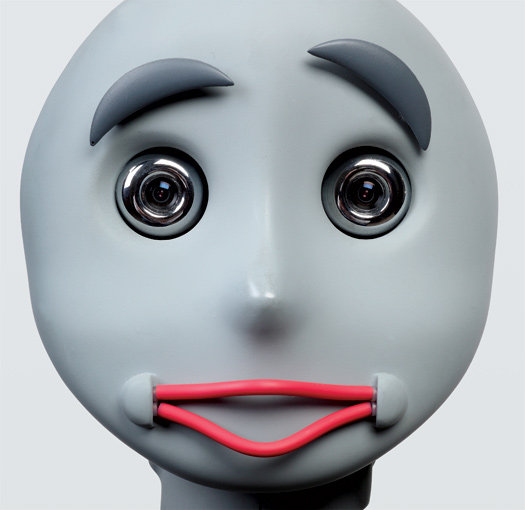
A robotic therapist teaches kids how to read emotions

With one in 110 children diagnosed with autism, and therapists in short supply, researchers are developing humanoids to fill the gaps. But can robots help patients forge stronger bonds with people?

…There is increasing evidence that kids with autism respond more naturally to machines than they do to people. Psychologist Simon Baron-Cohen, the director of the Autism Research Center at the University of Cambridge in England, along with other autism experts, believes that robots, computers and electronic gadgets may be appealing because they are predictable, unlike people. You can pretty much guess what a computer is going to do next about 90 percent of the time, but human interactions obey very few entirely predictable laws. And this, Baron-Cohen explains, is difficult for children with autism. “They find unlawful situations toxic,” he says. “They can’t cope. So they turn away from people and turn to the world of objects.”

More…