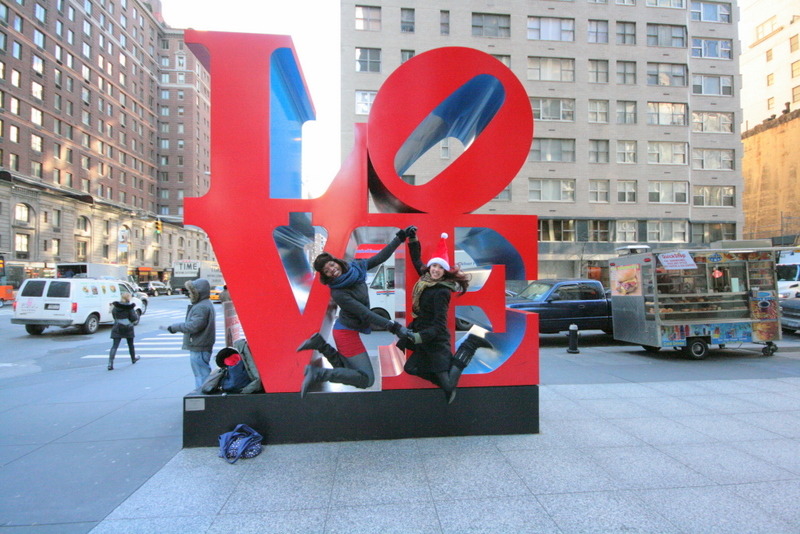
The Seattle City Government Parks & Recreation site recently hosted a public meeting to gather input on a proposed public art piece in Myrtle Edwards Park that will be used for skateboarding.
Energy drink maker Red Bull has approached Seattle Parks and Recreation about making a community investment that would include commissioning an artist to design and fabricate a unique piece of skate-able art. At the meeting, Seattle Parks presented the history of the proposed project, followed by an opportunity for the public to weigh in on the idea.
Myrtle Edwards Park is located at 3130 Alaskan Way on the shoreline of Elliott Bay, north of the Olympic Sculpture Park.
The Citywide Skatepark Plan, developed in 2006 and 2007 with extensive public process, designated Myrtle Edwards as a recommended site for a skatedot [editor: which is apparently smaller than a skatepark]. Since 2007, Seattle Parks and Recreation has constructed eight new skate parks and skatedots. Two more are in construction and design.
4Culture is administering the Call for Artists associated with this project. The artist will coordinate the design with Seattle Parks and Recreation.
A second follow-up meeting is planned in June.
I love the idea of creating public art that is actually usable, whether it’s by skaters, kids, or even animals. I understand that some art is best appreciated by not messing with it, but especially in a public space sometimes it’s hard to not want to interact with sculptures or murals. I also appreciate Red Bull’s focus on supporting play in all its forms, although private sponsorship of public spaces is always a touchy, tricky gray area.
Is there a public art piece, or artistic skatedot, fountain, whatever, that you really enjoy sitting on, playing on, or just watching others play? Let me know about it in the comments below.
Courtesy of Krulwich Wonders: multiple species will make their own games and toys out of thin air, literally, using a variety of different tools:
Humans do it with smoke.
Dolphins do it with air.
With a little snort, dolphins can produce a nearly perfect "air" rings, (sophisticated non-dolphins called them toroidal vortices) which they turn into underwater toys.
While humans and dolphins obviously play with rings, it’s possible humpback whales do this too. The video shows humpbacks sending air rings to the ocean surface, but in one of them, the giant underwater author suddenly pops up mid-ring to take what looks like a bow in front of a boat of whale-watchers.
Yes! Seattle had a similar competition a couple of years ago, more focused on art but in a similar vein. Unfortunately not much came of the competition, so I would LOVE to see the results of this competition. Hooray for Playscapes!
Yes! Seattle had a similar competition a couple of years ago, more focused on art but in a similar vein. Unfortunately not much came of the competition, so I would LOVE to see the results of this competition. Hooray for Playscapes!
Ritner Creek Covered Bridge near Pedee, Oregon, used as a rest stop during the Watermelon Rides organized by the Salem Bicycle Club (Photo credit: Wikipedia)
Happy Friday. I hope you get a chance to go outside this weekend. Not just because it’s good for you, but because it also helps the economy. No really, at least according to one study, and anecdotally, Oregon is seeing ahuge economic benefit by encouraging outdoor recreation, specifically bikeways and bike tourism:
During a special hearing on bicycle tourism at the House Transportation and Economic Development Committee in Salem, OR, on May 9th, representatives from Travel Oregon released a major new report on the economic impact of bicycle-related travel. The Travel Oregon study, The Economic Significance of Bicycle-Related Travel in Oregon Detailed State and Travel Region Estimates, 2012 (PDF), looked at bike tourism’s impact throughout the state during 2012. The big number — which garnered a headline in The Oregonian and has been adjusted up since our story in March — is $400 million. That’s how much people “involved in bicycle-related activities” spent in Oregon last year.
One key reason for the ascension of bike tourism in Oregon are initiatives like the nation’s first State Scenic Bikeway program.
The Oregon Parks and Recreation Department named two new Scenic Bikeways that same day. They’ve got the right idea about increasing revenue by making their state fun to hang out in!
You can read more about the economic impacts, but it’s so far a pretty effective strategy to promote tourism.
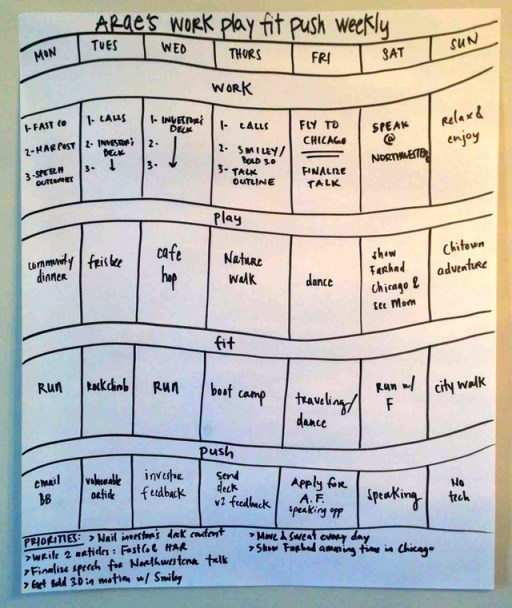
I have been struggling, STRUGGLING!, lately with fitting play and relaxation into my new life structure and creating space in my life for everything that needs to get done. I’m curious how other people manage it, so I found this article intriguing:
About four years ago I started working for myself. I wanted the freedom and flexibility to own my schedule and the space to bring my ideas to life.
One of the biggest challenges was structuring my time so I was fully experiencing the benefits of working for myself while also being as creative and productive as possible. At first, the idea of systems and planning made me cringe. I felt like they would hold back my creative potential. Eventually, organization and effectiveness challenges pilled up and I decided to give structure a try.
I wondered:
How do I balance client service with working on my own ideas?
How do I avoid interruptions that mess with my creative flow?
How do I stop putting off the stuff I hate but still have to do?
Creating organic, peaceful spaces can be arguably one of the most powerful, important acts for human wellness, both physically and mentally. These gardens are also peaceful just to look at, even if you can’t experience them firsthand.
Creating organic, peaceful spaces can be arguably one of the most powerful, important acts for human wellness, both physically and mentally. These gardens are also peaceful just to look at, even if you can’t experience them firsthand.
Happy Spring Forward. Time to start planting seeds and playing in the dirt. In honor of getting dirty and creative, here’s a a TED talk from Ron Finley, guerrilla gardener.
Ron Finley plants vegetable gardens in South Central LA — in abandoned lots, traffic medians, along the curbs. Why? For fun, for defiance, for beauty and to offer some alternative to fast food in a community where “the drive-thrus are killing more people than the drive-bys.”Ron Finley grows a nourishing food culture in South Central L.A.’s food desert by planting the seeds and tools for healthy eating.
Best quote ever: “Gardening is the most therapeutic & defiant act you can do, especially in the inner city. Plus you get strawberries.”
OpenIDEO asks how do we promote wellness in the workplace. (Photo credit: Wikipedia)
Wow, OpenIDEO is on a role lately with their challenges that get my creative juices rolling and my passions up, in a good way! This latest challenge is about wellness in the workplace:
Together with Bupa and the International Diabetes Federation, we’re asking our global community to help us explore how people can best be supported in the workplace to make positive changes to their health and wellness – and what skills and tools are needed to pass these positive changes onto their networks of co-workers, family and friends.
As the Chair of the Wellness Committee at my job for just under a year, we tried out a lot of different wellness incentives, some with better results than others. I feel very passionately about offices promoting and encouraging wellness; we spend the majority of our waking lives there, it’s cheaper in the long run for companies to have healthy and happy workers, and it promotes productivity and dedication from employees.
What are your ideas? Add them to the inspiration. I’ll have to share some of my ideas for this challenge on the blog, as well as my ideas from the previous OpenIDEO challenge I mentioned, which is currently in the concepting phase.
What does it take to reduce on-the-job depression and create an overall happier work environment? (Photo credit: Modern_Language_Center)
A recent study of health factors and their associated costs at seven companies, published in the journal Health Affairs, found that “depression is the most costly among 10 common risk factors linked to higher health spending on employees.”
The analysis, found that these factors — which also included obesity, high blood sugar and high blood pressure — were associated with nearly a quarter of the money spent on the health care of more than 92,000 workers.
First the employees were assessed for health risks, then researchers tracked their medical spending from 2005 through 2009.
The average medical spending for each employee was $3,961 a year. In total, $82 million, or 22 percent, of the $366 million annually spent on health care for the workers was attributed to the 10 risk factors, the study found.
The relationship between higher spending and depression was the strongest, with 48 percent more spending for workers with a propensity for that widespread problem.
Now, to be fair, this is a fairly small study of just seven companies, and the article didn’t say how many employees worked at these companies. However, this is definitely a trend that has been spotted at least anecdotally by many HR managers, so it’s nice to see that there is some “official” analysis being done on the issue.
So what can employers do about this? My fear is that employers would discriminate, unintentionally or intentionally, against people who suffer from depression. But these days many people will be diagnosed with depression due to a temporary life situation such as a death in the family, or their jobs, so being fired for temporary sadness is probably not a good idea for companies.
Instead, my hope is that companies would invest more on making people’s job satisfaction higher. As of two years ago, Americans reported the lowest job satisfaction ever recorded. That means employers can be doing A LOT more to improve their employees’ lives at work. And a lot of that has to do with feeling supported by their managers, and feel like they are heard and respected and overall a part of the team. A lot of that comes from having fun at work.
This philosophy has been spouted in several different books and magazines, and has been shown to work well in classrooms as well, referred to as the “Responsive Classroom” approach.
The Responsive Classroom approach centers on several ostensibly mundane classroom practices. Each morning students form a circle, greet one another, share bits of news, engage in a brief, fun activity and review the day’s agenda. The idea is to build trust, ensure a little fun (which adolescents crave) and confront small problems before they become big. Students might welcome one another with salutations from a foreign language. An activity might involve tossing several balls around a circle in rapid succession. Students share weekend plans or explore topics like bullying before lessons begin. (New York Times)
This approach could very easily be applied to a business setting, in fact it sounds like a team kick-off meeting one might see in a corporate environment. Taking time to connect with other coworkers and laugh a little before diving in to the day’s work has been shown to work wonders for productivity and boost morality in both school and work settings.
There is definitely a drive and expectation in many industries to work longer, faster, harder hours, and be available and working at all hours. But that drive is unsustainable, demonstrated by the low job satisfaction and high burnout rates in many industries, from high-tech to physicians. Taking time to play a little bit at work, or just connect with coworkers, is being shown as an effective way to reduce depression related to work and job burnout, increase productivity, and create a more cohesive company with more loyalty overall to the company’s mission.
So long story short: remember to bring the koosh ball to your next meeting.
Overview of Singapore’s financial district; how do we make our living environments better as our cities grow? (Photo credit: Wikipedia)
I love these OpenIDEO public challenges, so I was thrilled when I saw this challenge alert pop up in my inbox (and then unfortunately let it get buried for a week, oops!) about ideas on how to make communities more involved and engaged in their environments.
Public agencies such as Singapore’s National Environment Agency would like to envision how to rejuvenate our local environments to inspire and enable communities to make our living environments better – and are eager to collaborate with the global community to explore solutions which resonate in Singapore and across the world.
In this challenge we are looking to try and explore the following questions, both for Singapore and for communities everywhere that face similar challenges.
How might we better collectively solve problems facing our neighbourhoods?
How might communities look out for each other more?
How might we provide a safe space for positive and constructive action?
How might we help passive citizens become active contributors?
How might the role of the government evolve in the future, with regards to local neighbourhoods?
In short, what does community ownership look like in 2012 and beyond? The National Environment Agency invites you to join us in designing better answers, together.
Let’s collect examples of existing initiatives and explore the challenge topic to inform our ideas for the upcoming Concepting phase.
It’s a question that I bring up a lot on the blog, and share different examples of how communities around the world are doing just that, from adding public art to bee and butterfly gardens to building playgrounds. I am bubbling with excitement over this challenge, and have lots of different ideas, but there are only 14 more days to submit ideas and I want to make sure mine are really good, eek!
What have you seen that worked in growing communities to keep the residents and developers motivated to preserve the surrounding environments, rather than bulldoze them over for a quick couple hundred bucks? What are some of your ideas? Have you seen any story of community building on this blog that screams “Yes, this is the answer!”? Submit your ideas at the OpenIDEO website.




 Mental Flowers