
Yes, yes, yes! Accessibility for all! Allow everyone to be able to use their environments and stay in their communities! Different generations living together in a community is better for everyone!
Category: happiness

Lolcats and the Harlem Shake: Play on the Internet

An article from the head of Google’s Agency Strategic Planning team published in Fast Company talks about why we play on the Internet; it’s a really good dive into the need and importance for play in our lives and share that playful experience with others, and how as we move towards a more digital space we are taking that need to share play with us. It is marketing/branding focused, but the message is clear; we all need play and are making space for it, at least in our Internet lives:
We [netizens] uploaded over half a million variations of Harlem Shake to YouTube in the past few months. Google searches for Cat GIFs hit an all-time high last month. And we took 380 billion photos last year–that’s 10% of all the photos taken . . . ever. But let’s be honest–these memes are fun, but they don’t matter, right? They’re pretty much a waste of time.
As the head of Google’s Agency Strategic Planning team, it’s my job to work with brands and creative agencies to help develop their ideas in the digital space. So I had to ask: Why would we be doing so much of all this “visual play” if it really means so little to us?
To get to the bottom of these memes, we assembled a team of original thinkers–anthropologists, digital vanguards, and content creators–to dig a little deeper into this “visual web.” We also spoke to gen-Cers–the people who grew up on the web or behave as though they did–and who thrive on creation, curation, connection, and community.The research showed us that far from distracting us from more serious things, these viral pictures, videos, and memes reconnect us to an essential part of ourselves.
It may seem that all we’re doing is just capturing every mundane moment. But look closely. These everyday moments are shot, displayed, and juxtaposed in a way that offers us a new perspective. And then all of a sudden these everyday moments, places, and things look . . . fascinating.
As kids, that happens all the time because everything is new. Everything is unlike. And we aren’t constrained by the rules about what “goes together.” Why else was putting the Barbie in the toy car wash more fun than putting the car in the car wash?
Read the whole article here: Memes With Meaning: Why We Create And Share Cat Videos And Why It Matters To People And Brands
Related articles
Cool doctors doing what’s right… – The Meta Picture
Hospitals can be scary places, for grown ups and for kids. This is a great way to make hospitals a little less intimidating, and add some silliness to an otherwise boring, and possibly painful, medical procedure.
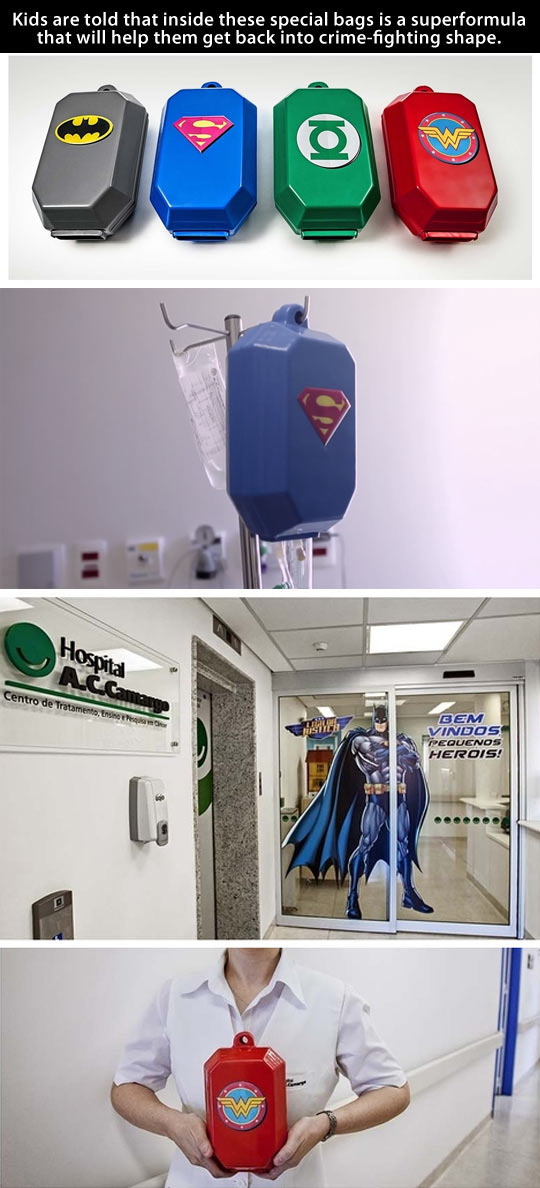
Originally from Cool doctors doing what’s right… – The Meta Picture.
Freak Bikes of Portland
I’ve been watching episodes of American Hipster Presents – a fun video series about different entrepreneurs/artists/etc. around the U.S. (side tangent, how crazy is it that we live in an economy where I can write entrepreneurs/artists/etc. and have that not be weird? Hello Etsy!) – I came across the freak bike builders of Portland. It’s a group of guys and gals around Portland that build their own bikes and then pedal around town in bike gangs, playing games, hanging out with friends, and being overall pretty silly.
To me this is a great showcase of grown-ups making playful spaces and space for play in their lives.
The main interviewee says it best [paraphrasing]: “Kids get to play on bikes, why shouldn’t grown-ups?”
It also makes me kind of want to move to Portland.
Related articles
- Art at the Food Carts Bike Ride! (fc4c.wordpress.com)
- Visiting Portland? There’s an App for That! (justabackpackandarollie.com)
- Explore Portland’s Craft Beer and Cycling Culture with ‘Hop In The Saddle’ Package from Jupiter Hotel (prweb.com)
- Keeping it weird in Portland: cycling the brew pubs (vancouverobserver.com)
Americans’ happiness score – latimes.com

We’re a lot happier as a nation than I was otherwise led to believe. Um, go us?
We’re No. 6! That’s according to new data from the Organization of Economic Cooperation and Development , which on Tuesday released results of a survey measuring quality of life in 36 industrialized nations.
For the last three years, the Paris-based outfit has weighed 11 criteria, including housing, income, jobs, environment, safety and work-life balance. For the third year in a row, Australia was the big winner, thanks in large part to an economy that managed to avoid the global recession of the last decade.
The U.S. hobbled across the finish line in sixth place, behind Sweden, Canada, Norway and Switzerland, which ranked second through fifth, respectively.
more via Daum: Americans’ happiness score – latimes.com.
But seriously (ha ha), I feel like happiness scoring, as subjective as it is, is a good way of measuring our overall health and well being. It also indicates we’re doing okay and getting time in our lives for all the important stuff like family and time to recreate. I like Bhutan’s use of grass national happiness as a major marker for the nation’s well-being (lovely country, BTW, just be prepared for an exciting landing).
Related articles
- Meghan Daum: Americans’ happiness score (pantagraph.com)
- Why Australia is the happiest developed nation (smartplanet.com)
Prancercising, Inspired by Play
Everyone’s been having fun learning about Prancercise, created by Joanna Rohrback. Sure it’s a little silly, but that’s sort of the point. Joanna even says that the workout is inspired by horses prancing, and should be motivated by fun:
Prancercise® is defined as: A springy, rhythmic way of moving forward, similar to a horse’s gait and ideally induced by elation. It’s about Self-Expression. It’s about Non-violence. It’s about Conservation.
Exercise doesn’t need to be grueling and difficult, it can be fun. People stick with exercise programs longer if it’s fun, and exercise has been shown to be more effective when it’s fun.
So while blogs like the Huffington Post are poking fun at Prancercising, in a way it’s a great reminder to have fun with your exercise routine.
Related articles
- Prancercise your way to fitness (local10.com)
- ‘Prancercise’ fitness video goes viral (fox4kc.com)
- Prancercising: an exercise of a different color (king5.com)
- 60-year-old prances about to workout (wwlp.com)
- Prancercise: New eccentric fitness routine mimics dancing like a horse (foxnews.com)
- Introducing Prancercise: The Horse-Inspired Exercise Trend (newsfeed.time.com)
Playing with smoke rings, air rings, bubble rings…
Courtesy of Krulwich Wonders: multiple species will make their own games and toys out of thin air, literally, using a variety of different tools:
Humans do it with smoke.

Dolphins do it with air.

With a little snort, dolphins can produce a nearly perfect "air" rings, (sophisticated non-dolphins called them toroidal vortices) which they turn into underwater toys.
While humans and dolphins obviously play with rings, it’s possible humpback whales do this too. The video shows humpbacks sending air rings to the ocean surface, but in one of them, the giant underwater author suddenly pops up mid-ring to take what looks like a bow in front of a boat of whale-watchers.
Tree Hugging Now Scientifically Validated – Uplift

The term “tree hugger” has been applied to people viewed as uber-liberal or too idealistic, however… “it has been recently scientifically validated that hugging trees is actually good for you.”
Research has shown that you don’t even have to touch a tree to get better, you just need to be within its vicinity has a beneficial effect.
In a recently published book, Blinded by Science, the author Matthew Silverstone, proves scientifically that trees do in fact improve many health issues such as Attention Deficit Hyperactivity Disorder (ADHD), concentration levels, reaction times, depression and other forms of mental illness. He even points to research indicating a tree’s ability to alleviate headaches in humans seeking relief by communing with trees.
The author points to a number of studies that have shown that children show significant psychological and physiological improvement in terms of their health and well being when they interact with plants and trees. Specifically, the research indicates that children function better cognitively and emotionally in green environments and have more creative play in green areas. Also, he quotes a major public health report that investigated the association between green spaces and mental health concluded that “access to nature can significantly contribute to our mental capital and wellbeing”.
full article via Tree Hugging Now Scientifically Validated – Uplift.
I”m sorry the article only looked at research in children, as more and more findings are showing the same improvements in adults from interacting and playing with nature, and even results that some would term “nature deprivation” or as Richard Louv calls it “Nature Deficit Disorder.”
One of my favorite little trivia facts is that there are microbes in soil that induce positive emotions in people, so digging in the dirt actually makes you happier. Plus helps you learn and concentrate more.
Hospital patients with a view of a tree or greenery from their room window were found to heal faster.
Those kinds of benefits are for everybody!
While I do feel like it’s important to make sure children get enough outdoor time, I continually want to drive home the message that not only should you encourage children to go outside and play, but adults too. We ALL need fresh air and nature and flowers and bugs and dirt.
Related articles
- Minn. Arboretum Wants To Break Tree-Hug Record (minnesota.cbslocal.com)
- Nature Deficit Disorder (alyshiamarli.wordpress.com)
Parks, bikeways, other natural playful landscapes are good for the economy

Happy Friday. I hope you get a chance to go outside this weekend. Not just because it’s good for you, but because it also helps the economy. No really, at least according to one study, and anecdotally, Oregon is seeing ahuge economic benefit by encouraging outdoor recreation, specifically bikeways and bike tourism:
During a special hearing on bicycle tourism at the House Transportation and Economic Development Committee in Salem, OR, on May 9th, representatives from Travel Oregon released a major new report on the economic impact of bicycle-related travel. The Travel Oregon study, The Economic Significance of Bicycle-Related Travel in Oregon Detailed State and Travel Region Estimates, 2012 (PDF), looked at bike tourism’s impact throughout the state during 2012. The big number — which garnered a headline in The Oregonian and has been adjusted up since our story in March — is $400 million. That’s how much people “involved in bicycle-related activities” spent in Oregon last year.
One key reason for the ascension of bike tourism in Oregon are initiatives like the nation’s first State Scenic Bikeway program.
The Oregon Parks and Recreation Department named two new Scenic Bikeways that same day. They’ve got the right idea about increasing revenue by making their state fun to hang out in!
You can read more about the economic impacts, but it’s so far a pretty effective strategy to promote tourism.
Related articles
- Bicycling contributes $400 million to Oregon tourism, new survey says (oregonlive.com)
- Test Your Bike IQ: Bikeways vs Highways (sierraclub.typepad.com)
Does Not Having an Office Make You a Happier Worker?

I read an article yesterday about “the next big thing” in office space. According to Uday Dandavate, the CEO of SonicRim, the next “megatrend” is going to be no office space:
Large working complexes will be pyramids for dead people. I’m not making a judgment. I am just observing. They are fading symbols of an era that is soon going to be a bygone era.The ideal environment is where people don’t have to go to a workplace. The workplace is distributed in the community.
Companies won’t be building offices; they will be building communities and nice places to work in those communities. It’s a fallacy that people want to stay at home to work. In a given moment they want to work where they would be most productive, or relaxed, in the kind of mindset they need to be in. We need to get away from constructing buildings that have flexibility to creating work environments that can evolve.There needs to be a complex assessment of different moments at work. Recently we finished a global study on auto interiors for Johnson Controls. When you sit inside your car there are different moments that have different states of mind, going to work or coming home. Sometimes people want to feel their car is their home. At times people want the car to feel like a workplace. Take the same concept and apply it to architecture and work places. For any productive activity, not just working but cooking, reading, writing a letter, there is always a most conducive environment.
More at: The Registry SF
While Dandavate believes that the workers will be dispersed throughout the community, I’m not sure I entirely buy the idea that the central office space or main corporate headquarters is going to disappear. The emphasis on having everyone in one space my diminish, but there are a lot of reasons why having a central space sanctioned as “for work” is important.
To name a few:
- Working parents who need a space away from family distractions, like screaming children and biting puppies. Or heck, noisy roommates for that matter.
- People for whom going to the local library or coffee shop every day. This isn’t an option for a lot of people, even those living in big cities.
- People who work very collaboratively and need real-time input, and face time in order to accomplish their work.
- People who need more space to work than the kitchen table or their tiny apartment walls can provide.
- Those who just need the peer pressure of others working around them to push through a hard deadline.
- Extraverts!
Dandavate mentions a sense of identity for workers with the company that doesn’t require a tangible, geographical locale. I agree with his assessment that people don’t need a geographic place to congregate at to form a bond with coworkers or identify with a company, but they sure want one. Microsoft has a huge annual gathering of its employees in or near their homebase in Redmond, that most employees working from afar get really excited about. Traceurs (people who train parkour) will make pilgrimages to a small park outside of Paris simply because one of the sport’s founders filmed a video there. Elvis fans have Graceland.
Workers are also becoming more vocal about work vs. home life, and for many it is unappealing to have your work at home or not be able to leave it somewhere else (even places like Office Nomads you have to bring most of your stuff home with you).
Maybe I’m totally off-base, but while I think the workplace will become more flexible, we will always have the “homebase/headquarters” office buildings.
Disagree? Leave your thoughts in the comments below.
Related articles
- Some Important Tips for Office Space Design (officespacedesigners.wordpress.com)
- How to Find Co-Working Spaces Around the World (projecteve.com)
- Who Is Happiest At Work? Probably Not Who You Think (business.time.com)
 Mental Flowers