anthropology · architecture · behavior · community · creativity · culture · environment

The Playful City – Azure Magazine

A great article about how building playful spaces leads to more, and better, play.
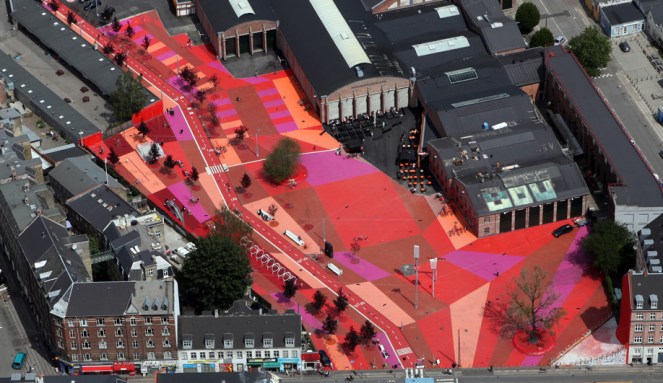
Can playgrounds make kids smarter? Yes, say the experts, and landscape architects everywhere are responding. Welcome to outdoor play’s new reality.

All work and no play makes jack a dull boy. Granted, Jack does not lack for innovative toys and gadgets. But what Jack really needs is better playgrounds. These days, reality is exchanged for a simulation of reality, and the sandbox is abandoned in pursuit of the virtual. Cognitive scientists, however, are finding that the unstructured activity children engage in at the playground fosters the social and intellectual abilities they need to succeed in life. Monkey bars and swing sets present opportunities to develop new skills, encourage autonomous thinking and promote flexible problem solving – but they also shape the brain. This is good news. With technology taking over so much of our lives, increased pressure on children to compete academically at a much younger age, and helicopter parenting restricting play for fear of potential danger, many experts – such as David Elkind, psychologist and author of The Hurried Child – are drawing attention to the “reinvention of childhood.” It is time we also reinvent the playground.

more via The Playful City – Azure Magazine.

behavior · children · community · environment · family · Nature · play

Grab a copy of 21 Days in the Woods and start a group session | Elisabeth M. Stone

We’re too late to join Elisabeth Stone on her group session she had back in February, but I still loved this idea of making a 21 day challenge to get outside!

21 Days in the Woods Poster

21 Days in the Woods is a connection project to get you and your family out in the woods once a day for 21 days. It is well-structured and adaptable to any age range. When you purchase your immediate download of the workbook, you can choose to work through it now or later

more via Grab a copy of 21 Days in the Woods and join us for a group session on February 1st. | Elisabeth M. Stone.

April has just started, and it’s starting to feel more and more like Spring, so take a look and see about how you can challenge yourself to get out into the woods.

behavior · community · creativity · culture · environment · happiness · play

An Artist’s Quest: To Force Strangers In Cities To Talk To One Another | Co.Exist

Sometimes all it takes is one person to start a neighborhood to start talking and engaging with one another. Someone moves in and throws an open house. Or even a garage sale. So how can art, or an artist, inject “love and play” into a community, particularly when the younger generations trust each other less than ever before?

San Francisco-based artist Hunter Franks is on a three-week mission across several different cities to explore just that, and hopefully get some “creative intervention” going in these urban areas.

An Artist's Quest: To Force Strangers In Cities To Talk To One Another | Co.Exist | ideas + impact

One Franks’s planned activities is something called “Vacant Love,” which aims to transform abandoned or neglected buildings with messages of affection. Another, called the “Free Portrait Project” asks residents to sit for a Polaroid photo taken by Franks, and during the 120 seconds it takes for the picture to develop, entertain a brief interview about their lives. Other interventions include two-way advice booths, for citizens to both give and take advice from one another, as well as an activity that asks people to write sticky notes about their loves and fears on a public wall. Franks will also be expanding his SF Postcard Project, in which he gathered postcards written from low-income San Francisco neighborhoods and mailed them to homes in ritzier ZIP codes.

more via An Artist’s Quest: To Force Strangers In Cities To Talk To One Another | Co.Exist | ideas + impact.

What activities have you seen, or even been engaged in, that got a neighborhood members involved and communicating? For some, even a Little Free Library can get the ball rolling. Tell us your experiences in the comments below.

architecture · creativity · culture · environment · work

Twitter to Install 19th Century Log Cabins in its SF Headquarters | Inhabitat

Do you think better in a small, cozy place, or something a little more rustic than modern offices? Twitter now has got its employees covered in that department.

Employees at Twitter’s San Francisco headquarters will soon have a chance to tap their creativity inside repurposed 19th century log cabins. The tech company has made a plan to install two homesteader cabins salvaged from historic ranches in Montana. The cabins will be installed within an open area in the headquarters, and serve as a creativity-inducing dining area.

The cabins, which are nicknamed Stanford and Belt to honor the Montana towns they were sourced from, will join other salvaged materials in the Twitter offices. Twitter’s logos throughout the office are made from reused California license plates, and the reception desk is made from salvaged bowling alley planks.

Like other tech companies in Silicon Valley, Twitter’s office is chock full of gimmicky but enjoyable features to inspire its employees. The refurbished office includes a yoga studio, rooftop garden, arcade and culinary treats like a cupcake shop, all clad in salvaged wood. The cabins are expected to be installed in the coming weeks.

more via Twitter to Install 19th Century Log Cabins in its SF Headquarters | Inhabitat – Sustainable Design Innovation, Eco Architecture, Green Building, or from its source CBS.

Going into a novel space, or even a space that feels special, can really boost creativity and/or help people focus on a project. It can also help to have some place quiet and private to concentrate and really dive in to something, whether it’s a log cabin at work or just a small “phone booth” style room.

What small, perhaps quirky, space do you use for yourself to get work done? Let us know about it in the comments below.

anthropology · architecture · behavior · community · culture · design · environment · happiness · health

Gorgeous Viewpoint Platform Invites Busy Londoners to Enjoy the Wildlife of Regents’ Canal | Inhabitat

Gorgeous Viewpoint Platform Invites Busy Londoners to Enjoy the Wildlife of Regents' Canal | Inhabitat - Sustainable Design Innovation, Eco Architecture, Green Building

Living in a big city like London, even with parks and trees, it can be hard to find a spot dedicated to just being quiet and taking in nature.

So the Finnish Institute of London, The Architecture Foundation and London Wildlife Trust just unveiled Viewpoint, a floating platform where Londoners can slow down and enjoy Regents’ Canal. Designed by Finnish architects Erkko Aarti, Arto Ollila and Mikki Ristola, this permanent structure serves as a placid retreat for visitors to nearby Camley Street Natural Park and as an outdoor learning environment for school children and adults.

more via Gorgeous Viewpoint Platform Invites Busy Londoners to Enjoy the Wildlife of Regents’ Canal | Inhabitat – Sustainable Design Innovation, Eco Architecture, Green Building.

Designating spaces as official rest areas is a great way to cue people to actually take breaks, and clue them in to their surroundings, to take a minute to stop and observe.

anthropology · behavior · environment

Playful Primate Moment

Your playful moment of the day brought to you by a playful primate enjoying the weather.

behavior · design · emotion · environment · happiness · health · mental health · psychology

Modular Glass Bedroom Helps Researchers Investigate Light’s Infinite Health Benefits – PSFK

Do you notice you have different moods depending on how bright or dark it is outside? Do you notice the warmth or cold feeling emitting from a light bulb? Whether you consciously notice them or not, they do have an effect on your brain and body. Since these days most of us don’t get to work outside and absorb natural light, scientists are working on the right kind of artificial light for us.

The light emitted from our lamps and fixtures at home doesn’t just spruce up a room; it has the power to significantly augment our mood and lift our spirits.To explore further the link between lighting and personal wellbeing, glass engineering company Cantifix and Oxford University have collaborated to create the Photon Project. This scientific study comes to life at this month’s London Design Festival in the form of the Photon Pod, an all-glass living space that will help the Photon Project gather data and insights on the links between light and health.Resembling a futuristic bedroom, the pod invites visitors to experience what life is like in a completely translucent living space, as well as take part in simulations that measure levels of alertness or relaxation under varied light conditions.

more via Modular Glass Bedroom Helps Researchers Investigate Light’s Infinite Health Benefits – PSFK.

anthropology · community · culture · environment · play · Social

Happy Park(ing) Day 2013!

Parking Day, Pioneer Square Seattle
Participants of Parking Day setting up a game in Pioneer Square, Seattle. Photo by author.

Today is PARK(ing) Day, “an annual worldwide event where artists, designers and citizens transform metered parking spots into temporary public parks.”

Every year I see some amazing games, maps, and other cool uses of parking spaces set up all over Seattle.

Go out and explore the different parklets!

more via Park(ing) Day 2013 | PARK(ing) Day 2013 is Friday, September 20th.


Side View on Park(ing) Day aktivity by Green C...
Side View on Park(ing) Day aktivity by Green City in Munich. Two Parking spaces were transformed into a small park. (Photo credit: Wikipedia)
behavior · children · environment · happiness · Nature

Make-A-Wish, Woodland Park Zoo grant a child’s wish to play with animals.

When 2 1/2-year-old Rylee, a Make-A-Wish Alaska and Washington kid, said she loved animals, we wanted to give her an unforgettable day at Woodland Park Zoo. Two weeks ago, Rylee arrived in a stretch limo, fed elephants Chai and Watoto, pet and fed the goats, pigs and bunnies, enjoyed a picnic and rode the carousel—and had a wonderful time sharing it all with her family. We’re so sorry to learn that Rylee has since passed. But we know that while we gave Rylee and her family the gift of nature, they gave us the gift of sharing one of Rylee’s last days with her. Go outside and play today—nature and time are gifts we should all treasure together. (Photo: Jessica Johnny Photography)

Photo: When 2 1/2-year-old Rylee, a Make-A-Wish Alaska and Washington kid, said she loved animals, we wanted to give her an unforgettable day at Woodland Park Zoo. Two weeks ago, Rylee arrived in a stretch limo, fed elephants Chai and Watoto, pet and fed the goats, pigs and bunnies, enjoyed a picnic and rode the carousel—and had a wonderful time sharing it all with her family. We’re so sorry to learn that Rylee has since passed. But we know that while we gave Rylee and her family the gift of nature, they gave us the gift of sharing one of Rylee’s last days with her. Go outside and play today—nature and time are gifts we should all treasure together. (Photo: Jessica Johnny Photography)

Biophilia is amazingly strong for all kids, and it’s simultaneously wonderful and heartbreaking that this was a little girl’s last wish.

behavior · children · disease · environment · happiness · health

Why adult hospitals should be more like children’s hospitals – FierceHealthcare

My hospital has a goat 120/365
One hospital has a goat on their property that patients can see. One way to keep things engaging and fun and not feel like “a hospital.” (Photo credit: Jen R)

It’s not as silly as it sounds; in fact it’s genius!

Hospitals could improve patients’ quality of life, satisfaction and even health outcomes if they simply model adult hospitals after the ones designed for children, according to an opinion piece written by a fourth-year medical student in this week’s Journal of the American Medical Association.

Mark A. Attiah, who attends Perelman School of Medicine at the University of Pennsylvania in Philadelphia, writes in the piece, “Treat Me Like a Child,” that adult hospitals should take a page from pediatric facilities by creating surroundings that distract and reduce stress and making clinical practices more patient- and family-oriented rather than more convenient for caretakers.

Attiah was inspired to write the opinion piece after encounters with two pediatric patients during a rotation and another who transitioned into an adult hospital, according to an announcement about the editorial. The children’s hospital was bright, had longer visiting hours and allowed families to stay at the child’s bedside throughout the night. In addition, pediatric patients enjoyed the distractions of group activities, arts and crafts, and concerts. “If I ever get sick, I’d want to be taken here,” he writes.

more via Why adult hospitals should be more like children’s hospitals – FierceHealthcare.

Kid’s hospitals keep stuff light, upbeat, and optimistic. which is exactly what we need to get healthier, and want to go back to a particular hospital for our next ailment, since most hospitals care about that sort of thing.