behavior · brain · culture · health · play · Social

Play Doesn’t End With Childhood: Why Adults Need Recess Too | NPR

I’ve already shared this article via Twitter, but it is so important that I just had to re-share via my blog. If there was one mantra I would want to be known for it’s that adults need play. Humans need downtime. Humans need breathing room. Humans need play at any age!

A father and daughter try out a public park piano in Seattle, WA
A father and daughter try out a public park piano together in Seattle, WA

Childhood play is essential for brain development. As , time on the playground may be more important than time in the classroom.But playtime doesn’t end when we grow up. Adults need recess too.

The question is, why? To answer this question, Dr. Stuart Brown says we need to clearly define what play is. He’s head of a nonprofit called the National Institute for Play.

“Play is something done for its own sake,” he explains. “It’s voluntary, it’s pleasurable, it offers a sense of engagement, it takes you out of time. And the act itself is more important than the outcome.”

So, let’s take gambling, for instance. A poker player who’s enjoying a competitive card game? That’s play, says Brown. A gambling addict whose only goal is to hit the jackpot? Not play.

Brown says that children have a lot to learn from what he calls this “state of being,” including empathy, how to communicate with others, and how to roll with the punches.

read the whole article, including more insight from Stuart Brown, a long-time play research and advocate, via Play Doesn’t End With Childhood: Why Adults Need Recess Too : NPR Ed : NPR.

I have met and chatted briefly with Dr. Brown and read his work, and he has done some pretty interesting work on play over the years, using both primary and secondary research (I even cited him in my thesis).

I could easily go on a rant here as to why adult play is so important but so undervalued, but for now just read the article and leave any comments either here or on the actual article’s page.

architecture · behavior · community · creativity · culture · environment · family · happiness · health · play · Social

Cities’ Message to Young Families: Play and Stay – WSJ

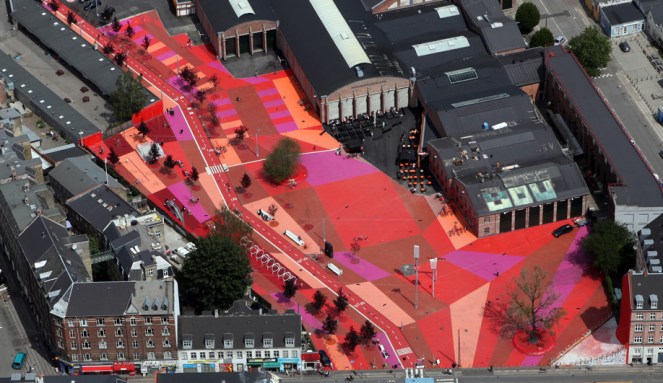
City planners are finally starting to grok that in order to keep residents, they will need to offer the whole package, including playful spaces for everyone, kids and grown-ups alike.

About a decade ago, the so-called creative class of 20somethings fueled the revival of urban centers by settling in downtown areas mixing condos and coffee shops. Now, as millennials and other urbanites have children, their needs are changing. Cities want to hold on to them by becoming more “playable,” for both children and adults.

For decades, cities “relegated kids to the playground and said, ‘We’ve done something for you,’ ” says Darell Hammond, chief executive of Washington, D.C. nonprofit KaBOOM!, which consults with city officials on promoting and preserving play. “The whole city should be a playground, and play should happen everywhere.”

That means not only building more parks and bike paths but also incorporating the ideas of “fun” and “play” throughout a city, whether it is musical swings downtown Montreal, a hopscotch crosswalk in an arts district Baltimore or camp sites on a city lake front Chicago.

more via Cities’ Message to Young Families: Play and Stay – WSJ.

I hope that this attitude shift from city planners and designers makes it more acceptable for grown-ups to go out and play, and I mean actually physically play, not just go to bars and concerts that were traditionally classified as the only acceptable adult “play.” Seattle and Portland, and  are definitely accepting and encouraging of grown-ups playing bike polo in city parks or just going for a run. Creating an environment that welcomes play also helps change the attitude of others

children · culture · education · environment · learning · Nature · school

Students Go Whole Hog with Farm-to-Cafeteria Cooking | Civil Eats

A few schools are adopting a more hands-on way of teaching about food, animal care, and science, which is actually an older technique: farm animals.

Most recently, slow roasting pork tenderloin was part of a homework assignment for a Bend, OR, high school culinary class. And the source of their pork? Mountain View High School, less than a mile away, where FFA formerly known as Future Farmers of America students are raising pigs.

These classes are complementary components of an integrated farm to school program at Bend-LaPine School District, where 29 schools serve more than 16,000 students. Bend-LaPine has students raising animals, butchering animals, and feeding a school meal program. Neatly wrapped packages of pork move from classroom to school kitchen, where they are cooked into succulent carnitas for all 29 school cafeterias.

The program breaks the normal bounds of food in school and has created a whole new arena for students to learn. “It’s a full circle agriculture education experience,” says Katrina Wiest, the manager for the Bend farmers’ market and wellness specialist for the school district.

“Agriculture is a big part of my life,” says Wiest, who was raised on a wheat farm and is married to a farmer. “I feel it’s important that kids know where their food comes from.”

For close to ten years, Wiest has been pioneering the farm to school movement in the high desert of central Oregon: sourcing local food for schools and providing agriculture, health, and nutrition education opportunities in the cafeteria, classroom, and community.

more via Students Go Whole Hog with Farm-to-Cafeteria Cooking | Civil Eats.

I think this is an awesome idea! It’s a great hands-on learning opportunity for kids. A lot of schools have shied away from having animals on or near campus, or having kids even deal with animals, due to safety and health concerns. But how else and where else are kids going to learn about being safe around animals, or safety and caring for the animals themselves, unless they get somewhat structured guidance like this? Most kids don’t have a friendly farmer they can go visit and mess with their livestock on a regular basis.

But more importantly, it is a very hands-on, real-time way of letting kids work on something and seeing the results of their labor, whether it’s a happy pig or a delicious plate of carnitas, while also letting them experience delayed gratification (it takes hard work and a long time to grow a pig). It teaches kids how food is made, which is important when making food decisions. Plus, it can be very therapeutic to pet a pig.

Where I grew up was fairly rural, and yet the 4H/FFA program was still seen as a weird club that involved a lot of horse-showing. I am glad to see it getting integrated more into school programs.

children · culture · education · environment · learning · play

A School That Ditches All the Rules, But Not the Rigor | MindShift

Play IS a form of learning and experimentation, so it’s nice to see a school try to incorporate this very basic, very elemental learning process into the heart of their education system.

How can we make school a joyful experience without sacrificing rigor? What’s the best way to measure true learning? What’s the purpose of school? The founders and teachers at the PlayMaker School (watch the PBS Newshour report by April Brown), an all-game based school in Los Angeles, are asking those big, abstract questions that all teachers grapple with. And they’re trying to find their own answers through their constantly morphing, complex experiment.

Here are their thoughts about these issues, in their own words, from extended answers to the PBS NewsHour report. How can teachers, parents, and administrators these ideologies to existing public schools?

Read the interview with the school’s founder Tedd Wakeman at  A School That Ditches All the Rules, But Not the Rigor | MindShift.

community · culture · emotion · happiness

The World’s Happiest Places, Visualized | Fast Company

Trying to compare “happiness” metrics can be tricky, both because different countries and reports measure “happiness” in different ways, and because a spreadsheet of numbers isn’t all that inspiring (and I work with them, so speaking from personal experience).

I like the fact that they’re using multiple data points to quantify happiness (although it looks more like quality of life, but they definitely overlap).

Data viz wunderkind Moritz Stefaner has been on a happiness kick lately. Earlier this year, he analyzed the data of more than 3,000 images to try to determine the happiness of people New York, Bangkok, Moscow, São Paolo, and Berlin, according to their selfies. And now he’s back, visualizing the happiness of the entire world–using a more objective data source.

Founded in 1961, the Organisation for Economic Co-operation and Development (OECD) is an international policy organization dedicated to stimulating economic progress and world trade. As part of their mission, the OECD has worked to quantify happiness and well-being through their Better Life Initiative, which ranks countries and cities according to metrics such as health, safety, education, jobs, environmental quality, civic engagement, and level of disposable income. Now Stefaner and Dominikus Baur have teamed up with the OECD to visualize this data using a slick, interactive online tool.

Happiness index of France and similar regions

The OECD Regional Well-Being Index tool is easy to use. It asks to access your location, and then visualizes the well-being index of your state or country as a rainbow-hued star, each Pantone-coded arm of which represents one factor of happiness and well-being. You can drill down for more detail, or compare your region’s well-being index to other locations with similar ratings.

Check out how your own neighborhood compares on the OECD Regional Well-Being Index here.

more via Fast Company: The World’s Happiest Places, Visualized

behavior · creativity · culture · happiness · Social

10 Ways to Make Your Life More Playful

As we start summer, remember to spend some time playing! Here are 10 tips how.

“We don’t stop playing because we grow old; we grow old because we stop playing.” ~George Bernard Shaw

I was 25 and traveling through Ireland by myself. I was in Cong, a rural small town outside of Galway. It was quiet. Very quiet. Even though I had met people on my trip, I was starting to feel lonely.

I was thousands of miles from home. I had nobody around who knew me well or cared for me, and in the days before cell phones or internet cafes, I couldn’t just get in touch with my friends or family at the drop of a hat.I went on a walk in a local park, along a wide stream that emptied into a small, pristine pond. The weather was grey and gloomy, the park was damp and romantic-looking, with its bending trees and dark water.

On a whim, I sat down by the edge of the pond and began to do something I hadn’t done in probably 15 years: I started to build a fairy village out of sticks, pebbles, and leaves.As a child I had practically lived in the backyard, building intricate tiny villages, exploring the spaces in between plants and trees, making tree roots into cottages and lumps of mud into hillsides.

It calmed me down and got me away from sometimes troubling thoughts. In Ireland, I found the same thing happened: My loneliness and anxiety vanished, and an hour or so later when I finished, I felt better: lighter, and less worried.

read all about the 10 Ways to Make Your Life More Playful.

anthropology · behavior · brain · children · community · culture · education · environment · happiness · health · learning · play · psychology · Social

Plug for the NGO Right to Play

I tweeted about this short film yesterday, but I really feel like this is worth giving some space on the blog for.

The value of play is important for teaching life skills like conflict resolution and collaboration, health lessons, healing from trauma, building community and just overall survival as a child and human being, the work this organization does seems simple but is hugely important.

This short video highlights some of the incredible impact that play can have on a child, or group of children.

You can also visit the organization’s website at Right to Play.

Play matters!


anthropology · architecture · behavior · community · creativity · culture · environment

The Playful City – Azure Magazine

A great article about how building playful spaces leads to more, and better, play.

Can playgrounds make kids smarter? Yes, say the experts, and landscape architects everywhere are responding. Welcome to outdoor play’s new reality.

All work and no play makes jack a dull boy. Granted, Jack does not lack for innovative toys and gadgets. But what Jack really needs is better playgrounds. These days, reality is exchanged for a simulation of reality, and the sandbox is abandoned in pursuit of the virtual. Cognitive scientists, however, are finding that the unstructured activity children engage in at the playground fosters the social and intellectual abilities they need to succeed in life. Monkey bars and swing sets present opportunities to develop new skills, encourage autonomous thinking and promote flexible problem solving – but they also shape the brain. This is good news. With technology taking over so much of our lives, increased pressure on children to compete academically at a much younger age, and helicopter parenting restricting play for fear of potential danger, many experts – such as David Elkind, psychologist and author of The Hurried Child – are drawing attention to the “reinvention of childhood.” It is time we also reinvent the playground.

more via The Playful City – Azure Magazine.

behavior · brain · children · cognition · creativity · culture · happiness · health · mental health · psychology · Social

20+ Drawing Ideas and Activities | picklebums.com

Staying playful and creative sometimes requires going back to your roots, or at least your crayons. Drawing, scribbling, doodling, and coloring have all been found to help with destressing, thinking out ideas and problems, and keep brains active into old age.

Drawing is also a great learning activity with lots of fine motor skill and development, problem solving, language development and social learning opportunities… (Editor’s note: all of which tie into the above-mentioned benefits, and these skills are all useful for both grownups and kids to practice and refresh on a regular basis).

Drawing is a way for children everyone to process their world, to represent and share their ideas and to explore new skills and information.

Drawing with Geometry Tools
Graph Paper Drawing
Graph Paper Drawing
Collaborative Doodle Drawings

see all 20+ Drawing Ideas and Activities at picklebums.com.

If you think this is just “kid’s stuff” I dare you to try some of these, especially the collaborative drawing exercise. It’ll (potentially) expose some growth areas of yourself and/or others very quickly. 😛

creativity · culture · play

Intimate Photos Reveal the Day-to-Day Lives of Stormtroopers | Raw File | WIRED

Perhaps not very scholarly, but I love this growing trend of making “Day in the Life” photos of toys and other objects. It’s a great, playful exploration of space and creativity.


In the Star Wars movies, the Imperial Stormtroopers’ activities are pretty limited: Marching. Shooting things. Keeping order. More marching. What do they do the rest of the time? Twerk? Wait for the bus and bully battle droids like the rest of us? (OK, most of us don’t bully battle droids.) Photographer Zahir Batin has a few ideas, and they include feeding baby chickens.

Batin’s still-life photos, created with action figures and largely homemade props, provide a glimpse of Stormtroopers after the big battles—stringing crime scene tape, for example, and doing the splits, Jean-Claude Van Damme-style, on their 74-Z speeder bikes. But the Malaysian photographer’s pictures also reveal a grimmer reality. We see troopers carrying wounded soldiers from the battlefield and mourning fallen comrades. We also see dichotomy of life as a Stormtrooper, roughing up battle droids one moment and feeding chicks the next.

The photo series is “just a hobby to fill free time on the weekends,” Batin says, but it’s blossomed into dozens of pictures. The bulk of the time spent creating each image is spent on preparation. Because “my Photoshop skills have a limit,” Batin tries to make each scene as realistic as possible before snapping the frame. The resulting pictures are as gorgeous as they are humorous (or, of course, tragic).

Check out some of the photographer’s best Stormtrooper still-life photos in the gallery above, then check out even more on deviantArt and 500px.


via Intimate Photos Reveal the Day-to-Day Lives of Stormtroopers | Raw File | WIRED.