anthropology · architecture · behavior · community · creativity · design · work

Workstations Designed For Collaboration, Modeled On Friendly Neighborhoods | Co.Design: business + innovation + design

This article brings up an interesting idea of a “forced” playful space. You can certainly encourage creativity and playfulness, but forcing the issue can backfire in a bad way.

“We have recently seen many offices that try to evoke a kind of forced playfulness,” says Sam Hecht, founder of London-based Industrial Facility. “Slides, chill-out zones, ping-pong, or a kind of home-like interior. We were very suspicious of this.”

For his own take on the flexible office system, Hecht and his partner, Kim Colin, adopted a more nuanced approach to getting employees to think fondly of their office–and not view them as places of mandatory drudgery. Locale, for Herman Miller, uses modular pieces that easily adjust in place and height to create what Hecht calls neighborhoods.
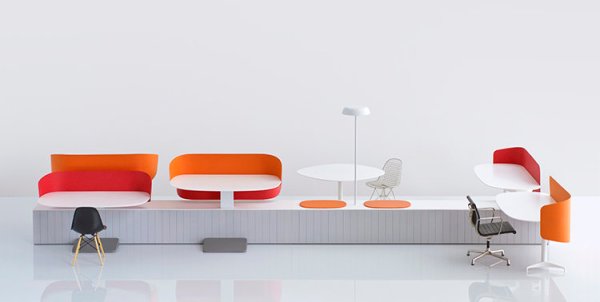
more via 1 | Workstations Designed For Collaboration, Modeled On Friendly Neighborhoods | Co.Design: business + innovation + design.

I definitely agree that everyone has to buy in or the “playful” environment doesn’t truly exist. A space designated for “play” just becomes a dead zone at work if nobody wants to hang out there, or knows they’ll be scolded by fellow workers for disrupting work, or viewed as “lazy.”

I’m curious to hear more of why the Locale design would make people feel more neighborly. Thoughts? Ideas? Leave them in the comments below.

architecture · creativity · design · environment · health · work

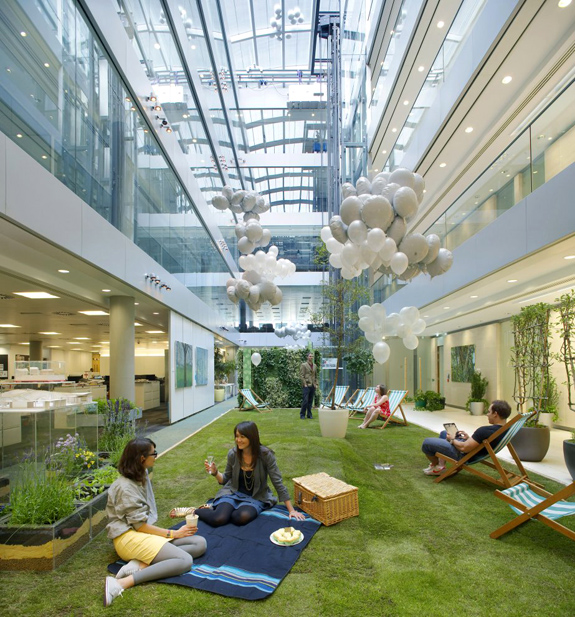
LEED Gold Firm With a Picnic Green | Inc.com

Bringing the great outdoors indoors for mental destressing, and maybe a little fun.

HOK’s London branch features a central patch of grass. But despite all the greenery, perhaps the greenest feature was its construction method and materials.

more via LEED Gold Firm With a Picnic Green | Inc.com.

anthropology · community · creativity · culture

Critical City Upload, Edgeryders create games for urban public spaces

Augusto Pirovano, in Milan, Italy with 2 other friends we made a project called Critical City Upload:

A game of urban transformation that uses a web platform and asks its players to perform creative missions. So far CCU is not very different from Edgeryders, the fact is that the missions are – instead of stories and reflections to write and share with others as it is on Edgeryders – creative actions that are generally performed in the public spaces of cities. The player picks the mission, shuts down the computer, gets out on the street, plays the mission, collects the necessary proof of his experience and then, after returning home, publishes the mission attaching photos and videos. As the player gets points, he levels up until he reaches level 7 and wins the Mechanical Box (a mysterious box that is delivered at his home).

Some examples of missions:

more via We create games for urban public spaces | Edgeryders.

architecture · community · creativity · design · environment · play

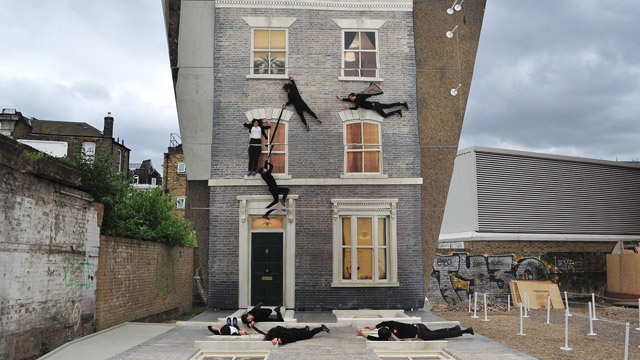
Dalston House: where every visitor becomes Spider-Man – video | Art and design | guardian.co.uk

A Victorian terrace has popped up in east London that lets you swing from its ledges, run up its walls and generally defy gravity. Architecture critic Oliver Wainwright hangs loose at Dalston House, the novelty installation by Argentinian artist Leandro Erlich.

The artist talks about “enjoyable discovery” and playing with spaces that you might not otherwise think of.

I love how it is an interactive piece of art that only exists when people play with it.

more at Dalston House: where every visitor becomes Spider-Man – video | Art and design | guardian.co.uk.

architecture · community · creativity · culture · design

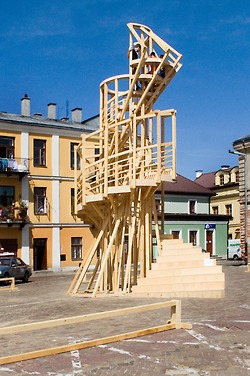
Teatro del Mare celebrates public space, community

A fun way to encourage public participation in space and creativity.

In order to celebrate its 10 years of activity, the artistic centre Lungomare in Bolzano Italy has recruited the ConstructLab/exyzt team composed by Alexander Römer, Gonzague Lacombe, Patrick Hubmann and Mattia Paco Rizzi. The result is the creation of Teatro del Mare, a wooden temporary structure, both a contemporary stage and street furniture, hosting a series of events, meetings and screenings until the end of June.

LIEU d’ÊTRE by the French Compagnie Acte is more than a performance. The project is an urban collective experience involving, both in the creation and the production of the event, professionals as well as inhabitants of a block of flats or of a whole neighbourhood. It uses the tool of dance to explore the pattern of the city.

more via In public space we trust.

anthropology · behavior · creativity · culture · happiness · play · Social · technology · youtube

Lolcats and the Harlem Shake: Play on the Internet


An article from the head of Google’s Agency Strategic Planning team published in Fast Company talks about why we play on the Internet; it’s a really good dive into the need and importance for play in our lives and share that playful experience with others, and how as we move towards a more digital space we are taking that need to share play with us. It is marketing/branding focused, but the message is clear; we all need play and are making space for it, at least in our Internet lives:

We [netizens] uploaded over half a million variations of Harlem Shake to YouTube in the past few months. Google searches for Cat GIFs hit an all-time high last month. And we took 380 billion photos last year–that’s 10% of all the photos taken . . . ever. But let’s be honest–these memes are fun, but they don’t matter, right? They’re pretty much a waste of time.

As the head of Google’s Agency Strategic Planning team, it’s my job to work with brands and creative agencies to help develop their ideas in the digital space. So I had to ask: Why would we be doing so much of all this “visual play” if it really means so little to us?
To get to the bottom of these memes, we assembled a team of original thinkers–anthropologists, digital vanguards, and content creators–to dig a little deeper into this “visual web.” We also spoke to gen-Cers–the people who grew up on the web or behave as though they did–and who thrive on creation, curation, connection, and community.

The research showed us that far from distracting us from more serious things, these viral pictures, videos, and memes reconnect us to an essential part of ourselves.

It may seem that all we’re doing is just capturing every mundane moment. But look closely. These everyday moments are shot, displayed, and juxtaposed in a way that offers us a new perspective. And then all of a sudden these everyday moments, places, and things look . . . fascinating.

As kids, that happens all the time because everything is new. Everything is unlike. And we aren’t constrained by the rules about what “goes together.” Why else was putting the Barbie in the toy car wash more fun than putting the car in the car wash?

Read the whole article here: Memes With Meaning: Why We Create And Share Cat Videos And Why It Matters To People And Brands

behavior · children · creativity · culture · happiness · health · play

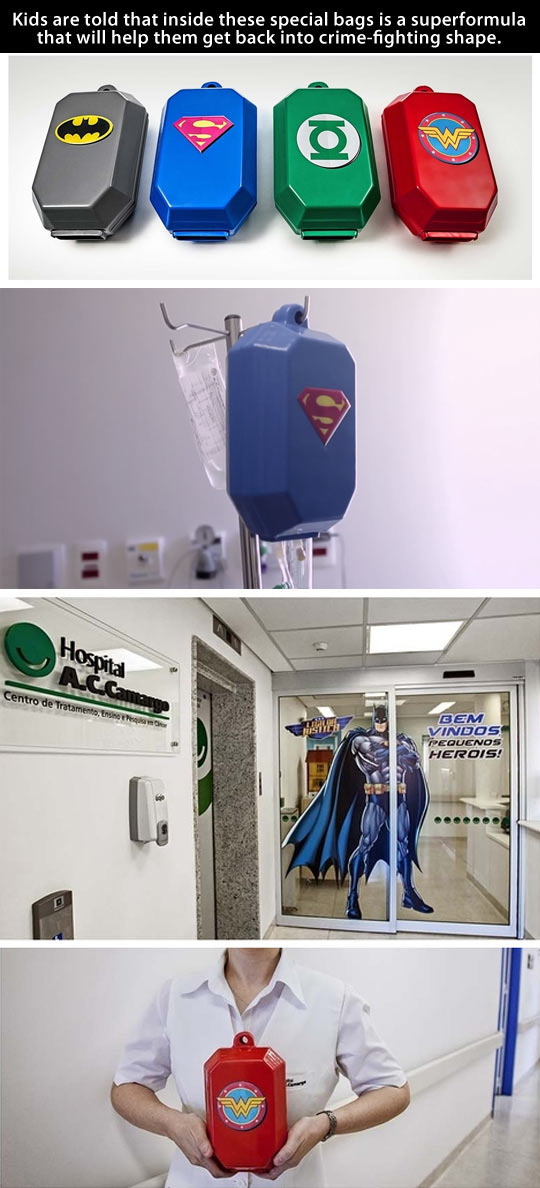
Cool doctors doing what’s right… – The Meta Picture

Hospitals can be scary places, for grown ups and for kids. This is a great way to make hospitals a little less intimidating, and add some silliness to an otherwise boring, and possibly painful, medical procedure.

Originally from Cool doctors doing what’s right… – The Meta Picture.

anthropology · community · creativity · design · happiness · play · youtube

Freak Bikes of Portland

I’ve been watching episodes of American Hipster Presents – a fun video series about different entrepreneurs/artists/etc. around the U.S. (side tangent, how crazy is it that we live in an economy where I can write entrepreneurs/artists/etc. and have that not be weird? Hello Etsy!) – I came across the freak bike builders of Portland. It’s a group of guys and gals around Portland that build their own bikes and then pedal around town in bike gangs, playing games, hanging out with friends, and being overall pretty silly.

To me this is a great showcase of grown-ups making playful spaces and space for play in their lives.

The main interviewee says it best [paraphrasing]: “Kids get to play on bikes, why shouldn’t grown-ups?”

It also makes me kind of want to move to Portland.

anthropology · children · community · creativity · culture · design · environment · music

In New Documentary “Landfill Harmonic” Music Students Scrape Together their Instruments from Trash

The kids show off their instruments

Making music is a pretty powerful thing. Especially if you’re making it out of recycled objects and keeping things out of landfills.

“Landfill Harmonic,” an upcoming documentary scheduled for release in 2014, tells the story of an orchestra whose musicians play instruments made from trash. The film is set in the town of Cateura, Paraguay, which is built on a landfill. Many of the town’s residents collect trash to recycle and sell for money, and many of the town’s children are susceptible to getting involved with gangs or drugs. A music program was set up to help keep the kids out of trouble, but because so many of them were interested, there was soon a shortage of instruments.

more via In New Documentary, ‘Recycled Orchestra’ Makes Instruments from Trash | Earth911.com.

Music, like play, has been shown to have so many cognitive benefits, and emotional as well (plus even the act of music is called “playing”). There is something very deeply rooted in humanity about playing music, it is wonderful that through ingenuity and creativity these kids can channel their energy into the incredible power of making music. Plus the fact that they’re keeping things out of landfills is just a double bonus!

More information: https://www.facebook.com/landfillharmonicmovie?fref=ts

Kickstarter project: http://www.kickstarter.com/projects/405192963/landfill-harmonic-inspiring-dreams-one-note-at-a-t

architecture · children · community · creativity · design · health

Energy drink maker Red Bull proposes skate-able art investment for Myrtle Edwards Park


The Seattle City Government Parks & Recreation site recently hosted a public meeting to gather input on a proposed public art piece in Myrtle Edwards Park that will be used for skateboarding.

Energy drink maker Red Bull has approached Seattle Parks and Recreation about making a community investment that would include commissioning an artist to design and fabricate a unique piece of skate-able art. At the meeting, Seattle Parks presented the history of the proposed project, followed by an opportunity for the public to weigh in on the idea.

Myrtle Edwards Park is located at 3130 Alaskan Way on the shoreline of Elliott Bay, north of the Olympic Sculpture Park.

The Citywide Skatepark Plan, developed in 2006 and 2007 with extensive public process, designated Myrtle Edwards as a recommended site for a skatedot [editor: which is apparently smaller than a skatepark]. Since 2007, Seattle Parks and Recreation has constructed eight new skate parks and skatedots. Two more are in construction and design.

4Culture is administering the Call for Artists associated with this project. The artist will coordinate the design with Seattle Parks and Recreation.

A second follow-up meeting is planned in June.

I love the idea of creating public art that is actually usable, whether it’s by skaters, kids, or even animals. I understand that some art is best appreciated by not messing with it, but especially in a public space sometimes it’s hard to not want to interact with sculptures or murals. I also appreciate Red Bull’s focus on supporting play in all its forms, although private sponsorship of public spaces is always a touchy, tricky gray area.

Is there a public art piece, or artistic skatedot, fountain, whatever, that you really enjoy sitting on, playing on, or just watching others play? Let me know about it in the comments below.