architecture · behavior · community · design · Social

Why Public Art Is Important « The Dirt

ASLA blog The Dirt has been reporting on their annual meeting, and mentioned a talk discussing why public art is important. I couldn’t agree more!

…art occupies a unique position within the art world. In comparison with big-name gallery shows, public art is often “under appreciated” much like landscape architecture. But there’s lots to laud: “It’s free. There are no tickets. People don’t have to dress up. You can view it alone or in groups. It’s open to everyone.”

Community art can also create attachment to one’s community. According to Bach, studies have looked at the economic development benefits of art, but only just recently have there been wider examinations of the effect of art on a community’s sense of place. The Knight Foundation’s Soul of the Community initiative surveyed some 43,000 people in 43 cities and found that “social offerings, openness and welcome-ness,” and, importantly, the “aesthetics of a place – its art, parks, and green spaces,” ranked higher than education, safety, and the local economy as a “driver of attachment.” Indeed, the same story may be playing out locally in Philly: a survey of local residents found that viewing public art was the 2nd most popular activity in the city, ranking above hiking and biking.

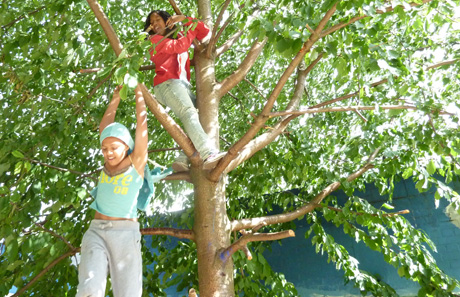
An example of public art; “Tree Futures” by Suze Woolf. Photo from the Heaven and Earth Exhibition in Carkeek Park, Seattle, 2012.

more via Why Public Art Is Important « The Dirt.

It creates community by creating a sense of place, it is available for all to enjoy, and it makes a place more enjoyable in which to hang out. All of these are important for creating enriching environments. Also, by making the art public, people often feel they have ownership of the art, or a right to play with it. This can be good and bad; if they art is designed to be engaged with, more power to the people. However, some people do act upon the art in a destructive way, either accidentally or intentionally, which is play to them but ruins it for the rest of the public.

This brings of the life cycle of art, and it being taken care of or abandoned over time, which was also discussed at the meeting:

Bach also made a point of discussing the “afterlife of public art,” what happens once it’s out there. As an example, she pointed a work by Pepon Osorio, a pavilion at a Latino community center that features historical photos of people from the community. Today, kids from the neighborhood take photos of themselves with photos of their ancestors. Another project called Common Ground in a footprint of a church that burnt down was hosting weddings just a week after it opened. While these works became part of their communities, Bach said the group still has to work hard to ensure that all works remain relevant to their communities and aren’t “orphaned.”

Some art is meant to be abandoned; at Carkeek Park in Seattle there is an annual public art exhibit where often the installed art pieces are left at the end of the summer to decay or be destroyed by the elements.

Art installation at Carkeek Park, Seattle, 2012

Overall though I think interaction with public art is a good thing. Do you or have you ever played in fountains, posed with statues or art pieces, or altered them in some way (like the Fremont people in Seattle)? These are all forms of play inspired by public art, which I think are valuable methods of play and should be encouraged so long as it doesn’t damage the artwork.

Waiting for the Interurban is memorial to the trolley/rail line that once ran between Everett and Tacoma. Standing at the north end of the Fremont Bridge, these five aluminum commuters (and one dog) have waited since 1978 for a ride that never came. Decorating the statues with seasonal apparel, political signs and other props has become a Seattle tradition.

What is your experience with public art? Do you find it a good use of real estate? Do you have a statue or fountain or public art piece that speaks to you, that you think of as “yours”?

Leave your thoughts in the comments below.

architecture · community · creativity · design · environment · play · Social

The Games These Benches Play « The Dirt

Playful design in an urban environment? My favorite!

Clever and talented Danish artist Jeppe Hein has been custom-making his “Modified Social Benches” for museums, arts festivals, and plazas since the mid-2000s. Most recently, he created a unique set of art you can sit on for Beaufort04, the fourth Triennial of Contemporary Art by the Sea this summer in Belgium. Kids, cool kids, and adults all seem to love playing with these.

Hein says his powder-coated aluminium “social benches” borrow their basic form from the standard park bench, but are altered to make the “act of sitting on them a conscious physical endeavor.” As they mutate, the benches become spaces to “inhabit,” rather than just places to park it and relax for a moment.

more via The Games These Benches Play « The Dirt.


The pieces may seem like fun one-offs, but something then happens between the work and the community: “As is the case with much of Hein’s work, the Modified Social Benches on the dyke in De Haan seem to hide behind a disguise of fun and entertainment. But what they actually evoke is a process of interaction and communication that works on different levels.”

Check out more at ASLA’s blog The Dirt.

community · environment · health · Social

Bee boulevard: How to turn an urban corridor into a haven for native pollinators | Grist

English: Amber Flush rose - Bagatelle Rose Gar...
 (Photo credit: Wikipedia)

I couldn’t stay away for long, could I?

I thought this was an interesting article about actively creating space in urban environments to promote biodiversity and making our lives as humans healthier (more bees means more flowers, fruits and veggies), and it just so happens to make the space prettier and more enjoyable visually as well.

Several years ago, Sarah Bergmann, a painter by training, started asking questions about the fate of the world’s pollinators. And while she’s not an environmentalist per se, Bergmann’s art and graphic design work never stray far from the environmental sphere. To her, the complex and shifting relationships between pollinators and plants have always begged further investigation. Bergmann’s response to what she learned is a work-in-progress called the Pollinator Pathway, a mile-long corridor of pollinator-friendly, mostly native plants stretching between two green spaces in the heart of Seattle.

Bergmann chose the pathway’s two endpoints — the Seattle University campus and a lot-sized forest called Nora’s Woods — for their diverse plant life and lack of pesticides. Since building the first test garden in 2008 with the help of a small city grant, she and hundreds of volunteers have installed 16 more gardens in parking strips along the way. “It’s not just a random line of plants; it’s meant to find two existing green spaces within the city and draw a line between them,” she says.

Gardens are built with the cooperation and enthusiasm of homeowners on the corridor, who have also agreed to maintain them. They must be drought-tolerant, pesticide free, and, ideally, contain at least 70 percent native plants — though Bergmann says the project hasn’t quite hit that target yet. And of course, the plants must be appealing to bees and other pollinators. These requirements, combined with city height restrictions for parking-strip vegetation, led to a list of about 50 plants that can be part of the pathway.

Biologists have been promoting migration corridors for mammals and birds for decades, so why not bees? Gardening is also a fun, playful activity for many people, and the idea that they’re helping out something else in return is also satisfying.

Find out more about creating bee corridors via Bee boulevard: How to turn an urban corridor into a haven for native pollinators | Grist.

behavior · community · creativity · education · emotion · environment · mental health · play · psychology · Social

Outdoor Play Poster

From the nonprofit organization Voice of Play and their host organization, the IPEMA (International Play Equipment Manufacturing Assocation):

This poster is appropriate for any player, whether you are 2 or 92.

What other reasons can you think of to play outside? Leave them in the comments below.


community · environment · play · Social

Fear, Traffic Largest Inhibitors of Outdoor Play in UK

This makes me sad to see that fear is stopping a lot of kids from playing outdoors in the U.K. From the national organization Play England:

Traffic and a fear of strangers are preventing children from playing outdoors, new research released for Playday 2012 has found. Almost half (49%) of parents report that fear of strangers stops their children from playing out, while 46% say traffic and almost a third (31%) highlight fear of accident and injury as barriers to outdoor play.

The findings of the survey have been released today as an estimated half-a-million children and families nationwide celebrate Playday- the national day for play in the UK, held this year on Wednesday 1st August. Around 500 community events are taking place across the UK to celebrate 25 years of the campaign, which raises awareness about children’s right to play and the importance of play for children’s health, wellbeing and happiness.

The Playday 2012 theme isGet out and play! The campaign, which is co-ordinated by Play England (part of the National Children’s Bureau), Play Wales, Play Scotland and PlayBoard Northern Ireland has gone from strength-to-strength since its conception in London in 1987, when the first events were held to raise awareness about the effects of cuts to local play services.

Cath Prisk, Director of Play England, said: “Simply playing outside should be a normal, everyday event for all children. If we want to foster the next generation of Olympians and sports stars, then we need children with confidence, who love being active and are confident in tackling challenges. If parents are too afraid to let their children play out – because of fear of strangers, traffic or their children having accidents – then we as a society need to address this fear. Whether that’s a community living in a cul-de-sac agreeing children will be playing out every day, a street applying to the council to close the road for play regularly, or residents volunteering to help local play projects reach more children, we can all do our bit to make sure every day is a Playday.”

Mike Greenaway, Director of Play Wales, said: ‘… As a society we have developed an irrational fear that our children are unsafe outside. Compound this with the domination of cars and their drivers, and the world outside the front door doesn’t look particularly attractive for anyone who wants to play there … and children regularly tell us that outside is where they want to play. Children value time, quality places and freedom to play in their own way; we need to support them, recognise that for their wellbeing, they need to play outside and that it’s safer than we think.’

Read the full release.

I am glad, however, that the U.K. seems to be taking play more seriously than the U.S.; just the fact that they have a Play Day (August 1), is pretty cool. And the Quote from Mike Greenaway is as accurate for the U.S. as it is for the U.K.: serious crime has actually been decreasing since the early 1990s.

Thankfully where I grew up was pretty rural, so as long as we were within whistle-shot (my mom would blow a whistle rather than yell), we could roam as far and wide as we wanted. What rules did your parents have about playing outside? What rules do you have for kids you are in charge of (kids, nieces and nephews, neighbor kids, grandkids, etc.)? Leave a note in the comment below.

behavior · community · creativity · happiness · play · Social

Why The Nose working to get a laugh out of the world

A clown nose

Happy Friday! Have you been waiting all week for some fun? Why the wait? Why not get a quick giggle in now? All it takes is a little red piece of foam, and the ability to not take yourself too seriously. I saw this shared on Facebook and had to spread the good cheer.

Why The Nose is a movement in clown accessories laughter and clowning around:

Whythenose.com is dedicated to the act of wearing a clown nose everyday, in order to make people smile.

It’s here for YOU…to encourage you with an act of Heroic Uninhibited Innocence :)

It’s really that simple. In a world filled with distractions and distrust, you’d be amazed at how many people (of all ages) have lost a sense of childlike wonder. Or maybe you wouldn’t…

Wearing a clown nose is fun, it’s easy, and it’s free (if you already have the nose).

We’re not trying to sell anything, we’re only showing you how joyful it is to change someone’s day.
Trust us, the nose breaks through barriers and opens doors every time you wear it…give it a try!

This phenomenon of adults wearing silly noses has been seen around both the 2011 and 2012 Burning Man Festival and other playful grown-up events courtesy of Tex Allen, who according to the website is a “responsible burner” but also wants to encourage people to enjoy themselves and enjoy their lives. I honestly hope this becomes a movement beyond just the Burning Man circuit, although I don’t think you’d need to wear the nose all day to get the effect he’s looking; maybe just for a quick trip to the grocery store. Visit the website for videos of some high quality goofing off. Or visit them on their Facebook page to see who else is getting their silly on.

Check out the video from Burning Man 2011 for more examples and maybe some inspiration.

community · creativity · design · environment · play · Social

Buses converted to portable public art spaces

After all the great stories about zoos adapting their spaces for their animals I’ve stumbled across recently, I was starting to feel a little sad for us humans. Thankfully, here’s another story I found from Inhabitat about re-purposing spaces for human play:

On the Plaza Luis Cabrera in Mexico City, two 1960’s Mitsubishi trolleybuses have been permanently parked for public use as part of a larger arts initiative in the Roma, Condesa and Hipodromo districts of Mexico City. The gutted and repurposed trolleys currently serve the city as vibrant spaces that engage residents and visitors in new art and cultural activities.

The vintage rides, which were donated to Mexico City by the government of Japan in the year 2000, were originally used to host the Galeria Trolebus initiative — a space used to showcase non-traditional art projects. Today the repurposed busses are public spaces for everyone to enjoy. On weekends and afternoons, visitors may stumble upon sculpture arts, free theater, music workshops, as well as concerts. The cultural activities on the trolleybuses even help to activate adjacent public parks, encouraging locals to take advantage of the ample and free space right before their eyes.

In order to keeps things dynamic, each month the buses on Plaza Luis Cabrera are re-painted in mural styles, with bright colors and bold prints by artists, community members and advertisers who volunteer their talents.

In brilliant fashion, the city has come up with a community-sustaining way to keep an outdated trolleybus model in style and out of the junkyard!

What a great reuse of an item, that is dynamic and allows the public to truly get creative together.
anthropology · behavior · community · design · environment · happiness · mental health · Nature · psychology

Animals get their own trail systems at Philadelphia Zoo

Lonely Monkey Ape at Zoo
Soon this guy will be able to take his own self-guided tours of Philadelphia zoo. (Photo credit: epSos.de)

I am so excited about this I’m practically jumping out my seat to tell people. I first read about it in USA Today; animals are getting to wander outside of their exhibits, share spaces with other animals, and over all just chill around the zoo. Yup, that’s right:

The Philadelphia Zoo on Thursday opens the first leg of an ambitious enclosed trail system designed to allow large animals such as great apes, bears and big cats to roam throughout the zoo. It will give them access to one another’s habitats in a kind of time-share arrangement and offer visitors a closer look at wild animals behaving like wild animals.

Other U.S. zoos have created paths between exhibits, mixed habitats, elevated paths or rope swings for apes.

“This is an emerging trend” among zoos accredited by the Association of Zoos & Aquariums, says the group’s senior vice president for external affairs, Steve Feldman. “Great animal care means providing for animals’ physical and psychological welfare. These pathways and rotations really allow them that kind of stimulation.”

The Philadelphia Zoo’s program is the first to encompass the entire zoo. “This campus-wide effort to build this trail system is unique,” Feldman says. “It’s innovative and is really taking that trend to the next level.”

Because it’s the first effort of its kind, “we don’t have a road map to see how others have done it,” says Vik Dewan, the Philadelphia Zoo’s chief executive officer. The system “puts animal well-being first and foremost,” he says, and gives visitors “an experience here, that when combined with other experiences, paints the bigger picture of how they could be more effective stewards of the world.”

The critters will have to “timeshare” so the orangutans won’t be hanging out with the brown bears. In fact the bears might not get a chance to use the pathways until winter when it’s too cold for the primates. But that said, it’s sure to be a boon for the animals, as well as for the people. The zookeepers already report seeing a positive result from a similar vine system in their primate exhibit.

The article mentions other zoos starting to move in this direction. But which ones, and what exactly are they up to? I’m curious to learn more. Any hints? Leave them in the comments below.

animals given access to the new trail are expected to be more active and
to benefit from the stimulation of being able to see visitors and other
animals from a new perspective.

anthropology · behavior · brain · children · community · education · environment · family · learning · mental health · psychology

Let the children play outside, darn it!

English: Children in Khorixas, Namibia Deutsch...
Why aren’t American kids allowed to play outside anymore; Children in Khorixas, Namibia (Photo credit: Wikipedia)


While summer may just be getting into full swing in my neck of the woods, it’s almost over for most everyone else (*sob!*). It seems everyone is trying to take advantage of a few last weekends of summer before school starts back up. But for some kids, that is a lot harder than it sounds. Free Range Kids recently posted about separate instances of a mom and a dad getting in trouble for letting their kids play outside unattended.


The mom’s story:


Today the police visited my home after one of my neighbors called in about my children being outside alone…in our yard with a home on two sides and six foot fence on the other two sides. The officer said, “Don’t have me called back out.” So now, do I have to go outside with my children every time they go out? I have a chronic illness and sitting outside all day sucks for me. They love being outside. They come in for bathroom breaks, they come in to tattle, they come in to say “I Love You”… they are in and out every 5-10 minutes. I check on them anytime I pass the door, and I lay or sit next to an open window. If I call for them, they come to the door/window and answer as a “check in.” They will literally stay outside from wake up to 9 pm, when I force them to come in, with breaks for the above and for food. They were perfectly safe. I don’t know what to do.


The dad’s story:


Dear Lenore: A neighbor of mine called the Texas CPS (Child Protective Services) and the Police on my wife and I because we allow our children, ages 6 and 8, to play in the courtyard directly in front of our apartment. CPS has been investigating my family since April 4th 2012, it is now August 12 2012, and all they have come up with is the one report to Police about my 6-year-old being outside in front of his home. Now we are dealing with the courts in a “Negligent Supervision” case, which makes absolutely no sense because my child wasn’t hurt or asking anyone for help. I was outside with my son when the Police arrived, but the CPS caseworker insists that I take drug tests and parenting classes. People are not neighbors anymore, they are just @$$holes. – A Texas Dad


Unfortunately the Free Range Kids blog has waaaay too many examples of this kind of reaction from authorities.


I find this really concerning, since we’re basically telling children they can’t be responsible for themselves when parents are trying to teach their children independence and responsibility, we’re not allowing them unstructured play time which is crucial for learning and brain development, that it is a way more dangerous world out there than it really is, AND it discourages them from exploring and getting exposure to nature and natural sunlight, both things that are crucial for growing bodies.


Why are children no longer allowed to play in their own front yards? I’m sorry if this comes off as a rant, but I feel not letting children play outside and learn on their own is a serious problem if we are simultaneously so concerned about “winning” the education race against other nations.

Aside from yelling at CPS and the police, what can we do as concerned citizens, either with children or without, to encourage and enable children to play outside and allow parents to let their children roam a little bit freer and get the unstructured, unsupervised play time they need in order to develop normally? Ideas welcome in the comments below.


architecture · community · environment · health · mental health · Social

Community gardens improve health, enrichment

Garden/Allotment
Garden/Allotment (Photo credit: tricky (rick harrison))

I’ve been pulling from The Dirt, the blog for the American Society of Landscape Architects, a lot lately, but there’s been a lot of great stuff coming off of their blog lately, including this conversation about the increase of urban agriculture, usually in the form of community gardens:

At the Greater & Greener: Reimagining Parks for 21st Century Cities conference in New York City, Laura Lawson, ASLA, Professor and Chair of the Department of Landscape Architecture at Rutgers University, described how urban agriculture has experienced explosive growth in recent years. According to a survey produced by the American Community Gardening Associationand Rutgers University, community gardens are now found in all 50 states. Some 445 organizations responded to the survey, listing a total of 9,030 gardens. Of these organizations, 90 percent have seen increased demand over the past five years. Also, some 39 percent of the gardens listed were built just in the past five years. These organizations have a variety of goals, including food production and access, social engagement, nutrition, education, and neighborhood revitalization.

Sarita Daftary then discussed her work as Project Director of East New York Farms. East New York is the easternmost neighborhood of Brooklyn. A community of 180,000 residents, East New York is underserved by fresh food markets. The East New York Farms program (see image above) seeks to engage the community through its 30 backyard gardens and 24 community gardens, employing 33 youth interns, 80 gardeners, and 100+ volunteers.

The program addresses neighborhood food access through its farmers markets, growing and selling a diversity of unusual foods that reflect the diversity of the neighborhood.

Read more at City Bountiful: The Rise of Urban Agriculture

Community gardens put power back in the hands of people to improve their environment AND their nutrition. Feeling like you have control of your self and your situation is extremely important to humans, both at home and in the workplace, so even if it’s not going to solve world hunger, or even hunger in the U.S., it will help out a lot of people live happier, healthier, more enriching lives.