behavior · children · creativity · education · health · learning · psychology

The Sometimes Overwhelming Power of Play

This is one of the best descriptions of the power of pretend play, especially dissecting how pretend play is hard work, and can be overwhelming, especially to someone who doesn’t have practice, which is why lots of play is important for practicing real-world feelings and situations like power, restraint, and questioning assumed priors.
Power is intoxicating.

It is also dangerous.

And it is especially dangerous when applied to four-year-olds.

Four-year-olds lack the experience to wield power responsibly. They have no idea what to do with it or how to control it.

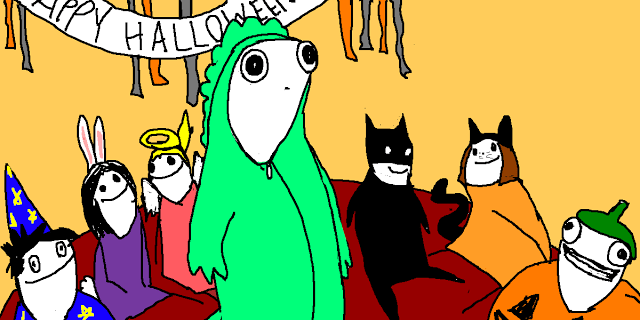
The dinosaur costume was the greatest thing that had ever happened to me.

…All I knew was that being a dinosaur felt very different from being a person, and I was doing things that I had never even dreamed of doing before. …Of course, I had always had the ability to do these things — even as a person — but I didn’t know that. I’d just assumed that I was unable.  As a dinosaur, I didn’t have any of those assumptions.  It felt like I could do whatever I wanted without fear of repercussions.

read the whole comic via Hyperbole and a Half: Menace.

  • Menace (hyperboleandahalf.blogspot.com)
behavior · children · creativity · family · play

Goodbye screen time, hello awesome kid | Offbeat Families

A great example of how letting your kid have free play, and encouraging it over screen time, can have wiiiiide reaching positive consequences.

Four months ago, I told my husband that we needed to cut out all screen time during the week. While he understood the merits of the proposal, he balked at the logistics, telling me that there was no way that he could handle morning routine alone without television (to accommodate preschool hours we stagger our work schedules, with one parent leaving an hour or two before the other). I disagreed, and, being the bull-headed lady that I am, waited him out until he agreed to a screen-free weekday existence on a trial basis.

To prepare for the transition, I devised a series of “Mystery Boxes” for each day of the week. These boxes were stacked on the table each morning, and Uli got to choose one for each morning. Inside, I placed a project or special toy that would keep him occupied while Dad showered and fixed breakfast. One morning it was a Spider-Man puzzle, the next colored pencils and pictures I’d drawn for him to color. All of the toys or projects were sourced from forgotten objects in his toy box or from our craft and art supplies. His favorite Mystery Box item, though, was an old digital camera that he used to snap the most unflattering photos that have ever existed of myself and his father.

We only used the Mystery Boxes for about two weeks, and after that Uli was able to play in a more self-directed and creative manner than he ever was able to when he had weekday screen time. We were actually shocked by how quickly he adjusted to the no-tv-during-the-week proclamation. His teachers at school also noticed a difference, telling us that Uli was more engaged than he had been previously — a side benefit we hadn’t expected.

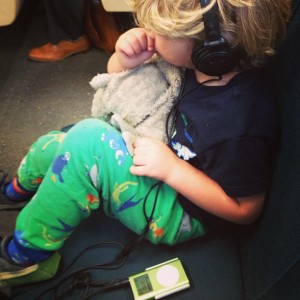
And in August, Uli and I took our first long plane trip without the iPad — including one fourteen-hour travel day. His dad had loaded a nine-year-old iPod with Uli’s favorite songs, which amused him for most of the plane trip, and in the airport, he did relay races in the terminal. It was a really successful experiment, and we have no plans to use the iPad again for travel.

read more about Uli’s transition via Goodbye screen time, hello awesome kid | Offbeat Families.

What have you done to encourage free play for your kids or yourself? Share in the comments below.

behavior · children · environment · happiness · Nature

Make-A-Wish, Woodland Park Zoo grant a child’s wish to play with animals.

When 2 1/2-year-old Rylee, a Make-A-Wish Alaska and Washington kid, said she loved animals, we wanted to give her an unforgettable day at Woodland Park Zoo. Two weeks ago, Rylee arrived in a stretch limo, fed elephants Chai and Watoto, pet and fed the goats, pigs and bunnies, enjoyed a picnic and rode the carousel—and had a wonderful time sharing it all with her family. We’re so sorry to learn that Rylee has since passed. But we know that while we gave Rylee and her family the gift of nature, they gave us the gift of sharing one of Rylee’s last days with her. Go outside and play today—nature and time are gifts we should all treasure together. (Photo: Jessica Johnny Photography)

Photo: When 2 1/2-year-old Rylee, a Make-A-Wish Alaska and Washington kid, said she loved animals, we wanted to give her an unforgettable day at Woodland Park Zoo. Two weeks ago, Rylee arrived in a stretch limo, fed elephants Chai and Watoto, pet and fed the goats, pigs and bunnies, enjoyed a picnic and rode the carousel—and had a wonderful time sharing it all with her family. We’re so sorry to learn that Rylee has since passed. But we know that while we gave Rylee and her family the gift of nature, they gave us the gift of sharing one of Rylee’s last days with her. Go outside and play today—nature and time are gifts we should all treasure together. (Photo: Jessica Johnny Photography)

Biophilia is amazingly strong for all kids, and it’s simultaneously wonderful and heartbreaking that this was a little girl’s last wish.

behavior · children · creativity · emotion · health · play · psychology

Tiny superheroes combat big challenges with capes made by Seattle mom | Local News | The Seattle Times

Robyn Rosenberger makes capes for only the fiercest of fighters.

Have you ever had days where you felt you had super powers, or felt you needed them? One woman in Seattle is making that a reality for over 1,700 kids with illnesses and disabilities in 50 states and 14 countries, with a new workshop opening to help out more kids:


Gabby has epilepsy and is completely dependent: She cannot talk, walk or eat on her own. But she is a tiny superhero — her superpowers include perseverance, courage and strength — and she has the cape to prove it. A purple number, with a blue letter “G” hand-sewn on by Robyn Rosenberger.

Rosenberger is the powerhouse behind TinySuperheroes, which makes capes as a form of empowerment. “Our mission is to empower these kids to feel as extraordinary as we see they are,” Rosenberger explained.


via Tiny superheroes combat big challenges with capes made by Seattle mom | Local News | The Seattle Times.


On the surface this may seem a little fluffy, but it exemplifies the power of play, particularly imaginary play and pretending.  First, it gives the kids a chance to take a break from their illness and maybe laugh a little, which is good for everyone.  Second, the crazy thing is researchers are finding that by pretending to be big, strong, dominant, and super-hero-esque, it can train your body to actually be more strong, dominant, and super-hero-esque. Even healthy kids can feel pretty powerless, so by imagining what it feels like to be strong and healthy it can help their minds and bodies map out what that might look and feel like and maybe even help along the road the recovery.


So by giving these kids superhero capes, these volunteers are in fact giving these kids some pretty strong medicine.


Now I want a cape, or at least a magic wand.

If you are interested in helping out, visit the Tiny Superheroes site.


behavior · children · disease · environment · happiness · health

Why adult hospitals should be more like children’s hospitals – FierceHealthcare

My hospital has a goat 120/365
One hospital has a goat on their property that patients can see. One way to keep things engaging and fun and not feel like “a hospital.” (Photo credit: Jen R)

It’s not as silly as it sounds; in fact it’s genius!

Hospitals could improve patients’ quality of life, satisfaction and even health outcomes if they simply model adult hospitals after the ones designed for children, according to an opinion piece written by a fourth-year medical student in this week’s Journal of the American Medical Association.

Mark A. Attiah, who attends Perelman School of Medicine at the University of Pennsylvania in Philadelphia, writes in the piece, “Treat Me Like a Child,” that adult hospitals should take a page from pediatric facilities by creating surroundings that distract and reduce stress and making clinical practices more patient- and family-oriented rather than more convenient for caretakers.

Attiah was inspired to write the opinion piece after encounters with two pediatric patients during a rotation and another who transitioned into an adult hospital, according to an announcement about the editorial. The children’s hospital was bright, had longer visiting hours and allowed families to stay at the child’s bedside throughout the night. In addition, pediatric patients enjoyed the distractions of group activities, arts and crafts, and concerts. “If I ever get sick, I’d want to be taken here,” he writes.

more via Why adult hospitals should be more like children’s hospitals – FierceHealthcare.

Kid’s hospitals keep stuff light, upbeat, and optimistic. which is exactly what we need to get healthier, and want to go back to a particular hospital for our next ailment, since most hospitals care about that sort of thing.

brain · children · creativity · education · learning · play · school

Games Without Frontiers: Games, simulations, and the new school year.

Tic tac toe. Español: Ta te ti Polski: Kółko i...
Tic tac toe. (Photo credit: Wikipedia)

For teachers, it’s time to start thinking about Back-to-School planning. Thankfully this teacher’s got an awesome plan to teach world politics:

Ask any student the following question; would you prefer to start the year with a lecture or playing a game? I’d wager the that nearly all learners would choose to spend their time with the game. As a younger student, I recall only being able to play in class once all of the curriculum was “done”, usually at the end of the school year. Of course, we know that learners of all stripes acquire, apply, synthesize, and communicate knowledge through participation in games and simulations. As a result, there’s a strong case to be made to embed complex critical thinking simulations and games right from the outset of the school year.

I’m currently putting the final touches on all of my lesson plans for the first term of both years of IB Global Politics. Here’s a partial list of the games and simulations the students and I will be playing in the first thirteen weeks:

Against All Odds; Fish Forever; Half the Sky; Malaria in Wanzuzu; Model United Nations; Pandemic; Prisoner’s Dilemma; Rock-Paper-Scissors-Lizard-Spock; Rushing River Cleanup; Survival; Tic-Tac-Toe; The Walking Dead

To say that I’m completely nerded out by all of this is an understatement; I can’t (hardly) wait for school to start on the 26th!

via Games Without Frontiers: Games, simulations, and the new school year.

I’m looking forward to seeing how the year unfolds for this class! If the teacher is excited, that’s definitely a good sign.

children · disease · environment · health · play

A Medi-Teddy: Wrapping Medical Sensors In A Plushie For Kids

Teddy the Guardian Medical Monitoring in a Teddy BearHospitals and medical device makers are coming to the conclusion that making medical spaces and medical practices more user-friendly and less scary leads to speedier recoveries, shorter hospital stays, and overall just good medicine.

One way to do that is to make the devices less scary, a la a Medi-Teddy. 🙂

The product is called Teddy the Guardian, a plushie installed with sensors that measure heart rate, blood pressure, oxygen levels, and temperature, and then relay that data via Bluetooth to a parent’s phone. The sensors are scattered around the bear’s body; pressing a finger to the bear’s paw, for instance, takes heart rate and oxygen levels.

The idea behind disguising medical tech as a lovable toy is to provide parents and pediatricians more accurate, consistent data points. When a child is stressed out about going to the doctor, his or her vital signs will be skewed. Taking data points when the child is in a neutral emotional state can give doctors a wealth of good information to compare against when something is wrong.

Of course, the bear is just as much a tool for keeping parents attuned to their child’s general well-being as it is a medical device. IDerma co-founder Josipa Majić said that for busy parents who don’t have as much time to connect with their kids, the data can show when their child’s day has been particularly stressful or problematic.

Later versions of Teddy will be equipped with sensors specific to different medical conditions, Majić said. Blood sugar level measurements for diabetic children, for instance.

via By Wrapping Sensors In A Plushie, “Teddy The Guardian” Aims To Sell Medical Tech For Kids | TechCrunch.

This is such a great idea to keep kids calm and cooperative during boring and possibly uncomfortable medical procedures. Heck, I know a lot of adults that would probably like to use this.

I’ve previously written about making MRI machines less scary for kids by making them space or aquatic themed, and how a natural view out of a hospital window is correlated with speedier recoveries, but what other things have you seen hospitals do to make it more patient-friendly? Let me know in the comments below.

autism · behavior · brain · children · learning · mental health · Nature · play · school

Outdoor Play Helps Improve Autistic Symptoms

Reposting this from a fantastic blog Free Range Kids, run by Lenore Skenazy, a huge advocate for letting children be children and just playing, especially outdoors:

Readers — In our desperation to create “smarter” kids, we have practically pinned them to their desks. Now educators are realizing this may be just the opposite of what is best for kids — including those with special needs, as Andrea Gordon writes in Toronto’s TheStar.com (a paper run by my favorite editor-in-chief from back when he and I were at the NY Daily News, Michael Cooke). – L.

It was a crisp March day outside Blaydon Public School when teachers discovered that 4-year-old Alex Wong could spell his name.There were no pencils or paper in sight. Everyone was bundled in winter jackets. Alex, who has autism, was in the outdoor classroom where his special-needs class played and explored for at least an hour every day, alongside 25 kids from the mainstream kindergarten class.

Teacher Sue Cooper noticed Alex march over to a pile of wood, put three sticks in a small wheelbarrow and push it to a spot on the pavement. One by one, he placed the sticks on the ground, forming the letter A. He made three more trips and came back with sticks to make three more letters, which he placed in a row: L, E and X.

Cooper’s jaw dropped. The teachers ran for a camera.

Alex is non-verbal and for a long time, his only interactions had been to throw things or hit. But in the fresh air, day after day, something started to change. Over several months Alex had watched the other children making structures. And that March morning, he was ready to take his turn.

The teachers say his is one example of how daily outdoor time is changing the way their young students — including those autism and other special needs — learn and behave.

Full post.

Obviously more research needs to be done, but there has been strong correlations drawn between outdoor time and decreasing of ADD and dementia symptoms, so it makes sense that putting humans in our natural surroundings would also help other mental disabilities and ailments.

There are a growing number of outdoor preschools, and I’d argue that there should be more outdoor elementary and even middle schools.

behavior · children · creativity · culture · happiness · health · play

Cool doctors doing what’s right… – The Meta Picture

Hospitals can be scary places, for grown ups and for kids. This is a great way to make hospitals a little less intimidating, and add some silliness to an otherwise boring, and possibly painful, medical procedure.

Originally from Cool doctors doing what’s right… – The Meta Picture.

anthropology · children · community · creativity · culture · design · environment · music

In New Documentary “Landfill Harmonic” Music Students Scrape Together their Instruments from Trash

The kids show off their instruments

Making music is a pretty powerful thing. Especially if you’re making it out of recycled objects and keeping things out of landfills.

“Landfill Harmonic,” an upcoming documentary scheduled for release in 2014, tells the story of an orchestra whose musicians play instruments made from trash. The film is set in the town of Cateura, Paraguay, which is built on a landfill. Many of the town’s residents collect trash to recycle and sell for money, and many of the town’s children are susceptible to getting involved with gangs or drugs. A music program was set up to help keep the kids out of trouble, but because so many of them were interested, there was soon a shortage of instruments.

more via In New Documentary, ‘Recycled Orchestra’ Makes Instruments from Trash | Earth911.com.

Music, like play, has been shown to have so many cognitive benefits, and emotional as well (plus even the act of music is called “playing”). There is something very deeply rooted in humanity about playing music, it is wonderful that through ingenuity and creativity these kids can channel their energy into the incredible power of making music. Plus the fact that they’re keeping things out of landfills is just a double bonus!

More information: https://www.facebook.com/landfillharmonicmovie?fref=ts

Kickstarter project: http://www.kickstarter.com/projects/405192963/landfill-harmonic-inspiring-dreams-one-note-at-a-t