behavior · environment · health · mental health · play · work

Creating playful and holistic spaces for healthier employees

The Clinton Foundation recently teamed up with my employer as part of the Clinton Health Matters Initiative (CHMI) to create more healthy, and healthier, employees in a corporate environment. There were five winners chosen, and these two were my personal favorites:

  • Make Work Active
  • Concept: Gamify holistic health and wellness. Design a points based rewards program to incentivize employees for adopting a healthy lifestyle at work, with programs tailored to industry specific wellness issues.
  • Workspace Design
  • Concept: Design workplaces that require regular movement physical activity. Create “motion enhancing workplace” certification. Create certification of “Motion Enhancing Workspaces” if sufficient requirements are met (Similar to Leed Certified buildings).


While some of the other ideas were also great – have fresh food on hand, make a team goal to improve health – I love these ideas in particular because they engage with employees on an individual level, and force the employee to engage with wellness, i.e. via a game and/or their environment.

I know gamification is a super “buzz” term right now, almost to the point of being passe, but I have found it to be a surprisingly powerful tool. A few years ago I organized a walking challenge at work, and bought cheap pedometers for everyone who wanted to participate. The winner ended up being the facilities manager, which surprised everyone but totally made sense since he was on his feet all day, and was a great example of how a lot of little walks add up.

Where have you seen either of these types of initiatives in action, whether at work, school, or in your neighborhood? Do you know of any group working on creating certifications for “healthy workspaces”? Share them in the comments below.
 

behavior · brain · children · creativity · mental health · play

Letting imagination win – The Washington Post

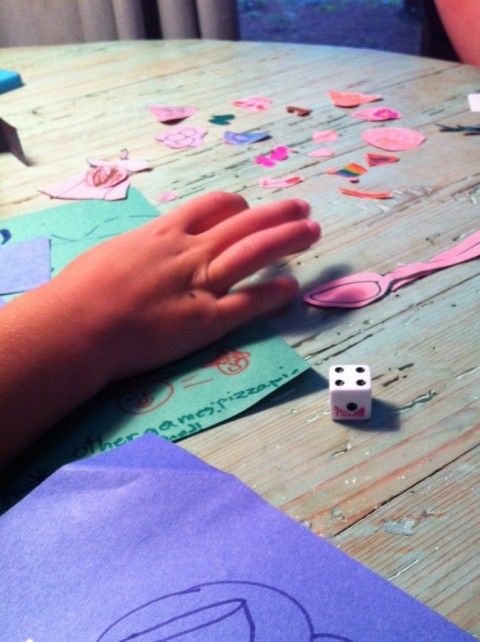
I am definitely competitive by nature, as well as a game-rule follower, but I also appreciate and value the ability to think beyond the rules and explore “what if?” That is essence is the entire definition of play, questioning, what else can this be used for. It helps brains grow and is also the spark behind science, art, math, and all the other great discoveries. It’s nice to see that other people also understand and appreciate that need to explore and ask “what else does this do?”.

At 8 and 6 years old, my daughter and oldest son prefer to pick out the pawns from board games and use these figures for imaginary role-play rather than play the games themselves. This drives my mother crazy, and not just because the kids also use her antique water bird decoys as super villains.

“Aren’t they a little old for this?” my mother asks, exasperated and reaching under the couch to capture roving tokens from Clue and Monopoly, setting the games back in their proper boxes “for the umpteenth time today!”

The truth is that my children are not too old for it at all. Nor are they too old for those evening song and dance numbers in which anyone over the age of 21 is required to sit in a row, sweaty thigh to sweaty thigh, while the children put on a variety show after little to no rehearsal.

read the entire article at Letting imagination win – The Washington Post.

behavior · brain · culture · health · play · Social

Play Doesn’t End With Childhood: Why Adults Need Recess Too | NPR

I’ve already shared this article via Twitter, but it is so important that I just had to re-share via my blog. If there was one mantra I would want to be known for it’s that adults need play. Humans need downtime. Humans need breathing room. Humans need play at any age!

A father and daughter try out a public park piano in Seattle, WA
A father and daughter try out a public park piano together in Seattle, WA

Childhood play is essential for brain development. As , time on the playground may be more important than time in the classroom.But playtime doesn’t end when we grow up. Adults need recess too.

The question is, why? To answer this question, Dr. Stuart Brown says we need to clearly define what play is. He’s head of a nonprofit called the National Institute for Play.

“Play is something done for its own sake,” he explains. “It’s voluntary, it’s pleasurable, it offers a sense of engagement, it takes you out of time. And the act itself is more important than the outcome.”

So, let’s take gambling, for instance. A poker player who’s enjoying a competitive card game? That’s play, says Brown. A gambling addict whose only goal is to hit the jackpot? Not play.

Brown says that children have a lot to learn from what he calls this “state of being,” including empathy, how to communicate with others, and how to roll with the punches.

read the whole article, including more insight from Stuart Brown, a long-time play research and advocate, via Play Doesn’t End With Childhood: Why Adults Need Recess Too : NPR Ed : NPR.

I have met and chatted briefly with Dr. Brown and read his work, and he has done some pretty interesting work on play over the years, using both primary and secondary research (I even cited him in my thesis).

I could easily go on a rant here as to why adult play is so important but so undervalued, but for now just read the article and leave any comments either here or on the actual article’s page.

architecture · behavior · community · creativity · culture · environment · family · happiness · health · play · Social

Cities’ Message to Young Families: Play and Stay – WSJ

City planners are finally starting to grok that in order to keep residents, they will need to offer the whole package, including playful spaces for everyone, kids and grown-ups alike.

About a decade ago, the so-called creative class of 20somethings fueled the revival of urban centers by settling in downtown areas mixing condos and coffee shops. Now, as millennials and other urbanites have children, their needs are changing. Cities want to hold on to them by becoming more “playable,” for both children and adults.

For decades, cities “relegated kids to the playground and said, ‘We’ve done something for you,’ ” says Darell Hammond, chief executive of Washington, D.C. nonprofit KaBOOM!, which consults with city officials on promoting and preserving play. “The whole city should be a playground, and play should happen everywhere.”

That means not only building more parks and bike paths but also incorporating the ideas of “fun” and “play” throughout a city, whether it is musical swings downtown Montreal, a hopscotch crosswalk in an arts district Baltimore or camp sites on a city lake front Chicago.

more via Cities’ Message to Young Families: Play and Stay – WSJ.

I hope that this attitude shift from city planners and designers makes it more acceptable for grown-ups to go out and play, and I mean actually physically play, not just go to bars and concerts that were traditionally classified as the only acceptable adult “play.” Seattle and Portland, and  are definitely accepting and encouraging of grown-ups playing bike polo in city parks or just going for a run. Creating an environment that welcomes play also helps change the attitude of others

architecture · behavior · community · creativity · design

Route Planning For The Happiest Walk, Not The Quickest | Co.Exist | ideas + impact

I am often focused on efficiency walking from place to place. But cyclists, runners, and other athletes talk about taking the more scenic route on their commutes or exercise routes, and maybe we should all follow suite.

Route Planning For The Happiest Walk, Not The Quickest | Co.Exist | ideas + impact

We’ve all [probably] taken a detour because the path is pleasant and scenic, even if it takes longer. But Google Maps and the like aren’t set up for that. They’re solely about speed and efficiency.Recent research led by Yahoo Labs shows how a planner-for-happiness might work. Using crowdsourced impressions of streets, Flickr data, and survey responses, it looks for a balance between “people’s emotional perceptions of urban spaces” and getting them to a destination in a reasonable amount of time.

more via Route Planning For The Happiest Walk, Not The Quickest | Co.Exist | ideas + impact.

behavior · children · community · education · environment · Nature · play

Let ‘Em Out! The Many Benefits of Outdoor Play In Kindergarten | MindShift

Another take on Free Play Learning:

For the typical American kindergartner, unstructured free play during the school day consists of 20 to 30 minutes of recess, and perhaps some time at indoor “stations” — perhaps creating with building blocks, costumes, or musical instruments. But what if there was more? What if the answer to “what did you do in school today?” was, “I climbed a tree, played in the mud, built a fire”?

That is exactly the kind of learning going on in the Swiss Waldkindergartens, or forest kindergartens, where children ages four to seven spend all of their school days playing outdoors, no matter the weather. With no explicit math or literacy taught until first grade, the Swiss have no set goals for kindergartners beyond a few measurements, like using scissors and writing one’s own name. They instead have chosen to focus on the social interaction and emotional well-being found in free play.

With many parents and educators overwhelmed by the amount of academics required for kindergartners — and the testing requirements at that age — it’s no surprise that the forest kindergarten, and the passion for bringing more free play to young children during the school day, is catching on stateside. Free play and inquiry learning are the cornerstone of Canada’s new all-day kindergarten program; forest kindergartens are popping up in Washington state, Vermont, and even Brooklyn.

At the Waldkindergarten, which takes place in the middle of the woods in Langnau am Albis, Switzerland, dotted with several handmade structures like a rudimentary wood shelter where children and teachers gather around the fire, children play, often away from teachers’ view.

These scenes are captured in “School’s Out: Lessons From a Forest Kindergarten,” a documentary directed by Lisa Molomot. In the 36-minute film, Molomot and producer Rona Richter show scenes from two public schools: the outdoor forest kindergarten in Switzerland and a more typical American kindergarten in New Haven, Connecticut.

more via Let ‘Em Out! The Many Benefits of Outdoor Play In Kindergarten | MindShift.

behavior · education · health · learning · neuroscience · play · technology

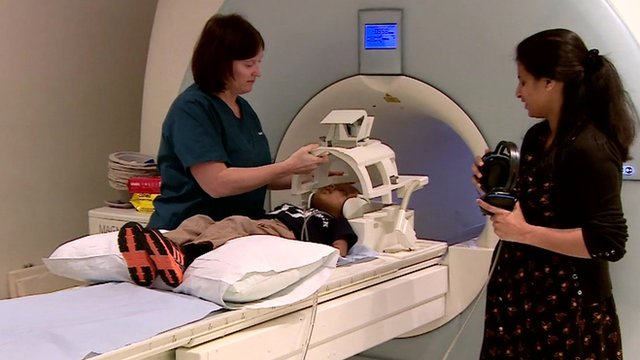
Helping children receive and learn about brain scans through play | BBC News

We know children tend to be wiggly, but we’ve also seen them sit stone still when they are engaged in a good book or toy or enraptured by a movie. A hospital in the UK is tapping into that enraptured engaged stillness.

Many adults find the procedure of having a brain scan, which involves having to lie still for an hour or more while images are analysed, an unsettling experience.The process is no less daunting for young children, who are usually given a general anaesthetic when they have the procedure.

However, a pilot scheme at University College Hospital in London is helping young people have a scan without being sedated, by teaching them about it through play.

see the video via BBC News – Helping children learn about brain scans through play.

anthropology · behavior · children · education · health · learning · music · play

To Boost Attendance, Milwaukee Schools Revive Art, Music And Gym : NPR Ed : NPR

This gives me hope:

In the stuffy, little gymnasium at Richard Kluge Elementary in Milwaukee, 16 boys and girls are stretching, jumping and marching to music.

Two years ago, the school had no gym, art or music classes due to budget cuts. But now, Kluge students get a so-called “special” class three days a week.

Milwaukee Public Schools is one of several school systems across the country — including Los Angeles, San Diego and Nashville, Tenn. — that are re-investing in subjects like art and physical education. The Milwaukee school district is hiring new specialty teachers with the hope of attracting more families and boosting academic achievement.Music teacher Angie Dvorak is one of the teachers that’s been effected. Last year, Dvorak was part time and traveled between schools. This year, she’s stays at Kluge all day, teaching music upstairs from the school’s gymnasium.

Dvorak says she’s seen a different in her students: “I get to have them for class more frequently, which is awesome because their music skills are shooting through the roof this year.”

more via To Boost Attendance, Milwaukee Schools Revive Art, Music And Gym : NPR Ed : NPR.

behavior · creativity · culture · happiness · Social

10 Ways to Make Your Life More Playful

As we start summer, remember to spend some time playing! Here are 10 tips how.

“We don’t stop playing because we grow old; we grow old because we stop playing.” ~George Bernard Shaw

I was 25 and traveling through Ireland by myself. I was in Cong, a rural small town outside of Galway. It was quiet. Very quiet. Even though I had met people on my trip, I was starting to feel lonely.

I was thousands of miles from home. I had nobody around who knew me well or cared for me, and in the days before cell phones or internet cafes, I couldn’t just get in touch with my friends or family at the drop of a hat.I went on a walk in a local park, along a wide stream that emptied into a small, pristine pond. The weather was grey and gloomy, the park was damp and romantic-looking, with its bending trees and dark water.

On a whim, I sat down by the edge of the pond and began to do something I hadn’t done in probably 15 years: I started to build a fairy village out of sticks, pebbles, and leaves.As a child I had practically lived in the backyard, building intricate tiny villages, exploring the spaces in between plants and trees, making tree roots into cottages and lumps of mud into hillsides.

It calmed me down and got me away from sometimes troubling thoughts. In Ireland, I found the same thing happened: My loneliness and anxiety vanished, and an hour or so later when I finished, I felt better: lighter, and less worried.

read all about the 10 Ways to Make Your Life More Playful.

anthropology · behavior · brain · children · community · culture · education · environment · happiness · health · learning · play · psychology · Social

Plug for the NGO Right to Play

I tweeted about this short film yesterday, but I really feel like this is worth giving some space on the blog for.

The value of play is important for teaching life skills like conflict resolution and collaboration, health lessons, healing from trauma, building community and just overall survival as a child and human being, the work this organization does seems simple but is hugely important.

This short video highlights some of the incredible impact that play can have on a child, or group of children.

You can also visit the organization’s website at Right to Play.

Play matters!