architecture · behavior · emotion · health

New WA hospitals are more open, less foreboding – seattlepi.com

St. Elizabeth Hospital
Old hospital style: not very healing. Image by reallyboring via Flickr

Getting sick and not feeling well is scary, so it’s good to see hospitals becoming more in-tune to the whole user experience. Here is one such case, with a new hospital opening up in Enumclaw, WA.

“The innovative designs at Swedish/Issaquah and St. Elizabeth Hospital in Enumclaw, like other new hospitals, include big windows that let in natural light, rooms with pullout couches for overnight visitors, and even hospital beds that ask patients questions in different languages…

…The design highlights food and spa and wellness products. The hospital opens into a five-story atrium surrounded by a mall, and its lobby includes a fireplace and a destination restaurant with a wood-burning oven.

The changes are driven in part by competition for patients with good insurance, the Seattle Times reported, Outpatient services, giving prime space to medical offices and centers that provide chemotherapy and radiology were emphasized.

The new St. Elizabeth in Enumclaw opened in February with beds programmed to provide information and to ask questions in 20 languages. For example, a bed might tell a patient in Spanish: “You have a tube in your throat to help you breathe.” The realization that critically ill patients may not speak English prompted the purchase.

St. Elizabeth and the new $365 million Swedish campus are part of a U.S. hospital building boom in suburbs and fast-growing communities that is now evident in urban areas as well.”

more via New WA hospitals are more open, less foreboding – seattlepi.com.

More research is also finding that people who have views of nature heal faster when they’re sick or recovering from surgery, so bring on the light, bring on the green!

architecture · behavior · brain · community · design · disease · environment · health

A Better Way to Fight Obesity: New, Smarter Supermarkets | The Atlantic

"The New Fred Meyer on Interstate on Lomb...
Image via Wikipedia

I heard an interview on the radio today with Rupal Sanghvi, the founder of HealthxDesign (“Healthy By Design”), an initiative she launched in 2010 after a decade of work with the International Planned Parenthood Federation.

During her years in the field, Sanghvi observed numerous instances in which people developing public health solutions overlooked contextual factors that were contributing to the problem. In clinics, for example, she saw how redesigning ventilation systems, retrofitting inefficient lighting, or choosing different building materials could improve
treatment conditions and accessibility, but these things were rarely addressed. Likewise, in supermarkets, features like store layout and air temperature can influence purchasing decisions, but food access initiatives often stop short of such nuances of structural design.

“Standard supermarkets are designed to promote consumption of foods that are high in sugar and preservatives,” explains Sanghvi, “because those are the high-margin items that maximize profit.” According to current guidelines, in an average 10,000-square-foot supermarket, only 500 square feet must be utilized for fresh produce. If the U.S. spends millions to build supermarkets according to the conventional mold, she argues, we may see some improvement in public health simply as a result of increased access to food, but we stand to achieve far better outcomes if we first reconsider supermarket design itself.

more via A Better Way to Fight Obesity: New, Smarter Supermarkets – Sarah Rich – Life – The Atlantic.

This is a great point being made about how our environment has a huge impact on our behavior, as well as corporate responsibility for health and wellness, and not just profits. This seems especially important for food stores, and I’m glad to see somebody taking up the cause.

Related:

Supermarket “Video Game” Designed to Help Shoppers Buy Healthier Food

architecture · behavior · culture · design · environment · happiness · Nature

Seattle has too many bleak public spaces | Crosscut.com

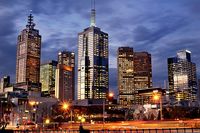
Seattle Skyline view from Queen Anne Hill.
View of Seattle's city skyline. In such a gorgeous part of the U.S., Seattle itself is lacking in pretty public spaces. Image via Wikipedia

In case y’all hadn’t noticed yet, I’m a huge proponent of utilizing public space for community use and creating an overall aesthetically pleasing environment for people. Cities have one of the greatest opportunities to provide that for their citizens. So I was thrilled when I read this article in Crosscut Magazine arguing the same thing, specifically for my hometown of Seattle.

Our landscape-oriented mindset should have been good preparation for what we need in the densifying city now, which is more design intelligence given to the open spaces between buildings — plazas, parklets, and awkward leftovers like the places under freeway overpasses. The more the air space around us becomes stuffed with architecture, the more acutely we need the relief of thoughtfully landscaped open spaces on the ground. Arguably, these spaces are more important in the built environment than most buildings because they’re public — people use them.

Or if they’re emotionally cold, dreary, or austere, people don’t use them, which is the case with a number of Seattle’s precious open spaces. On one of our desperately rare sunny spring days this month, I visited about a dozen open spaces in the dense city and found — no surprise — the bleak ones practically unused and the beautiful ones full of life. What is surprising is that we’re not demanding more graceful, humane, imaginative design — and raising hell over trends such as Seattle Parks and Rec’s inexplicable new fascination with concrete and gravel.

The article goes on to provide examples and suggest different fixes for a couple of spaces. More via Why does Seattle have so many bleak public spaces? | Crosscut.com.

architecture · behavior · brain · design · emotion · environment · happiness · health · mental health · Nature · psychology

Using Nature Therapy in Prisons and Hospitals

I’m seeing lots of different examples of people using nature to help heal, from the physically injured to those with aggression issues cut off from the rest of the world.

For example, I was just listening to a program this weekend on the local NPR station about a biologist at Evergreen State College who is greenifying a local prison, as well as working with inmates to grow new prairie grass and frogs (I can’t find the original story but here’s some similar coverage):

The frog rearing program here pairs inmates with scientists from the Evergreen State College as part of the Sustainable Prisons Project. So far, the frogs grown at Cedar Creek Correctional Center are doing better than those grown by professional zoologists.

LIESL PLOMSKI, graduate student, The Evergreen State College says, “They have a lot more time here to care for the frogs that a zoo wouldn’t have. I mean they’re here all day with them, so they change the water frequently. They feed them more frequently than a zoo could ever do.”

And then this morning stumbled upon this story:

Henning Larsen Architects recently won an international design competition with their plans for the new Odense University Hospital in Denmark. Situated close to the city center amidst a scenic old-growth forest, the OUH will use the surrounding landscape as a way to heal its patients. The holistic facility features a light footprint that incorporates nature at every turn to create an environment replete with peace and serenity. Daylight floods in through the glass-lined buildings, and rainwater will be collected to feed the many ponds and surrounding landscape.

more via Denmark’s New Odense Hospital is a Healing City of Glass Amid the Forest | Inhabitat – Green Design Will Save the World.

I am blown away by all the different applications of nature into therapy and recovery practices.

architecture · community · culture · design · environment

Creating a park that meets seattle’s needs

Alaskan Way Viaduct from Victor Steinbrueck Park
Image via Wikipedia

From Crosscut:

“This past weekend a small slice of the Alaskan Way Viaduct was bashed to the ground…The absence of the hulking, dirty superstructure with its squat legs immediately makes apparent new possibilities.

One can easily imagine a green promenade extending from the imposing facade of Qwest Field diagonally northwesterly, eventually touching down on an expansive waterfront park, perhaps outfitted with beaches and habitat for marine life. The promenade could be a splendid setting for food carts and festivals, art, and interpretive signs that explain the colorful history of the area previously known as the mud flats. The diminutive and delicate-looking triangle building would be a modest but distinctive landmark — now freed from lying in the shadow of the viaduct.

But still, as one looks along that alignment stretching towards Elliott Bay, the forest of dark gray columns is a dismal reminder of how much there is to be done before we reclaim the waterfront as attractive and accommodating public space.”

More

I’m really excited by the prospects of reclaiming urban spaces for pedestrian use!

architecture · behavior · children · community · creativity · design · education · environment

Green learning and sustainable knowledge

Kids learn the best by what they see and experience, not just what they are told. What better way to teach about environmental and sustainable practices then by demonstrating that at school?! Two projects in the Pacific Northwest are combining creative alternative designs and technologies to create an ideal environment for learning and minimizing impact on the environment.

I always wanted to live in a tree house or a hobbit hole. But going to school in a “living building” would be a pretty close second. From KUOW:

LEED–certified buildings are meant to be environmentally friendly and highly energy efficient. But now, there is a new standard that goes well beyond that. It’s called the “living building” and there are only three of them in the world. In Seattle, one elementary school is building what could be the first living building in the state.

The kids got to offer ideas for the school, and with its grand opening last friday, will hopefully make a splash (it does have it’s own little stream, after all).

In a related project, a school in Poulsbo is putting in Washington State’s fifth largest solar array:

“Next month, Lander, 56, will flip the switch on his first full-size community solar project atop Poulsbo Middle School, the largest of its kind in Washington and the fifth-largest solar system in the state.”

I also love the fact that both of these projects are community-based, in that the kids got to provide input on the school, and the solar panels are also community-driven.

anthropology · architecture · community · creativity · culture · design · environment · happiness

The Most Colorful Cities In The World

Living in the Pacific Northwest I can definitely appreciate the idea of adding more color to one’s life! Interestingly, it tends to be warmer climates that have the more colorful buildings, although Denmark and Finland has some of the most colorful interiors (and now exteriors) I’ve seen. Color has an amazing effect on human mental health and mood. People often talk about getting back into nature to see all the colors. Now, the colors can come to you (unless you live in a community with a rule against bright colors).

Urban life doesn’t have to be bleak and gray — in fact, many of the world’s cities pride themselves upon the bright palettes used to liven up their architecture. From the garish blue-walled buildings of Jodhpur, India, to the gentler pastels of Charleston, S.C., these cities are far from monotonous.

Charleston, SC
Charleston, SC
Nyhavn, Denmark
Buenos Aires, Argentina

More of The Most Colorful Cities In The World: Pics, Videos, Links, News.

architecture · technology

Funny Shaped Buildings

There was an old woman who lived in a shoe…and a young woman who lived in a basket.
People enjoy oddly-shaped structures, especially if they are functional. But what is the point? What do they do for us? They make us laugh, inspire creativity and "out of the box" thinking, and make us think of things in new ways. Oh yeah, and provide shelter.

And, in some cases, provide free advertising (free other than the cost of the building).

Mental Floss put together a fun gallery of 10 buildings shaped like the products they offer. Above, the Kansas City Library garage with its facade of 22 giant book spines, including Catch-22, Invisible Man, and The Lord of the Rings. To the left, the headquarters of Newark, Ohio’s Longaberger Company makers of, you guessed it, maple baskets. "10 Buildings Shaped Like What They Sell"

Courtesy also of Boing Boing

architecture · design · Nature

Norway’s Grassy Rooftops

Boing Boing is an awesome filter for culture and science enrichment! Heck the whole site is enriching. Once again they deliver, with this choice nugget from Norway: rural Norwegian homes whose roofs have been given over to the traditional turf — and even small forests.

Image from Amusing Planet

Turf roofs in Norway are a tradition and you will see them everywhere. Roofs in Scandinavia have probably been covered with birch bark and sod since prehistory. During the Viking and Middle Ages most houses had sod roofs. In rural areas sod roofs were almost universal until the beginning of the 18th century. Tile roofs, which appeared much earlier in towns and on rural manors, gradually superseded sod roofs except in remote inland areas during the 19th century. Corrugated iron and other industrial materials also became a threat to ancient traditions. But just before extinction, the national romantics proclaimed a revival of vernacular traditions, including sod roofs. A new market was opened by the demand for mountain lodges and holiday homes. At the same time, open air museums and the preservation movement created a reservation for ancient building traditions. From these reservations, sod roofs have begun to reappear as an alternative to modern materials.Every year, since 2000, an award is also given to the best green roof project…

The Grass Roofs of Norway (via Geisha Asobi)

Farm buildings in Heidal, Gudbrandadal, Norway
Image via Wikipedia

They remind me a little bit of the houses built by SunRay Kelley (my father-in-law)…

anthropology · architecture · behavior · community · Social

Radiolab explores the city!

What makes cities work? How do humans live in such HUGE tribes. More than half of us live in cities.

I’m a new city transplant. I’m not sure I’ll ever get used to it, but it’s a fascinating topic to explore.

There’s no scientific metric for measuring a city’s personality. But step out on the sidewalk, and you can see and feel it. Two physicists explain one tidy mathematical formula that they believe holds the key to what drives a city. Yet math can’t explain most of the human-scale details that make urban life unique. So we head out in search of what the numbers miss, and meet a reluctant city dweller, a man who’s walked 700 feet below Manhattan, and a once-thriving community that’s slipping away.

Thanks Jad and Robert.

Cities – Radiolab.