anthropology · behavior · design · health

Food, consumption, and dumpster diving

A typical dumpster in Sunnyvale, California.
Some people choose to make this their meal spot. Image via Wikipedia

One element of having an enriching, healthy environment is lack of trash and waste. We Americans throw away A LOT, especially food. The percentage of food we waste is astounding (I’ve read anywhere between 25% and 30%)!

In a possible reaction to this, several people, particularly Millenials, have started “rescuing” food from the back of restaurants, bakeries, and grocery stores, better known as “dumpster diving.”

For his Anthropology doctoral thesis, University of Washington student David Giles is examining how cultural assumptions of what is appetizing lead to the disposal of surplus, edible food. He’s become a pro at vaulting into Dumpsters, picking through their contents and befriending people who make a meal of other people’s leftovers.

In short: Giles is a Dumpster-diver.

The 31-year-old Australia native hopes his work will raise awareness of the volume of edible food that gets thrown out and will prompt people to think about how they might get more food into the hands of the hungry — perhaps by giving it to a food bank or handing it out to the homeless in a park.

Read more at Dumpster-diver’s thesis: Good stuff going to waste (seattletimes.nwsource.com)

One problem for restaurants is they are required to throw food out after it has been sitting for a certain amount of time. Same with grocery stores. That being said, us consumers could definitely do a lot to keep food from going to waste, such as buying less of it in the first place.

Shelly Rotondo, executive director of Northwest Harvest, a food bank with offices around the state, agrees with Giles that a lot of food goes to waste.

But she thinks food banks are doing a good job of capturing food and getting it into the hands of the hungry, and that most waste now comes from households or restaurants. Rotondo said fruits and vegetables with flaws and imperfections never even reach the grocery-store shelves — they’re sent by distributors to the food bank.

“Northwest Harvest does fantastic work,” Giles agreed. And yet, he’s seen the Dumpster evidence that lots of food ends up in the trash. He has not tried to quantify the amount of edible food that is thrown out in the Seattle area.

My hope is Giles addresses some of these restrictions in his thesis, or perhaps offers different ideas for distribution. After just going through my own Masters defense, I know you’re not supposed to speculate, but after all this work it would be good to at least have some action items come out of it.

Hunger is becoming more common in the U.S. now due to the recession, yet obesity and other lifestyle diseases are also becoming the number 1 cause of death in the US. There have also been more salmonella and bacteria outbreaks in food this past decade than I can remember, which would make one think they should steer extra clear of dumpsters for food. I think how we as Americans approach, handle, and consume food needs to be seriously looked at and re-assessed.

anthropology · architecture · community

Vancouver BC improving urban living for its older residents

Crosswalk button ne.
Making cities safe for residents of all ages is a major step to creating a more lively, sustainable community. Image via Wikipedia

Great article in the Vancouver Sun about the city working to make urban living more conducive to older folks:

City planners, engineers, seniors and health researchers came together to discuss things such as pedestrian crosswalks, which often don’t allow enough time for a safe crossing, given that at many lights the halting hand starts to flash after just seven seconds.

“It takes all hands on deck,” said Heather McKay, director of the Centre for Hip Health and Mobility, referring to the necessity of collaboration when making infrastructure changes to the so-called “built environment.” That’s why the Vancouver Coastal Health centre helped organize the second annual research and community partnership symposium, called “If we build it, will they walk?”

Using a $1.5-million grant from the Canadian Institutes for Health Research, McKay and her colleagues are examining factors that help make cities good places to grow older. Their goal is to identify the things that can prolong active and independent living, which will also help improve physical and emotional health, plus reduce dependency on the health care system.

Living in an urban environment makes a lot of sense for retired folks – easy access to public transportation, food, activities – as long as those resources are made accessible to their needs.

What other cities are making their spaces and infrastructure better for residents of all ages?

anthropology · architecture · community · design · environment

Does adding art to slums improve poor’s quality of life?

I saw this article last week on Recycle Art, about a design company in Brazil that does outreach to poor communities by creating more aesthetically pleasing surroundings:

Brazilian design studio Rosenbaum and TV show Caldeirao do Huck help poor families to redecorate their homes and improve their surroundings, in the hope that they feel more comfortable and happier at home.

++ Do the green thing

See more at Plastic bottles garden | Recycle Art

I’m pleasantly surprised by this philosophy. And apparently this idea is starting to pick up steam.  The New York Times just published an article (also below) about a design show being presented at the United Nations right now focusing on design for third-world countries, trying to create effective, efficient, and hopefully beautiful tools, boats, and buildings.

I’m curious, however, if designing a new space or adding beauty to an already existing slum really works. Does having a more beautiful environment make you want to protect it and invest in it? Even the curators of the exhibit in the New York Times article state that building something new and getting people to adopt it are two entirely different challenges.

I know having a greener work space is correlated with better worker productivity, and many communities in the U.S. have installed public gardens or parks with some success regarding improved community involvement and improved outlook of the neighborhood. The groups featured in the exhibit claim successes all over the world. However, somewhat similar experiments have been tried out with movie stars and athletes installing movie theaters or centers in poor neighborhoods with mixed success with mixed results, as I remember.

I would be interested in seeing more studies that looked at parks or even residential gardens and patios correlated with crime rate, income, and so on.

Anecdotally, have you seen or know of anyone who has seen a correlation between greening or beautifying a space and better sociological stats?

anthropology · architecture · brain · disease · environment · psychology

Thinking by Design: Scientific American

Illustration for Design Portal.
What makes some objects more appealing than others? Image via Wikipedia

One of the biggest pieces to having an enriching, relaxing, invigorating, or overall non-stressful space is what you put into it. There has been lots of research into creating better work spaces, medical spaces and homes, but it can be hard to quantify some of this research; after all, it’s hard to quantify “feeling better.” So it’s nice to read about one team in Vienna that is doing just that, by trying to figure out which objects people like more than others:

Each person’s aesthetic taste seems distinct, and yet that perception belies a large body of shared preferences. Our team at the University of Vienna, among others, has sought to unravel the patterns and principles behind people’s emotional reactions to objects. Although trends drive certain design decisions, scientists have identified fundamental properties of the mind that consistently dictate which products people tend to like and dislike. Psychologists are now better equipped than ever to explain how you came to choose your belongings in the first place. They can also begin to decipher why you continue to love certain purchases long after they have lost their initial shine, whereas others land in the trash.

more via Thinking by Design: Scientific American.

According to their work so far, we like big, round things, but also like things to be symmetrical. It’s pretty well established that we like symmetrical faces, so it makes sense that our tastes in other areas would follow. We also like things that are familiar but not exactly the same, old with a kick maybe.

While none of this is ground-breaking insight per say, it confirms what psychologists, architects and designers have known for years but didn’t necessarily have a good scientific reason when asked why.

I’m curious what other insights other groups have found when looking at design and aesthetics form a neurobiological standpoint. Know of any good ones? Post them in the comments below!

anthropology · behavior · culture · environment · Nature

New Research Reveals the Nature of America’s Youth | The Nature Conservancy

Interesting study to keep you motivated while I’m off in the woods:

Kids are spending less and less time outdoors. Why? We’re becoming more and more wired in and dependent on technology:

There is a growing disparity between the time kids spend indoors wired to technology and the time they spend outside enjoying nature. The vast majority of today’s kids use a computer, watch TV, or play video games on a daily basis, but only about 10 percent say they are spending time outdoors every day, according to a new nationwide poll from The Nature Conservancy.Why? Lack of access to natural areas and discomfort with the outdoors are two primary factors identified by the Conservancy’s poll.The poll was conducted from July 28 through August 4, and asked 602 kids between the ages of 13 and 18 about their attitudes toward nature, outdoor activity and environmental issues.

more via New Research Reveals the Nature of America’s Youth | The Nature Conservancy.

One easy solution is to limit electronic time for youngsters, and ourselves for that matter.

And yes I recognize the irony of sharing this information via an electronic-based blog.

anthropology · behavior · creativity · happiness · health · mental health · play

The Shape of Enrichment – ICEE conference taking place this weekend in Portland, Oregon

There are people who get paid to come up with games and toys for animals. Just like people, animals need something to do all day to keep themselves fit and healthy, both mentally and physically. This has been dubbed “enrichment” by people who study this kind of thing, but it basically is just looking at ways to encourage animals to play.

This weekend enrichment experts are all getting together to discuss different ways to provide better enrichment (i.e. toys, games, crossword puzzles) for animals that live in zoos, aquariums, research centers, and so on.

I am sorry I am missing this conference; it sounds amazing!

The mission of the ICEE is to improve the wellbeing of captive animals by providing a venue for the exchange of information among the many diverse groups that participate in environmental enrichment. A key feature of the ICEE is the participation and interaction of animal welfare scientists and all those responsible for the care of captive animals. To further this mission, the ICEE Committee organizes a biennial conference, with published proceedings, in locations around the globe.

more via The Shape of Enrichment – ICEE.

I wish I could go, but I’m doing a little bit of self-enrichment this weekend so am otherwise engaged (plus $400 is a bit steep for me), so I will just lurk on the website for awhile and see what updates pop up. OR, if you’re going you could post in the comments and let me know what I missed? Or, even better, if you know of other events coming up soon, share them here! Thanks!

anthropology · behavior · community · culture · education · health

Different reactions to urban farm economics

Downtown Bellingham as observed from Sehome Hi...
Bellingham, WA, which prides itself on buying, selling, and producing locally. Image via Wikipedia

The question of how to connect us back to our food is commonly asked these days, from local communities to big companies like IDEO and their Open IDEO challenges. One way to do this is through urban farms, or bringing the farm and local food production to the people. But the logistics of doing this can take on very different looks and feels.

I came across three stories in the past couple of days that all showcase a different reaction to the concept of economizing on local food growing and selling. The different styles seem to be very pro, con, or “social wellness” focused:

For example, in Bellingham, WA, local farms are offering kids classes on local farming practices, and make more money locally through education than actually selling their produce:

Common Threads’ goal is to connect children to food, their community and the environment through what she called seed-to-table education.

At Farm Camp, that included plenty of hands-on stuff for the 3- to 10-year-old children, who split into groups and take turns caring for the turkeys and chickens – do they have enough food and clean water? – as well as the garden.

“Growing stuff takes work and attention,” Plaut said, which is what the camp’s workers and volunteers emphasize to the children.

more via Bellingham program teaches children where their food comes from – Top Stories – bellinghamherald.com.

In Seattle, WA, the approach is definitely more entrepreneurial focused with backyard egg sellers and bee keeping:

CORKY LUSTER is hard-pressed to explain why his beekeeping idea turned into a full-time business and then some.

“People are interested in pollination and food . . . and honey bees have become the poster child for environmental concerns,” he muses.

Luster had a German roommate in college who introduced him to the idea of keeping a few chickens and beehives in the backyard. So when Luster heard about bees dying off and colony collapse disorder a few years ago, he decided to do his bit and set up a few beehives in his garden. Friends were fascinated with the bees — but not so much with all the work involved. The Ballard Bee Company was born, and two years later Luster doesn’t have time to remodel houses anymore.

more at Keeper brings bees to Seattle gardens.

In Missoula, MT, regulations make it a little bit tougher to sell wares:

Owners of small food enterprises continue to face hurdles doing business in Missoula even as the local food movement grows. At the state level, an effort is beginning to methodically review food safety laws and regulations. Leaders in Missoula say it’s time for some scrutiny on the local front, too, and one food vendor is already on the move.

Kim Olson, the “Empanada Lady,” is working to change at least one rule she said is arbitrary and hurts food vendors. Olson said the Health Department is obligated to enforce state laws, but the rules favor big franchises and leave homegrown shops adrift.

Which approach makes for a better experience of community food selling overall? With the E. Coli outbreak in Germany recently I understand the need for good food regulations, but what if they accidentally favor one kind of business model over another? I’m also curious if a more education focused approach works better than throwing local food sellers into the deep end with all the other commercial ventures? Thoughts? Experiences?
anthropology · behavior · community · creativity · design · Social

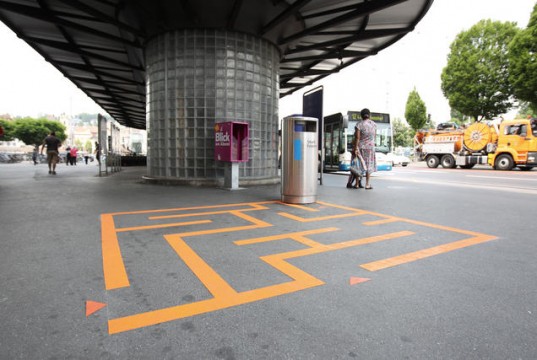
Lucerne’s Clever Street Decals Make Taking Out the Trash Fun | Inhabitat – Green Design Will Save the World

More ways to make social responsibility fun! I love the idea of turning the act of throwing away your trash into a game.

To discourage residents tossing their empty cups and wrappers on the streets and sidewalks, the city of Lucerne launched its “Lucerne Shines” program, which rolled out mazes, hopscotch boxes, and three point lines to make the act of trash disposal more fun. The project appeals to kids and is a great nostalgic throwback for adults alike — kudos to the Swiss town for this creative idea!

check out more games, like hop-scotch and puzzles, via Lucerne’s Clever Street Decals Make Taking Out the Trash Fun | Inhabitat – Green Design Will Save the World.

anthropology · behavior · culture · disease · health

Workplace Cited as a New Source of Rise in Obesity – NYTimes.com

Gli stand - FORUM PA 2011
The amount of physical activity in a typical work day has changed dramatically in the past 50 years. Image by Forum PA via Flickr

To be perfectly honest, I have gained a significant amount of weight since starting my new job in November. I avoid the free sodas but can’t resist the occasional free chocolate, and combined with being chained to my computer for typically 10 hours at a time (or more) BOY is it adding up. And apparently I am not alone:

A sweeping review of shifts in the labor force since 1960 suggests that a sizable portion of the national weight gain can be explained by declining physical activity during the workday. Jobs requiring moderate physical activity, which accounted for 50 percent of the labor market in 1960, have plummeted to just 20 percent.

The remaining 80 percent of jobs, the researchers report, are sedentary or require only light activity. The shift translates to an average decline of 120 to 140 calories a day in physical activity, closely matching the nation’s steady weight gain over the past five decades, according to the report, published Wednesday in the journal PLoS One.

Today, an estimated one in three Americans are obese. Researchers caution that workplace physical activity most likely accounts for only one piece of the obesity puzzle, and that diet, lifestyle and genetics all play important roles.

more via Workplace Cited as a New Source of Rise in Obesity – NYTimes.com.

Thankfully there are things I can do at work, like adjust my desk so that I can stand instead. I often take breaks to wiggle or stretch, and I get a discount at several local gyms. But this is not enough, and if we want to not have to pay for workers’ lifestyle-induced health problems, from obesity to carpal tunnel syndrome, we need to encourage businesses to improve health in the workplace!

For starters, no free candy and less hours expected of your workers! You’ll get more productive workers, really really!

anthropology · behavior · children · culture · education · family

Children’s past role and identity as worker

Children in Jerusalem.
The role of children has changed significantly over the past 100 years. Image via Wikipedia

This call for paper submissions from the The Society for the Study of Childhood in the Past got me thinking about how actively children used to participate in the daily household and economic life of families, from general maintenance like sweeping the kitchen to vital income by helping during harvest time.  Children used to have to help out on the farm, and later work in factories, in order to help their families make ends meet. While some of the work was dangerous and unhealthy, some of the work was beneficial to both the kid and the family. Kids felt like they contributed to their family, and learned skills from farming to general entrepreneurship. I wonder what kids are missing out on by not having as many daily chores to do, or summer jobs like mowing lawns and lemonade stands, and how children fit into our idea of work now.


In 2011, the themed session will be on children and work. The aim of the themed papers will be to bring together scholars from a wide range of academic disciplines who are studying any aspect of children and work in the past – children as economic contributors, children as slaves, elite children taking on adult roles, children as carers, children as consumers, the impact of working in childhood on children and society. The aim will be to advance cross-cultural knowledge and understanding of childhood and children in the past, and in particular to evaluate the varying nature and impact – social, economic, cultural, medical – of work performed by or for children in the past. Archaeology, history, literature and other sources will be explored.
In providing this opportunity for scholars of childhood to present their work to an international, interdisciplinary audience, the SSCIP International Conference aims to generate new perspectives on existing knowledge and to stimulate new avenues of research for the future.

I’d be interested to hear what jobs you had growing up, before the age of 18. Did your parents encourage you to work? Did you get an allowance or did you get paid by the job, or were you just expected to “earn your keep”? How is it different with your own kids, or nieces and nephews?