When does public art and playfulness interfere with the health and well being of other living things? That can be up for debate… more often than we think.
The war between whimsy and responsibility is an ancient one, and it is raging in San Francisco’s Golden Gate Park. Someone, and you’d be hard pressed to find who, has put a tiny door on a tree in the park. Officials took it away, saying it was hurting the tree. But people freaked out, so they are putting it back.
While the Grist article favors the tree and park officials, I honestly feel like the door did no more damage than a bird feeder attached to a tree, probably less.
I also like seed bombs, however the seeds contained in those are sometimes invasive, so you do have to be aware.
What are your feelings about adding on to or embellishing living things in order to create public art and whimsy? Leave your thoughts in the comments below.
For Turkish artist Mehmet Ali Uysal’s space is paramount, hence the title of this body of work, ‘Space Matters’. Always concerned with how to reshape the space around him, in his art he has achieved this exploration seamlessly. A giant clothespin pinching the landscape, Uysal takes the place of the work as the cause for creating the work. In the end, the gallery space becomes part of the art work, its’ material, form and content. The context becomes the content.Built for the Festival of the Five Seasons in Chaudfontaine Park, on the outskirts of Liege, Belgium generated a bit of attention across the web. It was made for the Festival of the Five Seasons.
Inhabitat is on a role with their environmental enrichment stories!
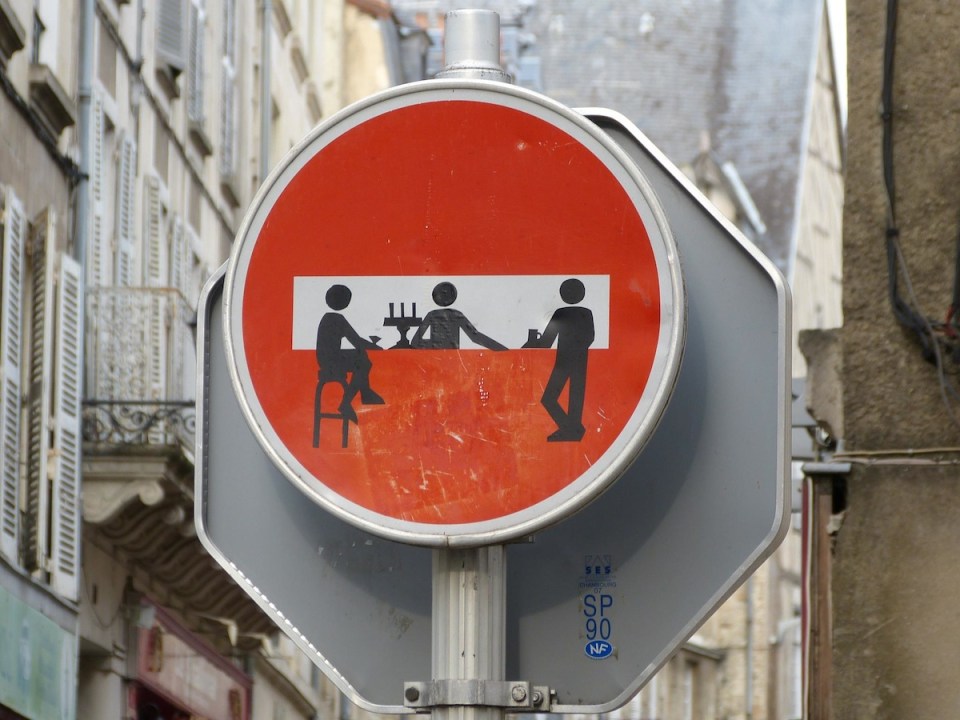
OakOak’s street art is created to amuse and inspire – this self-described “fun-loving” artist plays with urban elements to make people laugh. He finds broken infrastructure, crumbling buildings and cracks and gives them a facelift with the simple addition of a character in play. Everything from simple stick figures to smiley faces, animals, objects and superheroes can be seen gracing OakOak’s hometown of St. Etienne, France, where they turn the less than perfect facades into something playful and fun.
Install public art to create community, sense of place
Install public murals and other public art to create a sense of place and add beauty to urban spaces, which leads to more interest in and conservation of the environment as a whole, including the natural environment.
Yarnbombed tree
Public art creates a sense of place and space, and makes people more aware of their environments, more invested in the space, and more interested in preserving other things in their environment.
From a Grist article: “dozens of painted plazas, dubbed Intersection Repairs, pepper the map not just of Portland but also of Los Angeles, New York, St. Paul, and Seattle.
“In Seattle, a City Repair chapter formed and facilitated several intersection painting projects, including a ladybug in the Wallingford neighborhood. Residents meet annually to repaint the mural and hold a block party. “Our goal is to cut down traffic and bring the community together and create a sense of neighborhood,” Eric Higbee, who led the ladybug painting, told the Seattle Times.
“It’s not about the paint,” says professor Jan Semenza, a professor of public health at Portland State University who lives near the Sunnyside Piazza and has researched intersection repairs. “It’s about neighbors creating something bigger than themselves.” As an everyday intersection becomes someplace special, residents begin to experience the value of community.”
There are other examples of public art and murals being installed that have created a renaissance in a neighborhood, from New York to Brazil.
Guerilla street art has also started to appear over the last couple of years, creating awareness and interest in preserving the community. In Seattle, when a woman knit a sweater for a tree, it created interest in the tree and a desire to preserve it. Even something as simple as “repairing” walls and buildings with colorful Legos, such as the work that Jan Vormann has been doing for the last couple of years, has made people more invested in repairing and preserving their community.
While it is not a direct impact on the natural environment, it is a positive impact on the built environment, and does create a sense of place and overall higher investment in the neighborhood and local environment.
ASLA blog The Dirt has been reporting on their annual meeting, and mentioned a talk discussing why public art is important. I couldn’t agree more!
…art occupies a unique position within the art world. In comparison with big-name gallery shows, public art is often “under appreciated” much like landscape architecture. But there’s lots to laud: “It’s free. There are no tickets. People don’t have to dress up. You can view it alone or in groups. It’s open to everyone.”
Community art can also create attachment to one’s community. According to Bach, studies have looked at the economic development benefits of art, but only just recently have there been wider examinations of the effect of art on a community’s sense of place. The Knight Foundation’s Soul of the Community initiative surveyed some 43,000 people in 43 cities and found that “social offerings, openness and welcome-ness,” and, importantly, the “aesthetics of a place – its art, parks, and green spaces,” ranked higher than education, safety, and the local economy as a “driver of attachment.” Indeed, the same story may be playing out locally in Philly: a survey of local residents found that viewing public art was the 2nd most popular activity in the city, ranking above hiking and biking.
An example of public art; “Tree Futures” by Suze Woolf. Photo from the Heaven and Earth Exhibition in Carkeek Park, Seattle, 2012.
It creates community by creating a sense of place, it is available for all to enjoy, and it makes a place more enjoyable in which to hang out. All of these are important for creating enriching environments. Also, by making the art public, people often feel they have ownership of the art, or a right to play with it. This can be good and bad; if they art is designed to be engaged with, more power to the people. However, some people do act upon the art in a destructive way, either accidentally or intentionally, which is play to them but ruins it for the rest of the public.
This brings of the life cycle of art, and it being taken care of or abandoned over time, which was also discussed at the meeting:
Bach also made a point of discussing the “afterlife of public art,” what happens once it’s out there. As an example, she pointed a work by Pepon Osorio, a pavilion at a Latino community center that features historical photos of people from the community. Today, kids from the neighborhood take photos of themselves with photos of their ancestors. Another project called Common Ground in a footprint of a church that burnt down was hosting weddings just a week after it opened. While these works became part of their communities, Bach said the group still has to work hard to ensure that all works remain relevant to their communities and aren’t “orphaned.”
Some art is meant to be abandoned; at Carkeek Park in Seattle there is an annual public art exhibit where often the installed art pieces are left at the end of the summer to decay or be destroyed by the elements.
Art installation at Carkeek Park, Seattle, 2012
Overall though I think interaction with public art is a good thing. Do you or have you ever played in fountains, posed with statues or art pieces, or altered them in some way (like the Fremont people in Seattle)? These are all forms of play inspired by public art, which I think are valuable methods of play and should be encouraged so long as it doesn’t damage the artwork.
Waiting for the Interurban is memorial to the trolley/rail line that once ran between Everett and Tacoma. Standing at the north end of the Fremont Bridge, these five aluminum commuters (and one dog) have waited since 1978 for a ride that never came. Decorating the statues with seasonal apparel, political signs and other props has become a Seattle tradition.
What is your experience with public art? Do you find it a good use of real estate? Do you have a statue or fountain or public art piece that speaks to you, that you think of as “yours”?
Playful design in an urban environment? My favorite!
Clever and talented Danish artist Jeppe Hein has been custom-making his “Modified Social Benches” for museums, arts festivals, and plazas since the mid-2000s. Most recently, he created a unique set of art you can sit on for Beaufort04, the fourth Triennial of Contemporary Art by the Sea this summer in Belgium. Kids, cool kids, and adults all seem to love playing with these.
Hein says his powder-coated aluminium “social benches” borrow their basic form from the standard park bench, but are altered to make the “act of sitting on them a conscious physical endeavor.” As they mutate, the benches become spaces to “inhabit,” rather than just places to park it and relax for a moment.
The pieces may seem like fun one-offs, but something then happens between the work and the community: “As is the case with much of Hein’s work, the Modified Social Benches on the dyke in De Haan seem to hide behind a disguise of fun and entertainment. But what they actually evoke is a process of interaction and communication that works on different levels.”
After all the great stories about zoos adapting their spaces for their animals I’ve stumbled across recently, I was starting to feel a little sad for us humans. Thankfully, here’s another story I found from Inhabitat about re-purposing spaces for human play:
On the Plaza Luis Cabrera in Mexico City, two 1960’s Mitsubishi trolleybuses have been permanently parked for public use as part of a larger arts initiative in the Roma, Condesa and Hipodromo districts of Mexico City. The gutted and repurposed trolleys currently serve the city as vibrant spaces that engage residents and visitors in new art and cultural activities.
The vintage rides, which were donated to Mexico City by the government of Japan in the year 2000, were originally used to host the Galeria Trolebus initiative — a space used to showcase non-traditional art projects. Today the repurposed busses are public spaces for everyone to enjoy. On weekends and afternoons, visitors may stumble upon sculpture arts, free theater, music workshops, as well as concerts. The cultural activities on the trolleybuses even help to activate adjacent public parks, encouraging locals to take advantage of the ample and free space right before their eyes.
In order to keeps things dynamic, each month the buses on Plaza Luis Cabrera are re-painted in mural styles, with bright colors and bold prints by artists, community members and advertisers who volunteer their talents.
In brilliant fashion, the city has come up with a community-sustaining way to keep an outdated trolleybus model in style and out of the junkyard!
For the past four years, inspired by artist Luke Jerram, donated and painted baby grand pianos have been showing up in London during the summertime. This trend has now started to be picked up in major cities around the world, from Toronto, Canada, to Salem, Oregon.
‘Play Me, I’m Yours’, an installation of street pianos created by artist Luke Jerram, is back in the capital for the fourth year. This time, in celebration of the City of London Festival’s Golden Jubilee anniversary, 50 *golden* pianos are popping up across London for three weeks until July 13. They can be found all over the city including Soho Square, St Pancras International Station and Parliament Hill – you may well hear the soft tinkling of the ivories before you see them.
Pianos will be out August 1-22, 2012 for the Everett Street Tunes: An Invitation To Jam. Make music in the streets during Everett’s new interactive art project, Street Tunes! Musicians – both professional and novice – are invited to play any of the ten pianos located in downtown Everett.
Everett Street Tunes is an interactive art project, from start to finish, beginning with the commissioning of artists to paint and embellish each piano.
Touring internationally since 2008, “Play Me, I’m Yours” is an artwork by British artist Luke Jerram. Reaching over a two million people worldwide more than 600 pianos have now been installed in cities across the globe, from New York to Sydney, bearing the simple instruction ‘Play Me, I’m Yours’.
Located in public parks, bus shelters and train stations, outside galleries and markets and even on bridges and ferries, the pianos are available for any member of the public to play and enjoy. Who plays them and how long they remain is up to each community. Many pianos are personalised and decorated by artists or the local community. By creating a place of exchange ‘Play Me, I’m Yours’ invites the public to engage with, activate and take ownership of their urban environment.
The pianos are loaned with the understanding that they might not make it back in one piece, but so far in the past four years the most destruction to the pianos has been due to rain or other inclement weather.
Visit the website to find out more about this cool, interactive, playful art project, and locations near you.




 Mental Flowers