Nature · writing

A Flowering Tribute To Emily Dickinson : NPR

What a great combination of nature, poetry, history, and how museums contribute more than just dusty history lessons.

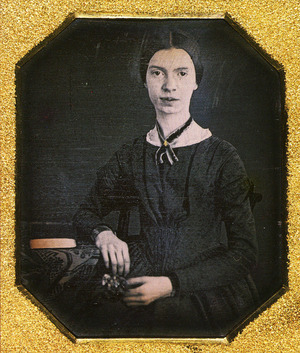
Emily Dickenson

Dickinson loved nature and was an avid gardener, and now an exhibition at the New York Botanical Garden called Emily Dickinson’s Garden: The Poetry of Flowers is putting on display a side of the poet that is little known.

Gardening was a huge part of Dickinson’s life and her art. “I was always attached to mud,” she once wrote, and a sophisticated understanding of plants and flowers is reflected in her poetry. According to Gregory Long, the president and CEO of the New York Botanical Garden, Dickinson used to tuck little poems into bouquets of flowers that she gave to her neighbors.

more via A Flowering Tribute To Emily Dickinson : NPR.

architecture · Nature · Social

Art Review – Pondering Public Sculpture in Manhattan – NYTimes.com

Art Review – Pondering Public Sculpture in Manhattan – NYTimes.com.

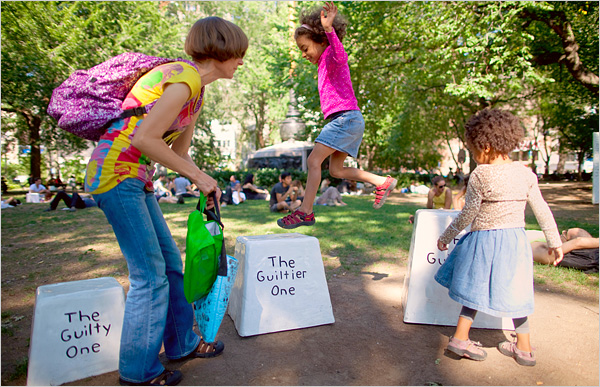
I love public sculpture, and I love it even more when people actually use the sculpture.

Mental · Nature

Gardens soothe a failing brain

medicinal gardens
credit: Angelface Botanicals

Just viewing nature can make us feel better. This has been found in several different situations, but perhaps none so profound as with Alzheimer patients. As reported by Claire Moore, ABC News:

Alzheimer’s is the most common form of senile dementia and is characterized by a buildup of plaques deposited in the brain. It affects up to 10 percent of adults over the age of 65 and 50 percent of those over 80.

Nationwide more than 4 million people have the disease. The Chicago-based Alzheimer’s Association that is sponsoring the congress estimates more than 12 million Americans will have Alzheimer’s by 2025 as baby boomers move onto their 70s and 80s.

Elizabeth Brawley has devoted her professional life to “designing for Alzheimer’s” — everything from handrails and chairs to lights and entire rooms that fit the needs of adults with dementia, a fatal condition most commonly caused by Alzheimer’s.

Her most recent project is the American Landscape Society of America Alzheimer’s Garden Project — a series of nine gardens designed to accommodate those with Alzheimer’s. “We know that just getting outside is good for you. For Alzheimer’s patients it can help reduce anxiety, improve sleep patterns and give the caregiver a break,” says Jack Carman, a landscape architect who is Brawley’s partner in the garden project.

Research has shown that sick and elderly people who were able to view trees and sky recovered faster — with fewer painkillers and complaints — than those left staring at brick walls. Numerous studies have also shown reductions in blood pressure, anxiety, pain and other symptoms of stress when patients were offered just a videotape or a photograph of a natural scene.

But so far there is very little research on how sunlight and being in a natural environment affect people with Alzheimer’s in particular. So Brawley, Carman and the Alzheimer’s Association are currently applying for government and private funding to study the five memory gardens they have completed in Oklahoma City, Muskegon, Mich., Hastings, Minn., New York City and Macon, Ga.

The first memory garden opened in July 1999 on a half acre park in Macon, Ga.

“So far, it’s been hugely successful because everyone from the community uses it. It’s not just for people with Alzheimer’s but it does provide them with a sanctuary,” said Mary Gatti, executive director of the Central Georgia chapter.

Although healing gardens are hardly a new idea, said Chapman — they’ve been discussed for the past 40 years by some researchers — the importance of an outdoor environment has been ignored to practitioners and nursing homes for too long.

The National Post also carried a story about the healing of gardening. There has also been research on ADHD kids and nature, as well as general mental wellness. More on this later, but the article also mentioned studies about how just viewing flowers makes us happier:

A behavioural research study conducted a few years ago at Rutgers University found the presence of flowers — at the bedside or outside a window — triggers happy emotions, heightens feelings of life satisfaction and affects social behaviour in positive ways that exceed what was previously believed.

An earlier study, conducted by health care design expert Roger Ulrich, compared the hospital records of patients recovering from gall bladder surgery and found those with a view of trees— rather than a view of a brick wall — spent less time in the hospital and required fewer and less-potent drugs to remain comfortable.

I think it’s wonderful how this is becoming more widespread and more accepted. The University of Washington, Seattle, offers a certificate degree in designing healing gardens.

architecture · Nature

Gardens that grow on walls

I have seen this done in a couple of places, but always love to see it done, and often in different ways. This was featured in the New York Times a couple of months ago, but like I said I’ve been storing these ideas for a couple of months now.

From the NYT article, “Vertical Gardens, Grown on Walls” by Kristina Shevory:

Mr. Riley, a former commodities trader turned plant expert who went on to become assistant director of the Horticultural Society of New York, was eager to move beyond potted plants in a way that hadn’t yet occurred to many others. It took a number of expeditions, a lot of research and more than a decade and a half, but by 2003 he had figured out how to grow a wall of plants inside his Upper West Side apartment. …

Vertical gardens — which began as an experiment in 1988 by Patrick Blanc, a French botanist intent on creating a garden without dirt — are becoming increasingly popular at home. Avid and aspiring gardeners, frustrated with little outdoor space, are taking another look at their walls and noticing something new: more space. And a number of companies are selling ready-made systems and all-in-one kits for gardeners like Mr. Riley who want to do it themselves.

Matthew McGregor-Mento put 400 plants in his vertical garden in Manhattan.

These were originally developed by artist Patrick Blanc almost 30 years ago. The NYT article features garden walls in New York, for obvious reasons, but they are also sprouting up in Tacoma, WA, London, Singapore, and other cities.

antigravity forest, London
Maximum Garden
Maximum Garden House, Singapore. Credit: Jeremy San
children · Nature

Children and Nature

First, I apologize for my lackluster posting these last few weeks. I am being asked to blog for two different classes, and am working on a blog for work, so this unfortunately is getting little to no attention.

I do have one observation, though, which will probably turn into a research paper, but these are my original thoughts on the subject.

During a weekend visit to my in-laws, three adults took five children out for a walk to visit a duck pond. Actually the grown-ups had planned to go by themselves, but as soon as the children overheard one adult saying they might take a walk to the pond, all the kids were pulling on jackets and boots and were ready to go. I found this interesting because the children had not been very interested until ducks were mentioned.

Armed with a back of frozen hamburger buns, the children raced to the pond, not even distracted as they passed a jungle gym in the neighborhood park. The ducks were particularly hungry that evening, and as we arrived all of them got out of the pond to meet us on the path to be fed. The children practiced ripping off bite-size pieces of bread and throwing it to the ducks, the younger ones sometimes getting intimidated by shoulder-height ducks and throwing half the bun at them to make them go away. The older children mentioned concern about fairness and tried to throw their bread in different spots in the duck herd (or a brace of ducks1). Even after all the bread was gone the children did not want to leave, and even when the grown-ups started complaining about being cold the children wanted to stay and watch the ducks swim.

What I learned later that evening was that humans are born with bio-philia, meaning an innate love of animals. Babies are fascinated by animal pictures books, most children want pets, and the best part of a trip to the museum can be the pigeons strutting around outside.

However, children are not getting the same experiences today with animals that they did even a generation ago. More children today have allergies, and it has been shown that children who grow up on farms and are exposed to animal and dirt microbes have much lesser occurrences of allergies2. Most children today do not even know where their food comes from3. Some child researchers are talking about nature deficit disorder, a term coined by journalist and activist Richard Louv4, and lack of connectedness to nature has been shown to even affect cognitive ability5.

Fortunately, Congress has recently passed the No Child Left Inside Act, which would encourage school curriculums which focused on environmental education, and would increase funding for environmental education programs6.

A child’s idea and feelings towards nature are decided by the time they are five or six5. I think it is incredibly important to provide children the opportunity to experience and interact with their outside environments.

1. An Exaltation of Larks: The Ultimate Edition, James Lipton, Viking Penguin, 1991.

2. “Bacteria Modulates Immune Response to Decrease Allergy Among Farm Children,” Harvey McConnell, Lancet; 360:465-66, 2006.

3. “Kids don’t know their onions about food,” Graham Hiscott, The Independent, 3 December 2004.

4. Richard Louv website: http://richardlouv.com/

5. “At Home with Nature: Effects of “Greenness” on Children’s Cognitive Functioning,” Nancy M. Wells, Environment and Behavior, 32(6):775-795, 2000.

6. No Child Left Inside Act: Solution

http://www.cbf.org/site/PageServer?pagename=act_sub_actioncenter_federal_nclb_solution