
mental health · play · work

If You Can’t Find Your Inspiration to Play, Stop.

I haven’t written in awhile.

My apologies.

Quite frankly, I had lost my play drive.

I had to take two weeks off of work – including some time totally unplugged from civilization – to even see glimmers of it returning.

Before I wanted to explore, to create, to ponder.

To take pictures. To go hiking. To sew. To sculpt. To craft.

3661188717_86bb489933_o

I had gotten so bogged down with reacting to life and trying to keep up with it all, I couldn’t find the room to play, let alone sleep enough, eat as healthy as I’d like, exercise, or even spend time with my husband and kids.

That’s not a healthy place to be, and I don’t wish it on anyone.

Sometimes we have to buckle down and get the work done. No doubt. Sometimes pushing ourselves past our limits is needed, and can be exciting and helps us grow. And yes we must make sacrifices, we simply cannot do it all. Some professions (performers, fire fighters, doctors, airline employees, consultants, CEO’s, etc.) require travel and/or late nights that take us away from our friends and families, but it is worth the short-term sacrifice.

But too much of that sacrifice is physically and mentally draining, period. It literally wears us down – our brains stop working as well and we feel physically exhausted all the time (because we are!) – until we are so depleted it takes a long time to get back to where we can actually function as members of our respective tribes, whether that is work, home, or friends and other social obligations. In the worst case scenarios it can kill us.

We can all find great pleasure in devoting ourselves to one main “thing” and for some of us that is our professional work or as caregivers to our children. But even those who are dedicated to their one passion need to take breaks. Sometimes we get so bogged down in keeping up we don’t even realize just how much of a toll it has taken on us. Until we break.
Kelley_Beth_2

Thankfully I did not reach the breaking point, but I did reach the point of exhaustion. You know those pictures of runners that have collapsed after a particularly grueling marathon? That was me. I was able to walk myself off the finish line, but as soon as I did I just sat down and it took a long time before I was ready to stand up, and even longer before I even wanted to think about running again (both metaphorically and literally).

It almost feels melodramatic the way I’m describing it, but just like so many other things related to the mind and body, it is an invisible but real problem we need to deal with. Unfortunately overwork and exhaustion are all too common a phenomenon in our modern world, almost a badge of honor, that is instead contributing to the leading causes of death – heart disease, obesity, unhealthy coping mechanisms, others  – and it needs to be taken seriously. You need to know the signs in yourself before you get so far down the path of exhaustion and overwork – whether you’re a SAHM or an unattached traveling salesman – that it takes much longer to get back.

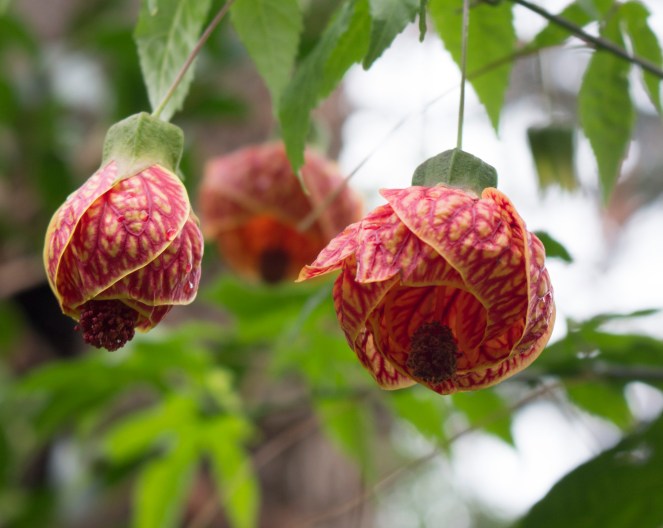
But it doesn’t have to take long. After my relatively short break – 2 weeks – I am slowly getting back into my play training regimen. I am taking pictures. I am walking/hiking. I am sewing. I am crafting. I am looking for play opportunities.
flowers_unknown_close-up

And I am trying to fit play and adventure in wherever I can. I have the benefit of having my kids to help me.

On my first day back to work, I took a half hour out of my morning to watch the eclipse. That wasn’t a lot of time out of my day, and I know some neighbors who drove the four hours south to get a better view, but it was enough. (And, side note: for a once in a lifetime experience I didn’t see as many of my coworkers out on the sidewalk with me as I would have expected.)

solstice pics

Bottom line, including mostly for myself: Please take time to play. Everyone will thank you. Especially yourself.

behavior · brain · community · health · mental health · Nature

Vermont Physicians Will be Prescribing Day Passes to State Parks – Champlain Valley News

Healthcare providers already recommend this in Japan and Korea, so glad to see it getting picked up in North America too.

vt20gov20council20photo201_1496178303788_22174713_ver1-0_640_360
Dr. Elisabeth Fontaine writes a prescription for exercise for a patient at Northwestern Medical Center. Photo: Vermont Governor’s Council on Physical Fitness and Sports

This summer, Vermont physicians will be prescribing active play in Vermont State Parks to promote healthy lifestyles and prevent chronic health issues.

The Vermont Governor’s Council on Physical Fitness and Sports along with the Vermont Department of Forests, Parks and Recreation gave doctors free day passes to state parks to give to patients.

These “prescriptions” follow the principles of Exercise in Medicine (EiM), a global health initiative to promote physical activity.

In some ways this is just a promotion for Vermont’s state parks, but so what?! In an era when we are taking less vacation, park budgets are being slashed and use is being restricted in other ways, including parks potentially being shut down permanently, this is a great way to encourage people to get out into nature and just breathe fresh air, stretch their bodies, and move!

“Studies have demonstrated that outdoor exercise is associated with increased energy and revitalization and decreased depression and tension,” said Dr. Elisabeth Fontaine, a physician at Northwestern Medical Center and a member of the VT Governor’s Council.

“The sun also helps to create through your skin Vitamin D3, which is important for bone health and metabolic function,” Dr. Fontaine continued.

In addition to handing out state park pass prescriptions, the VT Governor’s Council is also encouraging doctors to talk with patients about the importance of exercise.

“The Park Prescription program is a perfect way to highlight the connection between outdoor recreation and personal health. Spending time outdoors, connecting with nature and being active all help keep us strong in both body and spirit,” said Director of Vermont State Parks Craig Whipple.

“And state parks offer the ideal settings for valuable outdoor time,” Whipple added.

For more information, visit www.vtstateparks.com.

health · learning · mental health · Social

How the cost of daycare and ineffective regulations are bad for businesses

Preface to anyone who has children in a corporate-owned daycare that could be encompassed in the below description: I in no way mean to critique you or your child-rearing decisions, I am criticizing the system that has built up around these behemoth corporations that are more interested in making money rather than caring for kids.

Kids play outside with a throwable computer
In Washington State, small in-home day-cares are getting pushed out of business.

The push for large corporate, academics-based daycare and preschools in the U.S. to monopolize the industry and childhood development practices has gone too far!

My daycare provider this month had to bump up her prices 150% due to new regulations passed by legislators that were pushed through by big daycare corporations; supported with the sole intention of driving smaller in-home daycares like my provider’s out of business.

This kind of “pay to play” legislation is not only unethical, this particular one is supporting a system of large, low-personalization, academics-driven style of daycare that is not only inappropriate for children but downright HARMFUL to their development. Eight-month-olds do not need to be studying the alphabet! They need to be playing blocks with their friends and learning colors and counting through unstructured play time, not forced circle time and flash cards!

It is better for children to have smaller groups of kids to play together, with regular, consistent caretakers that can provide personal touch and unstructured play time.

This kind of system is also a HUGE burden on working parents. This kind of price increase – $100’s of dollars in my daycare’s case – is unmanageable for so many working families, and the high prices of childcare means that it pushes hundreds of thousands of well-educated, highly motivated parents out of the workforce during their prime working years. In-home daycares are also more flexible on hours and more understanding if a parent is 5 minutes late with pick-up.

This is also incredibly anti-small business; my daycare provider is strongly considering retirement after this last batch of legislation and required price increases, not to mention potential loss of revenue due to parents pulling their kids out of her daycare because they can’t afford it. I can only imagine other daycare providers are struggling with the same dilemma.

I support paying higher prices for higher quality child care, but this price increase is purely due to new legislations, fees, and bureaucracy that can be absorbed by larger corporations but not smaller businesses. I support safety and regulations of childcare, but not to the point where businesses are required to feed children  only cow or soy milk (yes, that is a rule in Washington State).

If the government is really interested in creating a strong, resilient, competitive workforce, AND/OR is really interested in supporting small businesses, this is NOT the way to do it!

As soon as I figure out which congress person to write to I will do it and share it here! If there is specific regulations you are aware of that are impacting costs or food options, or even play time, please comment and post them below, so when we write our emails, postcards, or angry YouTube video rants we’ll know exactly which regulations to call out as unjust.

In the meantime, please give your daycare provider a hug, no matter who they are, and let them know we care.

behavior · emotion · mental health · Nature · psychology

Trees are like friends

My husband recently posted an ode to one of his favorite trees that sadly caught a root fungus and finally died after 4 years and was cut down slowly this winter.

He was not the only one moved by the loss of the tree. Neighbors of the park, visitors, and other movers also expressed their sadness over the loss of the tree.

It seems strange at first of mourning a tree, but this phenomenon of bonding with and becoming fond of a tree, or multiple trees, is very common, and very human. Trees provide humans food, shelter from the elements, landmarks during travel, and safety from (most) animals. But they also provide us a level of consistency and reliability in our world – that tree doesn’t go anywhere – while also marking the changing of the seasons and change over time. It provides enjoyment whether you are climbing the tree or just resting at its base. Being in or near nature, even a single tree, has profound, positive effects on our physical and mental states.

In Melbourne, Australia, a few years ago people started using the park system’s email alert system to express their fondness for some of their favorite trees.

At my daughter’s  outdoor preschool the kids have slowly been naming the trees in the park during their daily hikes – grandfather tree, silly tree, spaceship tree, and others. These names help the kids orient where they are in the park, but they also represent a kinship with the tree, a familiarity and reliability that provides consistency and joy for the kids.

When a tree dies or is cut down, we feel its loss and we mourn. It is only human.

behavior · children · education · emotion · health · learning · mental health · play

How to Play-Fight with your Kids


After posting a blog about why I choose to play fight with my kids, I got a great response from parents and non-parents alike. What surprised me however was how many people – moms, uncles/aunts, non-kid affiliated adults – reached out to me and asked, “How do I even get started?”

It turns out a lot of people never play-fought as a kids…
They were told to never hit, never push, never poke.
Or they just never had a good example from their parents or older siblings or relatives.

Or as parents now, they have played with older kids but when they try to do the same thing with their little one she just cries and runs away.

That makes me so sad. There are so many benefits to play-fighting as a kid, and as a grown-up. Both my husband and I are huge advocates of physical play, including roughhousing. Play-fighting doesn’t have to be rough and tumble all the time either; there are some great games that involve the same elements as physical play but are more gentler on the body than traditional wrestling or punching games (pretending to be movable mannequins is one of my favorites).

Based on my research of studying physical play behaviors, and my own experience with my kids, not to mention observing my husband coach and facilitate grown-ups on how to play for the past 10+ years, here is what I’ve found to be good tips to get started:

Let the kids lead: Young animals of all species, including kids, are naturally the best players in the entire animal kingdom. It is how they learn about their world. So let them lead. You can come up with the game, but often times the kids already have a game in mind. Or, give them a gentle poke or push and see how they respond. Sometimes they might not be in the mood, but sometimes they will take your cue and run with it.
Anecdotally, I’ve noticed often girls will be done rough-playing sooner than boys or need more breaks, whereas little boys will often go and go until they start to cry, so don’t be surprised if either happens.

Match their strength…: When we see big dogs and little dogs play together, often the big dog will handicap themselves; they won’t push as hard, or they’ll get down on the ground so the little dog can actually reach them. Similarly, match your play partner’s strength. Push only has hard as they push, or hit only as hard as they hit.

…But show off yours too: Of course you can and should try doing lifts, carries, spins, gentle knock downs, and other things that require you to have more strength. That’s part of the fun of playing with someone bigger than you!

Let them win (sometimes): Similar to the dog play example above, if you want the game to keep going then make sure they’re having fun, which means letting them get a few punches in on you or knocking you down. (If you aren’t comfortable yet with falling down, think of this as a great way to practice slowly falling down in a safe way.) But that also means you get to win sometimes too; don’t be a punching bag, but it’s all about taking turns so you are both having fun.

Communicate: Check-in, see how they are doing. Ask if they want to switch up the game, or if you’re ready to switch it up or take a break, tell them. Which leads to…


Teach them no
: The whole joy of play-fighting is the give and the take (have I said this enough times yet?). When it’s not fun anymore, both you AND your child get to say no, stop, time out, or I’m done. At any time. And, as the grown-up, you also need to be able to read your play-partner’s cues and tell when they’re not having a good time, even if they’re not specifically saying no.

Tickling is a great example. A lot of people see ticking as “harmless fun” and it’s tricky when a little kid is laughing and saying no at the same time, but it can be quite scary for a kid (or a grown-up) if they mean no and it isn’t respected. But, it’s also a great way to build trust with your play partner, whether they are a kid or a grown-up. Now, I HATE being tickled! HATE it! No tickles ever, thank you! Ever since I was little. My mom has stories of her trying to tickle me as a tiny baby, and even so much as putting her fingers out to say “coochie coochie coo” and I would just freak out! And she listened. So no tickles. As a grown-up I have not always had partners that understood that tickling is not fun for me, or when to stop tickling (as in immediately). But thanks to my mom I knew that I could choose to say no and that needed to be respected.

The same goes for tickling your kid; if they say stop, even if they’re laughing, stop. If they want more, they will ask for it (kids are good at that sort of thing).
And this can be expanded to all kinds of physical play; we need to learn how to listen to our bodies and our limits. If we get scared or frustrated, we need to learn to take a step back and regroup, and that we’re safe to do so. Physical play with a safe person like your parents is a great place to practice that.

Have fun!: In the end, that’s what this is all about. Sometimes you’re not in the mood to wrestle, and sometimes you are, or maybe you’ve got knee pain and can’t get on the ground, so just go with what feels right in the moment. Make up stories (“we’re bears, rawr!”), give yourself challenges (you can’t move from one spot; you can only use one arm), and just see what happens.

There are lots of different fun games you can try out with your kids and prompt you both to play more. Here is a great example of kid-led play fighting:
https://www.youtube.com/watch?v=wqFJEQopKdY

I’d love to hear some of the games you have come up with with your little play partners, so share them in the comments below.

Save

behavior · brain · children · cognition · emotion · environment · family · happiness · health · learning · mental health · play · psychology

Why I Play-Fight with my Kids

In some ways this seems like an overly obvious, unnecessary post. Of course parents play fight with their kids! Right? Yet I am surprised by how few MOMS play fight with their kids.

I do. And I love it! I didn’t think I would enjoy it as much as I do, but I do. Here are my top reasons why.

1. It teaches them body awareness – How hard do I have to push to make something happen? How strong am I before I get pushed over? How do I get myself back upright? How hard is too hard to hit? Also being aware of how strong they are now versus a month from now is important too as they grow and get bigger and stronger; I’ve known too many bigger little kids that don’t know their own strength.

2. It teaches them spatial awareness – How far away is that body I am playing with? Where are my legs and arms while I’m wrestling? Oops, now I’m upside down, how does that make me feel?

3. It makes them feel loved and given attention.

4. It’s fun! I’ll bet almost everyone at one time or another has played slug bug, tickle time, or wrestled with your sibling, or started a real fight with your sibling that by the end you two were both on the floor laughing.

5. They feel safe acting out being big and strong and knocking me down or punching me and knowing that I can take it.

6. Kids who play fight with their dads are being shown that men are big and strong. For somewhat feminist but mostly totally selfish reasons, I want them to know that women (i.e. ME!) can be big, strong, and tough too.

7. Along those same lines, grown-ups who play fight with kids are demonstrating that when people play or play fight, they are being respectful of each other’s boundaries, and if you don’t feel safe you can and should ask the other person to stop. If the other person doesn’t respect your boundaries then kids learn that’s not okay and they get time out or kids or grown-ups stop playing with them. This is a super-critical skill that is missing in so much rhetoric, both physical and verbal, in our society today.

8. As their mom, it is so fun to watch my kids get stronger, faster, more coordinated, and more creative in their physical play. They mix strategies, including saying silly things to catch me off guard, which is all part of the art of play.

9. Finally, I want to promote physical play of all kinds with kids and grown-ups alike. Whether that’s boxing, hiking, jump rope, tricycles, making forts, tree-climbing, or just going for an exploratory walk around the neighborhood, I support it.

I’m sure there are other reasons I’m forgetting, but those are my main ones.

My husband teaches natural movement classes, and before that parkour and martial arts. Slowly more women are joining the adult classes in all of those fields. But especially in the kids’ classes, the moms are just as likely to join their kids, but almost none participate given the opportunity. Why?! Some women (and men) don’t like physical contact activities. And that’s totally fine. But more often than not women are intimidated. I say no more fear! Get in there and push someone.

Why do you play fight with your kids? Or why don’t you? Leave your thoughts in the comments below.

UPDATE: I wrote a follow-up post about safe ways to roughhouse with your children that you can find here.

brain · disease · health · mental health · play

Why I support doll therapy for Alzheimers

I heard an interesting story on NPR today: the increase in doll therapy for patients with dementia:

dolls-2-7dd7449e40a36336a5c1ae6519aa62028c092060-s800-c85

Guzofsky, who has Alzheimer’s disease [pictured above], lives on a secure memory floor at a home for seniors in Beverly Hills, Calif. She visits the dolls in the home’s pretend nursery nearly every day. Sometimes Guzofsky changes their clothes or lays them down for a nap. One morning in August, she sings to them: “You are my sunshine, my only sunshine. You make me happy when skies are gray.”

No one knows whether she believes she is holding a doll or a real baby. What the staff at Sunrise Senior Living do know is that Guzofsky, who can get agitated and aggressive, is always calm when caring for the dolls.

Doll therapy is catching on at nursing homes and other senior facilities across the country. It’s used to help ease anxiety among residents with dementia, who can experience personality changes, agitation and aggression. But the therapy is controversial.

Supporters say the dolls can lessen distress, improve communication and reduce the need for psychotropic medication. Critics say the dolls are demeaning and infantilize seniors.

Full story here.

I understand the concern that critics may find this kind of treatment demeaning to seniors who now need care to do basic everyday tasks.

However, let’s think of this as something else: Play Therapy.

It’s true that it can be hard to tell if the patients realize this is a toy doll or real baby. However this could potentially be very similar to a child’s imaginary play with dolls or an imaginary friend: kids know it’s pretend, but also get very invested in their pretend world, taking care of their babies, feeding them, changing them, snuggling them for comfort.

I also agree that the positive results – reduced stress, increased verbalization, and more – without the use of medication, make it worth more exploration rather than outright rejection because of its use of toys and play. Maybe the nay-sayers should give it a try.

brain · health · mental health · youtube

The Importance of Staring Out Of The Window

THIS!

Staring out the window is often associated with a lack of attention or productivity, but in this film from The School of Life, we examine the activity (or lack of activity) as a highly productive pursuit that we might rarely make time for anymore: Discovering the contents of our own minds.

Source: The Importance of Staring Out Of The Window | The Kid Should See This

behavior · community · happiness · health · mental health · play · work

Six Ideas For Those Who Need to Laugh More (which is everyone)

stressed hamsterI wanted to share a great list from full time mom/worker/author/etc. Katrina Alcorn about how to fit in some play and laughs into a busy schedule.


Whether or not laughter is the best medicine, it’s certainly a great coping technique. It may not make you less busy, but it will boost your immune system, protect your heart, help you handle stress, lower your blood pressure, and improve your intake of oxygen. Also, it has zero calories, zero negative side effects, and it’s free.

read her six ideas on how to get more laughter into your busy life quickly, cheaply, and effectively at Because Working Moms Need to Laugh — 6 Ideas | Maybrooks.

Katrina also wrote a great book about her experience being Maxed Out and ways that we can all fight for more time and space to play and be balanced in our lives. It is a wonderful, fast, engaging read. Go check it out.

behavior · children · culture · environment · happiness · health · mental health · Nature · play

Nature Valley shows chilling faces of children addicted to technology

Okay, ignore that this is a granola company’s commercial.

And they may have cherry-picked to prove a point.

YET…

The fact that even these kids exist is terrifying.

Just watch the video. And cringe. Mourn. Cry. Then go do something about it!

https://www.youtube.com/watch?v=is5W6GxAI3c

Children are obsessed with technology, and Nature Valley wants us to be afraid. Very afraid.

That seems to be the message of this new ad for the granola bar company, which asks three generations of families: “When you were a kid, what did you do for fun?”

The elder two generations share memories of blueberry picking, sledding, fishing trips, and playing baseball as airy music plays in the background.

But then it’s the younger generation’s turn, and ominous music suggests these kids aren’t exactly frolicking in the grass and soaking in the sunshine. The kids detail that they spend five hours a day texting, emailing, tweeting, browsing the computer, or playing video games as the parents cry or lament the death of the good old days.

h/t via Nature Valley shows chilling faces of children addicted to technology (Mashable).

This is not okay people. So, so, the opposite of okay!

Go volunteer to take your niece or nephew to the park, or go hunt for cool leaves and flowers in the park. Grow a flower or even spider plant and give it to a kid! Take action!