community · creativity · environment · play · Social

99 Tiny Games Project in London Brings Play to the Streeets

Sometimes we just need a little spark to get us to play.

In 2012, Hide&Seek installed 99 tiny games around London:

http://hideandseek.net/projects/99-tiny-games/

Tiny Games began life at the Southbank Centre in 2011 and are a collection of very small, very quick-to-understand games. They sit in the real world, inviting participation from any interested passer-by. Their rules can be summarised in just a couple of sentences.

In the spirit of the “big” games in London this summer, Hide & Seek created 99 wee-tiny games and stuck them all over the city, transforming buildings, sidewalks, tube stations and more into impromptu game sites. The rules are all quick and simple and each game takes almost no time to play – anyone can play, anytime they want. Players will be tested on everything from wits to creativity to cooperation to determination, all within immediate reach of their home, workplace, or favorite pub.

It’s great to watch the Olympians do what they do best and admire their near-superhuman abilities, but it’s also important to bring this spirit of competition and fun to non-superhumans like us. We bet that if everyone stopped to play even for just a few minutes everyday the world would undoubtedly be a better place. 99 Tiny Games serves as a reminder to everyone to always be playful, no matter where you are.

In the past year, the team has since created a Kickstarter to try and get an app built so you can find fun games wherever you go. Hooray for using technology to create playful spaces wherever you are! Unfortunately it only looks like it’s available in the UK market, but it’s great inspiration to look for play wherever you go.

community · creativity · environment · music

Want to support music? Support green space and parks!

OK, maybe that’s overstating it a bit, but that’s the headline/thesis that Grist Editor Jess Zimmerman proposes in his short article about Seattle rapper Macklemore, and I gotta admit I like his thinking…

In this video for the Nature Conservancy, rapper Macklemore explains how municipal green space in his home city of Seattle influenced his career: He and his friends didn’t want to kick it at their parents’ houses, so they went and freestyled in parks. (Side note: Do people really still say “kick it,” or is Macklemore even older than I am?) We knew, of course, that Macklemore was into creative reuse, but who knew he had so many ideas about urban infrastructure?

The moral here is clear: Want more rappers? Make more parks. It’s just science.

I also love the fact that a hip hop artist is “kicking it” with the Nature Conservancy.

Do you know of any other artists who got their start playing in parks, beaches, or other urban green spaces? Leave your thoughts in the comments below.

children · environment · happiness · hugs · Nature · neuroscience · psychology

Tree Hugging Now Scientifically Validated – Uplift

hugging trees can be good for us

The term “tree hugger” has been applied to people viewed as uber-liberal or too idealistic, however… “it has been recently scientifically validated that hugging trees is actually good for you.”

Research has shown that you don’t even have to touch a tree to get better, you just need to be within its vicinity has a beneficial effect.

In a recently published book, Blinded by Science, the author Matthew Silverstone, proves scientifically that trees do in fact improve many health issues such as Attention Deficit Hyperactivity Disorder (ADHD), concentration levels, reaction times, depression and other forms of mental illness. He even points to research indicating a tree’s ability to alleviate headaches in humans seeking relief by communing with trees.

The author points to a number of studies that have shown that children show significant psychological and physiological improvement in terms of their health and well being when they interact with plants and trees. Specifically, the research indicates that children function better cognitively and emotionally in green environments and have more creative play in green areas. Also, he quotes a major public health report that investigated the association between green spaces and mental health concluded that “access to nature can significantly contribute to our mental capital and wellbeing”.

full article via Tree Hugging Now Scientifically Validated – Uplift.

I”m sorry the article only looked at research in children, as more and more findings are showing the same improvements in adults from interacting and playing with nature, and even results that some would term “nature deprivation” or as Richard Louv calls it “Nature Deficit Disorder.”

One of my favorite little trivia facts is that there are microbes in soil that induce positive emotions in people, so digging in the dirt actually makes you happier. Plus helps you learn and concentrate more.

Hospital patients with a view of a tree or greenery from their room window were found to heal faster.


Those kinds of benefits are for everybody!

While I do feel like it’s important to make sure children get enough outdoor time, I continually want to drive home the message that not only should you encourage children to go outside and play, but adults too. We ALL need fresh air and nature and flowers and bugs and dirt.

behavior · brain · creativity · environment

How Acting Like a Scientist Can Help You Play

playing in the woods and acting like a scientist look pretty similar
I heard this story on NPR recently, and I think it’s the best advice I’ve heard in awhile on how to get out in the woods and explore, relax, and as they say in the article, take time to smell the roses! The answer: make an exploratory game out of it. “Pretend” to be a naturalist. Yes!

In this permanent state of hyperventilation, the issue for us all is not stopping to smell roses. It’s not even noticing that there are roses right there in front of us. Joseph Campbell, the great scholar of religion, hit the core of our problem when he wrote, “People say that what we’re all seeking is a meaning for life. I don’t think that’s what we’re really seeking. I think that what we’re seeking is an experience of being alive.”

But how can we experience “being alive” in the midst of the crushing urgencies that make up modern life?

Well, it might seem strange, but one answer to that question is “science,” at least science with a lowercase “s.” Science, you see, is all about noticing. This is where it begins, with simple act of catching seeing the smallest detail as an opening to a wider world of wonder and awe. And here is the good news. You don’t need a particle accelerator or well-equipped genetics lab in your basement to practice noticing (that would be science with a capital “S”).

You already are a scientist. You have been since you were a kid playing with water in the tub, or screwing around in the backyard with dirt and sticks and stuff.

If you want to rebuild your inner-scientist-noticing-skills, the best place to begin is with a walk in the woods.

There are lots of reasons to take a walk in the woods. To get away from it all, clear your head, smell the fresh air. The problem, of course, is that even if we get ourselves into a park or a forest, we might still be so lost in our heads that we miss what’s right in front of us. Practicing noticing, like a scientist, can change that by binding us to experience in ways that are thrilling, even in their ordinariness.

Noticing can take many forms. One trick is to count things. Scientists love to count stuff. How many trees are there on the sides of a steep hill compared with its crest? How many leaves are there on the stalks of the blue flowers compared to the yellow ones? How many different kinds of birdsong do you hear when you stop and listen, (by the way, this requires really stopping and really listening, which is awesome). Counting things forces you to pay attention to subtleties in the landscape, the plants, the critters.

Other things scientists love: shapes, colors, patterns. Do the rocks at the stream’s edge look different from the ones near the trail? Do the big cattails have the same color as the small ones? Get your naturalist on and bring a notebook. Pretend you are or John Muir. Jot down your findings, make little drawings and always, always ask your yourself those basic questions: why, how, when?

Read the full article.

It may seem counter-intuitive, but scientists are all about creativity and exploration, and noticing things outside of the ordinary, so acting like a scientist is great way to see the world in a whole new way by playing with things, seeing what happens when you mess with something. Kids are natural players/explorers/scientists, so you can even bring one along as it might be helpful to get you in the explorer mode.

I would also argue that it doesn’t have to be “the woods” necessarily to get the same playful/exploratory benefits, it can also be short walks around the block, whatever works to get your observational juices flowing.
community · culture · environment · happiness · health

Parks, bikeways, other natural playful landscapes are good for the economy

English: Ritner Creek Covered Bridge near Pede...
Ritner Creek Covered Bridge near Pedee, Oregon, used as a rest stop during the Watermelon Rides organized by the Salem Bicycle Club (Photo credit: Wikipedia)

Happy Friday. I hope you get a chance to go outside this weekend. Not just because it’s good for you, but because it also helps the economy. No really, at least according to one study, and anecdotally, Oregon is seeing  ahuge economic benefit by encouraging outdoor recreation, specifically bikeways and bike tourism:

During a special hearing on bicycle tourism at the House Transportation and Economic Development Committee in Salem, OR, on May 9th, representatives from Travel Oregon released a major new report on the economic impact of bicycle-related travel. The Travel Oregon study, The Economic Significance of Bicycle-Related Travel in Oregon Detailed State and Travel Region Estimates, 2012 (PDF), looked at bike tourism’s impact throughout the state during 2012. The big number — which garnered a headline in The Oregonian and has been adjusted up since our story in March — is $400 million. That’s how much people “involved in bicycle-related activities” spent in Oregon last year.

One key reason for the ascension of bike tourism in Oregon are initiatives like the nation’s first State Scenic Bikeway program.

The Oregon Parks and Recreation Department named two new Scenic Bikeways that same day. They’ve got the right idea about increasing revenue by making their state fun to hang out in!

You can read more about the economic impacts, but it’s so far a pretty effective strategy to promote tourism.

community · creativity · environment

Creating Open & Collaborative Cultures through Play

A really great look at playfulness in a corporate environment.

annemariesteen's avatarAnnemarie Steen

worrySince 2004 IBM conducts every two years a Global CEO Survey among global business and public sector leaders to research what keeps them busy (at night in bed). The survey consists of in-person interviews with (in 2012) over 1700 CEO’s worldwide.

More than half of all CEO’s see Human Capital, Customer Relationships and Innovation as key sources of sustained economic value (report 2012).

The findings (2010 & 2012) show a fast growing need for some critical capabilities of employees, in order to deal with the complexity of operating in an increasingly volatile and uncertain world. These include; creativity and creative leadership, collaborativeness, connectedness, communication and flexibility.

To foster these capabilities “CEO’s are creating more Open & Collaborative cultures – encouraging employees to connect, learn from each other and thrive in a world of rapid change. The emphasis on Openness is even higher among Outperforming organizations(*) – and they have the changemanagement-capabilities to make it…

View original post 220 more words

environment · Nature

Quantification of how urban green spaces deliver big happiness boost

There have been studies that have found a correlation between nature and calming, relaxation, and an ability to concentrate. But is this effect quantifiable? And how much of an impact is there?

A lot, according to a new study in Psychological Science. The researchers estimate that green urban areas provide a life satisfaction boost roughly equivalent to one-fifth to one-quarter of the increase associated with being married or having a job.

Several studies have suggested that people living near green spaces are less anxious and depressed. But these studies generally don’t account for the possible effects of personality. For example, perhaps more upbeat people tend to live in greener places.

To avoid that problem, the study authors analyzed survey data from more than 10,000 people in the UK over an 18-year period, noting changes in the participants’ well-being and health as they moved from place to place. That way, the researchers could compare happiness in the same person while living in a green and not-so-green area. The team also controlled for factors such as crime rates, income level, and the type of housing.

More at Conservation Magazine.

anthropology · creativity · environment · happiness · Nature

In Love With My Planet – NYTimes.com

Happy Earth Day!

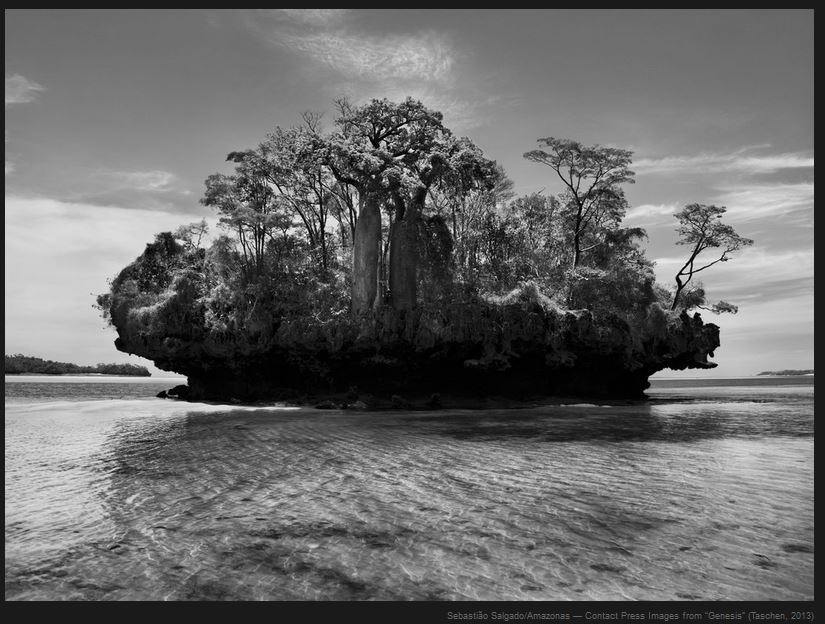
In honor of celebrating the best, prettiest, largest playful space out there – Earth – some beautiful photos showing off the planet in all its natural glory.

Sebastião Salgado, one of the world’s most admired photojournalists, has spent a lifetime relentlessly training his eye on human degradation and suffering. His photographs, though beautiful, are often full of despair. Mr. Salgado’s new work, “Genesis,” is a testament to something altogether different: the joy, innocence and repose in earth’s Edenic corners.

croc 1

croc 2

croc 3

more via In Love With My Planet – NYTimes.com.

community · environment · Social

In Quebec City, the Rivers Return to the People

Another great example of creating enriching public spaces out of natural environments and features already in place.

Unknown's avatar

Another great example of creating enriching public spaces out of natural environments and features already in place.

View original post

children · creativity · environment

Play and Creativity Require Space and Time

I found this video courtesy of Creativitea. They were using it to explain how they don’t believe in creating things under a time pressure. It really does a great job of illustrating how we all need to give ourselves more time, and space in our lives, to get creative and think about things.

Have a happy weekend, and make sure to make some space for play and creativity.