behavior · brain · creativity · learning · mental health · neuroscience · psychology

The Benefits of Daydreaming

English: Rêverie (Daydream)

I am a HUGE fan of Jonah Lehrer and his exploration of science and psychology, so I was thrilled to see his new article in the New Yorker about how important it is for us to daydream (which is a big part of make-believe play).

Humans are a daydreaming species. According to a recent study led by the Harvard psychologists Daniel Gilbert and Matthew A. Killingsworth, people let their minds wander forty-seven per cent of the time they are awake. (The scientists demonstrated this by developing an iPhone app that contacted twenty-two hundred and fifty volunteers at random intervals during the day.) In fact, the only activity during which we report that our minds are not constantly wandering is “love making.” We’re able to focus for that.

At first glance, such data seems like a confirmation of our inherent laziness. In a culture obsessed with efficiency, mind-wandering is often derided as useless—the kind of thinking we rely on when we don’t really want to think. Freud, for instance, described daydreams as “infantile” and a means of escaping from the necessary chores of the world into fantasies of “wish-fulfillment.”

In recent years, however, psychologists and neuroscientists have redeemed this mental state, revealing the ways in which mind-wandering is an essential cognitive tool. It turns out that whenever we are slightly bored—when reality isn’t quite enough for us—we begin exploring our own associations, contemplating counterfactuals and fictive scenarios that only exist within the head.

Read more http://www.newyorker.com/online/blogs/frontal-cortex/2012/06/the-virtues-of-daydreaming.html#ixzz1wwmMkzFa

We all need a chance to let our brains wander and make connections and just absorb and process what we’ve been experiencing. It’s a mental health issue as much as an intelligence issue in my book. There are lots of stories (not all of them 100% true, but still useful), of scientists struggling with a problem, going outside to take a break and daydream on it, and *BAM* problem suddenly solved!

Do you give yourself a chance to daydream? Have you had one of those “aha” moments due to daydreaming? Leave a note about your experiences in the comments below.

behavior · brain · creativity · design · environment · happiness · health

Grassy PicNYC Table brings the picnic feeling indoors

With Memorial Day weekend right around the corner, it’s time to think about getting outdoors and dining al fresco. But what if you live in a place that is rainy all through Memorial Day weekend (not pointing fingers, Seattle!), or you don’t have a lot of green space to play with? Fear not! From Inhabitat:

Haiko Cornelissen‘s lush, living PicNYC Table is a brilliant plant-growing furnishing that brings a taste of the outdoors to every meal. The aluminum table is deep enough to double as a planter bed, and it can grow everything from grass to herbs and flowers. We caught up with Haiko at this year’s Wanted Design exhibition during NY Design Week to ask him about his inspiration and snap some firsthand photo.
Getting some greenery, even with something as simple as a grassy table, can work wonders for picking up mood and feeling refreshed. Even having an indoor plant on your desk has been shown to improve productivity. Bon Appetit!
community · creativity · Social

Street art

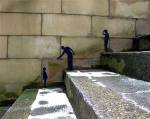
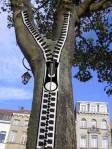
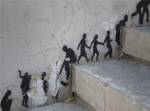
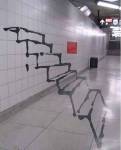
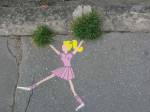
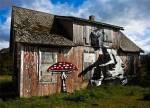
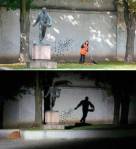
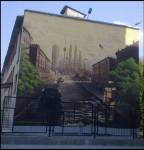
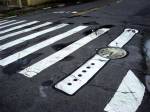
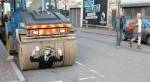
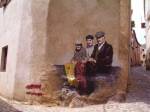
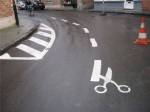
Happy Friday! I was forwarded one of those massive emails with a lot of great street graffiti and art, all of them commenting on their environment, as well as adding beauty and interest. I will add credits and attribute authors as soon as I find out who everyone is (if you know any of the artists please let me know in the comments below), but for now just some nice eye candy to get you ready for the weekend. Enjoy!

:
creativity · design · play

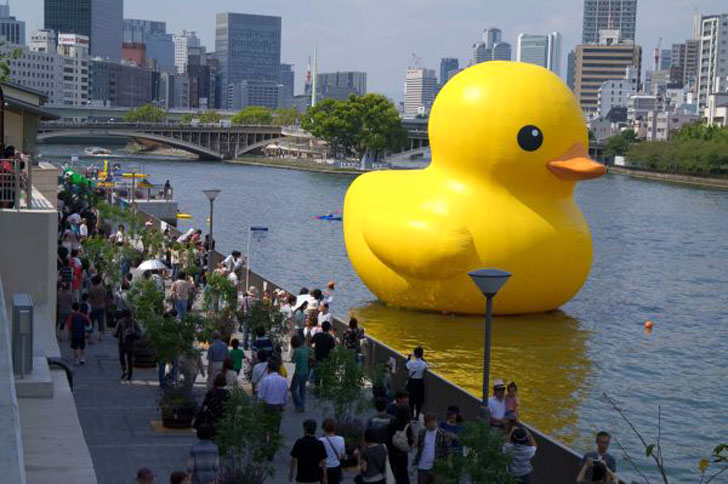
Giant Rubber Duckie Invades Loire River in France

A little more play for your Friday. Via Inhabitat and PSFK:

Artist Florentin Hofman’s giant yellow duckie puts a smile on the faces of passers-by as it floats from city to city along the Loire river in France. The hilarious and striking sight has already traveled the world before through cities such as Osaka and Sao Paulo.

The 25 meters tall and 25 meters wide friendly creature’s mission is to provide a joyful interruption to people’s daily routines. People from all over the world connect the rubber duck with their childhood memories and are brought up with positive sensations.

Famous for his humoristic pieces, the Dutch artist Florentin Hofman used rubber coated PVC to built the duck on a pontoon with a generator. Hofman believes that the soft giant can relieve global tensions through delighting people coming from different countries and backgrounds. Hofman has generated smiles many times before. In 2011, the Kobe Frog, an enormous frog wearing a party hat, was sitting on the edge of Hyogo Prefectural Museum of Art in Kobe, Japan.

The duck itself is a durable vessel, made from inflatable rubber-coated PVC, a pontoon boat, and generator to help propel it forward downstream.

more via PSFK.

Have a great weekend! Be sure to outside and explore your neighborhood, you might just see a giant rubber duckie or something else just as fantastic!


children · creativity · design · learning · play

Designs for Children Showcased at ‘Play In Progress’ During Milan Design Week

Happy Friday! I hope you get a chance to go out and play this weekend. Speaking of play, here is another great find from Milan’s Design week (remember the edible mini furniture from earlier this week?). This exhibit of design focused specifically on children’s spaces, with a focus that was very playful, creative, and also a great idea for grown-ups to incorporate into their own environments.

From Inhabitat:

Students from the HDK master program Child Culture Design created an exhibit to explore new ways of bringing play into everyday objects to help foster imagination and creativity. Dubbed “Play In Progress“, the exhibit was one of our favorites at the Salone Mobile.

Johanna Larsson‘s cool table features transparent color plates that can be arranged and rearranged to create different tabletop scenes that push imaginative thinking.
At first look of Hide||show appears to be nothing special, but just put a kid in front of one of these and you’ll realize that there is definitely something more to this cabinet. The cabinet features two pairs of handles — one ordinary set for adults and a pint-sized set of hole-like handles for children. The variation indicates different accesses to function, and give children the feeling of exclusivity in their own world.
Inspired by the game of “hide and seek”, Behind the Curtain blocks out part of a white curtain with color to create a secret space for a child to be alone in his/her world.
Griet Boucique has designed an ‘Alternative Playground’ – a landscape of soft seats – that questions what is a ‘good’ play environment for a child? The design considers material usage, its impact on the environment, and how different textiles can the way a child engages in play.

Check out more great designs at Inhabitat (I love the block table, for example!)

creativity · design

Furniture for Breakfast

On this blog we often talk about the importance of being more playful and fun. Two great ways to be more playful are with design and food. One designer decided to combine both!

As covered by Design*Sponge:

I was glad to see that this year’s [Milan Furniture Fair] show offered more tongue-in-cheek pieces that played around with the idea of furniture in a fun and fresh way. This “furniture tasting” waffle iron is from Ryosuke Fukusada and Rui Pereira, and it allows you to produce, essentially, a completely edible collection of dollhouse living room furniture. Is this a super functional design? Perhaps not (although you can eat what you make), but it’s a clever way to play with design while bringing up the topic of mass production. Although I may have to be in favor of mass production if it means plates full of tasty furniture-shaped waffles. Click here for more information and details over at the 2DM Magazine blog. Thanks to our resident foodie, Kristina, for the tip.

Photos via 2DM

Just another excuse to play with your food. 🙂

What other examples of fun food design have you seen lately? Share them in the comments below.

behavior · creativity · emotion · happiness · psychology

Surefire way to make yourself smile

Feeling a little down after the festive weekend with possibly WAY too many chocolate bunnies? There is a cure for that. But don’t take my word for it, ask Canadian artist Alison Ann:

I was a bit sad that my vacation was over until I remembered this little gem of a project that I did on a cool January eve.

The goal here was to draw 100 smiley faces in an act of self cheering.
It totally works.
Here is my sample, and I encourage you to do the same.
If you do do the same you should share it with others too.. or share it with me!!!
Or share on this blog! 🙂

Happy Monday!


community · creativity · design · environment · happiness · mental health · play

Remaking or “hacking” urban spaces

Great story from TreeHugger about self-proclaimed “Urban Hacktivist” Florian Riviere and some of the various “hacks” he’s done:

When it comes to redefining public space and objects, Florian Rivière is a master. The self-described “urban hacktivist” transforms parking spots into hockey rinks, sidewalk barriers into tables, and uncomfortable benches into lounge chairs for the homeless.

I absolutely agree with TreeHugger when they say:

I love it when people re-imagine how urban space is used; it’s a fantastic way to make cities more liveable, practical and fun, without needing major construction projects or the hassle of red tape.

Here are some of his best “hacktions.”

Visit Florian Riviere‘s site and see more of his work.

I particularly like these hurdles he’s set up:

parcourse

This is just one example of “hacking” public space in a fun creative way. I still remember the yarn-bombing movement that really took off a couple of years ago but seems to have died down for now.

There was also the Swing at the bus stop.

What other examples of urban “hacktivism” have you seen? Share them in the comments below.

creativity · health · play

Easter Egg Enrichment for Big Cats

Who says Easter is all about bunnies, or has to be for little kids? It can also be for big cats. Very nice video of a Easter gourd hunt for the residents at Big Cat Rescue.

Enjoy!

anthropology · children · community · creativity · design · environment · learning · Nature · play

Kids’ playground goes back to nature – Edmonton Journal

I love the fact that playgrounds are incorporating the stuff that kids love to play with the most – dirt, rocks, and sticks!

Children won’t find new monkey bars and bright plastic play structures at the upgraded Donnan Park.

Instead, the aging playground at 9105 80th Ave. will become Edmonton’s first “natural playground,” part of a growing trend in playground design.

Children in the redesigned Donnan Park will entertain themselves with such timehonoured playthings as rocks, sticks, sand and dirt. The overhauled space will feature a slide built into a hill, a sideways-growing tree, a boulder spiral, a hand pump to pour water into a small stream and plenty of plants, trees and greenery.

It will be “a beautiful garden that everyone plays in,” says Kory Baker-Henderson, co-chair of the neighbourhood committee that worked on the preliminary playground design with expertise from Ontario-based Bienenstock Natural Playgrounds.

“Around us there are already some typical playground structures, so we wanted to have something different that blends in with the (Mill Creek) ravine,” Baker-Henderson says.

“Studies have shown imaginative play is much more stimulated (in natural settings) and children actually will play longer and become much more involved than on a typical red, plastic slide structure. Their games will just get much more imaginative. There’s that connection with nature. We have plans for a community garden, so it’s a learning and teaching tool, too.”

The playground at Donnan Park currently has swings and a slide that will remain for now, but won’t be replaced, she says.

Read the full article.