
Mental

The dose makes the poison – how dopamine receptors contribute to creativity, and mental illness

A study released this past May by PLoS ONE: “Thinking Outside a Less Intact Box: Thalamic Dopamine D2 Receptor Densities Are Negatively Related to Psychometric Creativity in Healthy Individuals,” group of researchers in Sweden found that people with slightly decreased dopamine receptors were more creative than average people. At the same time, it’s been previously shown that people with Schizophrenia and other psychotic diseases have severely decreased dopamine receptors.

It’s amazing how often the case is that a little bit of a genetic trait is good, but too much of it can be dangerous or even deadly: just look at sickle cell anemia and malaria resistance: http://www.buzzle.com/articles/sickle-cell-and-malaria.html
Mental · Social · technology

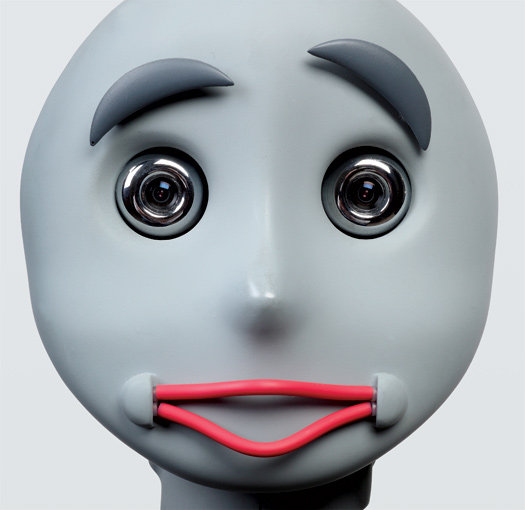
The New Face of Autism Therapy | Popular Science

I found this really interesting, since 2D interactions don’t seem to teach kids to teach kids how to empathize and be more social beings. However, a 3D robot seems to do the trick…

via The New Face of Autism Therapy | Popular Science.

A robotic therapist teaches kids how to read emotions

With one in 110 children diagnosed with autism, and therapists in short supply, researchers are developing humanoids to fill the gaps. But can robots help patients forge stronger bonds with people?

…There is increasing evidence that kids with autism respond more naturally to machines than they do to people. Psychologist Simon Baron-Cohen, the director of the Autism Research Center at the University of Cambridge in England, along with other autism experts, believes that robots, computers and electronic gadgets may be appealing because they are predictable, unlike people. You can pretty much guess what a computer is going to do next about 90 percent of the time, but human interactions obey very few entirely predictable laws. And this, Baron-Cohen explains, is difficult for children with autism. “They find unlawful situations toxic,” he says. “They can’t cope. So they turn away from people and turn to the world of objects.”

More…