Social · writing

Mary Catherine Bateson on Domesticity – NYTimes.com

garden art at Dr. Bateson's New Hampshire farm

A nicely written article in the August 25th edition of the New York Times on anthropologist Dr. Mary Catherine Bateson (Margaret Mead‘s and Gregory Bateson‘s daughter) on her latest book which looks at domesticity, homemaking, and what it means to be part of a couple.

In Dr. Bateson’s parlance, homemaking is … a metaphor for community, for the design of an environment — professional or domestic or societal — that challenges and supports its inhabitants, an ideal closer to the arrangement of a Samoan village than a perfectly appointed living room. “It’s critical that home not just be a place that you use whatever is there, but that it be a place you are truly responsible for,” she said. “It’s not just your home and you get to mess it up.”

Homemaking, she added, is also a metaphor for longevity, a way of looking at the second stage of adulthood that precedes old age — what she calls “adulthood II” — which is the subject of her new book.

Yes, it’s a sequel to her 1990 meditation on the stop-and-start nature of women’s lives, except that this time she has invited men into the conversation.

more at At Home With Mary Catherine Bateson – Mary Catherine Bateson on Domesticity – NYTimes.com.

Social · technology

Steven Pinker Op-Ed – Mind Over Mass Media – NYTimes

There is so much buzz right now about whether or not we’re over-saturated with technology and gizmos and electronic thingamabobs and constant electronic feedback that it’s wrecking our brains. Some people have said absolutely, 100% yes.

Steven Pinker, a language, cognitive science, evolutionary psychologist working out of MIT and most famous for popularizing the idea that language is an “instinct” or biological adaptation shaped by natural selection, however points out that in some ways electronic technologies have helped us do better science, be more creative, and build social networks.

When comic books were accused of turning juveniles into delinquents in the 1950s, crime was falling to record lows, just as the denunciations of video games in the 1990s coincided with the great American crime decline. The decades of television, transistor radios and rock videos were also decades in which I.Q. scores rose continuously.

For a reality check today, take the state of science, which demands high levels of brainwork and is measured by clear benchmarks of discovery. These days scientists are never far from their e-mail, rarely touch paper and cannot lecture without PowerPoint. If electronic media were hazardous to intelligence, the quality of science would be plummeting. Yet discoveries are multiplying like fruit flies, and progress is dizzying.

via Op-Ed Contributor – Mind Over Mass Media – NYTimes.com.

I have mixed opinions about technology and the modern world – I am a blogger, and I write for both hard-copy and online publications. Most of my paychecks have come from online writing. I gain unmeasurable knowledge and enjoyment from the Internet, and yet the most restful vacation I have had in years is three days in Boulder where the only technology I had was my cell phone and a car, both of which turned off the majority of my visit. My husband can hear the buzz of electronics at night and can’t have anything plugged in when he goes to bed.

What do you think? Any other links to people’s opinions on the subject?

Mental

The dose makes the poison – how dopamine receptors contribute to creativity, and mental illness

A study released this past May by PLoS ONE: “Thinking Outside a Less Intact Box: Thalamic Dopamine D2 Receptor Densities Are Negatively Related to Psychometric Creativity in Healthy Individuals,” group of researchers in Sweden found that people with slightly decreased dopamine receptors were more creative than average people. At the same time, it’s been previously shown that people with Schizophrenia and other psychotic diseases have severely decreased dopamine receptors.

It’s amazing how often the case is that a little bit of a genetic trait is good, but too much of it can be dangerous or even deadly: just look at sickle cell anemia and malaria resistance: http://www.buzzle.com/articles/sickle-cell-and-malaria.html

Social · technology · writing

Open Diary: Chronicling The Hidden World Of Girls : NPR

It’s not too late to submit! Be a part of the story on NPR’s Open Diary: Chronicling The Hidden World Of Girls.

one submission to the Flickr account

As part of the Hidden World of Girls project, we’re looking to create a database of intimate diary entries. With enough of them, they could form a comprehensive tapestry — from elation to depression — of life experiences. We already have a small collection on Flickr.

How Can You Help? Submit pictures or scans of your diary’s pages — or even the pages of your mother’s diaries or grandmother’s diaries.

How To Submit: Photos should be submitted through The Hidden World Of Girl’s Flickr group. Or if it makes things easier, just upload them anywhere and leave us a link to the picture in the comments section. We will be getting in touch with you through Flickr mail or through the e-mail address provided when you sign up for an NPR community account. On Flickr, you’ll know if you’ve submitted photos correctly if they show up here.

via Open Diary: Chronicling The Hidden World Of Girls : NPR.

Mental · Social · technology

The New Face of Autism Therapy | Popular Science

I found this really interesting, since 2D interactions don’t seem to teach kids to teach kids how to empathize and be more social beings. However, a 3D robot seems to do the trick…

via The New Face of Autism Therapy | Popular Science.

A robotic therapist teaches kids how to read emotions

With one in 110 children diagnosed with autism, and therapists in short supply, researchers are developing humanoids to fill the gaps. But can robots help patients forge stronger bonds with people?

…There is increasing evidence that kids with autism respond more naturally to machines than they do to people. Psychologist Simon Baron-Cohen, the director of the Autism Research Center at the University of Cambridge in England, along with other autism experts, believes that robots, computers and electronic gadgets may be appealing because they are predictable, unlike people. You can pretty much guess what a computer is going to do next about 90 percent of the time, but human interactions obey very few entirely predictable laws. And this, Baron-Cohen explains, is difficult for children with autism. “They find unlawful situations toxic,” he says. “They can’t cope. So they turn away from people and turn to the world of objects.”

More…

Mental · Social

The Evolution of Play : NPR

imaginary play

Another oldie-but-goodie. NPR did a fantastic series about the evolution and importance of play. The article I’ve linked to here is the first in the series. Eventually I plan to post them all into a right-nav bar for easy access. But start here and then explore for yourself; after all, the first story in the series (featured here) talks about the importance of imagination and self-exploration in play, and finding things out for yourself:

“…For most of human history, what children did when children played was engage in free-wheeling, imaginative play, elaborate narratives of pirates and princesses. Basically, they spent most of their time doing what looked like nothing much at all.

They improvised play, whether it was in the outdoors, the fields and the forests, or whether it was on a street-corner or somebody’s backyard. They improvised their own play. They regulated their play. They made up their own rules.

But Chudacoff argues once TV and toys began to supply children with ever-more-specific scripts and special props for their stories, the size of children’s imaginative space begins to shrink, and that’s not the only way that imagination comes under siege, according to Chudacoff.

In the second half of the 20th century, he says, parents were increasingly concerned about safety, which again affected play.”

via The Evolution of Play : NPR.

Nature

BBC NEWS | UK | Education | Rain stops play – but should it?

Growing up in sunny, dry, southern California, my mom always let me go out and play in the rain. Now that I live in Washington, I have go out and play in the rain or I’d never get to go out and play. This article from the BBC discusses why it’s okay to go get wet and playful.

“Why do we let ourselves be penned in so by the rain?

If a small child sees a puddle their first instinct is to jump in it. Perhaps, in a sense, that’s part of the problem.

Are we spoiling their fun or even their learning just so we can cut back on washing?”

via BBC NEWS | UK | Education | Rain stops play – but should it?.

Social

The Free Hugs Campaign in Helsinki, Finland : Living the Scientific Life (Scientist, Interrupted)

From earlier this year, but good advice for this upcoming dark and wet winter:

A group of Helsinki residents started a free hugs campaign to cheer people up. A group calling themselves, “FreeHugs Finland” had been promoting for this day on the internet and over 30 huggers showed up! During a couple of hours over 1000 people in Helsinki got a hug and one woman told me it saved her day!

via The Free Hugs Campaign in Helsinki, Finland : Living the Scientific Life (Scientist, Interrupted).

Check out the Free Hugs Finland Blog. Seattle’s got a reputation for being not the most outgoing place, but so do Fins! If a group of Finnish people can do it, maybe we can too?

Mental · Nature · Social

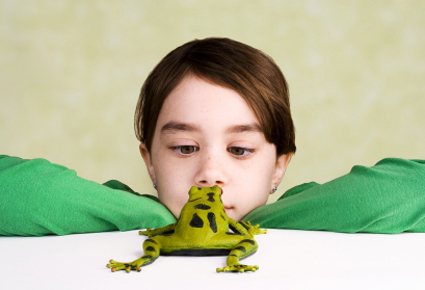
Futurity.org – Urban kids view the world in human terms

urban kids and how they see the world

The way children develop reasoning about the natural world is largely influenced by how and where they are raised, a new study finds.

For decades, the consensus was that as young children begin reasoning about the biological world, they adopt an “anthropocentric” stance, favoring humans over non-human animals when it comes to learning about properties of animals. But it appears human-centered reasoning among children is not universal after all.

more via Futurity.org – Urban kids view the world in human terms.

Nature · writing

A Flowering Tribute To Emily Dickinson : NPR

What a great combination of nature, poetry, history, and how museums contribute more than just dusty history lessons.

Emily Dickenson

Dickinson loved nature and was an avid gardener, and now an exhibition at the New York Botanical Garden called Emily Dickinson’s Garden: The Poetry of Flowers is putting on display a side of the poet that is little known.

Gardening was a huge part of Dickinson’s life and her art. “I was always attached to mud,” she once wrote, and a sophisticated understanding of plants and flowers is reflected in her poetry. According to Gregory Long, the president and CEO of the New York Botanical Garden, Dickinson used to tuck little poems into bouquets of flowers that she gave to her neighbors.

more via A Flowering Tribute To Emily Dickinson : NPR.