play

The Real Guide to Imaginary Companions: Episode 1 – Science Friday

This is an often rejected idea; imaginary worlds and friends. I never had one, and my kids so far don’t, but the idea of creating another creature who explores the world along with you, or possibly in a very different way than you, is a fascinating concept to me.

Developmental psychologist have pieced together an unexpectedly diverse and nuanced profile of the children who create imaginary companions, while finding out how and why they create them.

Source: The Real Guide to Imaginary Companions: Episode 1 – Science Friday

play

Biophilic Cities Lead the Way to Urban Sustainability

Cities working to incorporate more natural scapes.

Jared Green's avatarTHE DIRT

“We need density but we also need connections to nature,” said University of Virginia professor Timothy Beatley, at an event at the University of the District of Columbia (UDC) to celebrate D.C.’s successful inclusion in the Biophilic Cities Network, a group of leading cities pushing for rich, nature-filled experiences in daily urban life.

Beatley launched the network only a few years ago, but it already seems to have taken off. Building on the impact of his important books, Green Urbanism, Biophilic Cities, and Blue Urbanism, the network is designed to improve knowledge-sharing among cities who seek to merge the built and natural environments. Leading environmental cities — such as Singapore; Portland; San Francisco; Wellington, New Zealand; and now, Washington, D.C. — have joined, and another 20-30 cities are now exploring signing on.

Beatley explained how biophilic cities forge deeper, more meaningful connections to nature, which…

View original post 577 more words

creativity · learning · play

Playing into old age: Meet the Graffiti Mamas


Play often involves some aspect of rebellion – doing things just slightly different than before, mixing things up.

That is very apparent in this interview with Luisa Cortesao from Portugal, who became a graffiti artist later in life and ran workshops for her peers.

play

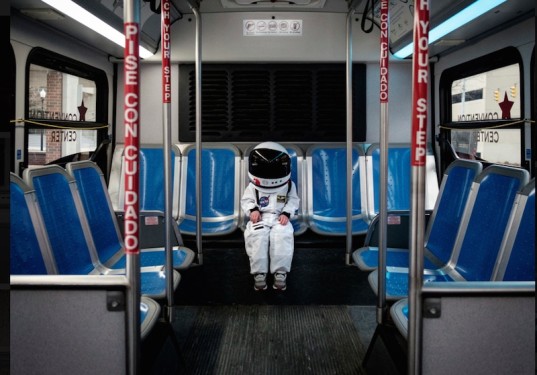
Father and his astronaut son boldly explore life’s daily adventures in Small Steps are Giant Leaps | Inhabitots

One joy of having kids in your life – whether you’re a parent, grandparent, aunt, or a friend – is that you get to see the world through their new experiences, you get to see things for the first time again. The world is a brand new laboratory of discovery.

With this spirit of exploration and adventure in mind, I love this photo series trying to capture what it feels like to be doing things for the first time. For a kid it must feel like being an astronaut landing on the moon. As grown-ups we must not lose that love of adventure and re-discovery.

It may be cliché to say that one of the greatest joys of becoming a parent is getting to watch your child experience the world for the first time. But it’s absolutely true. That first step, the first taste of ice cream, the first trip to the ocean — it’s unbelievable to see how kids test out new experiences and react to them in this chaotic and exciting world. Photographer Aaron Sheldon takes this time of exploration personally with a photo series featuring his four year-old son, entitled Small Steps Are Giant Leaps. The photos, which show the little astronaut in a variety of different scenarios, remind all of us of how, in the words of Sheldon, kids are “exploring new frontiers. Our job as parents is to act as their mission control and co-pilot to make sure they can explore as much of their new world as possible.”

Read more about Aaron Sheldon’s adventures at: Father and his astronaut son boldly explore life’s daily adventures in Small Steps are Giant Leaps | Inhabitots

play

Recycled Art Sculpture | Mystery Box Challenge – TinkerLab

This is a great idea to see this kind of project given to adults to let them explore ideas and design.

I recently led a fun maker station for the California Museum Association’s (CAM) annual conference that we called the Mystery Box Challenge. While we often share child-led projects here on TinkerLab, the participants in this challenge were all all museum professionals. To see how my children interpreted the same prompt, click here. This project was inspired by the Art Studio at the Boston Children’s Museum.

For the Mystery Box Challenge, I prepared a bunch of boxes by filling them with all sorts of interesting found objects and trinkets: pieces of wood, surplus plastic, cupcake holders, pipe cleaners, pom-poms, etc. Each participant received their own box with a prompt to make a critter from any or all of the supplies in the box.I found the boxes at the craft store, some of the supplies came from RAFT (Resource Area for Teaching, a non-profit that sells low cost surplus materials for education), and others were found at the craft store and a local party store. We were also lucky to receive a generous donation of low heat glue guns and glue sticks from Blick Art Materials.

More at: Recycled Art Sculpture | Mystery Box Challenge – TinkerLab

play

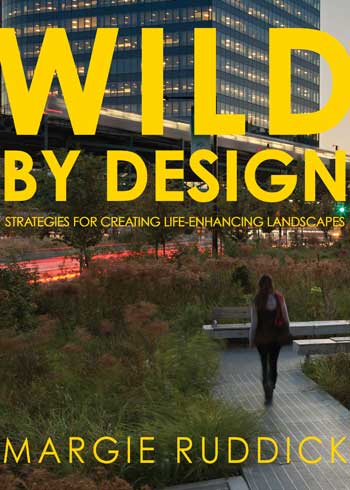
Margie Ruddick Is Wild by Design

Great profile on making urban parks “wild” and enriching for city dwellers.

Jared Green's avatarTHE DIRT

Wild by Design / Island Press Wild by Design / Island Press

“Combining ecological function and design is now mainstream,” said landscape architect Margie Ruddick, ASLA, in a talk at the National Building Museum in Washington, D.C. “It’s no longer fringe. The culture has caught up.” And it’s caught up to where Ruddick, the winner of the 2013 Cooper Hewitt National Design Award, has been for a while. A leading advocate of the “wild” landscape movement, Ruddick explained how she carefully balances ecological conservation and restoration with a strong sense of design.

In 2011, a New York Times article about Ruddick and how she was fined for growing “weeds” in her front yard in Mt. Airy, Philadelphia went “viral” among landscape architects and designers. She ultimately got out of the $75 fine by explaining to the judge the value of the wild plants she let live in her yard. “I told the judge: ‘This is actually…

View original post 1,092 more words

play

Sir Ken Robinson speaks on outdoor play

Interview with a well-known play and education advocate on his views on outdoor play.

Tim Gill's avatarRethinking Childhood

Screengrab of Sir Ken RobinsonEducationalist Sir Ken Robinson, known to millions for his work on creativity in schools, yesterday shared his thoughts on outdoor play.

The 20-minute talk, in a video recorded as part of the Dirt is Good campaign sponsored by Persil (in the UK) and Omo (in many other countries), gives some powerful messages to parents about why play matters for children’s development and learning. This post shares some edited highlights from the talk.

View original post 1,131 more words

play

Adelaide Aims to Plant 100,000 Square Meters of Greenery by 2020

These kinds of “greening” projects almost always have to come from city or county level ordinances to get the funding and city-wide support they need to survive. Well done Adelaide.

Unknown's avatarTHE DIRT

Adelaide Design Manual Adelaide Design Manual

Only a few years ago, if you mentioned the words sustainability, green, or global warming you were probably met with an eye roll and maybe some sort of off-handed remark about being a hippy. Now, the opposite has happened: it’s totally uncool to be disinterested in the environment, as celebrities such as Leonardo DiCaprio bring climate change to the foreground for the public.

Locally, the Adelaide City Council is leading by example. Our new Adelaide Design Manual provides strategic and technical guidance for designing streets, squares, parks, with a strong focus on greening and water-sensitive urban design. The design manual will help the city achieve ambitious goals identified in the 2016-2020 draft strategic plan: to become one of the world’s first carbon-neutral cities; plant an extra 100,000 square meters of greenery by 2020; and provide a path to a real reduction in city temperatures by 2040.

The…

View original post 320 more words

play

The Mary Poppins playground kit

Great example of activism to encourage play in a neighborhood, or what psychologist Peter Gray calls “Playborhoods”. 🙂

Tim Gill's avatarRethinking Childhood

This post shares an idea from a parent who was frustrated that her kids were finding it hard to have much fun in their local playgrounds. I’ve called it the Mary Poppins playground kit, for reasons that should become obvious.

2 bags of play items

At the end of this post, I will say more about why I like the Mary Poppins playground kit so much. First, the idea itself, in the words of the parent herself (whose chosen name is Djindjer):

View original post 1,185 more words

play

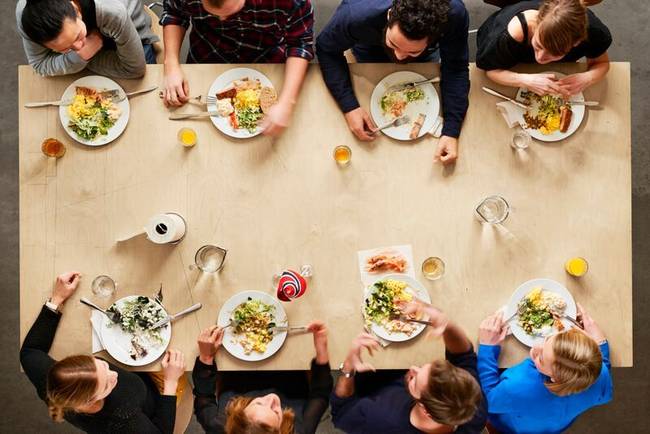
Why we should all embrace fika, the Swedish coffee break : TreeHugger

I truly appreciate the important social and emotional value of stopping to think and talk with people, especially over food. The habit/ritual of fika I think is an important one of mindful breaks and letting your brain unwind, something both introverts and extroverts can appreciate.

It’s so much more than an opportunity to consume caffeine. It’s a moment to slow down and appreciate the good things in life. As explained in “Fika: The Art of the Swedish Coffee Break,” written by Anna Brones and Johanna Kindvall: “Functioning as both a verb and a noun, the concept of fika is simple. It is the moment that you take a break, often with a cup of coffee, but alternatively with tea, and find a baked good to pair with it. You can do it alone, you can do it with friends. You can do it at home, in a park or at work. But the essential thing is that you do it, that you make time to take a break: that’s what fika is all about.”

more at: Why we should all embrace fika, the Swedish coffee break : TreeHugger