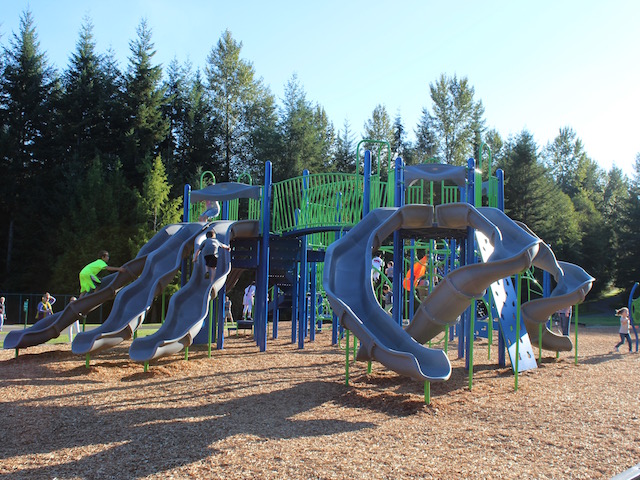
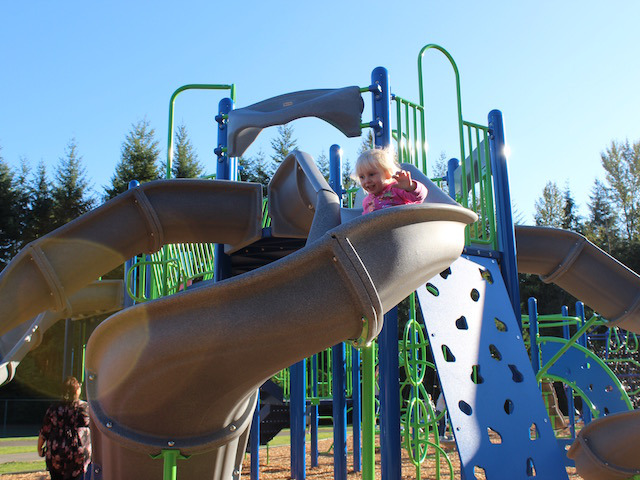
When the Snoqualmie, WA Parks Board asked local Girl Scouts to choose the park’s new amenities, the Girl Scouts provided their input and the newly designed Fisher Creek Park was built. With a ginormous play structure, dueling zip lines, rock climbing wall and mountain bike park, this just-opened park is already a big hit with locals.
By designing an awesome playground with eight slides, a music station, a rock climbing wall, merry-go-round, spider ball and dueling 100-foot long zip lines, plus a mountain bike park, a full-size basketball court and a .75 mile trail that’s connected to the Snoqualmie Ridge Trail system, Fisher Creek Park was designed for the whole family to play.
Fall is finally upon us here in the Pacific Northwest. I’m not going to deny it anymore. But even as the weather gets cooler, my family and I are still finding ways to get outside and play.
I have always loved playing outside, climbing on rocks, trees, hiking, and splashing in puddles, and really want to pass this love of nature and outdoor movement on to my kids. It is so great to see other parents encourage their kids, and other grown-ups, to discover and recover their biophilia and love of playing outdoors.
One of the best outdoor play advocates I have met in a long time is Katy Bowman, although for her, moving and exploring the outdoors is simply behaving like a normal human.
Katy Bowman doing her thing
Katy is a biomechanist with a deservedly large following of movement practitioners using her Restorative Exercise program. Katy is a huge advocate of natural movement and getting outside as much as possible, and encourages it with her kids as well. Katy talks about their experience in their outdoor “nature” preschool on her blog and podcast, but the enriching environments she has set up for her kids at home is in a class by itself.
Katy graciously invited my family out to her house outside of a small town on the Olympic Peninsula earlier this summer.
When we pull up to her house, the front yard looks fairly typical for any house containing small children; a few toys are strewn around the yard, slightly hidden by the uncut grass. Her husband and children have just headed off down the road for a walk. She helps us unload our brood out of the car after the long drive and immediately invites my daughter to explore, with me in tow.
We step out of the house into the backyard, and it is perfect.
My three-year-old daughter’s eyes light up like she’s hit the motherlode.
The lawn is littered with toys – costumes, stuffed animals, balls, a Little Tyke’s scooter car. There is a big basket of LEGOs sitting on the porch waiting to be dumped over and played with.
There are also complex toys laid out intentionally by Katy and her husband Michael for her kids to play with. A tippy rope ladder strung between two trees with a foam mat underneath; ladders laid on the ground for balancing, a jungle gym, a circle swing, large wooden ramps placed strategically up to table tops. The cherry tree is also filled with cherries, for good measure.
The kids have gotten creative with some of their building materials, including taking a couple of blocks from the flower box and made a corral for their plastic farm animals. They have also left little illustrations stealthily added around inside the house: on the wooden bed frame, the balance ball in Katy’s office, and on a couple of door frames.
And that’s before we even meet the chickens or go down to the Dungeness River to throw rocks, wade, climb, and make structures in the sand.
It is obvious the kids have the run of the house, and its affect is wonderful.
Katy has created a practice based on her high level training in biomechanics and years of teaching experience centered on creating a healthy, mobile human being, and this practice is reflected in how she and Michael have set up their home environment. Every space is open for movement, jump, climb, and play. There are edges and imperfectly balanced steps and slight risks everywhere. The kids must learn to navigate their environment safely, and have a blast doing it.
Katy often talks about getting her kids outside and exposed to new, playful challenges. And yet, when I ask her about it, she almost baulks at the idea she is supporting a primarily “playful” environment. For her, this is simply survival, teaching her little humans how to be human. She is merely creating and supporting healthy behaviors, what kids and grownups should be doing all the time.
They let their children go slow, at their pace. Their kids learn by doing, by experiencing. As do we all, really. It’s true that, thanks to the visit, I now have more confidence in being able to ford a fast-moving stream carrying my toddler. And it wasn’t part of a survival training camp or an emergency. It was part of our Sunday family outing. It may sound small or frivolous or “not necessary,” but for the survival of our species, that skill is a big deal.
To me, this kind of activity is not just good for restoring our body and capability to move, it is also restorative to our psyches and filling that need to explore and play at our own pace and learn in a playful way.
Finally my family has to head home. We take the time to let our kids say good night to the chickens before we load back into our car, driving away with the sunset on our backs. After getting to see and play in Katy’s backyard, both the grown-ups and the kids in our family feel renewed, replenished, and ready to play and explore our own backyard and our home environment in a new way.
I highly recommend digging in to Katy’s materials. She has some great ideas and thoughts around leading a healthy, restorative, and in my mind playful movement practice, whether it’s in nature or just in your own backyard.
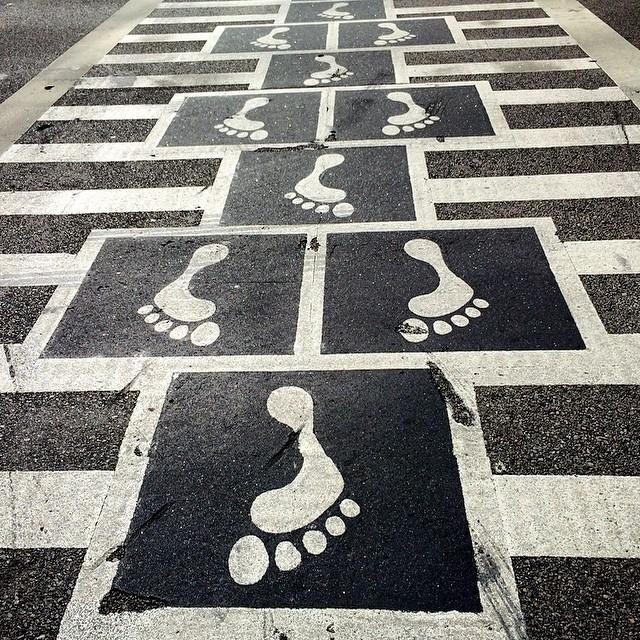
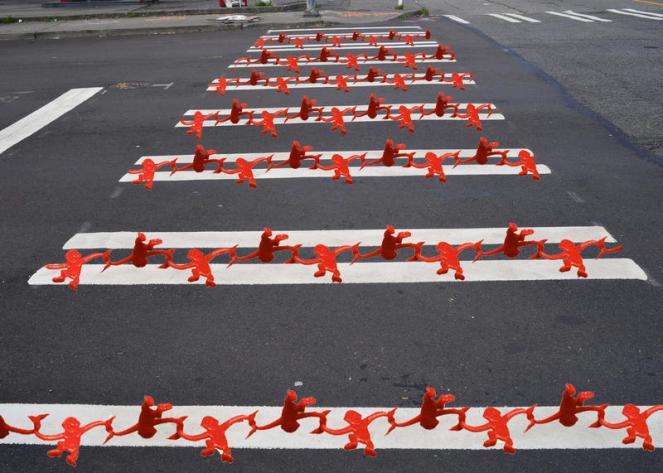
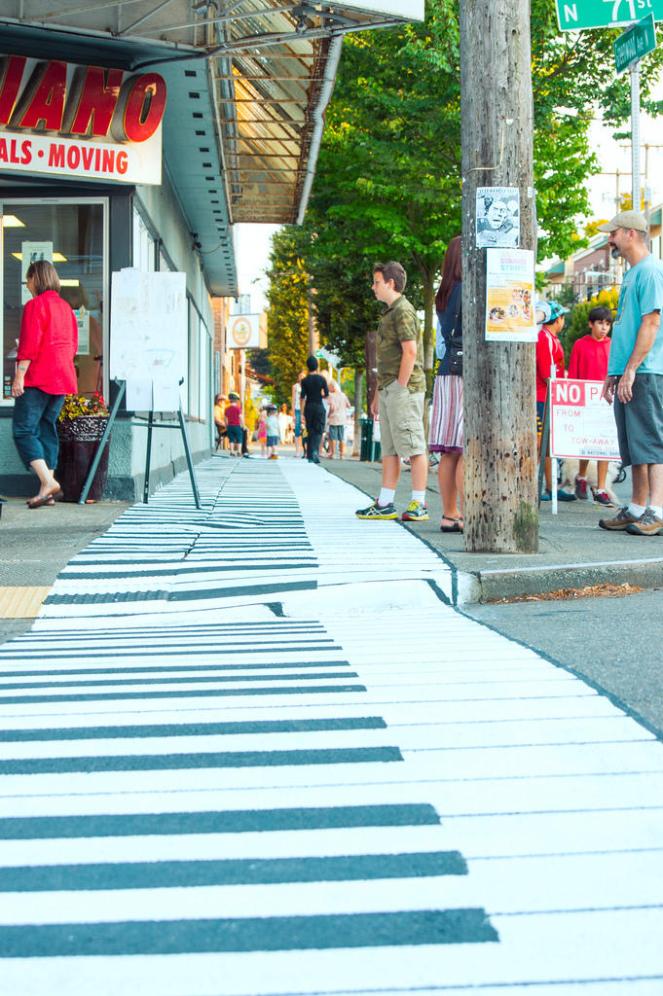
Seattle is making it easier for neighborhoods to customize crosswalks. The idea started in June, when the city painted rainbow crosswalks in gay-friendly Capitol Hill ahead of Seattle Pride festivities. Then a group from the Central District called the United Hood Movement painted several crosswalks the colors of the Pan-African flag. Although one was official and the other ad hoc, both were responses to violence and gentrification in the area. Crosswalks have been spritzed up elsewhere in the city, too. In Rainier Beach, a crosswalk was painted the colors of the Ethiopian flag. And on Phinney Ridge, piano keys were painted on the street outside A-1 Piano.
This is a really great initiative. Painting the crosswalks helps add color, play, and creativity to neighborhoods. It helps build a sense of identity and community for each neighborhood. Not to mention it adds to the safety of crossing the street.
I was walking to work today and saw a crew cleaning up from a festival held in the square over the weekend.
One of the installations caught my eye in particular; this one focused on learning and sharing knowledge.
It encouraged people to interact with it by adding some of their own knowledge they wanted to share.
Bits of knowledge scribed on little clear plates.
There were also books to take and read. I hope the crew leaves that one up for awhile.
Almost like a Free Little Library, I would love to see designated learning/book sharing spots like this all over the city.
I celebrated my daughter’s third birthday this past weekend.
She asked for a train-themed party, so of course we had to have the obligatory pink train cake (it sure felt obligatory based on how insistently she asked for it).
Pink Chocolate Choo Choo Train cake, as requested by the birthday girl.
Although we had it at the park intentionally so the kid guests (and grown ups) could run around and climb on things, I also wanted to offer some sort of “activity” the kids could do while the parents actually sat down to relax and enjoy other adults’ company.
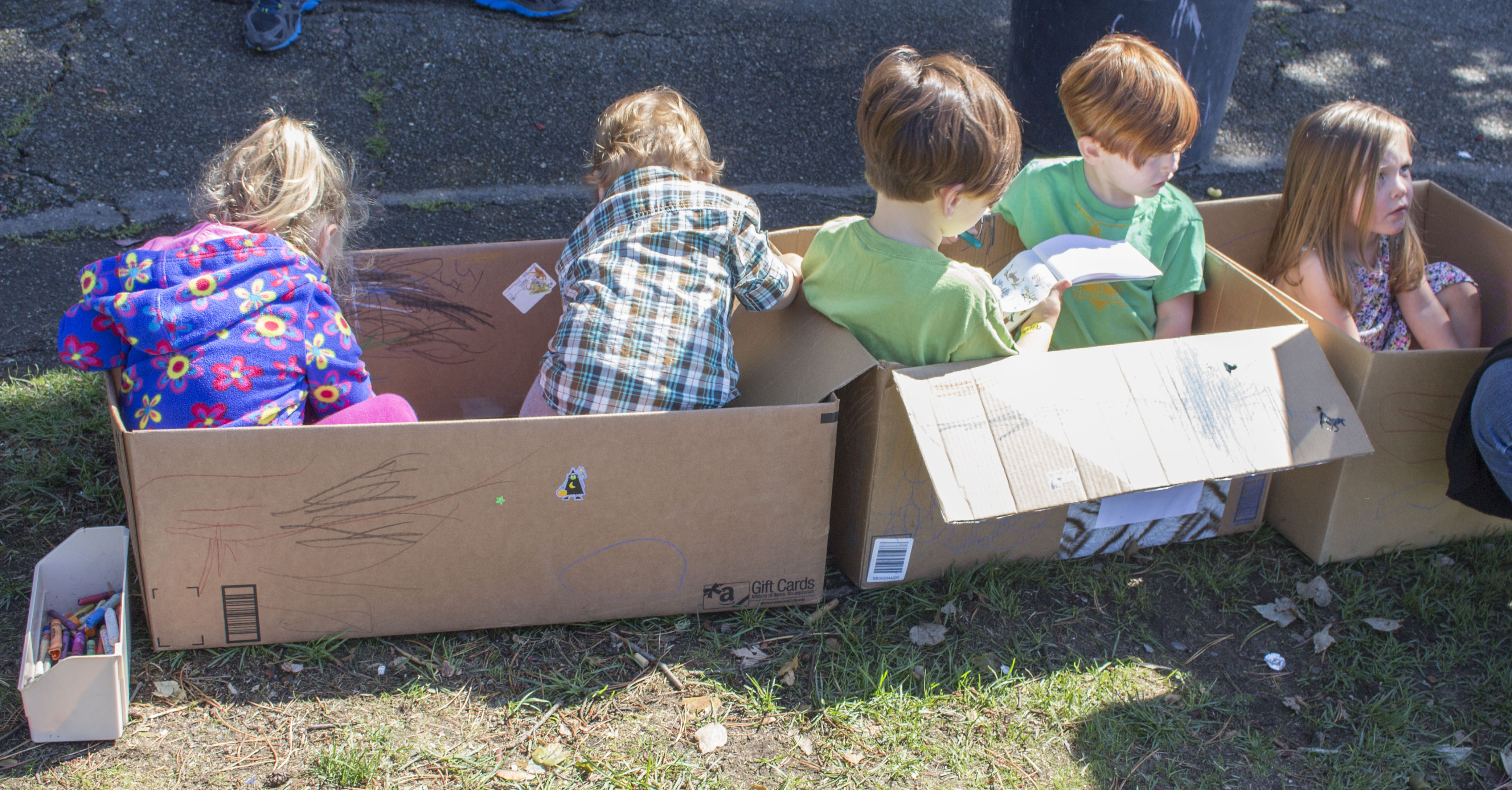
I grabbed four largish boxes and brought them to the park, along with crayons and stickers. I set the boxes up to look vaguely like a train, with one taped to the front box like it was a smoke stack, and invited everyone who wanted to to decorate the train as they saw fit. After they ate their cake (because, priorities), the kids all jumped into the train, from the one-year-old to the five-year-old, and proceeded to stay there for almost an hour jumping in and out of the boxes, decorating, adding stickers, often tipping the boxes over and falling out onto the grass, but laughing and getting right back in.
It was definitely the highlight of the birthday party.
I am glad that I took a chance and brought these boxes and crayons for the kids. It cost no money (I had all of these items laying around my house already), and it let the kids do some creative make believe play that they might not have gotten to do otherwise. It was something that all ages of kids could do independently or collaboratively as they so chose.
Parents lament that kids tend to like the box more than the present that came in it. I say bring on the box!
This is a great example of how easy it is to create playful spaces, especially temporary ones, which can in many ways add to the fun.
Also a good reminder that PARKing Day is happening in the US next week!
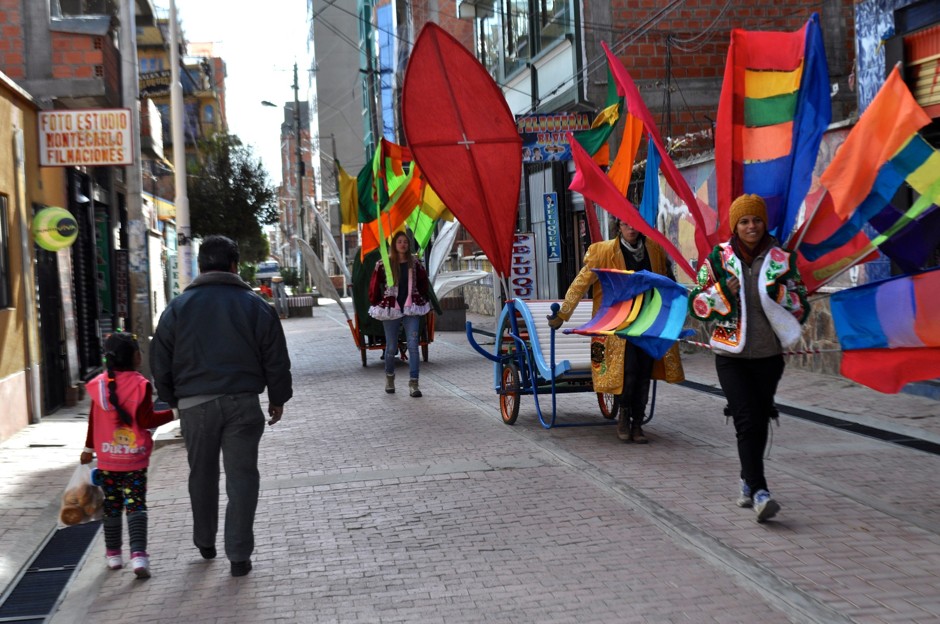
The mobile park on parade in El Alto this summer. (Megan Hoffman)
Working in the harsh sunlight, they set about disassembling the carts. The shell of the bee became a series of green mounds, while the elephant trunk revealed itself as a slide.
In a matter of minutes a playground was born, and the sounds of children playing rippled across the plaza.
By most urban timelines, El Alto itself is a pop-up construction of sorts. The grid that spreads across the barren altiplano was a tiny informal settlement, perched above La Paz, in the early 1950s. Following its establishment as an independent municipality in 1985, its population jumped, by 54 percent from 2000 to 2010 alone. El Alto now has more than 1 million people, approximately 75 percent of whom identify as members of the indigenous Aymara people. (In Bolivia overall, 25 percent of the population is indigenous.) It has even given rise to a bold new architecture, evidence of Bolivia’s recent economic boom.
In this dense city, driven by commerce at all scales, streets, sidewalks, and communal spaces are often transformed into informal markets, where vendors and minibuses compete for real estate. While this competition brings vitality, it requires novel methods of occupying urban space for play.
The pop-up playground aims to do just that. Over three summers, the International Design Clinic (IDC), a “guerrilla design” collective, has collaborated with Teatro Trono to design and build a pair of mutable, movable playspaces that will help the organization expand its activism into El Alto’s public space. The areas currently designated for children in El Alto are scant and often ill-maintained.
Headed by Scott Shall, an architecture professor at Lawrence Technological University near Detroit, the IDC works closely with groups already embedded within communities, lending its own design expertise to support what they do well. “We try to contribute to and intersect their work for a strategic moment, but we always have an exit plan,” says Shall. “We aren’t permanent, they are.”
Barbie’s traded her pink Corvette for a Subaru, her designer purse for a Filson backpack, and her ordinary specs for Warby Parkers. She’s living #authentic, celebrating #socality, and effortlessly being so much better than you.
Socality Barbie is a fantastic Instagram account satirizing the great millennial adventurer trend in photography. It’s an endless barrage of pensive selfies in exotic locales, arty snapshots of coffee, and just the right filter on everything. Anyone who’s flipped through an issue of Kinfolk gets the aesthetic.
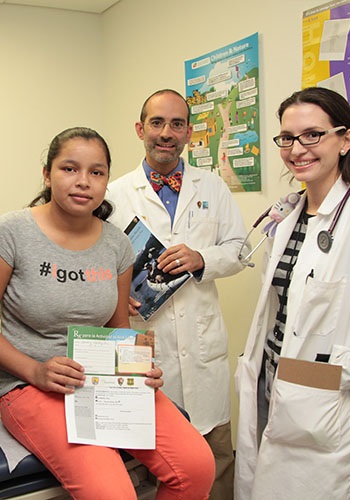
Dr. Maria Cristi Rueda and Dr. Robert Zarr with a young patient holding a copy of her park prescription / HealthIT Buzz
Pediatricians in Washington, D.C. are prescribing their patients a new type of medicine: parks. Presenting on the success of DC Park RX, a new community health initiative, at a conference organized by Casey Trees, Dr. Robert Zarr, the founder and director of the program, said that many doctors have started to recognize the positive impact nature has on many health conditions. “Nature clearly shows an effect on your health in terms of prevention. So you may not have a diagnosis yet, but if you’re headed that way, you can certainly turn that around by spending more time outside,” Zarr said.
DC Park RX created a searchable online database of parks, identifying 350 green spaces in the district. Every park gets a one-page summary that makes it…
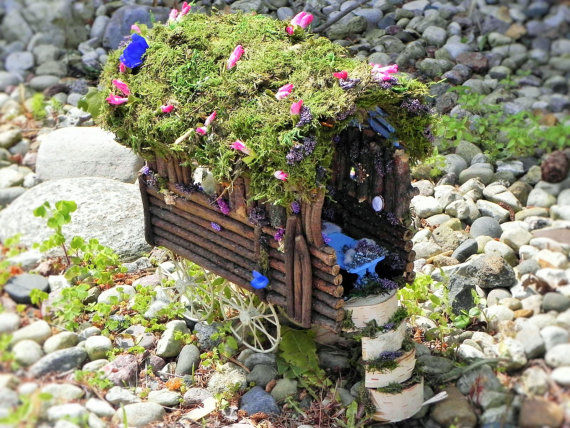
It is in our nature to pick up interesting rocks, sticks, and leaves as part of our exploration of our surroundings. Some people bring their treasures home and display them on a fireplace mantle or little shadow box.
For a husband and wife team, they have been turning their little finds into fairy houses, which is another playful way of exploring their surroundings and getting to engage in make believe play as a grown up. They are also one of the lucky few people who get to sell their play creations. They were interviewed on the Etsy blog about their creations:
Etsy: When did you make your first fairy house? And had you ever heard of one before you made one?
Debbie: I grew up writing poetry and playing musical instruments and I had always loved doing different kinds of crafts like making dolls, handmade books and cards. But no, we’d never really heard of fairy houses before we started doing this 25 years ago. At the time, our sons had just started going to grade school, and when I found I had more time to myself, I was excited to use my creative talents again. The first project I tried was making a full-size Adirondack chair; when that didn’t work out, Mike suggested that I try making a miniature chair instead. I used some materials I had gathered from a couple of acres near my mom and dad’s place in Washington, and it was so much fun I kept doing it.
Mike: We have always loved nature. When we would go for hikes, Debbie was always picking up things she found, so we already had quite a collection of wild grasses and flowers. And Debbie’s mom was our biggest mentor. She always said, “You have so much talent. I wish you would use your talent.” She really encouraged us.
How wonderful that Debbie’s mom continued to encourage to play and explore with creating these miniatures.
Have you ever built little fairy houses when you go for a walk? Or seen someone else’s creation? Do you build with LEGOs or other miniatures? Or K’nex (Connector) Sets or Lincoln Logs or other building set? Do you wish you still did? Share in the comments below.
When the Snoqualmie, WA Parks Board asked local Girl Scouts to choose the park’s new amenities, the Girl Scouts provided their input and the newly designed Fisher Creek Park was built. With a ginormous play structure, dueling zip lines, rock climbing wall and mountain bike park, this just-opened park is already a big hit with locals.







 Mental Flowers