play

Why Schools And Hospitals Should Be More Like Theme Parks


The idea of making hospitals less scary and more “visitor first” focused is not only important from a customer service perspective, it also calms the patient and leads to faster healing times.

Understanding how designers create theme parks could help us reimagine our most important social institutions.

The technologies and narrative devices common at theme parks could be easily applied to other institutions. Consider the hospital or medical clinic of the near future. While you don’t expect to have fun visiting one of these places, you do at least hope to avoid being overwhelmed, bored, annoyed, confused, or frightened. Taking a “guest-first” approach, in the parlance of the theme park industry, the hospital offers a computer system that, through a series of encounters, gets to know you, and across visits remembers you and your medical history. It allows the hospital to route you through an experience that feels relatively stress-free, intuitive, supportive and, most importantly, centered around you. Logistics like transportation are orchestrated for you, redundant administrative tasks are minimized, and doctors and nurses have information at their fingertips that helps them put your care first. Something that is typically cold and impersonal becomes simple and human, not just while you’re in the building, but before and after your visit, within the larger context of your personal health.

Source: Why Schools And Hospitals Should Be More Like Theme Parks

play

Little Girl Forgets Her Stuffed Bunny At Hotel, Staff Takes It On Adventure | Bored Panda

I love that this has become a THING now that hotels, airports, and other tourism industry focused places do. Sure it’s good PR, but it ALSO provides adults a chance to play!

When Adare Manor Hotel’s staff in Ireland found a lost bunny, they decided to have a little fun. They shared its photo on Facebook captioned “I lost my owner at breakfast in Adare Manor.” It went viral, so they decided to treat the bunny with 5-star service.“We decided to keep it going,” a spokesperson for the hotel told BuzzFeed. “We thought Facebook was a great way to get the word out there.”

They kept posting funny photos with the bunny enjoying the hotel until it was happily reunited with the owner, Kate Hogan.

more at the source: Little Girl Forgets Her Stuffed Bunny At Hotel, Staff Takes It On Adventure | Bored Panda

play

About – Project for Public Spaces

I just discovered this organization and I’m already in love…

Project for Public Spaces (PPS) is a nonprofit planning, design and educational organization dedicated to helping people create and sustain public spaces that build stronger communities. Our pioneering Placemaking approach helps citizens transform their public spaces into vital places that highlight local assets, spur rejuvenation and serve common needs.

Since 1975 we have completed projects in more than 3000 communities in 43 countries and all 50 U.S. states and are the premier center for best practices, information and resources on placemaking.

Read more about – Project for Public Spaces

play

Calling all Artists! – Seattle Bridge Residencies for 2016

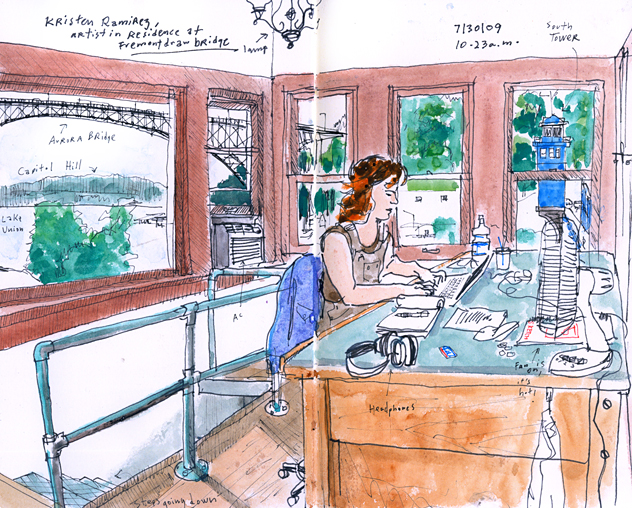
The Seattle Department of Transportation (SDOT), in partnership with the Office of Arts & Culture (Arts), is excited to announce two unique opportunities for artist residencies in 2016. Using the towers of two movable bridges as a canvas, the City is seeking an individual or team of artists for two residencies, one for the Fremont Bridge and one for the University Bridge.

Find out more at: Calling all Artists! – Seattle Bridge Residencies for 2016

play

In Chicago, New Parks Are Civic Infrastructure

Another great example from Chicago of prioritizing green spaces and environmental enrichment for its citizens.

Unknown's avatarTHE DIRT

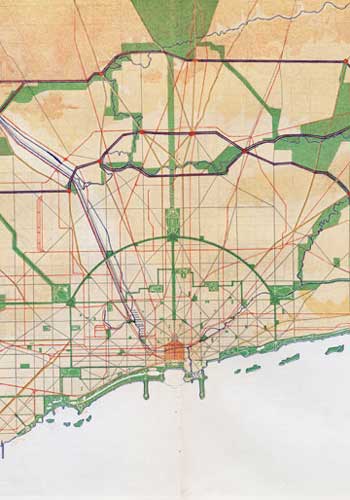
Burnham's Plan of Chicago / University of Chicago Burnham’s Plan of Chicago / University of Chicago

For Daniel Burnham, the Chicago architect and planner who created the 1909 Plan of Chicago, civic and infrastructural improvements in Chicago could only happen simultaneously. This approach continues today. Using Burnham’s plan as launching point to discuss some of the parks and landscapes recently created, Marshall Brown, Illinois Institute of Technology (IIT) and Marshall Brown Projects, moderated a panel at the ASLA 2015 Annual Meeting in Chicago with Sarah Astheimer, ASLA, James Corner Field Operations; Matthew Bird, ASLA, Michael Van Valkenburg Associates (MVVA); and Gina Ford, ASLA, Sasaki Associates.

In the Plan of Chicago, Burnham’s approach was an “integration of landscape and architecture,” creating hybrid places that are infrastructural in nature. The three new Chicago parks and landscapes discussed in the session – Navy Pier Pierscape by James Corner Field Operations, Maggie Daley Park by MVVA, and…

View original post 362 more words

play

Fun Office Still Life

Shared by my friend. A great example of environmental enrichment for smaller spaces, like an office desk.

office still life

I love the fact that it combines both natural elements – plants and wood – with a toy and symbol of something that makes her happy.

A few of my coworkers also have similar things on their desks. What sort of meditation, mini zen garden, or other still life do you have on your desk, kitchen window, wherever? Leave a photo and description in the comments below.

play

Study Shows Community Gardens Can Improve Mental Health

This is a great shift in the study of biophilia and nature’s impact on people. This looked at both the environment and communal aspects of nature, via a community garden:

Researchers in the U.K. have found that people who work in community gardens not only experience better physical health but enjoy improved mental health as well. A new study, published in the Journal of Public Health and authored by scientists at Westminster and Essex universities found that people who gardened for at least 30 minutes a week had lower body mass indexes (BMIs)—a measure of body fat—as well as higher levels of self-esteem and better moods overall. They also reported lower levels of tension and stress.

The Brits call them “allotment gardens”—small plots of land, generally located within congested urban areas, that are open for use to the public.

“With an increasing number of people residing in urban areas, a decline in the number of homes with gardens, and the increased risk for mental ill health associated with urban living, these findings are particularly important and suggest that allotment gardening might play an important role in promoting mental well-being in people residing in urban areas,” the researchers wrote in their paper.

Source: Community Gardens Can Improve Your Mental Health, Study Shows | GOOD

Do you have a space to garden with friends, or just by yourself? Leave your thoughts in the comments below.

play

Throwback Thursday: Toys

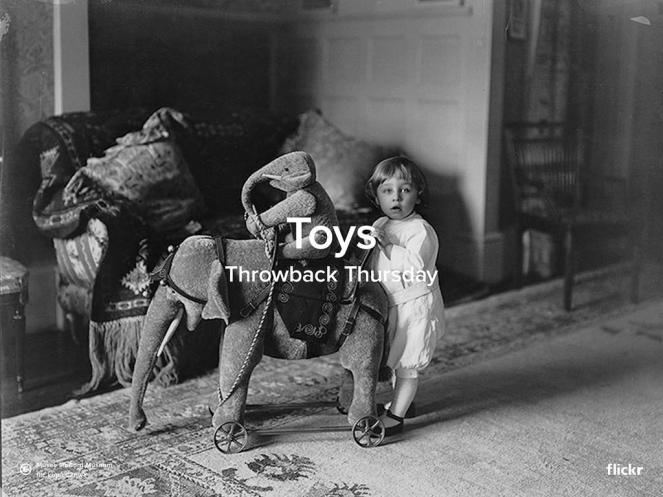
Happy Thursday. Today Flickr shared a great Throwback Thursday #TBT post on toys and their place in our history.

We grow old when we stop playing. So this #TBT you can rescue your old teddy bears, dolls and cars from the dusty old trunk and share your photos with us.

Share your toy pics on their blog: Throwback Thursday: Toys

play

‘The Monster Project’, Kids Draw Monsters and Then Artists From Around the World Recreate Them in Their Own Styles

This is a really great project focused on promoting and validating creativity as well as collaboration and visual exploration:

The Monster Project is an awesome collaboration among skilled artist from around the world who recreate drawings, created by elementary school students, in their own styles to help teach the kids about the importance of creativity and imagination. The massive team behind the project are currently raising funds on Kickstarter to help expand to other schools, create an activity book, make professional prints for the kids, start an online, and more. The entire collection of drawings and artist remakes are available to view in the Monster Gallery.

More at: ‘The Monster Project’, Kids Draw Monsters and Then Artists From Around the World Recreate Them in Their Own Styles

play

Which Aspects of Nature Improve Our Health?

Interesting breakdown.

Jared Green's avatarTHE DIRT

Landscape attributes / MaryCarol Hunter Landscape attributes / MaryCarol Hunter

“We know that exposure to nature enhances our well-being, but we know less about the specific features that create these positive effects,” said MaryCarol Hunter, ASLA, University of Michigan, at the ASLA 2015 Annual Meeting in Chicago. A set of fascinating studies by Hunter and Marc Berman, a psychologist and neuroscientist at the University of Chicago, are beginning to converge on what those feature are. The goal is to translate knowledge of these features into design guidelines landscape architects and other designers can apply. All of this research is happening under the rubric of the TKF Foundation, which has invested millions over the past two decades creating more than 130 small, healing parks and financing research studies on the health benefits of green spaces in dense, urban areas. The TKF Foundation wants to know: with increasingly limited space in cities for green space…

View original post 1,084 more words